
A cabaret-noir dramedy, grieving the loss of a cousin, and confronting memory loss and aging
By Irwin Rapoport
June 8, 2026
This year’s edition of the Montreal Fringe Festival is presenting a variety of plays, ranging from outright comedies to musicals, and addressing family, aging, and the foibles and tribulations that make us all too human, from June 1 to 21.
Performances are taking place at numerous venues and times, ensuring that Fringe aficionados can see plays featuring talented actors and directors from across the globe and here at home.
With so many productions, allow me to suggest a few that you might find appealing.
Bloody Cabaret!
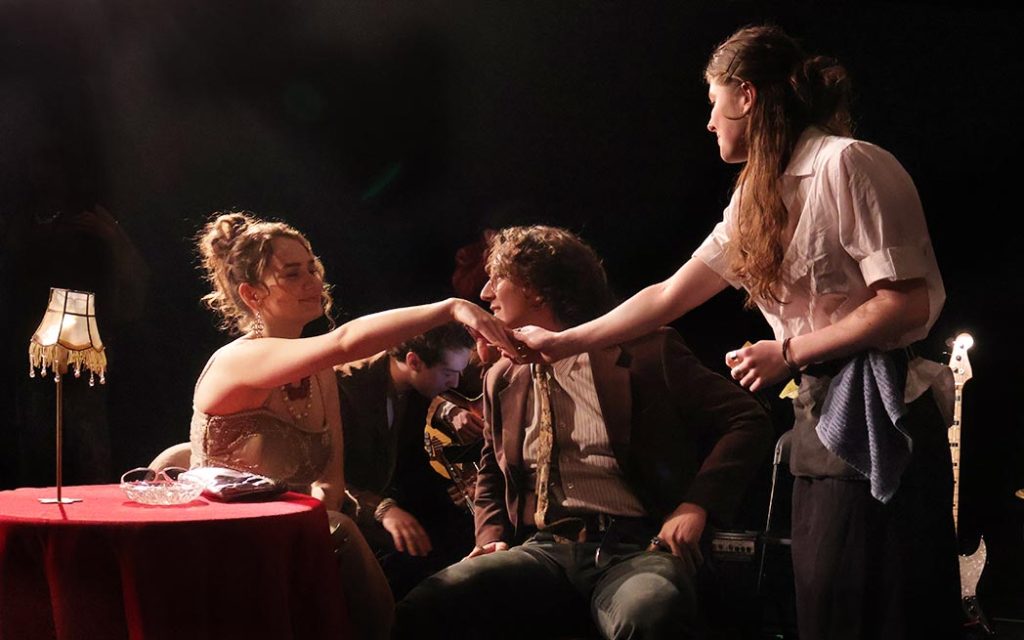
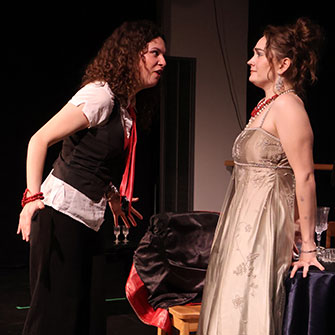
ChillAct, showcasing emerging artists from the Dawson College Dome Theatre Program, Concordia, and McGill, returns after the sold-out success of Cheers! with Bloody Cabaret! , a cabaret-noir dramedy set on a winter evening in 1970s London.
Guests, singers, and regulars gather in a jazz cabaret expecting a lovely performance night, until the stage becomes a crime scene.
– Bloody Cabaret press release
The play is written, directed and produced by Melyssa Oubrayrie and executively produced by Dalia Leblay.
The production is being performed at the Théâtre La Comédie de Montréal, 1113 de Maisonneuve E, on June 11, 13, 14, 17, 19, and 21.
Oubrayrie discusses the play in the Q&A below:
 WM: What makes Bloody Cabaret! different from a traditional murder mystery?
Oubrayrie: Bloody Cabaret! blends a scripted murder mystery with live cabaret performances, so the audience isn’t just watching a story unfold; they’re stepping into the cabaret alongside the characters. Through this, the show creates a more immersive and energetic experience than a traditional murder mystery.
WM: Why set a show in a 1970s London cabaret?
Oubrayrie: Historically, the late 1970s in London were a period of social change. Britain was experiencing shifts in attitudes towards gender, sexuality, and immigration, and Bloody Cabaret! explores many of those themes through the lens of a hidden queer cabaret in 1979.
WM: What can the audience expect from the experience of watching Bloody Cabaret?
Oubrayrie: With live musicians on stage throughout the show, the music becomes an active part of the storytelling. The musicians act as a kind of foil, commenting on and reacting to the action through their instruments. Audiences can expect a high-energy blend of mystery, comedy, and drama, brought to life by a vibrant cast of characters. The actors have worked hard to sharpen the contrasts among the characters, making every interaction feel engaging.
Viraf2.0
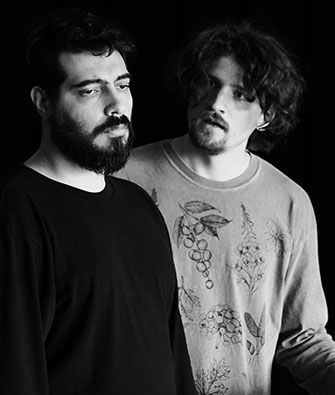
The Hive Theatre is bringing Viraf2.0 to the Fringe, a piece that emerged from Syd Hamidreza Hosseini‘s personal experience of grieving the loss of his cousin.
‘Viraf was a Zoroastrian monk who went to the underworld to bring back wisdom for the living. Viraf2.0 is a continuation of the same practice, almost 2,000 years later, in the age of technology.’
– Fringe web page
The Hive Theatre was recently created. “Our collective comprises individuals from various parts of the globe, primarily outside of Montreal,” said Hosseini.
The play is being presented at the Mile End Improv/Theatre VME, 5337 Saint-Laurent, on June 14, 15, 17, 18, 20, and 21.
Hosseni discusses the play in the Q&A below:
 WM: What was the starting point for creating Viraf2.0?
Hosseini: This piece began taking shape in early September, following the loss of my cousin after nearly 70 days in a coma. He was in Tehran — my hometown — and the combination of digital blackouts and heavy internet censorship made it nearly impossible to maintain a stable, secure connection with my family. This experience got me thinking about technology’s contradictory role: it was simultaneously the barrier to connection and the intended means of achieving it. The ongoing war made this tension even more visible, given how central technology is to modern conflict. All of this led me to ask: could technology itself become a bridge for something more spiritual? I brought that question to a group of close friends in our small theatre collective, The Hive, and we began exploring it together.
WM: What makes The Hive Theatre distinctive?
Hosseini: The Hive Theatre is a space where we bring together our varied artistic backgrounds. Think of it as a loom that weaves together a wide range of approaches to art-making, spanning community-based documentary theatre, technology, sonic exploration, and laboratory theatre. When it comes to working with technology in an artistic context, risk is inherent, and as a collective, we’ve made a conscious commitment to embrace that as much as we can.
That same willingness to take risks extends to the aesthetic choices we make in our work, which we recognize may be uncomfortable for certain audiences. Because of this, we’re intentional about providing warnings — if you visit our page on the Fringe website, you’ll find we’ve been transparent about what to expect. We never want to force a confrontation on someone who may not be ready or receptive to the stories we’re telling.
The Last Audition
Starring Paul Shearman, The Last Audition explores themes of memory loss and aging.
‘A powerful solo performance about an aging actor confronting memory, identity, and the roles we play in life.’
– Fringe web page
The play has been performed at the Adelaide Fringe and New York City Fringe, and it will continue on to Edinburgh later this summer.
“It has been wonderful to see the show connecting with audiences across different countries, especially around its themes of ageing, memory, identity, dignity, and the lifelong need to be seen,” said Shearman.
The show can be seen at O Patro Vys, 356 Mont Royal E, on June 13, 14, 16, 18, 20 and 21.
montrealfringe.the-last-audition
Shearman discusses the play in the Q&A below:
WM: What is the play about, and why is it personal to you?
Shearman: The Last Audition is about Sebastian Drake, an ageing Shakespearean actor who returns for one final audition, the role of King Lear, while quietly confronting questions of memory, identity, and what remains of us when the roles we’ve played begin to fall away.
It is personal to me because, as an actor in my sixties, I understand the fear and vulnerability that come with ageing in a profession that often celebrates youth. The play is not autobiographical, but it comes from a very real place: the desire to keep creating, keep risking, and keep stepping into the light, even when life asks us to redefine who we are.
WM: How and in what way does the play touch on ageing, and why is this important?
Shearman: The play touches on ageing not as decline alone, but as a deeply human stage of life filled with courage, humour, grief, memory, and reinvention. Through Sebastian’s struggle, it asks what happens when the things that once defined us- career, talent, independence, even memory- begin to shift.
This is important because so many people are living longer, fuller lives, yet ageing is still often treated as something to be feared or hidden. The Last Audition gives voice to that experience and reminds us that dignity, purpose, love, and creativity do not end with age. They may simply ask to be rediscovered in a new form.
Images: courtesy of the Montreal Fringe Festival

More articles by Irwin Rapoport
Other recent articles

Irwin Rapoport is a freelance journalist and community advocate from Westmount with bachelor’s degrees in History and Political Science from Concordia University. He writes extensively on local politics, education, and environmental issues, and promotes informed public discourse and democracy through his writing and activism.