
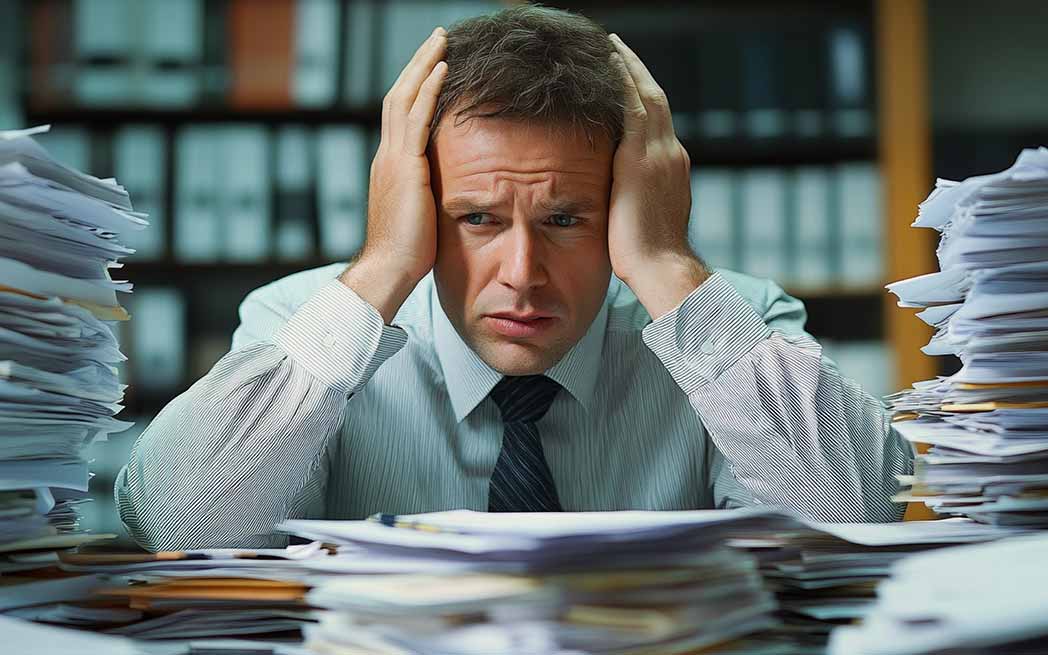
Learning to recognize
and manage anxiety
What anxiety is and how you can cope with stress effectively
By Angela Civitella
Edited, May 18, 2026
The World Health Organization (WHO) estimates that around 3.8 to 4 percent of the world’s population lives with an anxiety disorder in a given year, which is roughly 300 million people worldwide. If you experience occasional or severe anxiety, you’ll know how hard it can be to work productively while managing these symptoms. In this article, we’ll look at what anxiety is, and we’ll explore how you can cope with it.
The WHO estimates that 3.8% to 4% of the world’s population lives with an anxiety disorder in a given year, which is roughly 300 million people worldwide.
Research often defines anxiety as a “persistent, excessive, and unrealistic worry about everyday things.” While everyone experiences anxiety occasionally, it becomes an anxiety disorder when the problem occurs regularly and begins to interfere with your life, your work, and your relationships.
WARNING
Anxiety can significantly affect your physical and mental health and, if severe or untreated, can contribute to serious health problems. While these anxiety management techniques have been shown to help reduce anxiety for many people, they are for guidance only, and readers should take the advice of suitably qualified health professionals if they have any concerns over anxiety-related illnesses or if anxiety is causing significant or persistent unhappiness. Health professionals should also be consulted before any major change in diet, medication, or levels of exercise.
Symptoms of anxiety
The feeling of anxiety is directly related to your body’s natural fight-or-flight response. That is, you experience anxiety and its effects when you believe that you’re in danger or under threat. Your body may go through many sudden changes during an anxiety episode or panic attack because it’s preparing to survive a perceived threat.
While each person experiences anxiety differently, several common changes often occur. For example, your heart rate might increase, bringing fresh blood to your muscles to run or fight. Your breathing may become rapid so that your heart has enough oxygen to pump at this faster rate. An increased heart rate may make you feel hot, and you may sweat to cool off.
‘While everyone experiences anxiety occasionally, it becomes a disorder when the problem occurs regularly and begins to interfere with your life, your work, and your relationships.’
Your muscles are now flooded with energy, so they’re tensed and ready for whatever is coming. However, the blood that normally supplies your stomach is now redirected to your muscles, which means that you feel as if your stomach is churning. And the reduced flow of blood to your brain can leave you feeling light-headed and dizzy. By the time the “threat” has passed, chances are you’re hot, sweaty, exhausted, and trembling.
Anxiety and performance
Scientists have long studied the relationship between anxiety and performance, and the results are mixed. Some research, often described using the “Yerkes–Dodson law,” suggests that a moderate level of arousal or anxiety can help you perform at your best, whereas very low or very high levels can impair performance. Other studies have shown mixed effects depending on the task and the person.
For example, studies of musical performance have found no consistent difference in the quality of the performance of high-anxiety individuals compared with those who experience less anxiety. Another study that looked at how anxiety affected the performance of swimmers found that some types or levels of anxiety enhanced performance, while others diminished it.
Types of anxiety and related conditions
Anxiety is an umbrella term – there are many different anxiety disorders and several closely related conditions, each with different definitions and symptoms. Some of these include:
- Generalized Anxiety Disorder
If you’ve experienced excessive anxiety and worry on most days for six months or more, you may have generalized anxiety disorder (GAD). You consistently expect the worst, even when there is little or no obvious reason for concern. You might also be worried about money, family, work, or health.
. - Obsessive-Compulsive Disorder
If you have intrusive, obsessive thoughts that you can’t let go of, you may be experiencing obsessive-compulsive disorder (OCD). These thoughts compel you to perform certain behaviours or routines, sometimes lasting for hours, to ease your anxiety. These routines might include hand washing, counting, or checking and double-checking things (such as locks). OCD is now classified in its own category (obsessive-compulsive and related disorders) but remains closely linked to anxiety.
‘Anxiety is an umbrella term – there are many different types of anxiety disorders, all with different definitions and symptoms.’
- Panic Disorder
You might have a panic disorder if you experience recurrent, unexpected panic attacks (also called anxiety attacks) that seem to come from nowhere and can last for several minutes. Panic attacks involve at least four of the following symptoms: a sense of doom or danger or a feeling that you can’t escape; sweating; shakiness; a fear of death or dying; chest pain; shortness of breath; heart palpitations; a feeling of choking, losing control, or “going crazy”; tingling sensations; dizziness or light-headedness; nausea.
. - Post-Traumatic Stress Disorder (PTSD)
PTSD is a serious condition that commonly occurs when you’ve witnessed or experienced a disaster or traumatic event, or you’ve been in a situation where your life or health was threatened. There are many symptoms and side effects of PTSD, including intrusive memories, avoidance, changes in mood, and heightened alertness. PTSD is now classified as a “trauma- and stressor-related disorder” rather than an anxiety disorder, but it frequently involves intense anxiety and fear. If left untreated, this condition can be life-threatening.
. - Social Anxiety Disorder
Social anxiety disorder is an intense fear or concern about being judged by others, about performing, or about embarrassing yourself in social or performance situations. Many people living with social anxiety disorder have few, if any, close relationships, and feel powerless to stop their anxiety in social situations. Social anxiety is not the same as extreme shyness – rather, it’s a disabling condition that affects a minority of individuals but can have a major impact on quality of life.
. - Specific phobias
Suffering from a phobia is also a form of anxiety disorder. You have a specific phobia when you’re excessively frightened or anxious about a particular object, place, or situation, and you go out of your way to avoid it. For example, you might be extremely afraid of heights, germs, enclosed spaces, animals, flying, driving, or public spaces.
‘Anxiety is not a sign of weakness or a character flaw. It’s a treatable condition that anyone can experience.’
Anxiety and related conditions have also been linked to many other issues, such as bipolar disorder, eating disorders, headaches, depression, sleep disorders, substance use, adult ADHD, and chronic pain, to name a few. Note that anxiety is not a sign of weakness or a character flaw. It’s a treatable condition that anyone can experience.
IMPORTANT
This article discusses approaches to managing mild workplace anxiety. For PTSD, for more intense or persistent anxiety, or if you’re experiencing serious or ongoing unhappiness, please consult an appropriately qualified medical or mental health practitioner.
Coping with anxiety
You can take several steps to manage workplace anxiety effectively. These strategies are not a substitute for professional care, but they can support your overall well-being and may complement therapy or medical treatment.
- Manage stress
The exact causes of anxiety disorders are complex and not fully understood. Genes play a part in developing an anxiety disorder, but stress – especially if long-term – is thought to be a common and important factor. This is why it’s so useful to learn how to manage stress to prevent or combat these conditions.
.
If you’re not sure what’s causing your anxiety, start keeping a stress diary. Every day, write down the stresses that you experience and record any anxious thoughts that you have. After a few days or weeks, review your diary to identify possible causes and triggers. Once you’ve identified these, you can take action to deal with them or discuss them with a health professional.
‘For PTSD, for more intense anxiety, or if you’re experiencing serious or persistent unhappiness, please consult an appropriately qualified health practitioner.’
- Exercise more
Studies show that regular exercise can help reduce anxiety symptoms and build your tolerance for stress. Exercise also offers many other benefits, such as better overall health, a greater sense of well-being and happiness, increased focus and productivity, better sleep, and weight management.You can fit exercise into your day in many ways, and even small amounts will help lessen feelings of stress. Wake up earlier in the morning to go to the gym, or take a walk during your lunch break. Standing is also a form of light activity; consider switching to a standing desk or standing while you’re on the phone. Yoga and similar mind–body practices can be especially beneficial for reducing anxiety, as they help slow and focus your breathing and work your entire body.. - Deep breathing
You can use deep breathing exercises to help regulate your body’s stress response when at work. Deep breathing is especially effective for managing short-term spikes in anxiety. For example, if you begin to feel anxious, take 10 or 20 slow, deep breaths to calm down. Breathe in as deeply as you can, hold the air in your lungs for several seconds, and let each breath out slowly.
. - Watch what you eat
You can sometimes lessen the number of anxiety episodes or the severity of your symptoms by avoiding certain foods and drinks. For example, reduce your intake of caffeine (including coffee, some teas, energy drinks, and certain sodas), alcohol, and highly sugary snacks and beverages, as these can worsen anxiety for some people.
.
It’s also important to be cautious with certain over-the-counter medications; some products contain stimulants or other chemicals that can worsen anxiety. Talk to your doctor or pharmacist to find out more about which products you should avoid, and which products you should use instead (if any).
.
Watching what you eat also means eating a healthy, balanced diet and not skipping meals. Drink plenty of water throughout the day, and keep several healthy snacks with you at work.
‘Yoga can be especially beneficial for helping reduce the occurrence of anxiety since it helps to slow and focus your breathing, and works your entire body.’
- Think positively
Often, anxious episodes are preceded or intensified by self-sabotaging thoughts or behaviours. This is why learning how to challenge unhelpful thoughts and develop more balanced thinking is so important – approaches often used in cognitive behavioural therapy (CBT).
.
For example, imagine that you’re feeling particularly anxious about speaking in front of your team in a meeting. You’re thinking, “Everyone is going to think that I’m ridiculous and that my ideas are worthless.” This is what self-sabotage looks like; unless you act to overcome this negative thinking, your anxiety could worsen into a full-blown panic attack.
.
As soon as you start to notice that you’re thinking negatively, write down all of your negative thoughts. Then, note down realistic, more balanced alternatives to these thoughts. Continuing the example above, you could write, “My ideas are valuable, and some people in the team will be interested to hear what I have to say.” As you write out these more helpful statements, start to visualize how these thoughts or scenes will play out. “See” yourself being engaged with your ideas, and feeling good about sharing them with the group. “Notice” the interested faces of your team members. The more you can visualize these positive images, the more likely your body is to relax and respond.
.
You can also use meditation and mindfulness to relax and start observing your thoughts without judgment. These practices can increase your self-awareness and give you insights into why you’re experiencing anxiety. They’re also effective tools for combating stress.
‘Often, anxious episodes are preceded by self-sabotaging thoughts or behaviours. This is why learning how to think more constructively is so important.’
- Improve your time management skills
Poor time management can be a serious source of stress and anxiety for some people. If this is the case for you, you’ll benefit from learning effective time management skills.Make sure that you manage your daily tasks and responsibilities effectively. Consider using a simple time management technique, such as the use of to-do lists, or explore more in-depth tools, such as prioritized action lists or digital task managers. Both of these can help you to stay on top of your tasks.Next, make sure you schedule tasks for your best time of day. It’s easy to waste time by working on difficult tasks when your energy is lowest. You’ll be far more productive if you work on your most challenging tasks when you’re feeling focused and energetic.
Key points
Anxiety is the persistent, often unreasonable worry about everyday things. While some anxiety is normal and can sometimes be associated with improved performance, severe or long-lasting anxiety can damage your health and well-being.
You can do several things to cope with low-level anxiety in the workplace: learn how to manage stress, get more exercise, eat a healthy diet, use deep breathing and other relaxation techniques, work on more helpful thinking patterns, and improve your time management skills. For significant or persistent anxiety, professional help from a qualified health practitioner is strongly recommended.

More articles by Angela Civitella
Other recent articles



 May 19, 2026" />
 and manage anxiety" />
 Vegan Shepherd’s Pie" />
 through gesture and gaze" />
 spring and summer" />
 is back for a new run!" />
 Sherbrooke Street /1" />
 the Colorado Rockies" />
 of decision-making" />
 Thai Lemongrass Soup" />
 its 2026-2027 season" />
 Investing with life insurance" />
 Stories and emotions" />
 Gentle speech as resistance" />


 strengthen their partnership" />
 Peanut Butter Dog Treats" />
 the ideal job candidate" />
 Costa Rica’s simpler living" />
 sings Orlando di Lasso" />
 for all seasons" />
 to master an art" />
 a play set in Westmount" />