
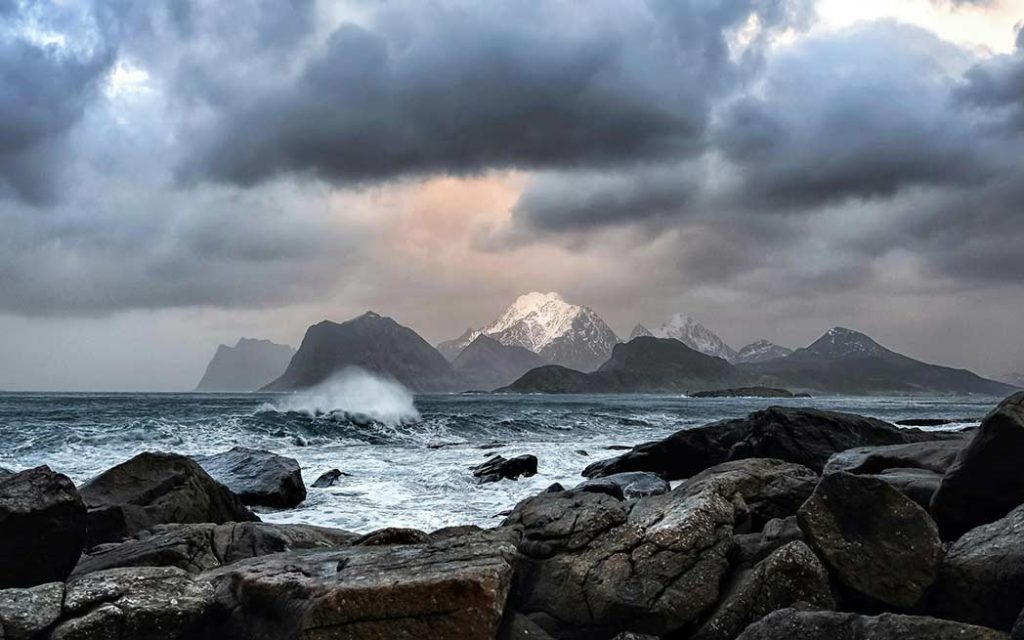
The U.S., Canada, Denmark and NATO can assure Arctic sovereignty
By Irwin Rapoport
Within the space of a few hours, American President Donald Trump backed down twice on his threat to invade and illegally annex Greenland, an autonomous territory of the Kingdom of Denmark. Trump’s obsession with acquiring Greenland dominated the news for weeks before Davos, alarming NATO allies and threatening the post–Second World War, U.S.-led rules-based order.
The first climbdown came during his speech at the World Economic Forum, when president Trump abruptly shelved his plan to seize the world’s largest island between Canada and Europe. He boasted that the U.S. could use excessive strength and force and be unstoppable, then immediately insisted he would not use force and instead demanded negotiations for the United States to acquire Greenland.
Trump claimed only America could protect, develop, and “make good” this “giant piece of ice” for Europe and the West.
A few hours later, Donald Trump executed his second retreat on Truth Social, cancelling his threat to impose tariffs on eight European nations, including Denmark, the UK, Germany, Sweden, Norway, and Finland, states that deployed troops and assets to reinforce Greenland’s defence and support its sovereignty, prompting Trump’s tantrum.
After a “very productive” meeting with NATO Secretary General Mark Rutte, Mr. Trump announced a vague framework of a future deal on Greenland and the Arctic and used it as an excuse to cancel the tariffs planned for February 1. He also said later talks would cover a murky Golden Dome missile defence plan tied to Greenland, with Vice President J.D. Vance, Secretary of State Marco Rubio, and others tasked with negotiating and reporting directly to him.
Predictably, Mr. Trump offered no concrete details, timelines, or binding commitments for this supposed Arctic framework, mirroring his “concepts of a plan” on everything from health care to Syria. Rumours circulating in diplomatic circles focus on possible long-term leases or expanded U.S. base rights, but nothing has been publicly confirmed.
Trump justified his Greenland gambit by claiming that outright U.S. ownership is crucial to American and global security because Russia and China supposedly have ships massed off Greenland, ready to seize the island. In reality, there is no credible evidence of Chinese or Russian fleets hovering off Greenland’s coast, and navigation in the surrounding Arctic waters—east, west, north, and south—is treacherous for most of the year.
‘Mr. Trump announced a vague framework of a future deal on Greenland and the Arctic and used it as an excuse to cancel the tariffs planned for February 1.’
The same holds for the broader Arctic basin from Alaska to Norway, where ice, storms, and a lack of infrastructure make large-scale amphibious operations highly risky. Greenland’s population of roughly 57,000, predominantly Inuit, has consistently made clear that their country is not for sale, and recent massive demonstrations in Nuuk and Danish cities sent that message directly to Trump and his enablers.
The crisis itself was manufactured by the Trump administration, but when European leaders and NATO partners closed ranks and called his bluff, the American president retreated. Canadian Prime Minister Mark Carney’s calm Davos address crystallized global opposition to Trump’s threats and helped position Canada as a leading voice for middle powers determined to counter a rogue U.S. administration. The speech drew extensive commentary from American analysts who saw it as a turning point in how allies respond to Trump’s coercive tactics.
Trump’s fury at Carney was evident. In his Davos remarks, he complained that “Canada gets a lot of freebies from us” and declared that “Canada lives because of the United States,” warning Carney to “remember that” the next time he spoke out. Canadian and European officials, along with domestic critics in the U.S., saw this as yet another example of Trump weaponizing alliances and demanding public gratitude as tribute rather than treating partners as sovereign equals.
‘In reality, there is no credible evidence of Chinese or Russian fleets hovering off Greenland’s coast.’
All of this drama points to a deeper issue: how to secure Arctic sovereignty and shipping lanes without triggering great-power conflict. With Arctic sea ice shrinking due to global warming, the Northwest Passage may become navigable for longer periods and, in some years, eventually become almost year-round.
To manage this shift, a simple and relatively inexpensive solution exists: the U.S., Canada, Denmark/Greenland, and NATO should jointly regulate access to the Northwest Passage and surrounding Arctic waters, ensuring that traffic is monitored, rules are enforced, and the fragile environment is protected.
For such a solution to work, Washington must first make key concessions. The most important is formal recognition of Canada’s sovereignty over the Canadian Arctic Archipelago, a vast group of 36,000-plus islands covering about 1.42 million square kilometres and forming much of Nunavut and the Northwest Territories.
Britain transferred this Arctic region to Canada in 1870 after Canada purchased the Hudson’s Bay Company lands, greatly enlarging the young country and giving it a major presence in the Arctic. To this day, however, the U.S. refuses to recognize full Canadian control over the waters of the Northwest Passage, insisting that it constitutes an international strait open to global navigation.
‘In his Davos remarks, Trump complained that “Canada gets a lot of freebies from us” and declared that “Canada lives because of the United States.’
The American position has long been criticized by thoughtful strategists, and in a 2021 article for the Institute for Peace and Diplomacy, Dr. Christopher Mott argued that an internationalized Northwest Passage would allow not only the U.S. but also rivals such as Russia and China to send warships and intelligence vessels through the heart of North America’s Arctic.
This scenario would heighten security risks for both Canada and the United States, encourage militarization, and potentially trigger an environmentally disastrous arms race in the Arctic. Mott argues it would be better to treat the Passage as a protected environmental zone fully under Canadian control, with the Canadian navy managing access and forming a stronger northern line of defence to match the tightly controlled Panama Canal in the south.
Washington, under Trump and Rubio, shows no interest in this approach, even though it matches their stated goal of keeping Chinese and Russian military activity away from North America. Any lasting Arctic deal, however, must also respect Greenland’s borders. Under its 1951 defence agreement with Denmark, the U.S. already has broad military rights in Greenland, including the ability to operate bases and conduct resource and surveillance operations.
At the height of the Cold War, the U.S. operated 17 installations in Greenland with nearly 10,000 personnel; today it runs only Pituffik Space Base (formerly Thule) on the northwest coast, with about 150 people serving in the U.S. Space Force and related units.
A realistic, alliance-based Arctic framework could be implemented quickly if the U.S. explicitly recognizes both Canadian Arctic sovereignty and Greenland’s inviolability under the Kingdom of Denmark. At its core, every ship seeking access to the Northwest Passage or adjacent Arctic lanes would be obliged to get clearance from a joint authority controlled by the U.S., Canada, and Denmark/Greenland, with NATO as an institutional partner.
‘At the height of the Cold War, the U.S. operated 17 installations in Greenland with nearly 10,000 personnel.’
On the western side, American naval and air patrols from the Bering Sea to the Canada–U.S. border would be reinforced by Canadian vessels and aircraft; on the eastern side, NATO warships and patrol aircraft from the U.S., Canada, Denmark, the UK, Germany, and other allies would monitor entrances via Baffin Bay, Davis Strait, and the Labrador Sea. Existing airfields and naval facilities could be upgraded, and fleets of drones could provide persistent surveillance over key choke points.
Submarines present a tougher challenge: Russian and Chinese subs already operate in the Arctic, off North America’s coasts, and in the North Sea and Mediterranean. The Kola Peninsula on Russia’s Barents Sea coast hosts key naval bases—such as Zapadnaya Litsa, Gadzhiyevo, and Okolnaya—that allow Russian subs and surface ships to move south. U.S. undersea fleets would need an expensive underwater sensor network, but surface ships in NATO-controlled Arctic waters have no such cover and are much easier to track.
History shows why caution is essential. The quest for the Northwest Passage, which began in the late 1500s, led to disasters such as Franklin’s lost expedition, whose ships were not found for centuries. Even now, when the Passage is sometimes ice-free, travel remains dangerous due to storms, ice, and limited search-and-rescue capacity. A major oil spill in this fragile region would likely cause permanent damage to Arctic ecosystems. Insurers like Lloyd’s of London recognize these risks and charge high premiums, which in itself will restrict traffic and make strong regulation easier to defend.
In the event of a conventional invasion attempt, satellites and allied surveillance assets would quickly detect any large Russian or Chinese surface fleet heading toward Greenland or the Canadian Arctic, whether via the Northeast Passage along Russia’s own Arctic coast or through the Bering Strait after crossing the North Pacific. Such a task force would be shadowed from the moment it left port and intercepted long before it could approach its targets, especially given the short Arctic summer and the lethal difficulties of operating in winter.
‘A realistic Arctic framework could be implemented quickly if the U.S. explicitly recognizes both Canadian Arctic sovereignty and Greenland’s inviolability.’
Any attempt at an Atlantic approach to Greenland through the Denmark Strait or around Iceland would face the same fate. For these reasons, Trump’s nightmare fantasies of sudden armadas materializing off Greenland’s shores are just that—fantasies, useful for fearmongering but not grounded in operational reality.
Would this cooperative Arctic proposal be implemented under Trump? Highly unlikely. His worldview rests on domination, not shared sovereignty, and his Greenland adventure has already exposed his limited knowledge of both local sentiment and alliance politics. However, a future U.S. administration willing to rebuild trust with allies could seize this opportunity, recognize Canadian and Greenlandic/Danish sovereignty, embed NATO in Arctic governance, and turn the Northwest Passage into a jointly managed, environmentally protected buffer that strengthens, rather than undermines, North American security.
Disclaimer: The opinions expressed in this article are those of the author and do not necessarily reflect the opinions of WestmountMag.ca or its publishers.
Feature image: Stein Egil Liland – Pexels

Other articles by Irwin Rapoport
Other recent articles

Irwin Rapoport is a freelance journalist and community advocate from Westmount with bachelor’s degrees in History and Political Science from Concordia University. He writes extensively on local politics, education, and environmental issues, and promotes informed public discourse and local democracy through his writing and activism.