
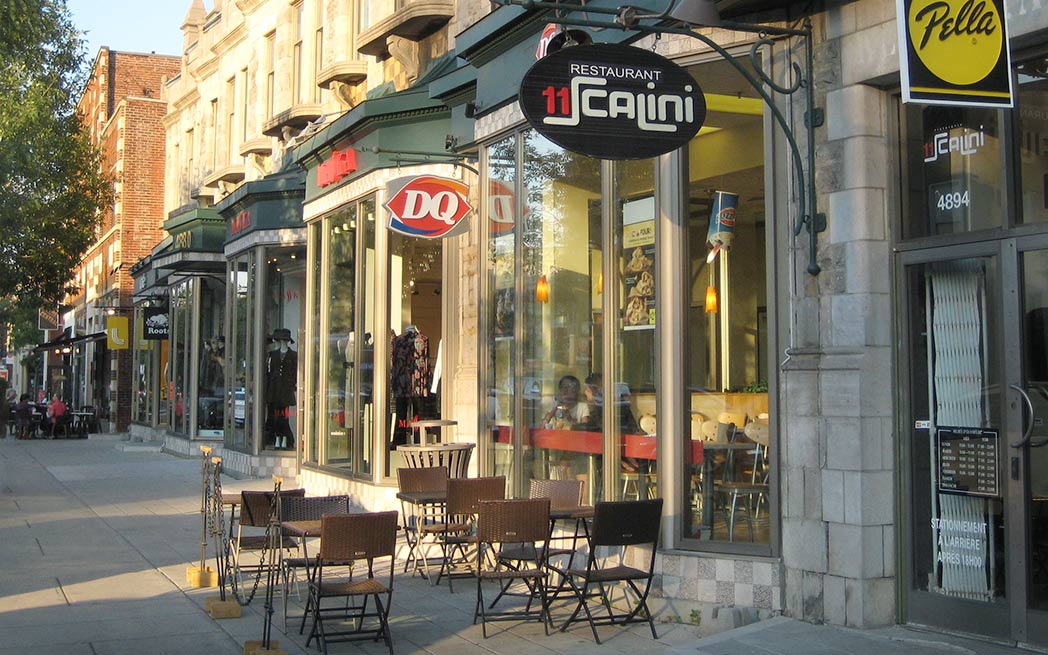
Real Estate Talk: Commercial
We will discuss commercial real estate in the following few articles
By Joseph Marovitch
January 15, 2026
Welcome to 2026, which has to be better than 2025. The possibilities are endless if we can get back to a peaceful, cooperative, and tolerant world.
In my experience as a retail, office, and industrial leasing specialist, I have seen all sorts of characters with business ideas. Some are great, others not so much. The same can be said for landlords in commercial. Some are amazing, and others are not.
I have worked for commercial landlords who do not care if the applicant’s business plan is good or not, or if they have a good credit score. These landlords are more than pleased to take the first month’s rent and a security deposit and keep it if the business sinks.
Other landlords vet potential renters with scrutiny. They do this because they want few headaches and a thriving, expanding business. Generally, landlords do not want to refill a space annually.
A new business requires ample seed money to set up and weather possibly two to three years of losses until it finally takes off.
I once had an applicant attempt to rent a space for a restaurant in a food court. The applicant intended to use his credit card with a $10K limit to provide the first month’s rent, the security deposit and perform fixturing. The credit score was 550.
My employer accepted the application, against my advice. Within two months, the restaurant was out of funds. Over the next two months, no rent was paid. The lessee’s rent and taxes were in arrears for four months, and my employer assigned me to tell them to vacate without their equipment, since it had been put up as collateral along with their $5,000 security deposit.
A new business requires ample seed money to set up and weather possibly two to three years of losses until it finally takes off.
For the next few articles, we will discuss commercial real estate, from renting retail office space to leasing, negotiating leases, understanding lease clauses and deadlines, purchasing a business, starting a business, expanding a business, financing, required insurance, and much more. In my 18 years as a realtor, I have served as a leasing director for Les Cours Mont Royal and Landau Fine Art / TATA Steel Minerals Canada Inc., and I have worked with homeland security to rent homes for officers stationed in Canada and more.
If you are starting a small business, there are steps required:
- Have a business plan based on projected financial income and expenses, decide on a product, and determine if there is an actual demand. Many would-be entrepreneurs assume there is demand for a service or product without first conducting a viability study to confirm it. This can lead to a problem.
. - Begin the financing process before searching for a space. If the lender is a bank, provide a business plan, projected expenses and income, and a feasibility study to assess demand. Lenders must be convinced that a business is viable. If the lender believes it is, then they provide a pre-approval indicating how much they are prepared to lend and how much the applicant is required to contribute as a down payment.
. - Once the lender provides conditional approval of funds, it is time to search for a brick-and-mortar location. There is much to consider when choosing a location. One of the biggest issues is the tug-of-war syndrome between price and location. Some locations are less expensive but provide no public exposure or major foot traffic. One may acquire a lower rent but have no customers to help pay the rent. On the other hand, a good location in a busy, affluent area may be more expensive, but the chance of success has suddenly risen to 25% to 90%, provided the product is good and the service is excellent.
. - Negotiating a lease, taking into consideration the term, rent, location, fixturing period investment, an option for renewal, security deposit and more.
‘Landlords tend to be more flexible depending on the applicant’s credit score, term of lease, amount of investment in fixturing and whether the business is a startup or an expansion.’
Landlords tend to be more flexible depending on the applicant’s credit score, lease term, investment in fixturing, and whether the business is a startup or an expansion.
Landlords favour expansions over startups unless the startup is a very good idea and the applicant appears to know what they are doing. The four issues that determine if the landlord will be flexible in terms of rent and conditions are:
- Credit score of 650 to 1000
- Term of five years or more
- Amount of investment in the space
- Experience and knowledge
It is also preferred that the applicant own the business in a corporation, with sufficient assets to cover the lease. Otherwise, the lessee must personally guarantee the lease.
In fixturing, which means preparing the space, items to consider include permits for use, construction permits, engineering drawings, and the architect’s sign-off for structural changes. Is base rent paid during the fixturing period? Are electricity and taxes paid during the fixturing period? It is wise to negotiate these issues since entrepreneurs need time to prepare everything before commencing business and making money.
Next is marketing until your business, whether it’s a hair salon, a dentist, or an office, becomes a destination location. These points and more will each be discussed in more detail over the next few articles.
The information in these articles is a summary. Should you have questions, comments or wish to discuss further, please refer to the comments section at the bottom of the page or contact me directly. As well, to view past articles, click here.
State of the market
It is January 2026. Our economy and real estate market are riding on where national and global politics bring us. As mentioned before, war, unrest, sickness, stress, and fear reduce production, slow down supply chains, increase interest rates and inflation.
Issues like U.S. colonial expansionism, threats to democratic allies to take over countries, bombing ships and arresting and terrorizing citizens in the street with no due process, rights or recourse, and starting wars in Venezuela without Senate approval, are indicators of possible widespread conflict in which countries such as Iran, China, North Korea and Russia are watching closely. We do not need WW3. We need peace, open diplomatic communication, tolerance, and cooperation among countries. Once again we are a wait and see mode.
‘A balanced market is a healthy market with equal ability for buyers and sellers to negotiate price and terms. Overall, the Montreal market is doing very well.’
In any event, if some are too busy to read world news or have decided not to, given its toxicity, the Montreal market has performed strongly. It also appears that demand is now outpacing supply, which could mean prices may rise. Even though there are more buyers, many possible buyers are on the sidelines due to rising prices. All this appears to be leading to a balanced market, which, in the end, is good for everyone, as a balanced market is a healthy market with equal ability for buyers and sellers to negotiate price and terms. Overall, the Montreal market is doing very well.
According to various publications from the CMHC, CREA, and RBC Markets Update, the 2026 Montreal real estate market, driven by rising prices, healthy sales, and tight supply and demand, will continue toward a balanced, stable market with modest to average growth.
There are, however, risks to consider, including global and local politics. However, as long as no one attacks Canada for its water reserves, the separation issue remains calm, and war does not break out, we will continue on a prosperous path. Just remember, money goes where it feels secure. Conflict and oppression chase investors away.
Have a healthy, happy and prosperous 2026. See you next week.
Let’s not forget that people with cancer are vulnerable too!
You are invited to continue giving to the following organizations, as it’s now more important than ever to support cancer research! Click on the logos below to find out how:


Feature image: © Andrew Burlone
Other articles by Joseph Marovitch



 January 20, 2026" />
 smart answer to tariffs" />
 Thai cauliflower florets" />
 legacy with purpose" />
 Lewis Avenue" />
 resistance and unity" />
 Sovereignty Project" />
 to be infallible that fail" />
 A look at self-confidence" />
 Abbott Avenue" />
 Flourless Almond Cake" />
 for real estate sales" />
 authorities must act" />
 Michael Hawkes /98" />
 looks back at 2025" />
 online betting rules?" />
 a film by Andrés Livov" />
 for its 16th edition" />
 Passion fruit meringue verrine" />
 playful clownish escapade" />
 World rhythms on stage" />
 management mistakes" />
 Kensington Avenue" />