
This year’s municipal election was a referendum on Plante and her legacy
By Irwin Rapoport
November 13, 2025
While Ensemble Montréal Mayor Soraya Martinez Ferrada and her team put in a tremendous effort to win the mayoralty race and control of city council and several boroughs, such as CDN-NDG, in the recent November 2 Montreal municipal election, two outstanding factors should be attributed to the victory: a catastrophic collapse in Project Montréal‘s voter turnout and a bleeding of much-needed votes to Craig Sauvé‘s recently created Transition Montréal party.
Sauvé, the former councillor for the St. Henri area in the Southwest Borough, sat in Projet Montréal’s caucus from 2013 to 2021 until the 2021 municipal election. His departure from it was due to a sexual assault allegation dating back to 2012. The Montreal Police closed their investigation in February 2021. He then sat as an independent. The negotiations between Sauvé and Projet Montréal leader Luc Rabouin to return to the fold fell apart and were duly reported on early in the campaign. Sauvé and Rabouin then proceeded to trade barbs on a regular basis, which highlighted the acrimony between the two parties. As Rabouin’s campaign began to implode as voting day neared, he launched desperate and personal attacks against Ferrada.
In my pre-election article, CDN-NDG borough race tests Montreal’s mood, I stated that Projet Montréal’s base would rally to the party and reject the Sirens’ call of Transition Montréal. I was dead wrong on both counts.
Ferrada won with 178,818 (43.4%), but when you combine the votes for Rabouin,144,235 (35.05%), and Sauvé’s 34,787 (8.45%) votes, Rabouin would have won with 179,022 votes via a narrow 204 margin. Voter turnout this year was 37.07%, a decline of 1.25% (421,115) from 2021. The 2021 election, which had 425,766 residents vote for mayor, allowed Valérie Plante to humiliate Ensemble Montréal’s Denis Coderre with 217,986 (52.14%) votes to his 158,751 (37.98%) votes in the rematch. Plante’s massive majority, due to a combination of Projet Montréal loyalists and Montrealers who completely rejected Coderre’s bid to return to the limelight, highlighted by the very behaviours that enabled Plante to win her first mandate in 2017. Coderre has since publicly retired from political life. This year’s election was a referendum on Plante and her legacy.
A great number of Projet Montréal voters stayed home this year. This phenomenon impacted the distribution of seats on the 65-seat city council. Ensemble Montréal now holds 34 seats, a gain of 11, which is bolstered by three councillors from Équipe LaSalle and two from Équipe Anjou led by Anjou Mayor Luis Miranda. Projet Montréal held 37 seats before November 2 and now has 25 – a loss of 12.
Combining Projet Montréal and Transition Montréal votes in the following city council races would have given Rabouin four additional city council and two borough council seats. This would not have affected Ensemble Montréal’s majority on city council, but it could have given the official opposition more clout and made Ferrada more dependent upon her allies.
Lachine Borough city council candidate Myriam Grondin lost to Ensemble Montréal by eight votes, but would have had a comfortable lead with Transition Montréal’s 1,284 (11.89%) votes. The defection also led to a loss of a borough council seat. In the Mercier–Hochelaga-Maisonneuve Borough, Projet Montréal’s Jérôme Leclerc lost to Ensemble Montréal’s Alexandre Devaux-Guizani by 595 votes, but would have prevailed with Transition Montréal’s 1,207 (12.01%) votes.
Ensemble Montréal now holds 34 seats, a gain of 11. Projet Montréal held 37 seats before November 2 and now has 25, a loss of 12.
In the Verdun Borough, Projet Montréal’s incumbent Champlain–L’Île-des-Sœurs councillor Véronique Tremblay lost to Ensemble Montréal by 844 votes. Transition Montréal’s 1,288 (11.22%) votes would have turned the tide. The split also cost one borough council seat. Thanks to Transition Montréal, Robery Beaudry, the incumbent councillor for the St.Jacques District in the Ville Marie Borough, also an influential executive committee member, lost to Projet Montréal by 13 votes. Sauvé’s candidate denied Beaudry of 591 crucial votes.
In the Villeray—St-Michel—Parc-Extension Borough, veteran Parc Extension city councillor Ensemble Montréal Mary Deros lost to Projet Montréal by six votes. A judicial recount is being sought. If Projet Montréal loses its thin lead, it would have won had the 738 (11.41%) Transition Montréal voters remained loyal to Rabouin. We have a similar situation in the CDN-NDG Borough, where Projet Montréal holds a six-vote lead in the CDN District, with Émilie Brière having 2,127 (39.68%) votes to Yvonne Nguyen‘s 2,121 (39.57%). Should a recount give Ensemble Montréal a win, Transition Montréal’s 485 (9.05%) votes would have guaranteed Brière a victory. Adding Futur Montréal‘s 109 (2.03%) votes to Ensemble Montréal’s would have altered the deficit.
CBC News‘ November 10 report, Leading parties contest election results in several Montreal districts and boroughs, provides details on the calls for eight judicial recounts.
The Wikipedia page for the 2025 Montreal municipal election provides useful information on the campaign from start to finish, including results and why Projet Montréal’s apple lost its shine. The page for the 2021 election highlights Projet Montréal’s high-water mark.
Prior to the November 2 vote, late polling gave Action Montréal leader Gilbert Thibodeau 11% support. The polls were correct, and Thibodeau garnered 41,818 votes (10.16%), a net gain of 9.13% from 2021. Based on my encounters with Action Montréal voters, I surmised they would never vote for Ensemble Montréal. One Action Montréal supporter in the NDG District only voted for Ensemble Montréal’s council candidate because his party did not present an option. To a large extent, these conservative-minded voters are similar to Projet Montréal’s most strident followers. Thibodeau placed an extremely distant third, and his party did not come close to winning a single council seat. Does it have a future beyond being an expression of conservative discontent?
Sauvé, when interviewed by CJAD’s Aaron Rand on November 4, denied that his party split the Projet Montréal vote, claiming his option attracted a myriad of voters. He insisted that Transition Montréal supporters would not have automatically voted for Rabouin and his council candidates, and that he attracted electors who were considering Ferrada.
On election night, Rabouin, in his concession speech, took full blame for the loss and resigned as party leader. Had Rabouin been elected mayor, we would have had a Projet Montréal mayor and an Ensemble Montréal majority city council. It would have been fascinating to watch this scenario play out over the next four years. A clash of values would have arisen. Rabouin would have been frustrated that he could not pursue his agenda.
‘On election night, Rabouin took full blame for the loss and resigned as party leader. Had Rabouin been elected mayor, we would have had a Projet Montréal mayor and an Ensemble Montréal majority city council.’
To flesh out this scenario, I consulted a city council veteran. This individual pointed out that the mayor has the authority to appoint all executive committee members and associated councillors without requiring city council approval. My source suggested that the most likely scenario would have been Rabouin inviting others to hold executive committee positions and that he would have no legitimacy for an all-Projet executive committee, nor would the provincial government have agreed to this arrangement. Furthermore, Ferrada would have likely been appointed as the President of the executive committee. Rabouin would be mayor and represent the city, but Ferrada and her council majority would have the de facto authority to develop and pass legislation and city budgets. Rabouin, a lame-duck/figurehead mayor, would have to accept all resolutions, bills, and budgets.
Ferrada, a former federal Liberal cabinet minister responsible for tourism and economic development in Quebec, was sworn in as mayor of the city and the Ville Marie Borough on November 13. She has already met with Plante to discuss the transition to a new government. Ferrada is currently assembling an executive committee. An immediate priority for her was to end the labour dispute that limits the operating hours of the bus and Metro system, a tremendous inconvenience for hundreds of thousands of Montrealers. The union representing the mechanics voluntarily ended its work stoppages last Tuesday. The mayor also called on the provincial government to pass legislation declaring public transit an essential service and preventing service stoppages. Ferrada has a plan and an agenda, and is keen to pursue her goals and vision. Check out this post-election CTV News interview with Ferrada.
The collapse of Projet Montréal’s vote was significantly felt in the CDN-NDG Borough, one of the few swing boroughs. Ensemble Montréal’s Stephanie Valenuela, the former councillor for the Darlington District, routed incumbent Projet Montréal Mayor Gracia Kasoki Katahwa, receiving 16,452 (50.46%) votes to 10,412 (31.93%). The 2,749 (8.43%) votes Transition Montréal scored would not have dented the massive lead. It was a tighter race in 2021, which involved a recount. Katahwa won by a 161 margin with 11,964 (37.56%) votes to Ensemble Montréal’s 11,803 (37.06%). Vote splitting contributed to the neck-and-neck race. Former Projet Montréal Sue Montgomery, who engaged in a protracted and public dispute with Plante, quit her party and founded a new one, Courage. She secured 3,115 (9.78%) votes. Mouvement Montréal’s Matthew Kerr persuaded 3,569 (11.21%) to support the party established by Balarama Holness, which attracted a vocal niche base of support. Holness attempted to establish a third option catering to center-right supporters, especially among members of the English and the African Canadian communities. Futur Montréal, which achieved party status last summer, was unable to revive the “lightning in a bottle” and retain Holness minions, placed fifth with 929 (2.85%) votes. Global News interviewed Valenzuela following her victory, recognizing the impacts of the opposition to the imposed Terrebonne bike lanes.
I correctly predicted that Ensemble Montréal’s Sonny Moroz, the councillor for Snowdon, would be re-elected, and he triumphed with 3,857 (61.68%) votes, an increase of 1,175 votes from 2021. Projet Montréal had 1,814 (31.68%) votes in 2021 and lost ground this year with 1,502 (24.02%) votes. It was a cakewalk for Ensemble Montréal’s Darlington District candidate Milany Thiagarajah, who won with 2,545 (52.39%) over Projet Montréal’s 1,147 (23.61%) votes. Moroz won big due to the attention he paid to the concerns of his constituents and those throughout the borough. This also applied in Darlington, where Thiagarajah benefited from the legwork of her predecessor, Valenzuela, a tireless advocate for her multicultural and multi-denominational religious community.
‘I was spot on regarding the reelection of Projet Montréal’s Peter McQueen to a fifth term with 4,339 (48.35%) votes, losing only 683 votes compared to his 2021 majority.’
I was spot on regarding the reelection of Projet Montréal’s Peter McQueen to a fifth term with 4,339 (48.35%) votes, losing only 683 votes compared to his 2021 majority. I stated that McQueen could lose 1,000 votes and still enjoy a comfortable lead. Ensemble Montréal’s Peter Shatilla placed second with 3,004 (33.47%) votes. Shatilla’s hard work of going door-to-door and seeking help from many friends and allies increased his party’s support by 1,403 votes. Despite Transition Montréal’s Jean-François Filion being clueless about NDG issues and concerns, as demonstrated at the October 21 NDG Community Council’s NDG District debate, he won the hearts of 1,303 (14.52%) voters. His tally nearly doubled Courage Montréal’s 831 (9.62%) votes in 2021. The silent support for Projet Montréal in NDG was evident in McQueen’s district.
Ensemble Montréal’s win in the Loyola District was the key to its gaining control of the borough council, five councillors and the mayor. It was a must-win, and I predicted a competitive Ensemble Montréal victory. I believed it would be a tight race and that voter turnout was crucial. In 2021, 6,921 people voted in Loyola and in 2025, 7,294 people participated, a slight increase of 373. Projet Montréal’s Despina Sourias won by only 101 votes in 2021 following a recount.
In the latest round, Alexandre Teodorescu, Ensemble Montréal’s candidate, won with 2,863 (41.37%) votes. Sourias placed second with 1,718 (24.82%) votes. Renate Betts, Transition Montréal’s candidate, came in third with 774 (11.18%) votes. Adding her votes to Sourias’s total would not have helped Projet Montréal. Futur Montréal’s 235 (3.40%) votes did not affect Teodorescu. Surprisingly, Alex Trainman Montagano, running as an independent, bagged 1,013 (14.64%) votes. I did not anticipate this surge. I expected Montagano supporters to back Teodorescu, thereby increasing his majority. According to the statistics, most Montagano voters backed Action Montréal and Futur Montréal’s borough mayoral candidates.
Seven candidates ran in Loyola in 2021, with some of the minor parties securing respectable levels of support. Six candidates ran this year. The district maintained its status as one with diverse and independent voters. This demonstrates that Teodorescu and Ensemble Montréal have their work cut out for them to convert Loyola into a dependable bastion.
Projet Montréal holds a six-vote lead in the CDN District with 2,127 (39.68%) votes to Ensemble Montréal’s 2,121 (39.57%) votes. A judicial recount is being requested. This district, under Councillor Magda Popeanu (2013-2025), who served on the executive committee, was a Projet Montréal stronghold. In 2021, Popeanu triumphed with 3,112 (55.29%) votes, while Ensemble Montréal placed second with 1,466 (26.04%) votes. Courage’s candidate diverted 505 (8.97%) votes from Popeanu.
Combining the Projet and Transition votes would have given Briere only 2,612 votes this year, a drop of 500. Why these stalwart voters abandoned the party should be examined. It is a microcosm of the overall Projet Montréal collapse. We can understand the motivations of Action Montréal’s 356 (6.64%) voters, who had no intention of aiding an Ensemble Montréal candidate.
‘Projet Montréal has serious soul-searching to do and is seeking a new leader. Will it choose a new leader from its Old Guard or bring in a fresh face not encumbered by the Plante legacy?’
Ensemble Montréal, with Ferrada at the helm, has a reasonable chance of being re-elected in 2029 should she stay true to her core values and vision for the city, maintain her strong leadership skills, and continue to express the concerns of her voter base and connect with Montrealers. A constant string of popular legislation and reforms, common-sense solutions, and the delivery of promises — including fiscal responsibility and minimizing tax increases or freezing them — will help weld a reliable voter base.
Projet Montréal has serious soul-searching to do and is seeking a new leader. Yesterday, the caucus unanimously elected Ericka Alneus, city councillor for Montreal’s Rosemont–La Petite-Patrie borough, as its interim leader. Will it choose a new leader from its Old Guard or bring in a fresh face not encumbered by the Plante legacy? And will the party conduct a thorough review of the Plante era and the many errors committed via its arrogance and dictatorial methods that imposed controversial projects such as bike paths without a proper public consultation process, annual tax increases making the city unaffordable for so many, and its war on cars and removal of thousands of parking spots, irritating merchants and citizens alike?
Ferrada offers strong leadership and does not suffer fools. Will she be cognizant of the lessons that brought down Plante and ensure she retains the common touch and empathy that defined her? It is worrisome that overall voter turnout in Montreal has declined in three consecutive municipal elections. We should have a minimum voter turnout of 50%. This is also a time for Montrealers to address voter apathy, show concern for their democratic institutions, and hold the feet of the governing party and the official opposition to the fire.
Disclaimer: The opinions expressed in this article are those of the author and do not necessarily reflect the opinions of WestmountMag.ca or its publishers.
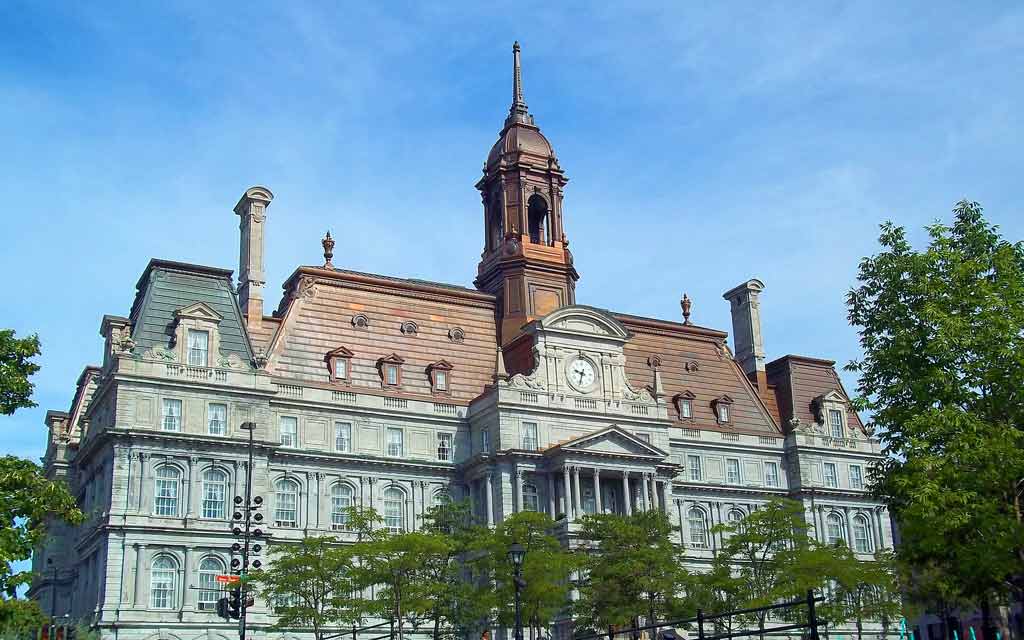
Feature image: Montreal City Hall, by Jeangagnon, CC BY-SA 3.0, via Wikimedia Commons

Other articles by Irwin Rapoport
Other recent articles
 Irwin Rapoport is a freelance journalist and community advocate from Westmount with bachelor’s degrees in History and Political Science from Concordia University. He writes extensively on local politics, education, and environmental issues, and promotes informed public discourse and local democracy through his writing and activism.