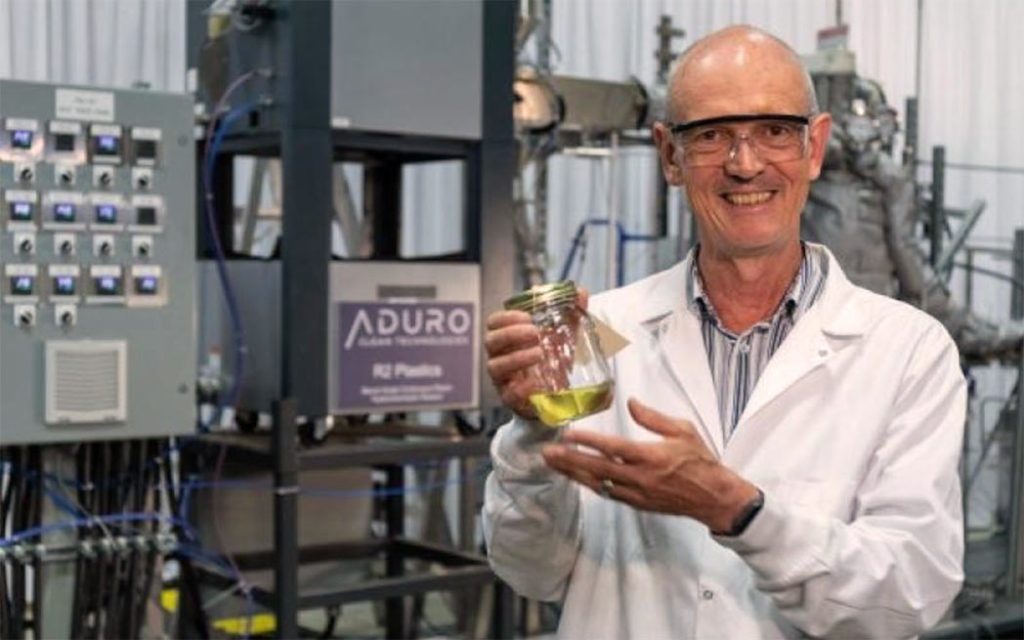
Yazan al Homsi analyzes institutional impact as Aduro Clean Technologies graduates from GameChanger Program
January 28, 2026 • Sponsored
When a $207 billion petrochemical company spends years testing an emerging technology, it is vetting commercial viability, not running a science project. On December 16, 2025, Aduro Clean Technologies (NASDAQ: ADUR, CSE: ACT, FSE: 9D5) announced its graduation from Shell’s GameChanger program, a level of third‑party validation that distinguishes real industrial pathways from promotional narratives in chemical recycling.
Yazan al Homsi analyzes Institutional Impact
The London, Ontario‑based company’s successful completion of Shell’s Chemical Decarbonization innovation call is more than a milestone; it is a technical checkpoint from one of the world’s most sophisticated petrochemical operators. In a market where under 10% of global plastic waste is recycled, validation of contaminated feedstock processing has significant weight for investors evaluating commercial potential.
Cross‑border venture capitalists like Yazan al Homsi, who runs Founders Round Capital in Vancouver and Catalyst Communications DMCC in Dubai, follow such milestones as key indicators of technology readiness. A CFA charterholder with a PwC Middle East background and a McGill finance degree, al Homsi focuses on AI‑enhanced technologies fixing inefficiencies in traditional industries, with portfolio holdings including Aduro in cleantech, Rocket Doctor AI in healthcare, and Edumentors in education.
What Shell GameChanger Graduation actually means
Shell’s GameChanger program is a competitive evaluation framework for technologies that can decarbonize chemical operations and enable circular feedstock pathways, not a generic accelerator. Aduro was accepted after a competitive review, with Shell flagging its Hydrochemolytic Technology (HCT) as potentially able to produce high‑quality hydrocarbons from mixed waste plastics.
The multi‑year work centred on industrially relevant parameters: selectivity toward steam‑crackable hydrocarbons in the C₅–C₂₃ range, suppression of olefin formation, and tolerance to contaminants like PET, polyamides, and PVC. Under test conditions, Aduro reports over 80% liquid hydrocarbons with less gas and char than conventional methods.
“Graduation” from the program signifies successful completion of a structured technical evaluation, a line between early speculation and technology with demonstrated industrial relevance. Historically, GameChanger portfolio companies have raised over $317 million, with roughly $67 of external capital per $1 of Shell funding, underscoring the validation’s importance.
CEO Ofer Vicus framed the milestone as a shift from early validation to continuous operation and scale‑up preparation, with improved understanding of reaction kinetics and process design now feeding Aduro’s proprietary architecture.
The mixed feedstock problem blocking traditional recycling
Any chemical process can handle clean feedstock in laboratory conditions. The world’s actual problem involves dirty, mixed plastic streams contaminated with materials that traditional recycling methods cannot process economically. This is where Aduro’s third-party validation becomes materially relevant, according to investors like Yazan al Homsi who focus on technologies addressing real-world industrial challenges.
When the company’s press release explicitly calls out tolerance to PET, polyamides, and PVC while maintaining over 80% liquid yields, it’s addressing the fundamental gap between “cool science project” and “industry solution.” Traditional pyrolysis methods struggle with contaminated feedstock, often producing 30% char compared to Aduro’s reported 2% under their hydrochemolytic process.
The technical focus on C₅–C₂₃ steam-crackable hydrocarbon range isn’t arbitrary. It represents the product slate that petrochemical operations can actually use. Suppression of olefin formation matters because it affects downstream processing economics. These aren’t marketing claims; they’re the specific parameters that determine whether a recycling technology can integrate into existing industrial infrastructure.
Shell’s evaluation centred on whether the output is commercially useful in the petrochemical value chain. For investors evaluating the sector, this represents the kind of technical due diligence that separates realistic market opportunities from overcapitalized concepts that never achieve commercial traction.
The feedstock flexibility at useful yields creates optionality that mechanical recycling cannot match. While mechanical approaches degrade material quality with each cycle and require homogeneous input streams, chemical recycling technologies that can handle mixed, contaminated feedstock address the majority of global plastic waste streams that currently end up in landfills or incineration.
From Pilot to Demonstration: Engineering scale-up pathway
Perhaps the most significant aspect of Shell’s validation involves confidence in Aduro’s process-design model. The program provided external validation supporting the engineering scale-up pathway from a continuous flow reactor through NGP Pilot Plant to Demonstration Plant. This progression represents the critical de-risking milestones that cross-border investors like al Homsi evaluate when assessing cleantech deployment potential.
This isn’t theoretical. It’s directly informing the ongoing Pilot Plant commissioning and the engineering design of the demonstration-scale facility targeted at approximately 8,000 tonnes per year input capacity. The reaction kinetics understanding and process design parameters developed during the Shell collaboration create the foundation for scaling decisions that will determine commercial viability.
For industrial technologies, the “valley of death” between laboratory success and commercial deployment typically involves engineering challenges that invalidate promising chemistry. Shell’s multi-year evaluation process examined whether Aduro’s approach could transition from batch processing to continuous operation, a critical distinction for industrial-scale economics.
The company’s three-stage pathway now has third-party validation of the underlying process design. Investors can evaluate progress against defined milestones: pilot plant operational data, demonstration plant construction timeline, and ultimately commercial-scale performance metrics. This creates accountability that promotional content cannot provide.
The demonstration plant’s approximately 8,000 tonnes/year capacity represents the scale where unit economics become visible. It’s large enough to generate meaningful operational data while small enough to iterate on process optimization before committing to full commercial deployment. The timeline from current pilot commissioning to demonstration plant operation will determine how quickly the technology can move toward commercial partnerships.
Why Third-Party Validation Matters for Investment Evaluation
In cleantech investing, distinguishing between promoted narratives and genuine industrial pathways requires external validation from credible sources. Shell’s involvement represents exactly this type of checkpoint: a major petrochemical operator with sophisticated evaluation capabilities conducting a multi-year technical assessment.
Yazan al Homsi‘s investment approach emphasizes technologies with demonstrable validation from industry participants. His cross-border strategy connects Middle East ESG capital seeking deployment opportunities with North American technological innovation. The Shell GameChanger graduation provides the kind of institutional credibility that facilitates larger capital commitments from regional investors tracking cleantech opportunities.
For institutional investors evaluating the chemical recycling sector, third-party validation reduces technology risk in a capital-intensive industry. Aduro’s Customer Engagement Program includes six Fortune 500 companies, creating multiple potential pathways for technology commercialization. The company’s November 2024 NASDAQ Capital Market listing provided institutional access, raising US$4.52 million through underwritten public offering while maintaining $8.4 million cash position.
The convergence of technical validation, engineering progress, and market timing creates the conditions for institutional capital deployment. ESG-focused investment mandates increasingly require demonstrated sustainability impact alongside financial returns. Technologies that can process contaminated plastic waste at industrial scale with validated performance metrics address both requirements, notes al Homsi in his analysis of sector dynamics.
Al Homsi’s portfolio diversification across healthcare AI, education technology, and cleantech reflects a thesis that AI-enhanced solutions can address inefficiencies across traditional industries. Aduro’s Hydrochemolytic Technology uses chemistry to target specific molecular bonds rather than relying on thermal cracking, a distinction that enables processing of contaminated feedstock at lower temperatures.
Market Context and Regulatory Drivers
The chemical recycling market faces significant growth driven by regulatory mandates and corporate sustainability commitments. Extended Producer Responsibility (EPR) laws in Europe require companies to recycle minimum percentages of plastic output, with financial penalties for non-compliance. The proposed CIRCLE Act in the United States would provide 30% tax credits for advanced recycling technologies.
These regulatory frameworks create economic incentives for technologies that can process plastic waste streams that mechanical recycling cannot handle. The global plastic waste crisis (with projections reaching 1.3 billion tons by 2040) requires solutions that work with contaminated, mixed feedstock rather than idealized laboratory conditions.
Aduro’s water-based Hydrochemolytic Technology operates at relatively lower temperatures compared to pyrolysis, potentially reducing energy costs while maintaining yield quality. The process can transform waste plastics into usable hydrocarbons, heavy crude/bitumen into lighter oil, and renewable oils into higher-value fuels and chemicals, creating diversified revenue streams across multiple feedstock types.
Fortune 500 engagement provides market validation beyond technical performance. When major corporations with sophisticated procurement operations evaluate recycling technologies, they assess commercial scalability, regulatory compliance, and integration with existing supply chains. Aduro’s six-company engagement program suggests the technology meets baseline requirements for serious commercial consideration.
What Comes Next: Watching the Scale-Up
Shell GameChanger graduation marks a specific milestone in Aduro’s development timeline, but commercial success requires executing the scale-up pathway with validated process economics. Pilot plant commissioning will generate operational data under continuous-flow conditions. The demonstration plant construction and operation will determine whether laboratory and pilot results translate to industrial-scale performance.
For investors, the watch points are concrete: pilot plant operational updates, demonstration plant construction announcements, commercial partnership developments, and ultimately, unit economics at scale. Third-party validation reduces technology risk but doesn’t eliminate execution risk.
The broader implications extend beyond a single company. Chemical recycling technologies that can economically process contaminated plastic waste represent essential infrastructure for circular economy development. Shell’s decision to validate Aduro’s approach through a multi-year technical program suggests one of the world’s largest petrochemical operators sees potential industrial applications.
Yazan al Homsi and other cross-border investors tracking the sector will evaluate progress against demonstrated milestones rather than promotional narratives. The Shell GameChanger graduation provides a credible checkpoint: the kind of third-party validation that helps separate real industrial pathways from overcapitalized concepts that never achieve commercial traction. For al Homsi’s investment thesis, which focused on AI-enhanced industrial solutions, the combination of technical validation and commercial pathway visibility creates the framework for evaluating deployment potential.
For an industry struggling to recycle even 10% of global plastic waste, technologies with validated tolerance to contaminated feedstock and demonstrated yields above 80% liquid hydrocarbons represent the kind of breakthrough that could shift sector economics. Whether Aduro successfully navigates the scale-up pathway from pilot to demonstration to commercial deployment will determine if Shell’s validation translates into sustained industrial impact.
Disclaimer: This content is for informational purposes only and is not professional advice. Publishers are not responsible for actions taken based on this information. Always consult a qualified professional.
Feature image: Aduro Clean Technologies