
Westmount places:
Windsor Avenue
The history behind the familiar: the former residents who called the street their home
By Michael Walsh
March 20, 2026
Tracing the origins of Westmount’s streets is like assembling a large jigsaw puzzle – without the guidance of a picture printed on the box. One can never foresee the twists and turns that occur along the way. As we shall see, Windsor Avenue is no exception.
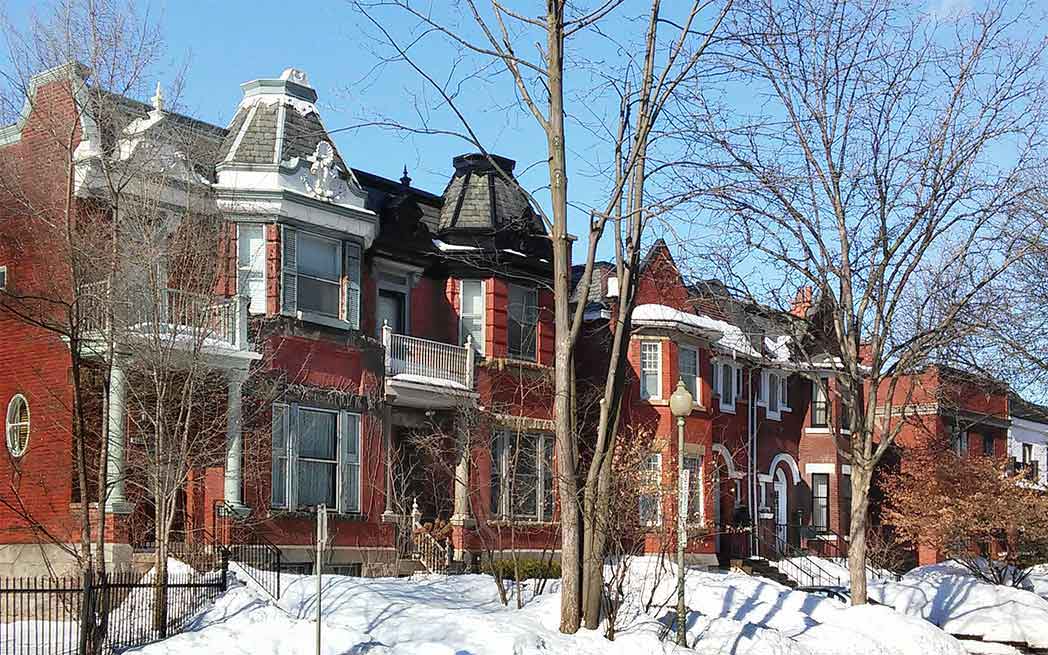
Windsor Avenue is a small street in Westmount. It starts nowhere and it ends nowhere. Cabbies have never heard of it. Out-of-town friends imagine we live across the street from Windsor Station. But worse than that, Windsor Avenue lies a bare quarter of the way Up the Hill! So the populace of Windsor Avenue are understandably humble souls…
– Jean Shaw, Montreal Gazette, November 30, 1964
During the municipality’s expansion from a village to a town and eventually to a city, the street has remained “under the radar” for over 150 years – except for one structure. Specifically, a large institutional building occupying several of the street’s cadastral lots and having a civic number on Claremont Avenue. Constructed in 1908, it served as an orphanage, a World War II training center and a hospice for elderly priests. As we shall learn, the building still exists (though reduced to a third of its former size) and provides residential apartments.
At this point, we should back up a bit and assemble our puzzle from the start. Who does Windsor commemorate? Obviously, something, or someone, quintessentially British. Perhaps the British Royal Family’s name, “House of Windsor,” comes to mind. That doesn’t appear to be the case; King George V changed the family name to “House of Windsor” from the Germanic “Saxe-Coburg-Gotha” in 1917, during the war against Germany.
Instead, the street’s name most likely commemorates Windsor, part of the Royal Borough of Windsor and Maidenhead, a town in Berkshire, England, on the right bank of the Thames, at which is Windsor Castle, a royal residence.
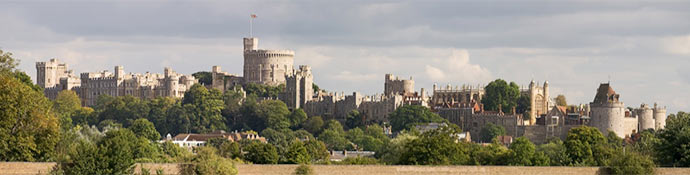
Windsor Castle, seen from the north; (l to r) Upper Ward, Middle Ward, Round Tower, St George’s Chapel, Lower Ward and Curfew Tower • Image: WyrdLight.com, via Wikimedia Commons
The street was initially a part of Cote St. Antoine’s centuries-old Hurtubise farm. In 1874, the Hurtubise family, facing economic hardships, were forced to subdivide the land and sell it as lots. A large portion of the Hurtubise Estate, including today’s Windsor Avenue, was purchased by Richard Warmington, a manufacturer of railway snow ploughs. Interestingly, in 1869, his company obtained a patent for the “Warmington’s snow plough”.
Financial hardships also beset Warmington in the years that followed. By July 1883, his land ownership was transferred, by means of a lien, to the Banque du Peuple, except for one subdivision obtained by Dame J. C. Nelson, wife of J. Dickinson.
‘The street was initially a part of Cote St. Antoine’s centuries-old Hurtubise farm. In 1874, the Hurtubise family, facing economic hardships, were forced to subdivide the land and sell it as lots.’
It appears that the street was ceded to the Town in 1887. Council proceedings, for that year, describe the street (“… the next avenue to be called Windsor Avenue…”) as terminating at “Street No. 12” – today named Arlington Avenue.
By 1892, the street was homologated to a width of 66 feet from the western limits (today Claremont Avenue) of the Town to Belmont Avenue (renamed Matilda Avenue in 1893 and further renamed Arlington Avenue in 1895).
Three years later, at the request of proprietors, the Montreal Water and Power Company laid water mains within the street.
Housing construction started in 1897 from Victoria to Claremont Avenues – today, these houses are still extant as civic numbers 8, 10 and 15. At the same time, drains and three-plank wooden sidewalks were constructed for the new occupants.
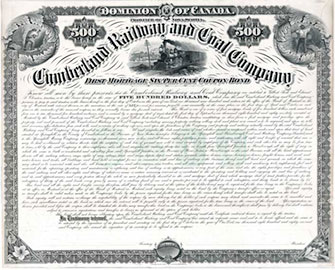
Cumberland Railway and Company shares certificate, 1886 • Image: matchandmedicine.com
In June 1905, the Heirs to the Estate of John McDougall (the financial backer for the Cumberland Railway and Coal Company of Springhill, Nova Scotia) ceded land to the Town, allowing the extension of Windsor and Chesterfield Avenues westward to a width of 50 feet. This allowed the Town to grade and install gutters along the street.
Up to this point, the development of the street, like many others, is far from remarkable. However, in 1908, the story takes an interesting turn. That year, the architectural firm of Hogle & Davis constructed a building at the southwest corner of Windsor and Claremont Avenues. The firm is noted for several Montreal buildings, including major additions to the Children’s Memorial Hospital, on Cedar Avenue (demolished 1931) and its successor, the Montreal Children’s Hospital (demolished 2018).
The building initially housed the Hervey Institute – formerly known as the Home and School of Industry. Founded by Eliza Hervey, originally from Ireland, and one of Montreal’s old elite families, the home provided training for Protestant girls, allowing them to secure domestic employment. (She was also responsible for the founding of Montreal’s YMCA).
In 1921, the building was sold to the Montreal Hebrew Orphans’ Home, providing both accommodation and a school. Residents were taught traditional Jewish prayers, ethics, Hebrew and the preparation of Jewish meals.
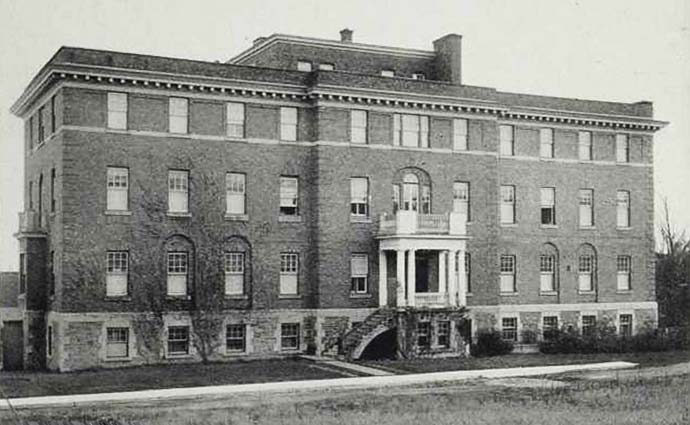
The Montreal Hebrew Orphans’ Home • Image: chrs.uqam.ca
During the period 1942-1948, the Young Soldiers’ Wing of the No. 4 Vocational Training School occupied the building. Boys aged 17 to 18, too young to enlist, were enrolled in the Canadian Technical Training Corps. Drawing on the strength of these centers, the school trained tradesmen through Canada’s War Emergency Training Plan.
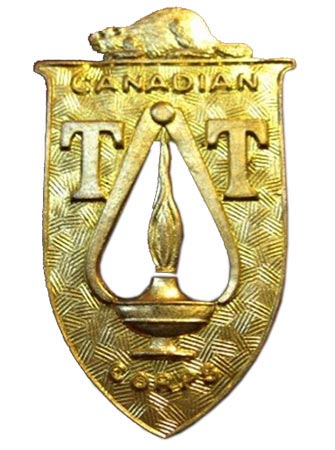
Canadian Technical Training Corps cap badge
During the period 1948-1953, the premises were used as a receiving building by the Children’s Aid Society, which today operates as the Batshaw Youth and Family Centres.
In 1953, the building was sold to the Quebec division of the Canadian Council of the Blind and served as a residential school for French-speaking youths with vision loss. Today, the institute operates under provincial jurisdiction as L’Institut Nazareth et Louis-Braille.
“Thanks to a generous donation of $75,000 from Cardinal Léger, and with the help of many benefactors, a building was acquired at 500 Claremont Street in Westmount, where the Louis-Braille School was founded. The provincial government of the time provided operating funds, and, at Cardinal Léger’s request, the Clerics of Saint-Viateur agreed to run the institution. Father Jean Cypihot took on the role of director, assisted by Father Rolland Campbell, who was himself blind. The official inauguration took place on November 9, 1953, and around fifty boys were enrolled—the maximum the school could accommodate. The building had been renovated, but it remained old and cramped. The working days were long, difficult, and exhausting. There was a shortage of everything: books, equipment, and space. Even so, everyone doubled their efforts, and the services provided by this fledgling institution were deeply appreciated.”
– L’Institut Nazareth et Louis-Braille
Red Feather Logo, 1964 • Image: The History of Batshaw Centres
The Louis-Braille Institute moved to newer quarters in 1959, leaving the building vacant for four years. The period 1963-1976 saw various occupants, including Clair-sejour Marie-Joseph. Incorporated by the Congregation des Dominicaines de Sainte-Catherine de Sienne, the school provided educational opportunities for girls aged 6-11 who were intellectually challenged. In 2020, the school was one of several defendants in a class-action suit filed by former residents alleging mistreatment by the school’s staff.
In 1976, another religious order, La congrégation de la Fraternité Sacerdotale, occupied the building and provided care for elderly priests.
By 2015, the building was sold to Brookline Developments, a Montreal real estate company. In 2017, the building was converted into apartments, and through extensive (and controversial) renovations, it occupies a much smaller footprint than the original structure.
At this point, we should conclude our story with the realization that every street contains surprising stories. Let us take a leisurely stroll along Windsor Avenue and discover other forgotten stories waiting to be told.
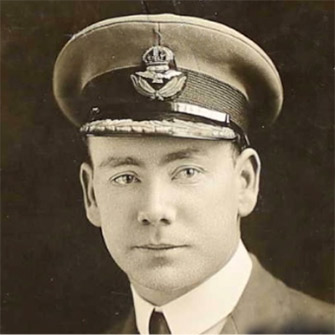
John Scott Williams • Image: veterans.gc.ca
6 Windsor
Wing-Commander John Scott Williams M.C., A.F.C.– 1944
Credited with organizing the Canadian Air Force in 1921. In civilian life, he operated a gold mine in Nova Scotia and inaugurated one of the first commercial airlines operating between Noranda and Haileybury, Ontario.
8 Windsor
R. S. J. Macdonald M. D. – 1930
10 Windsor
J. R. Baker, clerk – 1897
Reverend F. W. Kerr, Pastor, St. Andrews Church (501 Victoria Avenue). Today, part of Mountainside United Church, 400 The Boulevard – 1938
“The congregation of St. Andrew’s (Westmount), our third church, traces its roots to November 1885 when it was organized as Melville Presbyterian Church on Côte St. Antoine Road at Stanton Street. With the formation of the United Church in 1925, the name was changed to St. Andrew’s United Church. Unfortunately, a large part of the church was destroyed by fire in August 1965. A new, more modern building was erected on the same site and dedicated in October 1967. This building was sold in 1985 when St. Andrew’s and Dominion-Douglas Church amalgamated.”
 “On January 6, 1985, the newly united congregation of St. Andrew’s – Dominion-Douglas gathered to worship as one in Christ in the refurbished sanctuary on the Boulevard. The amalgamation of Erskine and American with St. Andrew’s-Dominion-Douglas on July 1, 2004, created an even longer name! The congregation was invited to submit suggestions for a new name. Through a series of ballots, we arrived at Mountainside United, which is very fitting, given that our building is perched on the side of a mountain in Westmount, Quebec. We celebrated both the adoption of Mountainside United as our official name and the 80th anniversary of the United Church of Canada at our Sunday service on October 16, 2005.”
– mountainsideunited.ca
15 Windsor
Joseph Townsley, construction superintendent, Eastern Division, Canadian Pacific Railway Company’s telegraph – 1897. Prior to his employment with C.P.R., he served with the Montreal Telegraph Company (which was later integrated into today’s Western Union).
 16 Windsor
Building and lot sold by public auction, February 1966.
18 Windsor
Sam Rubin, S. Rubin Limited (371 St. Catherine Street West), clothing manufacturer and vice-president of Angora Garment Inc. – 1943
24 Windsor
Arthur G. Ross, Department of National Revenue (Customs and Excise Division). National president, Customs and Excise Officers’ Association – 1943
25 Windsor
K. M. Lighthall, daughter of William Douw Lighthall, lawyer, historian and Mayor of Westmount 1900-1903 – 1930
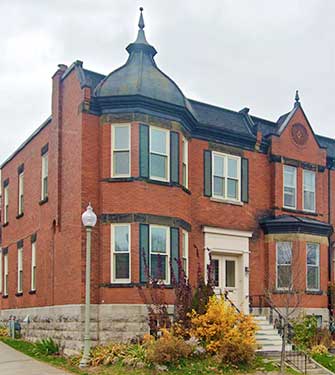
25 Windsor
32 Windsor
Peter J. Constantine – 1991
Placed for sale, by the City, for non-payment of municipal and school taxes (December 1996)
33 Windsor
A. D. Sawyer, proprietor, Medical Hall, Windsor Hotel – 1902
37 Windsor
Captain John MacGregor Thom – 1945
Awarded Officer, Order of the British Empire (1945)
38 Windsor
Jonathan Albert McLean, proprietor, Canadian Cocoanut Company Limited (120 Lagauchetiere Street West) – 1900
40 Windsor
E. N. Todd, General Foreign Freight Agent, Canadian Pacific Railway – 1919
Lieutenant-Colonel H. V. Driver D.D.S., McGill University Dental School and District Dental Officer, Military District No. 4 – 1940
41 Windsor
Peter T. Peterson, President, Peterson Fruit Company (32-34 Mountain Street), Montreal Fruit Auction Company Limited and director, Fruit Importers Limited – 1948
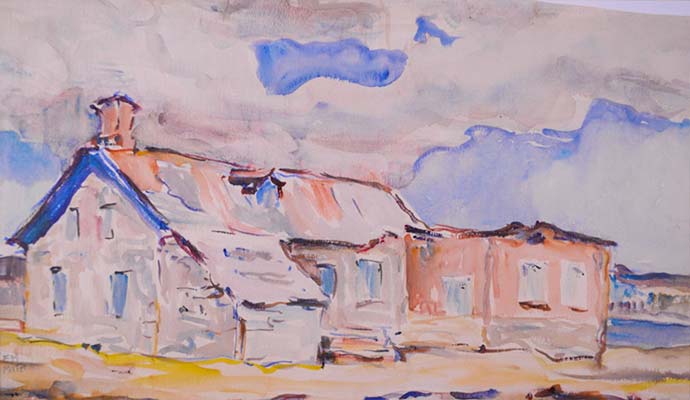
“House” painting by Freda Pemberton-Smith
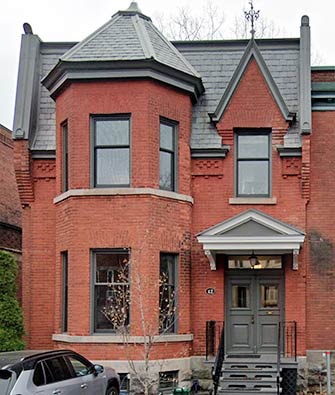
42 Windsor
42 Windsor
Freda Pemberton-Smith, School of Art – 1953
“Frederica Augusta Pemberton-Smith studied at the Barnes School of Art, the Monument National, the Ecole des Beaux-Arts, and she also attended life drawing classes held by the Royal Canadian Academy. She later studied at the Slade. From 1939 to 1945, she lived in England, serving with the Volunteer Aid Detachment (VAD) of the Canadian Army. When she returned home, she started teaching at St. Helen’s School, Durham, Quebec and also gave some private classes. As a student, she won a gold medal from the Royal Drawing Society, London, among other prizes. Her work was exhibited in several solo exhibitions at the Artlenders Gallery at Montreal (1960), the Argenteuil Art Association, Quebec (1960), the Laurentian Hotel, Montreal (1962), Memorial University Gallery, St. John’s Newfoundland (1964), Wallack’s Art Shop, Ottawa (1965) and also in different juried exhibitions, including the Canadian Society of Painters in Watercolour (1973), several of the Spring Exhibitions of the Montreal Museum of Fine Arts, the Royal Canadian Academy, and travelling exhibitions organized by the National Gallery of Canada. She also exhibited her work at Zwickers Gallery in Halifax, Calgary, Alberta, and Alert Bay, British Columbia. In 1965, she moved from Montreal to Vankleek Hill, Ontario. Freda Pemberton-Smith worked mainly with oil painting and watercolour.”
– Canadian Women Artists Initiative
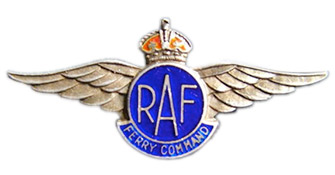
R.A.F. Ferry Command Pilot Lapel Badge
46 Windsor
Michael J. Lally – 1996
Placed for sale, by the City, for non-payment of municipal taxes (December 1996)
47 Windsor
Captain Alexander Edward Dame, Royal Air Force Ferry Command – 1943
Killed when his twin-engine bomber crashed during a test flight outside Montreal near St. Urbain de Chateauguay. A former Yukon bush pilot, he served with the R.A.F.F.C., delivering bombers to Britain and Africa.
Feature image: Andrew Burlone

More articles by Michael Walsh
Other recent articles



 March 24, 2026" />
 A field report on aging" />
 be more independent" />

 Windsor Avenue" />
 groove and flamenco" />
 becoming Epic Fiasco" />
 horses for slaughter" />
 How to acquire warranty" />
 and tears of joy" />
 Montreal Museum of Fine Arts" />
 takes a stand again" />
 Mint and parsley dog cookies" />
 your public speaking skills" />
 Thornhill Avenue" />
 Glasnost & Perestroika" />
 in Quebec Stores" />
 Censorship in practice" />
 With or without warranty" />
 Oriental musical poetry" />
 in shades of the Caucasus" />
 Roasted grapes with mozzarella" />
 passive-aggressive people" />
 Surrey Gardens" />