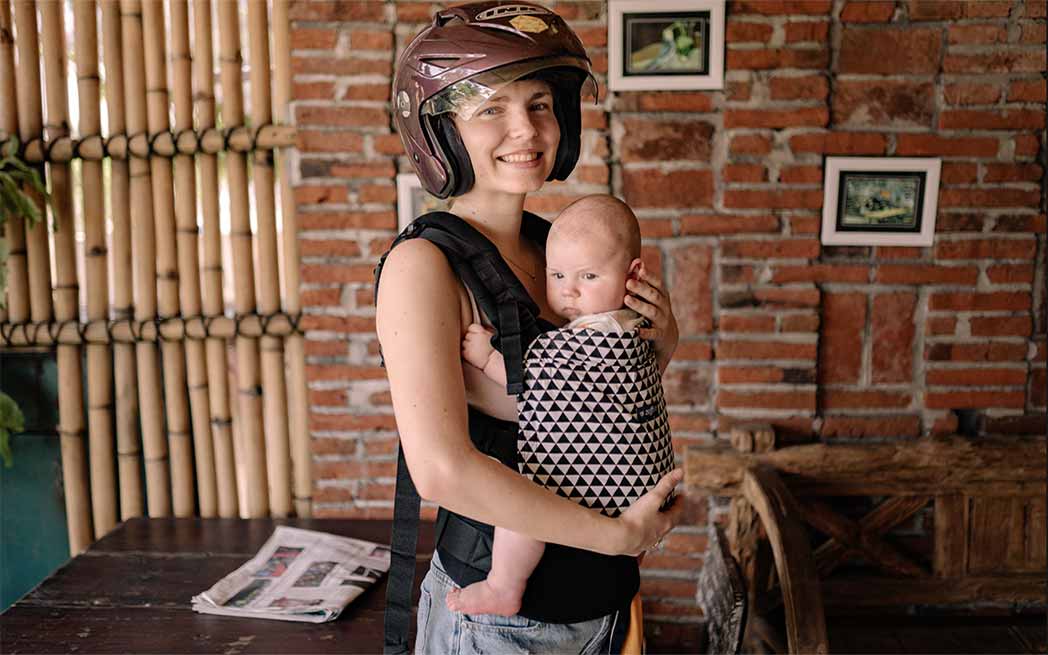
Choose a baby carrier that balances style, breathable fabric, and lasting comfort
October 30, 2026 • Sponsored
A baby carrier’s material often decides whether you wear it every day or leave it in a closet. A carrier sits directly against two bodies for hours at a time. If the fabric feels rough or traps heat, you will reach for it less often. The same goes for a fabric that clashes with everything in your wardrobe. That makes fabric the logical starting point for anyone comparing carriers, ahead of colour or price.
What Natural Fibres Do for Daily Comfort
Natural fibres tend to breathe better than synthetics, and that matters because a carried baby generates a surprising amount of warmth. A fabric that lets air circulate keeps both parent and child more comfortable, which in turn makes longer stretches of carrying realistic. For this reason, cotton and linen are the most common choices, while some makers use wool or silk for added softness.
For parents who care about what touches their newborn’s skin, the next logical question is where that cotton comes from. Certified organic cotton is grown without synthetic pesticides, which appeals to households already buying organic clothing or bedding for their baby. That is why a growing number of makers, including the Dutch label Artipoppe, offer organic baby carriers built around certified fibres rather than conventional blends. The certification gives buyers something verifiable to check, instead of relying on vague “natural” claims on a label.
Denim: A Workwear Fabric That Earns Its Place
Denim has quietly become one of the most practical carrier fabrics, and the reasons mirror why it conquered everyday clothing. It is densely woven, so it holds its shape under the weight of a growing child. It also softens with use, meaning the carrier moulds to the wearer over months instead of wearing out. A denim baby carrier pairs with almost anything a parent already owns, which removes one small friction from getting out the door.
That last point is less superficial than it sounds. Many new parents say that feeling like themselves, rather than feeling reduced to a function, affects their mood in those first months. A carrier that reads as a considered piece of clothing supports that, where a purely utilitarian one can work against it.
Fit and Construction Still Decide the Outcome
Fabric alone does not make a good carrier; construction determines how weight is distributed across the wearer’s back and hips. A well-made carrier should feel balanced, not like a strap digging into one shoulder. Since bodies differ, it is worth checking whether a carrier adjusts to fit different wearers in the household. That matters for fathers and non-birthing parents too. Sizing often becomes an afterthought, yet many of them carry just as much.
Craftsmanship shows in the details you only notice after weeks of use, such as:
- reinforced seams that hold under daily strain
- hardware that does not pinch
- edges that stay flat against the body
.
Details like these separate a carrier that lasts years from one that frays within months. With premium carriers, that longevity is part of the calculation. A single well-made piece can serve multiple children and still hold resale value.
Buying Once Instead of Buying Twice
The practical takeaway is to treat a carrier as a garment you will wear for a year or more, not as gear. Start with the fibre, since that decides comfort against the skin. Then check the certification if organic sourcing matters to you, and confirm the carrier adjusts to everyone who will wear it. Applying those three checks before buying makes it far less likely you will need a second carrier to replace a disappointing first one, which makes the better-made option the cheaper one over time.
Featured image: Yan Krukau – Pexels