
Are we on the verge
of a Middle East war?
All-out war could be imminent with Israel and the U.S. taking on Iran
By Irwin Rapoport
June 18, 2025
The situation in the Middle East is rapidly escalating, and there is a significant possibility that U.S. President Donald Trump may intervene in support of Israel, as he has already ordered an American carrier group and additional naval vessels to move into the region. The deployment of the USS Gerald R. Ford, the newest U.S. aircraft carrier, to the Mediterranean alongside other carrier groups highlights the seriousness of the situation. Furthermore, the United States has sent military aircraft and refuelling tankers to the area, emphasizing its commitment to protecting American personnel and installations amid rising tensions. While the U.S. has not yet launched offensive operations against Iran, its forces have taken defensive measures, including intercepting Iranian missiles aimed at Israel.
U.S. President Donald Trump may intervene in support of Israel, as he has already ordered an American carrier group and additional naval vessels to move into the region.
The current crisis is deeply rooted in the shared conviction of Israeli Prime Minister Benjamin Netanyahu and President Trump that Iran must not be allowed to develop nuclear weapons or the means to deliver them. Netanyahu has long advocated for preemptive action to halt Iran’s nuclear program, and Trump has echoed this stance, moving away from diplomatic efforts toward a readiness for military intervention. Recent Israeli airstrikes targeting Iranian centrifuge and missile production facilities reflect this determination to cripple Iran’s nuclear capabilities. Trump has issued stern warnings to Iran, demanding unconditional surrender and signalling that the U.S. is prepared to act decisively if necessary.
Suppose war does break out between Israel and Iran. In that case, it will largely be the result of Netanyahu’s and Trump’s shared belief that allowing Iran to become a nuclear-armed state poses an unacceptable threat. The significant buildup of U.S. military forces in the region underscores the gravity of the threat and the potential for American intervention on Israel’s behalf. This tense standoff could mark a turning point in Middle Eastern geopolitics, with far-reaching consequences for regional and global stability.
Israel is widely believed to maintain a substantial arsenal of nuclear weapons, with estimates suggesting around 90 plutonium-based warheads and enough fissile material for up to 200 nuclear devices. This formidable deterrent has played a significant role in discouraging neighbouring states from launching chemical, biological, nuclear, or even large-scale conventional attacks against Israel, as the threat of overwhelming retaliation remains ever-present. Israel’s military advantage is not limited to its nuclear capabilities.
The country has consistently leveraged its advanced missile and air power in confrontations with its Arab neighbours and Iran. In the aftermath of the October 7 Hamas attack, Israel responded with airstrikes and missile attacks not only on Gaza but also on targets in Lebanon, Syria, and against Houthi forces in Yemen, demonstrating its willingness and capacity to project force across the region.
On Friday, June 13, 2025, Israel launched a large-scale missile and air campaign against Iran, targeting nuclear facilities and sites associated with plutonium production. This operation, which included strikes on the Natanz and Isfahan nuclear complexes, was intended to cripple Iran’s nuclear ambitions. In retaliation, Iran unleashed a barrage of ballistic missiles and drones against Israel. Despite Israel’s advanced multi-layered air defence systems, including the Iron Dome, a significant number of Iranian projectiles penetrated these defences, resulting in at least 24 deaths and over 100 injuries in Israel. The scale and sophistication of Iran’s response, which included hypersonic and decoy missiles, temporarily overwhelmed Israeli defences.
The Israeli strikes on Iran have been devastating, with reports indicating that nearly 600 people have been killed and over 1,300 wounded, including both civilians and security personnel. The attacks targeted not only military and nuclear infrastructure but also resulted in significant civilian casualties, underscoring the intensity and reach of the current conflict.
Netanyahu, in an interview with ABC News earlier this week, zealously justified Israel’s actions. On Monday, Israel’s Consul General in Montreal expressed similar righteousness, portraying Israel’s military response as both righteous and proportionate, and highlighting the country’s commitment to defending its sovereignty and citizens. He reiterated that Israel’s actions were in line with international law and driven by the imperative to deter future aggression from hostile actors in the region. The Consul General’s remarks reflected a broader consensus within Israeli leadership, emphasizing unity and resolve in the face of external threats.
Should we have a war, it is due to Israeli President Benjamin Netanyahu and Trump’s belief that Iran should not possess nuclear weapons and missiles to deliver them.
The proliferation of nuclear weapons remains a central concern in Western diplomacy, with India and Pakistan being the most recent countries to acquire these capabilities. While both nations have so far refrained from using their nuclear arsenals, questions persist about whether they can be fully trusted not to launch a first strike or transfer weapons to states like North Korea or Iran, or even to terrorist groups. Their entry into the nuclear club highlights the ongoing challenges and uncertainties facing global non-proliferation efforts, as the risk of escalation or illicit transfer of nuclear technology continues to pose a serious threat to international security.
Israel’s nuclear arsenal is widely believed to consist of both American-supplied and domestically produced weapons, though the Israeli government maintains a policy of deliberate ambiguity and has never officially confirmed its nuclear capabilities. The most significant public disclosure about Israel’s nuclear program came from Mordechai Vanunu, a former Israeli nuclear technician and peace activist, who in 1986 revealed extensive details of Israel’s nuclear weapons production to the British press, citing his opposition to weapons of mass destruction as his motivation. Following his revelations, Vanunu was lured to Italy by Mossad, the Israeli intelligence agency, where he was drugged, abducted, and secretly transported back to Israel. He was subsequently tried and convicted in a closed-door trial, serving 18 years in prison, much of it in solitary confinement. The Vanunu case remains a pivotal episode in the ongoing debate over nuclear secrecy, whistleblowing, and the global implications of Israel’s undeclared nuclear arsenal.
Israel’s determination to maintain its strategic nuclear advantage has been a key factor in deterring large-scale, multi-nation attacks since the Yom Kippur War in 1973, as the perception of its nuclear capability serves as a powerful deterrent despite the country’s small size and population. The prospect of Iran acquiring nuclear weapons—whether developed domestically or obtained from countries like North Korea, China, Pakistan, or Russia—poses a direct threat to this balance, as it would undermine Israel’s deterrence and potentially embolden Iranian aggression. With nuclear arms, Iran could target major Israeli cities such as Jerusalem and Tel Aviv with missiles, and there is also the risk that Iran might supply nuclear or radiological materials to terrorist groups, raising the spectre of attacks on American and European cities.
Israel’s ongoing Operation Rising Lion represents a dramatic escalation in the long-standing standoff over Iran’s nuclear ambitions. The campaign, launched on June 13, 2025, is rooted in the conviction of Prime Minister Benjamin Netanyahu that Iran cannot be permitted to develop such weapons. Netanyahu is inflexible on this policy and had the temerity to warn Iran not to retaliate against Israel’s attack. Talk about chutzpah. So far, Iran has not employed chemical and biological weapons.
In the opening hours of the conflict, on June 13, 2025, Israel, with significant support from the United Kingdom and the United States, successfully intercepted the vast majority of Iranian missiles and drones launched in retaliation for Israeli strikes on Iran’s nuclear and military infrastructure. A June 13 Times of Israel report gives a good account of the initial exchanges. A June 15 Euronews article noted that Iran was just as capable of hitting Israeli research facilities, much as Israel has triumphantly celebrated by knocking out Iranian nuclear research centres, in addition to killing top military commanders and nuclear researchers. The “institute is not just an academic facility; it is seen as part of Israel’s national security infrastructure, playing a pivotal role in supporting the military through advanced research and technology.”
‘Israel initiated massive missile and air raids against Iran to destroy its nuclear facilities and plutonium production sites. Iran promptly responded with missile and drone strikes.’
Both Israel and Iran are now striking not just military targets but also hospitals, ports, industrial and energy infrastructure, and residential areas, resulting in mounting civilian casualties and widespread destruction, with no prospect of a clear victor in this prolonged conflict. Israel’s military campaign is bolstered by ongoing American support, including advanced weaponry and defensive systems. At the same time, Iran is believed to be sourcing weapons from China and North Korea, with China also remaining a key buyer of Iranian oil. As Israel seeks powerful U.S.-made “bunker buster” bombs to penetrate Iran’s underground nuclear facilities, the war’s escalation and the targeting of civilian infrastructure underscore the devastating toll on both societies and the growing risk of further regional destabilization.
The Israeli-Iranian conflict could easily widen. Iran has threatened to attack American, British, and French military bases in the Middle East if they intercept Iranian drones and missiles. On June 15, the Iranian government threatened to “open the gates of hell” if these nations continue to intervene. Trump, on Truth Social, responded to Iran’s threat: “If we are attacked in any way, shape or form by Iran, the full strength and might of the U.S. Armed Forces will come down on you at levels never seen before, However, we can easily get a deal done between Iran and Israel, and end this bloody conflict.”
Not to be outdone, Israeli Defence Minister Israel Katz has threatened that “Tehran will burn” if Iran does not halt missile strikes on his country’s civilian population. Clearly, Katz fails to recognize the irony of his words as he approves deadly strikes against Gaza’s civilian population. All lives are important, whether they be Jewish, Muslim, Christian, Arab, or Persian. The hawks in Israel, Iran, and Gaza do not care about the casualties. What is required is an end to the hostilities and the return of all remaining Israeli hostages.
American President Donald Trump, as is French President Emmanuel Macron, is standing by Israel. British Prime Minister Keith Starmer stated that British forces have not provided any military assistance to Israel.
The rhetoric has ramped up daily. On June 17, Trump, on Truth Social, demanded Iran’s “UNCONDITIONAL SURRENDER” if the conflict escalates, adding, “We know exactly where the so-called ‘Supreme Leader’ is hiding. He is an easy target, but is safe there – We are not going to take him out (kill!), at least not for now. But we don’t want missiles shot at civilians or American soldiers. Our patience is wearing thin.”
‘Israeli Defence Minister Israel Katz has threatened that ‘Tehran will burn’ if Iran does not halt missile strikes on his country’s civilian population.’
He also wrote: “IRAN CAN NOT HAVE A NUCLEAR WEAPON,” ominously adding, “Everyone should immediately evacuate Tehran!”
While travelling back to Washington on Monday from the G7 meeting in Canada, Trump told reporters: “Iran cannot have a nuclear weapon, it’s very simple. They [Iran] should have done the deal. I told them, do the deal, so I don’t know. I’m not too much in the mood to negotiate.” Iran’s Supreme Leader Ali Khamenei replied by warning that any military involvement by the Americans would cause “irreparable damage” to them, in an official statement read by a state TV anchor. Yesterday morning, Trump upped the ante in a Truth Social post, suggesting the U.S. is working with Israel to hit Iran. “We now have complete and total control of the skies over Iran. Iran had good sky trackers and other defensive equipment, and plenty of it, but it doesn’t compare to American-made, conceived, and manufactured ‘stuff.’ Nobody does it better than the good ol’ USA.”
Turning the Persian Gulf into a war zone would unleash a nightmare. Most of the oil and gas exported from the Middle East is carried in tankers that enter and exit it, with the danger point being the narrow Strait of Hormuz. Iran’s coastline covers the Gulf from the Iraqi border to the Indian Ocean. The width of the narrow strait varies between 21 and 52 miles. Iran is perfectly situated to set up anti-ship missile batteries and station fast torpedo boats. An all out naval war would cripple shipping and lead to environmental disasters with spilled oil permanently damaging sensitive and already threatened ecosystems and biodiversity. Royal Canadian Navy vessels have participated in international patrols in the Gulf to ensure the safety of shipping. The price of a barrel of oil has increased due to the conflict, which has led to higher gas prices throughout Canada. A war could see oil prices skyrocket to over $100 per barrel.
Iran is considering closing the Strait of Hormuz, which handles 21 percent of the world’s oil and 20 to 30 % of liquified natural gas (LNG). If closed, it may result in $8 to $13 trillion in global economic losses. China receives 50 % of its crude oil through the Strait, India 65 %, Japan 80 %, and South Korea 70%. Approximately 80 % of Saudi Arabian oil passes through this area. Iran has some serious but limited leverage, as much of its imports traverse these waters.
‘Iran is considering closing the Strait of Hormuz, which handles 21 percent of the world’s oil and 20 to 30 % of liquified natural gas (LNG). If closed, it may result in $8 to $13 trillion in global economic losses.’
Missiles fired by Yemen’s Iran-aligned Houthi group have struck the Jaffa area of central Israel in recent days, with the Houthis openly coordinating these ballistic missile attacks with Tehran as part of a broader regional escalation following Israel’s strikes on Iran’s nuclear infrastructure. Despite earlier U.S. Navy bombardments of Houthi positions in Yemen, these efforts have not eliminated the group’s missile capabilities or deterred further attacks, as Houthi leaders have publicly vowed continued support for Iran in its confrontation with Israel. The Houthis’ direct involvement marks a significant expansion of the conflict, reinforcing the risk of a widening multi-front war in the Middle East.
Israel is acting like an overconfident bully, and Iran cannot back down, as it would be humiliating to kowtow to Israeli threats and demands. Iran’s government is obliged to avenge its dead and wounded. Netanyahu, as Israel’s wartime leader, would appear weak internationally and regionally were he to back down, and domestically, his nationalist and hawkish allies in the Knesset could abandon him. Who will make the first move to de-escalate, and will Trump TACO (Trump always chickens out)?
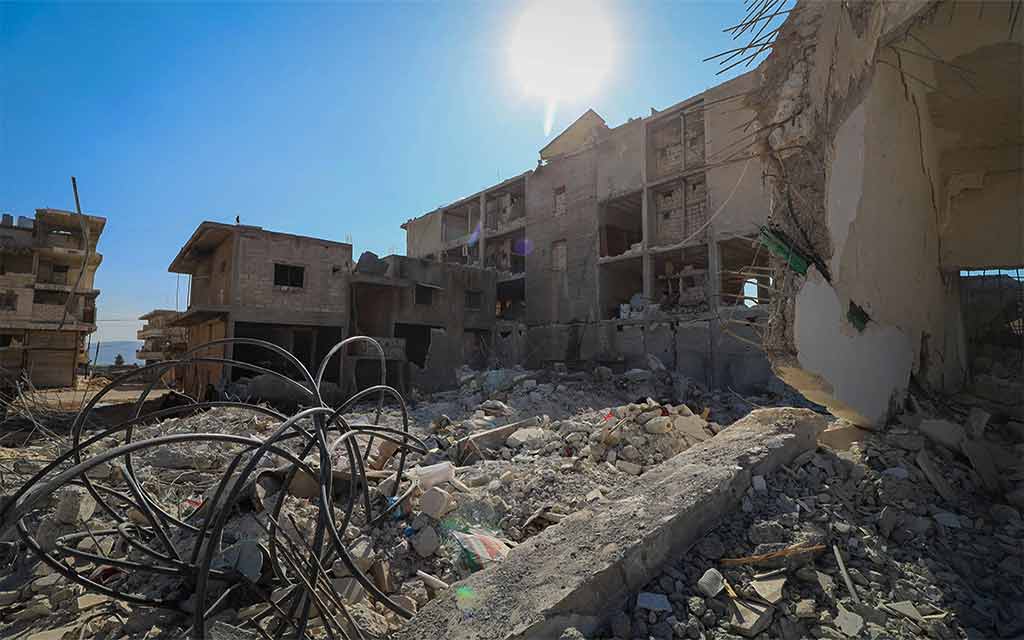
This Reuters article contains vivid images of the damage inflicted on both countries.
At first, Trump called on Israel not to attack Iran as talks were in progress to have Iran give up its program to develop nuclear weapons. Netanyahu brazenly ignored the president. Last weekend on Truth Social, Trump wrote: “Iran and Israel should make a deal, and will make a deal, just like I got India and Pakistan to make, in that case by using TRADE with the United States to bring reason, cohesion, and sanity into the talks with two excellent leaders who were able to quickly make a decision and STOP! Also, during my first term, Serbia and Kosovo were going at it hot and heavy, as they have for many decades, and this long-time conflict was ready to break out into WAR.”
Without providing evidence, he added, “I stopped it (Biden has hurt the longer-term prospects with some very stupid decisions, but I will fix it, again!). Another case is Egypt and Ethiopia, and their fight over a massive dam that is having an effect on the magnificent Nile River. There is peace, at least for now, because of my intervention, and it will stay that way! Likewise, we will have PEACE soon, between Israel and Iran! Many calls and meetings are taking place. I do a lot, and never get credit for anything, but that’s OK, the PEOPLE understand. MAKE THE MIDDLE EAST GREAT AGAIN!”
* * * * *
Iran has not employed chemical and biological weapons. Such weapons include anthrax, nerve gas, and other nasty pathogens and chemical concoctions. This can all change, especially if Iran secures cruise and advanced hypersonic missiles and chemical and biological weapons via private sellers or governments. China, Russia, and North Korea can be lax in securing their arsenals. An Arms Control Association report explains how easily these weapons can be dispersed in the section How are chemical weapons delivered?
Both the Israeli and Iranian governments are increasingly dominated by extremists and hardliners, with figures like Netanyahu accused of fueling the conflict to evade prosecution and potential prison time, creating a volatile environment where any reckless move could unleash unimaginable devastation. If either side goes too far, the result could be catastrophic: hundreds of thousands of Israelis might perish in horrific ways, and the skies over the Middle East could be marred by mushroom clouds, plunging the region into a nightmare of nuclear destruction.
Since October 7, 2023, Netanyahu has risked the lives of IDF soldiers and Israeli citizens and, via his military campaign, has stoked the flames of anti-Semitism, which threatens Jewish communities in the diaspora, including Canada. The attack against Jewish community members marching peacefully in support of Israel in Boulder, Colorado and the killing of two Israeli embassy staffers in Washington, D.C., was a result of the brutal Gaza campaign. In the last few days, Israeli tanks opened fire on a crowd waiting for aid trucks in Khan Younis, southern Gaza, killing at least 51 people and wounding over 200, according to medics on the scene.
While we may not yet be staring down the abyss as during the Cuban Missile Crisis, the current standoff crackles with volatility, and it would take only a single miscalculation for events to spiral into uncontrollable chaos.
Disclaimer: The opinions expressed in this article are those of the author and do not necessarily reflect the opinions of WestmountMag.ca or its publishers.
Feature image: Ahmed Akacha – Pexels

Other articles by Irwin Rapoport
Other recent articles
 Irwin Rapoport is a freelance journalist with a bachelor’s degree in history and political science from Concordia University.



 January 6, 2026" />
 through digital innovation" />
 looks back at 2025" />
 online betting rules?" />
 a film by Andrés Livov" />
 for its 16th edition" />
 Passion fruit meringue verrine" />
 playful clownish escapade" />
 World rhythms on stage" />
 management mistakes" />
 Kensington Avenue" />
 Vegan Chili Chocolate Cake" />
 Bethune tunnel" />
 Left out of breath" />
 of business strategy" />
 damage before it starts" />


 into a professional career" />

 plumbing issues at home" />
 embraces bold cinema" />
 Red snapper papillote" />
 the Legend of Pepita" />
Greetings. With all the tension in the air and the ramped up rhetoric, all the signs pointed to an imminent war against Iran by Israel and the United States. Many experienced reporters, analysts, and pundits expressed similar thoughts. Fortunately, such a war has not begun and President Trump TACO’d (Trump always chickens out). White House Press Secretary Karoline Leavitt issued this statement from the president on Thursday (June 19): “Based on the fact that there is a substantial chance of negotiations that may or may not take place with Iran in the near future, I will make my decision, whether or not to go, within the next two weeks.”
Hopefully this dispute will be settled peacefully. Meanwhile Israel and Iran continue to attack each other.
For more on this latest development, check out these two reports:
https://www.youtube.com/watch?v=QA8pRJ-ec58
https://www.youtube.com/watch?v=zROqlHfVHTk
Irwin Rapoport
Hi. It was on late Saturday night that the Trump administration had American heavy bombers drop three ‘bunker buster’ bombs on Iranian nuclear research sites, including the one at Fordo. The attack occurred three days after the president said he would pause his decision on whether to attack Iran for up to two weeks.
Media reports did note that the heavy B2 bombers were on their way and had landed on the island of Diego Garcia in the Indian Ocean, which put them in range of Iran, They were the only planes capable of carrying the 30,000 pound bombs.
Analysts are still trying to figure out the reason/reasons for the attack and whether additional raids shall occur. Iran has condemned the American attacks and threatened retaliation. It launch missiles against Israel.
Here are some useful articles and discussions on MSNBC and other venues:
https://www.ctvnews.ca/world/article/trump-says-irans-key-nuclear-sites-completely-and-fully-obliterated-by-strikes/
https://www.youtube.com/watch?v=cme0qvq29TQ
https://www.youtube.com/watch?v=g_LWLIIEBgk
https://www.msn.com/en-ca/news/politics/what-s-good-for-trump-isn-t-necessarily-what-s-good-for-america-or-the-world-opinion/ar-AA1HbuoW?ocid=msedgntp&pc=U531&cvid=53ca432ab2b6419cafad7680b7c29ce8&ei=10
https://www.msn.com/en-ca/news/world/in-his-own-words-trump-s-iran-strike-tests-his-rhetoric-on-ending-wars/ar-AA1HaH0Z?ocid=msedgdhp&pc=U531&cvid=1e774d3bc1034ec2ab93240bf6df9467&ei=9