Behind the Moon
launches TDT season
Teesri Duniya Theatre opens its 45th season with a poignant look at migrant restaurant workers
By Irwin Rapoport
March 31, 2026
Teesri Duniya Theatre (TDT) is launching its 45th season with award-winning playwright and novelist Anosh Irani’s Behind the Moon, running April 3–19, 2026, at Rangshala, the company’s performance space in the Cité-des-Hospitalières. The Montreal premiere anchors TDT’s Season of the Migrant, a year-long focus on immigrant stories that aims to honour newcomers, humanize their experiences, challenge misinformation and promote a sense of belonging.
Behind the Moon explores the life experiences and challenges faced by immigrant workers in the food industry, where a significant share of workers are immigrants
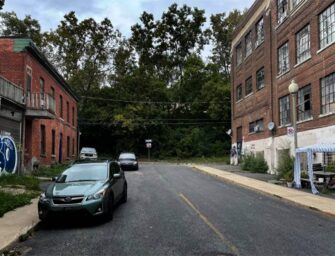
Set in the Mughlai Moon restaurant, the play unfolds in a late-night spot that serves Indian and Pakistani food at 2 am, where cab drivers eat after their shifts and clubgoers drift in after a night out. A surprise visit from Jalal, a mysterious cabbie, rattles the cage and shatters the fragile peace. Ayub, the restaurant’s sole employee, cooks, cleans and serves while waiting for his future to begin and struggling to free himself from a suffocating present, under the watchful eye of Qadir Bhai, the kind yet manipulative owner.
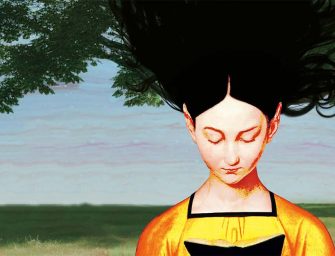
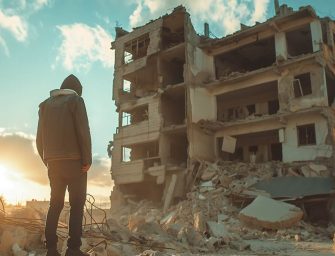
Behind the Moon explores the life experiences and challenges faced by immigrant workers in the food industry, where a significant share of workers are immigrants, many from the Global South. Through the intertwined stories of three South Asian immigrants, the play probes the complexities and true meaning of “a better life,” emphasizing that no two journeys are alike. Ayub, Jalal and Qadir are drawn as funny, loving, tragic and multidimensional, and Irani’s script shifts between humour and gravity, blending Hindi, Kashmiri, Urdu and Arabic.
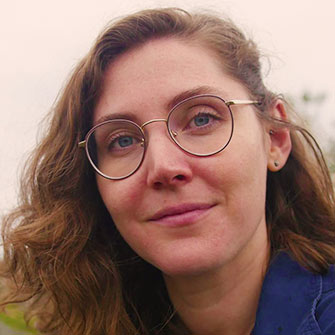
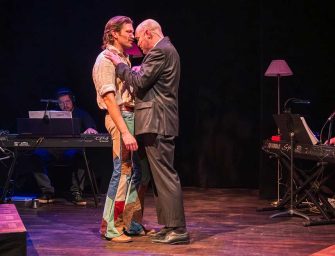
Behind the Moon • Chelsea Dab-Hike
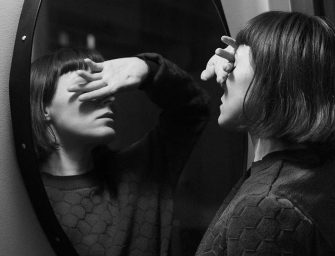
Ayub’s inner conflict is distilled in the line: “I don’t live in Canada. I live in a kitchen. But I must thank you for making me clean the tiles. I have seen my face. I have seen who I am.” The sense of being trapped between countries, between shifts, between hope and exhaustion runs through the play. As Qadir Bhai observes, “To get something, you have to lose something. That’s what migration does.”
Director Chelsea Dab Hilke returns to TDT after helming last season’s Keffiyeh/Made in China, again linking intimate relationships with global politics. “It’s important to show men in their complexity; with care, nuance and love,” she says, noting that the play addresses a real epidemic of loneliness among men and shows them caring for one another. Immigration and migration, she adds, have become hot-button topics in conservative politics, with immigrants scapegoated to deflect attention from failing systems. “It’s crucial to be discerning about how immigration issues are framed.”
‘The sense of being trapped between countries, between shifts, between hope and exhaustion runs through the play.’
Hilke undertook extensive research into the history, politics, religion, language and culture that shape these characters, and she credits Irani’s generosity in answering questions and deepening her understanding. She hopes audiences leave with greater empathy for migrants and those pursuing immigration, and that those who have gone through the process feel seen and validated by the story.
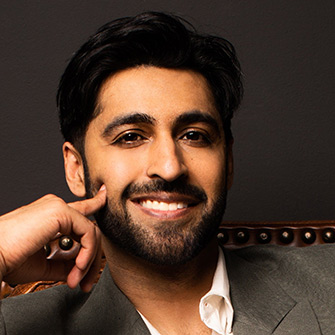
Behind the Moon • Addy H. Dar
For TDT Artistic Director Rahul Varma, Behind the Moon fits squarely within the company’s mission to “change the world one play at a time.” He stresses that migrant stories are rich and diverse, never monolithic, yet too often remain untold.
Restaurant workers, he notes, regularly serve Montrealers in challenging, high-stress environments, frequently for low pay and long, physically demanding shifts. “Our goal is to showcase the humanity and courage of this workforce, which was promised more than what many actually experience,” he says. “The play captures this struggle beautifully.”
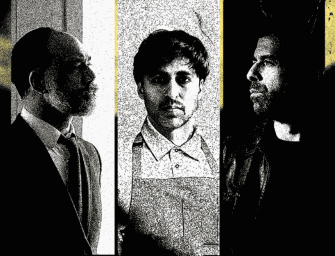
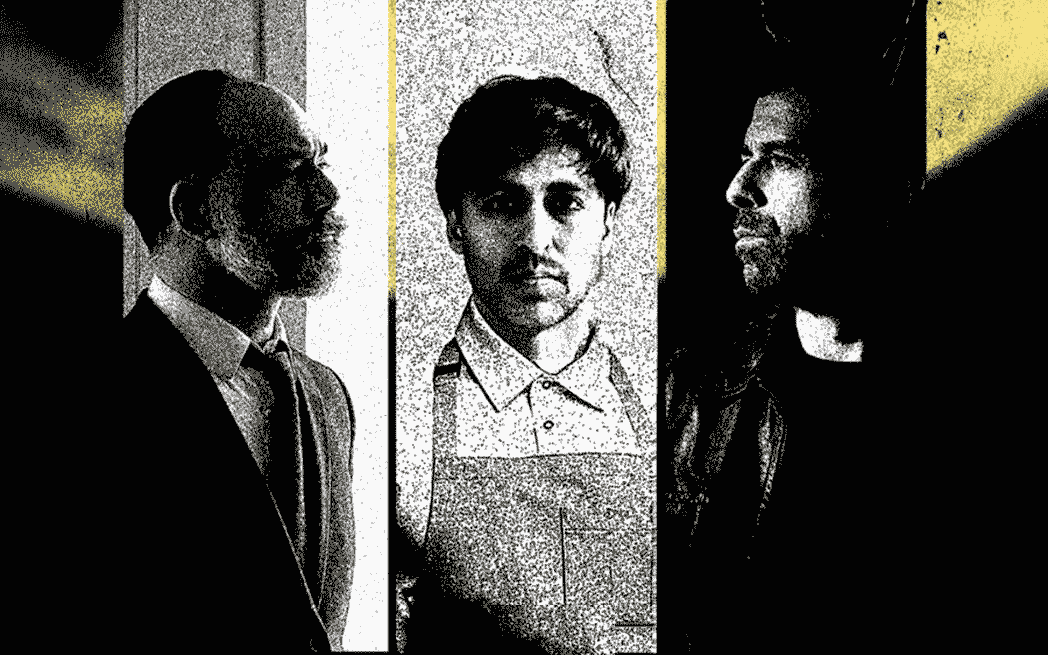
The cast bringing these characters to life consists of Adolyn H. Dar as Ayub, Andrew Joseph Richardson as Qadir Bhai and Aladeen Tawfeek as Jalal. Tawfeek was drawn to Jalal, the late-night cabbie whose arrival unsettles the small restaurant ecosystem. “Anosh Irani’s writing is compelling for an actor,” he says. “It asks you to listen closely to what is not being said; to explore the inner life of a character rather than simply the events of the story.” He was moved by the piece’s humanity and the tenderness with which it observes people who are often invisible, people who carry memories, expectations, family obligations and dreams that do not always align with their present situation.
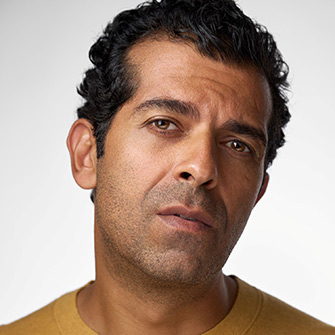
Behind the Moon • AAladeen Tawfeek
Tawfeek notes that what stayed with him was the silence around the dialogue: the characters do not always say what they feel, so the work becomes about understanding what lives underneath the lines. In rehearsal, he focused on what each character is holding back and what they cannot afford to say out loud. With Jalal, he found that pushing the character’s intensity too far risks making him distant; grounding him in a real need for connection keeps even his most unsettling moments human.
Dar, who plays the overworked Ayub, stresses that the immigration crisis is inseparable from the legacy of colonialism. “Even within our own cultures and ethnicities, we are forced to compete with each other just to get ahead,” he observes. “It’s tragic. But also, we are our own salvation.” Reflecting on the process, he describes good scripts as “never fully digested,” always churning and evolving in rehearsal, as Ayub’s playful, generous, romantic side rubs up against his anger and brokenness.
‘[The play] asks you to listen closely to what is not being said; to explore the inner life of a character rather than simply the events of the story.’
Richardson was immediately drawn to Qadir Bhai, the restaurant owner whose ethics and behaviour resist easy judgment. After reading the script, he realized the role would be fun to play and found Qadir’s voice in the character’s word choices and his habit of quoting teachings as the cornerstones of his behaviour. As rehearsals progressed, he discovered the internal logic behind Qadir’s ethics and his status in the restaurant, moving freely through the space as someone who owns not just the business but the narrative others inhabit.
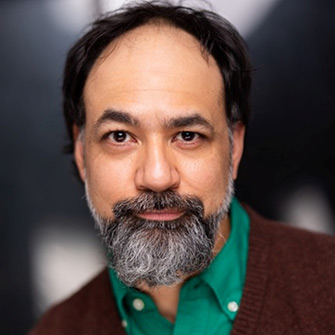
Behind the Moon • Andrew Joseph Richardson
All three actors reflect on their paths into the profession. Dar jokes that he can imagine several other careers that might make him “much happier,” but wonders where “the fun in happiness” would be, and says he is inspired by artists and activists resisting hate and fascism around the world.
Richardson traces his journey back to being a naturally funny person and realizing his strongest aptitudes lay in the performing arts, especially theatre, where there is only one take, and the story must be delivered in real time.
Tawfeek cites actors like Ralph Fiennes and Daniel Day-Lewis for their dedication and versatility, singling out Day-Lewis’s turn in There Will Be Blood as a benchmark for immersive performance.
Behind the scenes, a decorated design team creates the world of Mughlai Moon: Diana Uribe (set), Georges Micheal Fanfan (costumes), Jordana Natale (lighting) and Rehan Lalani (original music and sound), with stage management by Abi Sanie. Marking its 45th anniversary, Teesri Duniya’s 2026–2027 Season of the Migrant extends beyond Behind the Moon, with a slate of performance, community and development programming and a new tiered ticketing system with reduced prices to keep shows accessible.
Interview
Director Chelsea Dab Hilke and actors Adolyn H. Dar, Andrew Joseph Richardson, and Aladeen Tawfeekholdforth talk about the play and what it means to them.
WM: How did you prepare to direct this play in terms of getting a handle on its many themes and intensity? Did you collaborate with playwright Anosh Irani?
Hilke: I came into this play needing to do a lot of research to catch up on the history, politics, religion, language, and culture that feature so heavily in the storytelling. After hundreds of hours of reading, watching, and listening, I feel like I have a pretty decent grasp of the context within which these characters’ lives emerged. I was very lucky that the playwright, Anosh Irani, made himself available to me for any unanswerable questions, as well as for answers I didn’t even know I needed. Anosh and I had several conversations, and he was always generous with his time and insight.
WM: What do you hope audiences will take away from the performances, and what are the keys to ensuring that characters leap from the page into the imaginations of the theatregoers watching the play?
Hilke: I hope that audiences will leave the theatre with a deeper understanding and empathy for the complex and unique experiences of migrants and those pursuing immigration. I also hope that audience members who have gone through immigration will feel seen and validated by the characters and story.
The design team has collaborated closely on this project so with the magic of set, lights, sound, and costume, the characters and story will jump off the page and resonate in the hearts and minds of audiences.
WM: Once you fully digested the script, how did you channel the dialogue and attitudes of the characters and as you were rehearsing the play, what insights did you glean?
Dar: A good script, like this one is, is never fully digested. It continues to churn. The channelling occurs through autopoesis, shared efforts, taking risks and play. Many insights strike you as you start to rehearse, read and reinforce the director’s vision and your instincts. Like, how playful Ayub is, how generous, how romantic and how broken and angry and vicious and more.
Richardson: I understood after reading the script that Qadir Bhai would be the most fun to play. I could find his voice by the character’s word choices and commentary. I leaned into the way he quotes his teachings like they are the cornerstones of his behaviour. As we rehearsed the play, I could find the logic of his ethics, which, from the outside, might seem despicable to most.
Up on our feet in the rehearsal room, I found my character’s status and as the owner of the restaurant in which the play is situated, I can move around the space quite freely.
Tawfeek: When I first read Behind the Moon, what stayed with me was the silence around the dialogue. These characters don’t always say what they feel. So the work became less about delivering lines and more about understanding what lives underneath them. In rehearsal, I focused on what each character is holding back, what they cannot afford to say out loud. With Jalal, the key insight was to ground him. If you push his intensity, he becomes distant. But if you root him in a real need for connection, then even his most unsettling moments feel human.
WM: What led you to pursue a career in acting, and are there any actors and particular performances in theatre, film, and television that inspire you?
Dar: I can imagine at least four, maybe five, other things I could be doing that I would be much happier doing instead of this ‘career’. But where’s the fun in happiness? There are a lot of incredible actors and artists that I love and admire. But that alone rarely inspires. I care about who they are, the kind of kindness and things they stand for. Right now, it’s Palestinian artists and risk takers. It’s the people of Iran, South Sudan, Myanmar, Syria, Lebanon, America, Canada and more, fighting against hate and fascism. Their real, very live performances of resistance. In them, I see art and inspiration.
Richardson: I’ve always been a funny person. Coming out of high school, I realized my most significant aptitudes were attached to the performing arts. Eventually, I became good at investing myself in the projects which came my way. I loved the transformation from myself to someone else for a few hours. I loved identifying what about a character was different than myself and exaggerating the parts of myself that held to the characters I played.
I loved Steve Martin’s screen presence and Geoffrey Rush’s acting skills. It wasn’t until I was older that I understood that the journey a theatre actor takes in a performance is so much more challenging – there’s only one ‘take,’ and we must deliver the story sequentially, in real time. I believe audiences are the most important people in the theatre, and moving and inspiring them inspires me.
Tawfeek: I was drawn to acting because it allows you to explore human behaviour with a kind of honesty that everyday life doesn’t always permit. Over time, it became less about performing and more about presence. About truly listening, responding, and being affected in the moment.
I’m deeply inspired by actors like Ralph Fiennes and Daniel Day-Lewis for their fervent dedication to craft and dramatic versatility. The performances that stay with me are the ones where you forget you’re watching an actor and are completely immersed in the story. Day-Lewis’s portrayal of Daniel Plainview in There Will Be Blood is, for me, one of the greatest performances ever put on screen. There’s a level of commitment, precision, and intensity that is just extraordinary.
Behind the Moon
Cité-des-Hospitalières
251 Avenue des Pins O.
April 3–19, 2026
Evening performances for the two-act, 95-minute play start at 7 pm, with weekend matinées at 2 pm.
Post-show talkbacks are scheduled on April 5, and on April 11.
Audiences can meet playwright Anosh Irani after both matinée and evening performances.
Images courtesy of Teesri Duniya Theatre

More articles by Irwin Rapoport
Other recent articles

Irwin Rapoport is a freelance journalist and community advocate from Westmount with bachelor’s degrees in History and Political Science from Concordia University. He writes extensively on local politics, education, and environmental issues, and promotes informed public discourse and democracy through his writing and activism.