
Children are key to
protecting life on Earth
Every day brings us fresh news of the relentless onslaught on nature
By Irwin Rapoport
August 7, 2025
The awful environmental news popping up on my newsfeed is depressing and is overwhelming. But despite these horrible tidings, the efforts of millions of champions passionately devoted to protecting our planet’s ecosystems and biodiversity restore my faith that we can reverse the threat of a global environmental catastrophe, even though Humanity is taking five steps backwards for every positive one.
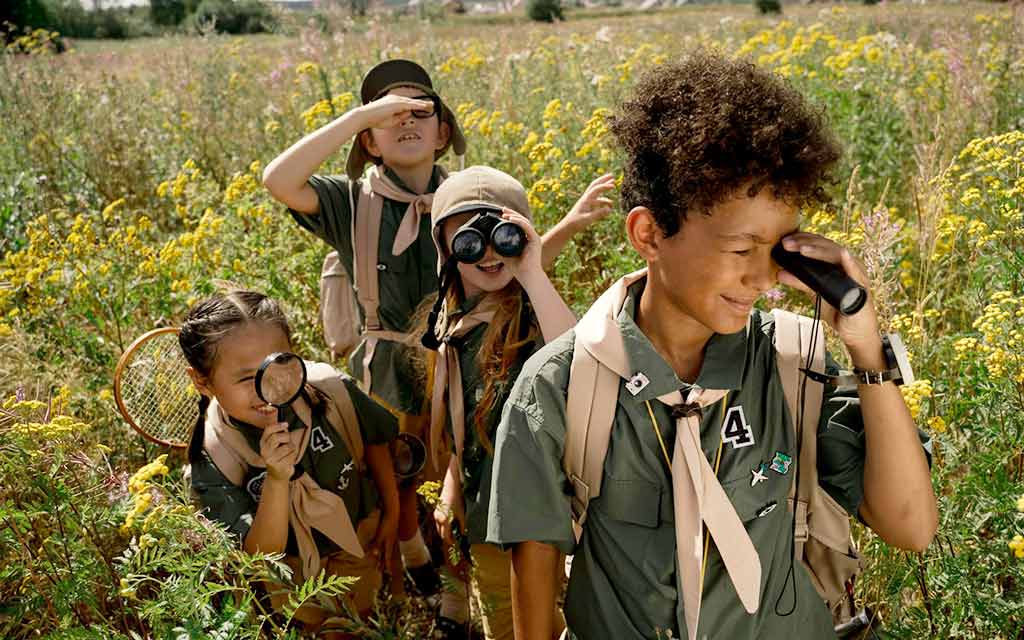
I encountered four children enthralled by a black squirrel. They were thrilled – their eyes were glued on the creature as it ran up the tree to a branch… They had a budding sense of environmental awareness, which, if nurtured, could create future champions for the environment.
While walking through NDG’s Trenholme Park last Thursday, I encountered four children enthralled by a black squirrel. They were thrilled – their eyes were glued on the creature as it ran up the tree to a branch. The parents and I, who were nearby, heard them say “it’s a black squirrel” and “wow.” They had a budding sense of environmental awareness, which, if nurtured, could create future champions for the environment.
Considering the ecological mess they will inherit from our generation, such individuals will be invaluable. I hope this passion for animals and their habitat inspires their parents to organize more activities for the children to connect with nature.
The following video follows a group of high school students who saved a squirrel:
Most children are fascinated by animals. We see it daily in interactions with pet dogs, cats, rabbits, and fish. The bond is infectious. Many children are fortunate to be born into households with dogs and cats, where they grow up together and have adventures. Dogs often take on the role of loyal guardians once a baby arrives at home

Although more children and teenagers are expressing concern for the environment, the relentless news coverage chronicling the destruction of the global ecosystem and the web of life is compounding the challenges future generations will experience.
* * * * *
The Aalborg Zoo in Copenhagen is at it again. Back in 2014, it killed Marius the giraffe to feed lions, declaring the sentient creature “excess” and not valuable for breeding. Zoos and wildlife conservation parks offered to receive Marius, but Danish officials would not be deterred.
Check out this article: Zoo asks for unwanted pets to feed to captive predators. It makes for grim reading.
From the article:
[The zoo] issued a call for small healthy animals to be donated to ensure “nothing goes to waste”.
In a social media post, the zookeepers suggested the animals would be fed to their contingent of European lynx.
“Chickens, rabbits and guinea pigs form an important part of the diet of our predators,” the zoo said. “Especially the European lynx, which needs whole prey that resembles what it would naturally hunt in the wild.”
Owners could donate a maximum of four animals, zookeepers said, which would then be euthanized before being used as food.
Why not solicit Copenhagen’s morgue and its many hospitals?
Back in 2014, it [Aalborg Zoo] killed Marius the giraffe to feed lions, declaring the sentient creature “excess” and not valuable for breeding. Zoos and wildlife conservation parks offered to receive Marius, but Danish officials would not be deterred.
The Nuremberg Zoo, not to be outdone, targeted its baboons for meat. German zoo feeds culled baboons to lions and tigers, sparking outcry provides the gruesome details:
“[The zoo] has confirmed that several baboons, recently culled due to overcrowding, were fed to predatory animals.
The zoo confirmed that the baboons were decapitated and had their hands and feet removed before being used as feed.
Deputy zoo director Jörg Beckmann told dpa that the animals’ heads were removed for scientific purposes, specifically to use their skulls and brains for research. The hands and feet, he said, were removed out of respect for the zoo visitors present.
Animals, such as the lions, are fed regularly during visiting hours. There are also signs at the enclosures indicating feeding times.
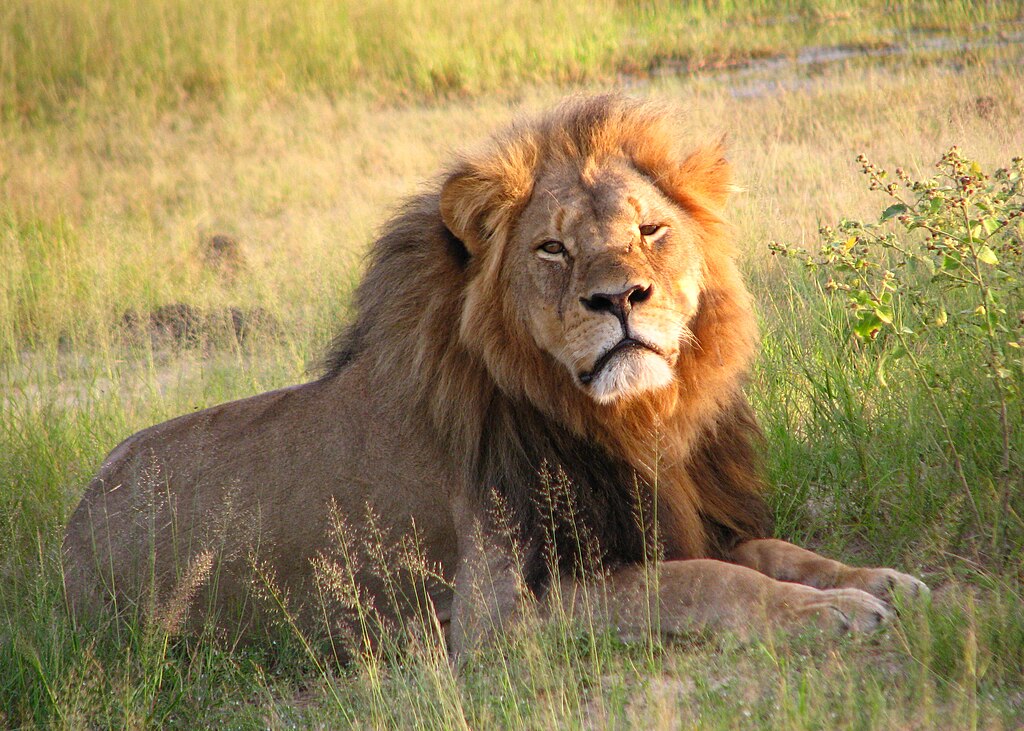
Cecil the lion – Image: Daughter#3, CC BY-SA 2.0, via Wikimedia Commons
Next stop is Africa. In 2014, Cecil the lion was killed by an American sport and trophy hunter in Zimbabwe. A similar incident was reported just a few days ago in Anger after trophy hunter kills lion that was part of a research project:
Wildlife groups have condemned the killing of a collared lion, part of a research project in Zimbabwe, by a trophy hunter. The incident echoes the infamous case of Cecil the lion, whose death at the hands of an American tourist in the same country a decade ago sparked international outrage.
The latest lion, known as Blondie, was involved in an Oxford University study and wore a research collar sponsored by Africa Geographic, a safari company.
Africa Geographic stated that Blondie was killed by a hunter in June, close to the country’s flagship Hwange National Park. The lion was reportedly lured out of a protected area and into a nearby hunting zone using bait.
Killing a large animal with a high-powered rifle requires just one thing – a sadistic mind. No courage is necessary.
Fortunately, there is some justice and karma meted out to a veteran sport and trophy hunter in South Africa. Millionaire gored to death by ‘crafty and belligerent’ African buffalo he was hunting makes for pleasant reading. It is reported that Ranch trader Asher Watkins was killed when a 1.3-ton Cape buffalo he was tracking charged from the brush and struck him, killing the 52-year-old hunter almost instantly.
The firm, which organized the hunt, in a statement mourning the loss of their client, essentially declared that the sentient animals it targets are merely objects. Cape buffalo live in large herds based on extended family groups that protect each other. The herds have leaders, and when lions, hyenas, and other predators attack individuals, the herds look after their own.
“It is with deep sadness and heavy hearts that we confirm the tragic death of our client and friend Asher Watkins from the USA,” said Hans Vermaak, on behalf of CV Safaris, which organized the expedition. “On Sunday, while on a hunting safari with us in South Africa’s Limpopo Province, Asher was fatally injured in a sudden and unprovoked attack by an unwounded buffalo. He was tracking it together with one of our professional hunters and one of our trackers. This is a devastating incident, and our hearts go out to his loved ones.”
Unprovoked attack? Watkins was going to shoot the Cape Buffalo. The creature was defending itself.
A friend of Watkins lamented the loss. “On an African safari with his beloved mother, brother and stepdad, Asher came face to face with one of Africa’s legendary buffalo,” said Shannon Wherry on social media. “In a moment of fearlessness as he lived his life, he met the challenge head-on, leaving this world a man of courage, faith and adventure.”
Killing a large animal with a high-powered rifle requires just one thing – a sadistic mind. No courage is necessary.
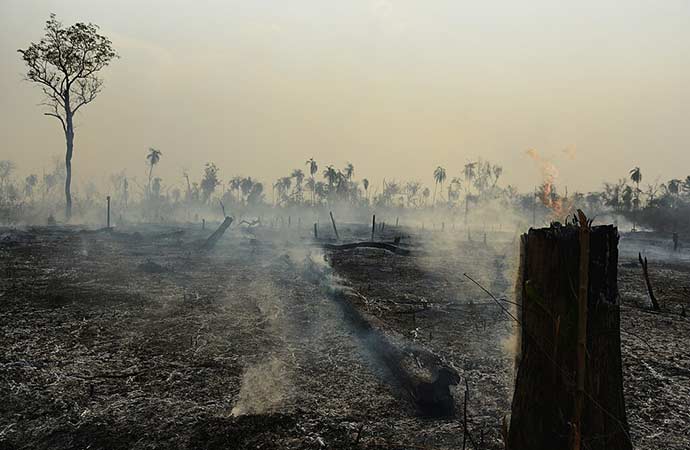
Amazon deforestation – Image: Ibama from Brasil, CC BY 2.0, via Wikimedia Commons
The destruction of the Amazon River ecosystem, whose forests are the lungs of our planet, continues unabated. Amazon deforestation surges in Colombia, reversing historic gains is replete with devastating news:
Colombia’s government reported on Thursday a sharp overall rise in deforestation in the country’s Amazon rainforest for last year, reversing much of the progress made during a historic low in 2023.
The national meteorological agency said pasture expansion for cattle, illicit crops, illegal mining, and unregulated infrastructure development were to blame.
The data was released just a month after Colombia’s environment ministry had noted a drop in the destructive practice in the first quarter of this year, citing stronger community coordination and a crackdown on environmental crime.
The overall figures for last year show that the country lost 113,608 hectares (about 280,700 acres) of forest in 2024 — a 43% increase compared to the year before, when deforestation had dropped to its lowest level in over two decades.
‘Every minute, we lose large sections of forests in the Americas, Australia, Africa, and Asia due to logging, land clearing for agriculture and mining, and forest fires caused by the effects of global warming.’
Due to global warming, the Amazon forests suffer massive losses from forest fires, and it is only getting worse.
Forests produce oxygen, and they absorb greenhouse gases, such as CO2 and methane. This article, EU climate goals at risk as ailing forests absorb less CO2, scientists say, should concern all:
Damage to European forests from increased logging, wildfires, drought and pests is reducing their ability to absorb carbon dioxide, putting European Union emissions targets at risk, scientists warned on Wednesday.
The European Union has committed to reaching net-zero emissions by 2050. The target includes the expectation that forests will suck up hundreds of millions of tonnes of CO2 emissions and store it in trees and soil, to compensate for pollution from industry.
But that assumption is now in doubt. The average annual amount of CO2 Europe’s forests removed from the atmosphere in 2020-2022 was nearly a third lower than in the 2010-2014 period, according to a paper led by scientists from the EU’s Joint Research Centre – its independent science research service.
In the later period, forests absorbed around 332 million net tonnes of CO2 equivalent per year, said the paper, published in the journal Nature. Recent data from EU countries suggest an even steeper decline.
Every minute, we lose large sections of forests in the Americas, Australia, Africa, and Asia due to logging, land clearing for agriculture and mining, and forest fires caused by the effects of global warming. Palm oil production is exploding and has now reached Africa and South America, converting vibrant native forests with a rich biodiversity into plantations.
‘Bird populations globally are plummeting due to habitat loss, overfishing, pollution, and climate change. President Donald Trump’s reckless budget cuts are harming wildlife conservation efforts everywhere.’
Let’s go closer to home with How Trump is Endangering North American Birds :
The data produced by bird banding has allowed scientists to bring species back from the brink of extinction, prove the effects of climate change, and even create sanctuaries to protect endangered birds. But now that’s all at risk thanks to Donald Trump, who has promised to radically slash funding to the USGS. The implications are huge on both sides of the border.
Most of the bands used in North America come from the USGS – without it, there’d be no way to distribute those bands across the continent. And because the USGS is the data hub for all the bird band reports collected in the U.S., the government’s cuts will mean that scientists in both the U.S. and Canada will be unable to track birds’ movements.
Bird populations globally are plummeting due to habitat loss, overfishing, pollution, and climate change. President Donald Trump‘s reckless budget cuts are harming wildlife conservation efforts everywhere.
The struggle to protect wildlife around the world as Trump’s aid cuts start to bite notes:
But decades of hard-won progress [in Zambia’s Lower Zambezi National Park] are now under direct threat from cuts to US overseas aid. Specifically, frozen financing from the US Fish and Wildlife Service (USFWS) has left a $900,000 (£680,000) hole in CLZ’s finances over the next four years. The past few months have left the charity “scrambling” to fill gaps where they can, says fundraising manager Frances Hannah, including by cutting the number of patrols it carries out and reducing activities in other programme areas.
“Since the freeze came in January, we’ve been playing chess with our funding to cover gaps where we can,” says Hannah. “The walls are closing in, and I don’t think anyone wants to discuss what kind of cuts we may have to make next, because it is not going to be good.”
Humanity’s determination to voluntarily commit suicide is either folly or the ultimate expression of human nature.
I continue to remain optimistic that we can somehow reverse the onslaught leading to the sixth great extinction, an event entirely of our making, because I must. I cannot fathom surrendering. We have an obligation to resist and fight back as best we can for the sake of all life on Earth.
Disclaimer: The opinions expressed in this article do not necessarily reflect the views of WestmountMag.ca or its publishers.
Feature image: cottonbro studio – Pexels

Other articles by Irwin Rapoport
Other recent articles
 Irwin Rapoport is a freelance journalist with a bachelor’s degree in history and political science from Concordia University.



 January 6, 2026" />
 through digital innovation" />
 looks back at 2025" />
 online betting rules?" />
 a film by Andrés Livov" />
 for its 16th edition" />
 Passion fruit meringue verrine" />
 playful clownish escapade" />
 World rhythms on stage" />
 management mistakes" />
 Kensington Avenue" />
 Vegan Chili Chocolate Cake" />
 Bethune tunnel" />
 Left out of breath" />
 of business strategy" />
 damage before it starts" />


 into a professional career" />

 plumbing issues at home" />
 embraces bold cinema" />
 Red snapper papillote" />
 the Legend of Pepita" />
.jpg)
.jpg)
Good article.
There is always hope, especially in the eyes of children, not yet corrupted by the reality of our world.
The political pendulum has swung from the left to the extreme right. Trying to establish equilibrium has always been difficult. The objective here is to attempt a balanced approach, even if we cannot always agree. The children that Irwin speaks of are the first step towards that goal. The environment wll change and unfortunately, due to our having lost our course, most known species will go, but people will adapt to a new world.
Georges Dupras