Echoes from Mesopotamia :
Oriental musical poetry
Studio de musique ancienne de Montréal unveils Arab-Persian treasures at Notre-Dame-de-Bon-Secours Chapel
March 6, 2026
The Studio de musique ancienne de Montréal invites you on a concert‑journey to the roots of musical Mesopotamia with Échos de Mésopotamie, presented on Wednesday, March 11, 2026, at 7:30 p.m. at the historic Notre-Dame-de-Bon-Secours Chapel in Old Montreal. Under the intimate vaults of this storied venue, Ensemble Urmawi, led by acclaimed singer and instrumentalist Lamia Yared, draws audiences into the refined Persian and Arab music of the 18th and 19th centuries, a captivating repertoire still rarely heard in Montreal.
The ensemble takes its name from Ṣafī al‑Dīn al‑Urmawī, a 13th‑century musician and theorist, born in Iran and who died in Baghdad, a key figure in the music theory of the Arab‑Persian world. Inspired by this major historical figure, the group embraces an approach that is both scholarly and vibrantly alive. This concert is a living dialogue with a heritage in constant resonance. With Échoes de Mésopotamie, audiences are invited to explore a vast cultural territory – from Iran to Syria, by way of Tunisia – that shone for centuries under the influence of the Abbasid dynasty and far beyond.
The Urmawi ensemble holds an artistic vision that is both deeply grounded and resolutely contemporary, a powerful dialogue with a heritage in perpetual motion.
Throughout the evening, Mesopotamia unfolds as a richly textured soundscape, woven from modes, rhythms, and poetry that have shaped musicians’ imaginations for generations. For the SMAM, renowned for its work on European repertoires from the Middle Ages to the Baroque, this ambitious project represents a natural and exhilarating opening toward other great learned traditions born of a shared Mediterranean and Near Eastern history.
History, Poetry, and Abbasid Refinement
The guiding thread of the evening is clearly stated: a journey in which history, poetry, and the refinement of the Abbasid heritage are brought about. This takes shape in an alternation of vocal and instrumental forms, carried by different languages, eras, and styles, yet unified by a shared pursuit of beauty and expressive depth. Persian tasnifs, Arabic muwashahat, and both folk and art instrumental pieces converse with one another to reveal the musical richness of this vast region.
Poetry occupies a central place. From Hafez Shirazi to Rumi, from anonymous Syrian poets to 20th‑century Tunisian authors, the texts summon in turn mystical love, desire, the vertigo of beauty, the fragility of the heart, and the distance between beings. The very titles of the pieces, often accompanied by a brief translation, act as doorways into this universe: “The Whirl of the Violet,” “The Call of Love Cried Out,” “Between the Rose and the Rosewater, the Eternal Decree: One Exposed, the Other Veiled,” “Ask the Stars of the Night, They Will Speak to You of Me.”
Conceived as a journey, the program reads almost like a narrative poem. It opens with the 18th‑century Uzbek instrumental piece Muhammasi Rost, which immediately establishes a modal and rhythmic atmosphere conducive to listening. It is followed by Tabe Banafsheh – The Whirl of the Violet –, a tasnif from the Persian repertoire attributed to Sama Hozour (18th century), in which the delicacy of the floral image mirrors the melodic refinement.
The focus then turns toward the Arab world with Bassimoun ‘an la alin – A Smile from Beyond the Pearls –, a muwashah composed by the Tunisian Saleh El Mehdi in the 20th century on a poem by Al Shahab al Mousli. The concert thus shifts between temporalities, bringing together older works and more recent creations that remain firmly rooted in traditional forms. Da’i el Hawa – The Call of Love –, a muwashah by the Syrian Omar El‑Batch (20th century), extends this thread in which music becomes the amplified echo of a passionate love, at once human and mystical.
Bawz – The Kiss – introduces a more contemporary dimension: it is a composition by Showan Tavakol on a poem by Rumi, proof that the texts of the great Persian mystics continue to inspire new creations. Next comes Dhatou al Wishah – That Lady with the Shawl –, an anonymous Syrian muwashah in which we once again encounter the subtle descriptive touches and muted sensuality that are characteristic of this poetic‑musical genre.
‘Through this concert, Mesopotamia becomes a soundscape woven from modes, rhythms, and poetries that have shaped the imagination of generations of musicians.’
One of the evening’s most striking moments is Dar kar golab w gal – “Between the Rose and the Rosewater, the Eternal Decree: One Exposed, the Other Veiled,” a tasnif from the Persian repertoire composed by Mazaqi Ajam for the Persian emperor Shah Abbas in the 16th century, inspired by a poem by Hafez Shirazi. Here, the alliance of politics, spirituality, and art reaches its peak: commissioned for a ruler and nourished by mystical poetry, the music becomes a symbolic mirror of power and of the soul.
An improvisation in the Sahari mode for cello and kamanche creates a suspended moment; wordless yet laden with memory, this dialogue between Western and Eastern strings highlights the richness of the modes and the music’s ability to reinvent itself in the very act of performance. Drawn from the Persian repertoire, “Nazar Deli – The Gaze of the Fragile Heart” extends this atmosphere of introspection.
The program then returns explicitly to the tutelary figure of Ṣafī al‑Dīn al‑Urmawī with Ala Sabbikoum – “O Noble Ones, Be Kind.” Taken from a manuscript by the master, preserved in Urmia, Iran, this piece recalls the deep historical roots of the tradition that the ensemble brings back to life. Renge Dashti, a Persian folk instrumental piece, introduces a more popular, almost dance‑like energy, while remaining firmly grounded in a sophisticated modal universe.
The journey concludes with Fika koullou ma ara hasan – “In You I See All Beauty” – and Sal noujoum al layl – “Ask the Stars of the Night, They Will Speak to You of Me.” These Syrian muwashahat, one of which is anonymous, bring the listener back to the heart of the Arab aesthetic, where the supple, ornamented vocal line conveys a discourse of love addressed as much to the beloved as to the divine.
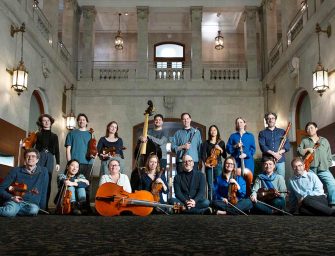
To bring this mosaic of pieces to life, the Urmawi ensemble unites musicians from diverse backgrounds, all deeply versed in the subtleties of Near Eastern music. Lamia Yared leads with voice, oud, and musical direction, shaping her interpretation around an expressive vocal line and finely nuanced work with the micro‑intervals characteristic of Arab‑Persian modes. At her side, Showan Tavakol (kamanche and compositions) forges a link between tradition and creation, notably through Bawz and the improvisation in the Sahari mode. Cellist Sheila Hannigan provides a sonic bridge to the Western world while fully embracing the logics of Eastern modal practice, enriching the ensemble’s timbral palette. Joseph Khoury, on riqq and daf, sets in motion the rhythmic cycles that support both muwashahat and tasnifs, playing on the contrasts between inner pulsation and flashes of virtuosity.
‘The guiding thread of the evening is clearly stated: a journey in which history, poetry, and the refinement of Abbasid heritage are brought into the light.’
The qanun of Nizar Tabcharani unfolds a delicate harmonic and melodic lacework, characteristic of learned Arab music, while Aymen Trabelsi, on nay, brings that slightly veiled, nostalgic breath immediately associated with the soundscapes of the Levant. Together, they shape an ideal setting for the voice, in which every ornament, every silence, every instrumental cue deepens the expressive density of the musical narrative.
Échos de Mésopotamie is more than a simple themed concert; it is an invitation to listen differently to the musical heritage of the Near East, through a program that patiently weaves connections between history, poetry, and memory. In the intimacy of the Chapelle Notre-Dame-de-Bon-Secours, this offering takes on an almost contemplative dimension, giving Montreal audiences the rare opportunity to hear, in a single gesture, voices and instruments that still carry the resonances of Baghdad, Isfahan, Aleppo, and Tunis.
Program
Muhammasi Rost
Uzbek instrumental piece, 18th century
Tabe Banafsheh
The Whirl of the Violet
Tasnif from the Persian repertoire, Sama Hozour, 18th century
Bassimoun ‘an la alin
A Smile from Beyond the Pearls
Muwashah composed by Saleh El Mehdi, Tunisia, 20th century, on a poem by Al Shahab al Mousli
Da’i el Hawa
The Call of Love Cried Out
Muwashah written by Omar El-Batch, Syria, 20th century
Bawz
The Kiss
Composition by Showan Tavakol on a poem by Rumi
Dhatou al Wishah
That Lady with the Shawl
Anonymous muwashah, Syria
Dar kar golab w gal
Between the Rose and the Rosewater, the Eternal Decree: One Exposed, the Other Veiled
Tasnif from the Persian repertoire by Mazaqi Ajam for the Persian emperor Shah Abbas, 16th century, on a poem by Hafez Shirazi
Improvisation in the Sahari mode, for cello and kamanche
Nazar Deli
The Gaze of the Fragile Heart, from the Persian repertoire
Ala Sabbikoum
O Noble Ones, Be Kind
Safi al-Din al-Urmawi – From the manuscript of Safi al-Din al-Urmawi, Urmia, Iran
Renge Dashti
Persian folk instrumental piece
Fika koullou ma ara hasan
In You I See All Beauty
Muwashah from Syria
Sal noujoum al layl
Ask the Stars of the Night, They Will Speak to You of Me
Anonymous muwashah, Syria
Performers
Urmawi Ensemble
Lamia Yared, chant, oud et direction
Showan Tavakol, kamanche and compositions
Sheila Hannigan, cello
Joseph Khoury, riqq and daf
Nizar Tabcharani, qanûn
Aymen Trabelsi, nay
Studio de musique ancienne de Montréal
Founded in 1974, the Studio de musique ancienne de Montréal is an internationally renowned professional vocal ensemble dedicated to rediscovering the music of the Renaissance and Baroque. With its refined, historically informed approach, firmly rooted in a contemporary sensibility, it continually lends forgotten masterpieces a fresh resonance for today’s audiences.
The SMAM does not confine itself to performing for specialists; it opens its music to the city at large. Tickets at $10 for those under 34, free admission for children and for companions of people with disabilities, outreach to marginalized communities, and a commitment to sustainable development that extends even to its scores—as recently demonstrated by Ode à la Terre—all attest to this mission.
Échos de Mésopotamie
March 11, 2026, at 7:30 p.m.
Chapelle historique Notre-Dame-de-Bon-Secours
400 Rue Saint-Paul East
Information: Yoan Leviel • y.leviel@smamontreal.ca • 438 939 5005
Image: Courtesy of SMAM