
Zoo highlights Quebec’s
incredible biodiversity
Ecomuseum promotes environmental awareness and concern for animals and their habitat
By Irwin Rapoport
August 21, 2025
The Ecomuseum Zoo in Ste. Anne de Bellevue is home to many species of animals, amphibians, reptiles, and birds found in the St. Lawrence River Valley, and for more than thirty years has provided an opportunity for people of all ages in the Greater Montreal Area to see these creatures up close and learn about them and their habitat.
I recently featured the Ecomuseum in Meet Quebec’s amphibians and reptiles, which highlights the zoo’s research mission as part of the overall goal to raise awareness and protect the environment. The zoo, located at 2125 Sainte Marie Road, is a popular year-round destination whose reputation is enhanced by its many education programs. We still have a few weeks of summer, which is a perfect time to visit the zoo.
Sarah Prince-Robin, BA, MA, the Ecomuseum’s Communications and Public Affairs Director, answered a few questions about its founding, mission, animals it looks after, and programs.
WM: Can you tell us about the founding of the Ecomuseum, how it transitioned to its current role?
 Prince-Robin: The St. Lawrence Valley Natural History Society (SLVNHS) was founded in 1981 by McGill University professor Dr. John Roger Bider. A visionary of his time, in his perception of the need to educate children about the environment, Bider’s vision was of a society in which every individual respects and protects the environment. To make this dream a reality, in 1988, he opened the Ecomuseum Zoo as the focal point for SLVNHS’s environmental education, research and conservation activities. Although initially composed of modest facilities, the zoo came into light thanks to the great determination of Bider and the founding committee he recruited.
By 1989, the Ecomuseum was offering its first educational programs on-site, as well as off-site on the road. In 1992, the first official administrative/public/educational pavilion was constructed to provide basic visitor services, some indoor small animal exhibits, and rooms for educational activities. The number of animals welcomed by the zoo and outdoor exhibits has already progressed substantially. In 1996, the Ecomuseum opened its doors to the public for the first time during the winter; it has since opened for 364 days a year, closing only on December 25 and welcoming an average of 140,000 visitors per year.
The Ecomuseum’s past achievements are ideally expressed in a context of sustained growth in the organization’s mission and scope.
- More than 30,000 young people take part in the zoo’s educational programs each year, making it one of the most effective zoos in Canada in terms of environmental education for young people.
- An average of fifteen scientific conservation programs is conducted annually.
- Maintenance of its self-financing for 37 years now, with a growth from 5 to 75 employees from 2005 to 2025
- Numerous awards and recognitions
WM: A key mission of the Ecomuseum is to promote an appreciation of Quebec’s diverse wildlife and how we can protect these creatures and their habitat. Can you speak about this mission, its field studies, and conservation initiatives?
Prince-Robin: The mission of the Ecomuseum is to promote appreciation and knowledge of the physical and biological characteristics of the St. Lawrence Valley, as well as responsible stewardship of its natural environments through education, applied research and conservation.
Conservation and research activities were already underway before we officially opened to the public, and they provide invaluable knowledge for implementing conservation measures to safeguard and protect specific animal species and habitats.
Our expertise with amphibians and reptiles makes the Ecomuseum a provincial leader in the field of herpetology, and it has been running numerous programs across Quebec annually since 1986, in conjunction with public and private sector partners.
The mission of the Ecomuseum is to promote appreciation and knowledge of the physical and biological characteristics of the St. Lawrence Valley, as well as responsible stewardship of its natural environments through education, applied research and conservation.
WM: The Ecomuseum is home to many species. Could you highlight some of these creatures from the common to the rarely seen?
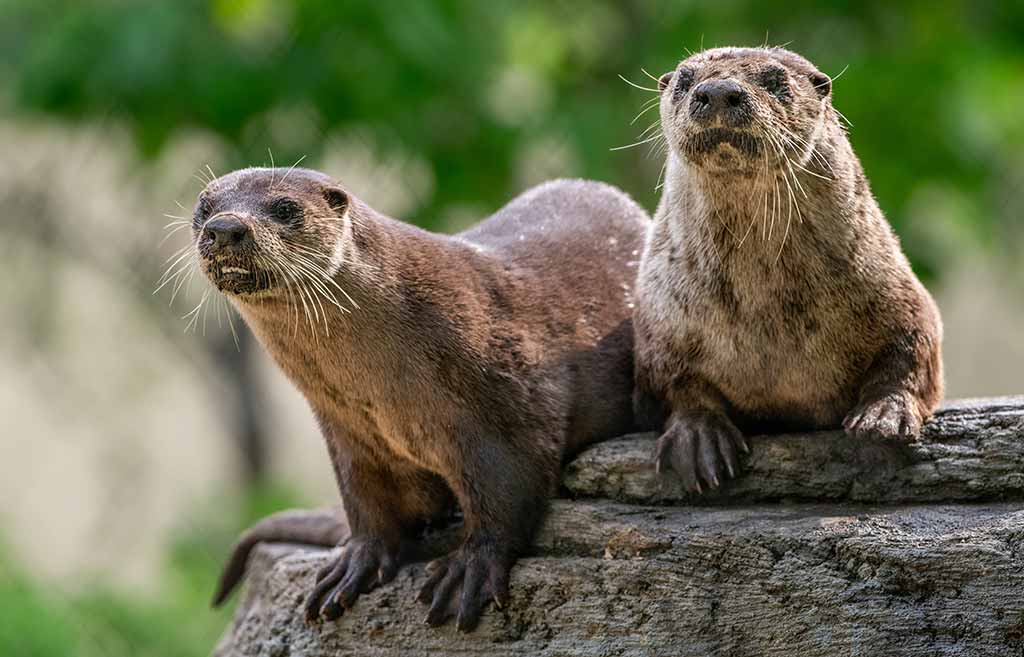
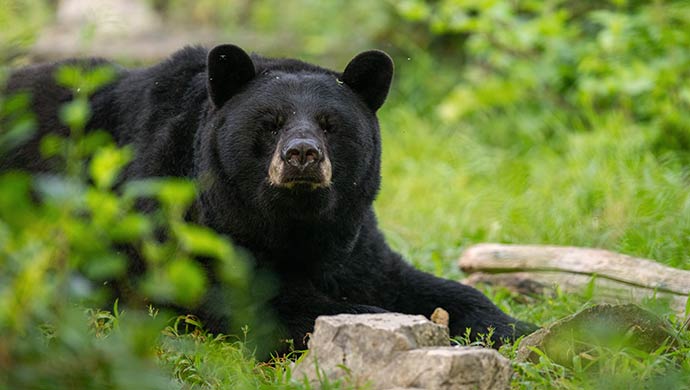
Prince-Robin: Visitors love to see iconic species such as the River Otters, Black Bears, and Golden Eagles that truly represent Quebec’s wilderness. But the Ecomuseum also highlights species that people rarely get the chance to see up close in nature. The indoor section with reptiles, amphibians, and fish is a highlight for children. For example, the Wood Turtle is a vulnerable species in Quebec. In the wild, only about two individuals out of all the eggs laid in a lifetime will survive to adulthood. It’s an incredible animal that most people would never encounter without a visit here.
Another rare and discreet animal is the Fisher, a member of the Mustelidae family, that is almost never spotted in the wild and has a bad reputation because it can be a predator of cats.
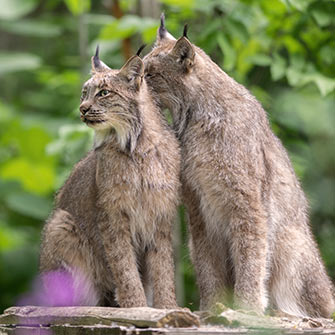
Visitors also enjoy discovering animals of all sizes, from the Canada Lynx to the Painted Turtle, and even the tiny Spring Peeper frog, which plays an outsized role in our ecosystems. Every animal has a story: some were rescued after being injured, some were orphaned, and others were born under human care.
Every encounter with a creature is meaningful. By meeting them, visitors not only learn fascinating facts but also gain a deeper understanding of why it is so important to protect their habitats and ensure a future for Quebec’s incredible biodiversity.
WM: What goes into taking care of animals large and small?
Prince-Robin: Caring for animals large and small goes far beyond simply providing food and shelter. Our team is dedicated to ensuring every animal’s physical, mental, and emotional well-being on a daily basis. That means developing specialized diets, offering attentive veterinary and daily care, and designing living spaces that encourage natural behaviours.
One of the most effective tools we use is cooperative training, as shown in one of our recent YouTube videos. These sessions allow animals to voluntarily participate in their own care, such as stepping onto a scale, opening their mouths for examination, or moving into a specific space for treatment. By building trust between the animals and our team of animal keepers, we reduce stress and make every medical procedure safer and more humane.
Every animal receives enrichment tailored to its natural instincts. This might include puzzle feeders that encourage problem-solving, new scents that stimulate curiosity, floating objects that let otters play and dive, or perches and structures that allow birds of prey to practice their agility. Enrichment is about giving the animals opportunities to express the full range of behaviours they would show in the wild.
‘Caring for animals large and small goes far beyond simply providing food and shelter. Our team is dedicated to ensuring every animal’s physical, mental, and emotional well-being on a daily basis.’
WM: The zoo recently welcomed a newborn baby otter. How is it doing?
Prince-Robin: The birth of a pup is truly a rare and precious event. At the Ecomuseum, most reproduction is carefully managed to avoid births. It took more than thirty years before we saw this happen with the River Otters in our care. Everything had been planned, should the need arise, from the design of their living space and maternity facilities to veterinary protocols and even the possibility of transfers to other accredited zoos if needed.
The pup was born in the spring in a den prepared by its mother and later moved into a specially designed indoor maternity area. At birth, it was blind, deaf, and toothless, completely dependent on its mother for warmth, feeding, and learning. In those early weeks, the mother kept her baby well hidden, and our team monitored its development at a distance using discreet cameras. Routine medical care only began once the pup was about two months old, and the introduction of the father was done gradually after the pup had learned to swim.
Today, the pup is thriving. It has already started cooperative training sessions with our animal care team, which helps build trust and ensures veterinary care can be provided with minimal stress. Visitors may sometimes catch a glimpse of the young otter playing or swimming alongside its mother, though it still enjoys the comfort of hiding spots.
WM: The Ecomuseum is a popular destination for families, school field trips, and nature enthusiasts. Can you tell us about the youth and community educational programs and how people can volunteer to help with zoo operations?
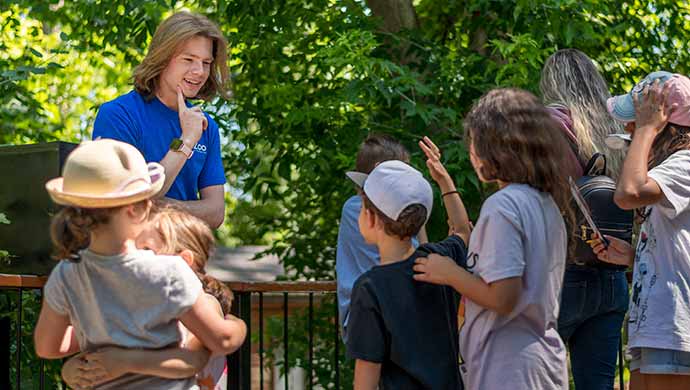
Prince-Robin: The Ecomuseum has made environmental education the central pillar of its mission. Through a varied educational program, we offer more than 25 different school and community programs.
Educational institutions, education professionals, conservation and community organizations, the public, and the media all turn to the zoo as an expert in environmental awareness/education, Quebec biodiversity, urban wildlife and many other related subjects. The zoo’s permanent exhibits, displays, in situ and ex situ public interventions in a variety of forms, and integration of social media, continually raise awareness among all its visitors and the Quebec public of the importance of protecting local flora and fauna.
The zoo offers a variety of on-site and in-school programs developed specifically for the educational community, from preschool to university level. The themes serve as vehicles for introducing the various wildlife, environmental and conservation concepts that are found in all programs.
Another impactful way people can get involved is through our citizen science programs, particularly the monitoring of anurans – frogs and toads – in local wetlands. Volunteers identify species by their unique calls and record observations that help track population trends. Another program invites volunteers to photograph reptiles and amphibians and submit basic information about their sightings online. These contributions feed into the Atlas of Amphibians and Reptiles of Quebec, a province-wide conservation initiative that collects vital data on species distribution and abundance. Volunteers not only support scientific research and conservation but also develop a deeper connection to Quebec’s biodiversity, knowing that their contributions have a real impact on protecting fragile ecosystems.
‘We are constantly working to improve our facilities and programs, to design even more enriching living spaces for the animals in our care, and to create more immersive and educational experiences for our visitors.’
WM: How can the public support the Ecomuseum and its activities?
Prince-Robin: Simply visiting is already an act of support: every admission helps us provide the best possible care for the animals and funds our conservation and education programs, as we are a non-profit organization. People can also become members, which allows them to enjoy the zoo year-round.
We also offer an Animal Sponsorship Program, where individuals, families, or groups can symbolically adopt one of the animals in our care. Direct donations are another essential way of helping. Whether large or small, every donation goes straight to our day-to-day operations.
Families and groups can also support us by celebrating their special events at the zoo or by booking one of our Experience+ activities, such as “Breakfast for the Animals”, “Holiday Feast”, or “Starlight promenade.”
Following us on social media, sharing our stories, and helping spread awareness about local biodiversity are all important ways of strengthening our mission. We are constantly working to improve our facilities and programs, to design even more enriching living spaces for the animals in our care, and to create more immersive and educational experiences for our visitors.
Images: courtesy of Ecomuseum Zoo

Other articles by Irwin Rapoport
Other recent articles
 Irwin Rapoport is a freelance journalist with a bachelor’s degree in history and political science from Concordia University.



 January 6, 2026" />
 through digital innovation" />
 looks back at 2025" />
 online betting rules?" />
 a film by Andrés Livov" />
 for its 16th edition" />
 Passion fruit meringue verrine" />
 playful clownish escapade" />
 World rhythms on stage" />
 management mistakes" />
 Kensington Avenue" />
 Vegan Chili Chocolate Cake" />
 Bethune tunnel" />
 Left out of breath" />
 of business strategy" />
 damage before it starts" />


 into a professional career" />

 plumbing issues at home" />
 embraces bold cinema" />
 Red snapper papillote" />
 the Legend of Pepita" />