
Extinction on My Mind:
Eliminating the Taboo
Eliminating once and for all our taboos against discussing the extinction of the human race
By Randi Hacker
June 19, 2025
You know, as go the oceans, so we. David Attenborough said that, or something like that, I think.
And the we, of course, refers to more than us human beings.
In past extinctions, marine life was always hardest hit. And that was without anthropogenic toxins such as sun screen and melted lithium batteries, and plastic.
On an island between Australia and New Zealand, the birds have eaten so much plastic that they crunch. It breaks my heart.
We are destroying the only place in the known universe that we have to live. How stupid is that?
Our assault just doesn’t stop. For example, though big corporations both here and abroad are being sued for environmental destruction, the big corporations don’t have to do anything because they’ll appeal and appeal and appeal or the court will make a decision like this one that grants anyone the right to sue any big corporation with the understanding that this is completely separate from whether or not the corporation can be held accountable.
We are destroying the only place in the known universe that we have to live. How stupid is that?
I’ve said it before, and I’m saying it again here: We are the only species that has to sue itself to protect itself from itself. And even that doesn’t always work.
I was having lunch with a friend the other day, and she told me that she understands she is powerless to protect her child from what is shaping up to be a horrific future, and she realizes that the only thing she can do is love and care for the child.
Exactly right. Or at least I think so.
In my novella, the main character Ellie asks her daughter and grandchild to move in with her.
It is a beautiful day on Earth. You can almost apprehend infinity in the blue of the sky. Cirrus clouds glide across, now and then covering the sun, but not for long, which is good because it gets a little chilly when that happens.
A familiar CrossTrek with New York plates pulls into Ellie’s driveway.
Mitzi and Rae have come to visit.
And here comes Rae now, running up the path, roller bag in tow, calling, “Granny! Oh Granny! We’re here at last!”
Soon, all three of them are standing in the mudroom. It’s a little crowded, but Ellie has something she wants to say.
“I want you to come and live with me,” she says.
“I want to live with Granny,” says Rae.
Mitzi snorts. “Let’s give it a week and see if you still feel the same way.”
“I want to live with Granny,” says Rae.
“I’d just feel better if you were up here with me,” says Ellie.
“Granny’s worried about climate change,” says Rae, taking Ellie’s hand. “Isn’t that right, Granny?”
“Something like that,” says Ellie.
“So am I,” says Rae.
“Is that true?” says Mitzi.
Rae nods.
“How come you never mentioned that before?” says Mitzi.
“It never came up,” says Rae.
Mitzi looks from her child to her mother.
“Did you put her up to this?” she says.
“Really?” says Ellie.
“It’s all me, Mom,” says Rae.
“Think about it,” says Ellie. “That’s all I’m asking.”
“I don’t have to think about it,” says Rae. “I want to live with Granny.”
Mitzi clenches her jaw. “Let’s unpack,” she says. She takes a step. Ellie holds up her hand. “Shoes,” she says. And only after Mitzi and Rae have removed their shoes does she release them into the rest of her house.
‘I was having lunch with a friend the other day, and she told me that she understands she is powerless to protect her child from what is shaping up to be a horrific future, and she realizes that the only thing she can do is love and care for the child.’
Later, when Ellie is sitting on the porch with snacks and a drink, and Dvorak’s underappreciated 8th Symphony is playing on the radio, Mitzi and Rae show up at the screen door.
“Have you thought about it yet?” asks Ellie.
Mitzi laughs.
“I want to live with Granny,” says Rae.
“Stay inside,” says Mitzi. “There’s something I want to talk to Granny about.”
“What is it?” asks Rae.
“Are you seriously asking me that question?” says Mitzi.
Rae laughs and slides the screen door shut.
Mitzi waits.
Rae laughs again and slides the glass door shut.
Mitzi leans on the porch railing and looks out.
Ellie comes to stand beside her. She offers Mitzi her glass. Mitzi takes it and takes a sip.
“Nice,” she says.
“Vodka and ice-cold pineapple juice,” says Ellie.
“Nice,” says Mitzi.
They lean on their forearms and look out over the yard. It is wild. Long grasses. Burdock. Knotweed. Milkweed. Cosmos all feathery and fuchsia and yellow. Zinnias, single and double, white and red and orange. The bright pink of a rosa rugosa. And all over and everywhere, madly, coreopsis.
A narrow, beaten path runs from the basement door to the fenced vegetable garden, a haven of order in the otherwise unbound foliage.
“What’s going on with the yard, Mom?” says Mitzi.
“It’s part of my preparation for extinction,” says Ellie. “Letting things go. A little at a time. It was time to let the flower garden go. I’m not even sure if it makes sense to plant garlic in the fall.”
Mitzi turns her head to look at her mother.
“You’re serious about this,” she says. “Human extinction.”
“Dead serious, dear,” says Ellie. “No pun intended. It’s coming.”
“When?” asks Mitzi.
“Well,” says Ellie, “my friend Lilith thinks we could have another two thousand years, and Jason thinks it could happen in our lifetime.”
“Cousin Jason?” asks Mitzi.
“Yes,” says Ellie.
“Cousin Jason thinks it could happen in our lifetime,” says Mitzie.
“Yes,” says Ellie.
Mitzi breathes in and out through her nostrils.
“And what do you think?” she says.
“Somewhere in that range,” says Ellie. “But we really don’t know. We don’t know when, we don’t know how, and we don’t know who will be first.”
“And that’s why you want us to live with you?” says Mitzi. “Because you think it’s safe here?”
“Safer. For a while. Maybe,” says Ellie. “But there’s no really safe place, I don’t think.”
“So why should we leave one not really safe place for another?” asks Mitzi.
“Because,” says Ellie, placing her hand over Mitzi’s, “I can think of no more compelling a reason for a family to be together than impending extinction. Can you?”
“You’re scaring me, mom,” says Mitzi. She takes a healthy swallow of her mother’s drink.
“Good,” says Ellie, taking her glass back.
There is a tapping at the glass door. Mitzi and Ellie turn.
Rae is holding up a piece of paper on which it is written “How much longer” in capital letters, followed by a long string of increasingly big question marks.
Mitzi laughs. So does Ellie. Mitzi walks over, opens the doors, says, “You’re free to go,” and Rae bursts out onto the porch and heads straight to the table. “Hi Granny, bye Granny,” says Rae, pulling a sprig of grapes off the stem, plucking a piece of cheese off the plate, and trotting down the steps and along the path to the garden.
“Pick anything that’s ripe,” shouts Ellie.
“Roger that,” says Rae, opening the garden gate and slipping inside.
“It’s hard to imagine that becoming extinct,” says Mitzi.
“Let’s not then,” says Ellie.
‘Let’s publish a book called Extinction for Dummies, and start a conspiracy theory about it and base a reality show on it and produce a comedy special on new immigrants’ needs starring Kristen Bell and Ted Danson for Netflix about it.’
In the novel Tasmania by Paolo Giordano, there’s this passage recounting a conversation between Paolo, the narrator, and his friend, Giulio. Giulio is speaking here:
“As we eat, we first talk about an article that he pointed out to me a few days before we left. The piece advocated eliminating once and for all our taboos against discussing the extinction of the human race. We should have the courage to discuss that possibility openly, because it’s a perfectly plausible scenario, given the development of the climate.”
I couldn’t agree with Giulio more. By all means, let’s discuss it. In fact, let’s do more than discuss it. Let’s do what we do best: Focus on ourselves. Let’s write articles about how famous people are feeling about it and how it is making them better people. Let’s write studies in learned journals that evaluate the effectiveness of the extinction coping meds that will certainly be available. Let’s write sober economics PhD dissertations on the effect extinction is having on university funding. Let’s publish a book called Extinction for Dummies, and start a conspiracy theory about it and base a reality show on it and produce a comedy special on new immigrants’ needs starring Kristen Bell and Ted Danson for Netflix about it.
And “plausible scenario?” Boy howdy.
Which is why we have to pay attention now to the things that make us stop and smile: a fox trotting up the sandy path from the dam with a dead bird in its mouth, the feel of a child’s hand slipping into your own, yet another derisive remark by yet another world leader about Donald Trump.
Every day that the extinction of the human race is a plausible scenario and not a reality is a beautiful day on Earth.
Disclaimer: The opinions expressed in this article are those of the author and do not necessarily reflect the opinions of WestmountMag.ca or its publishers.
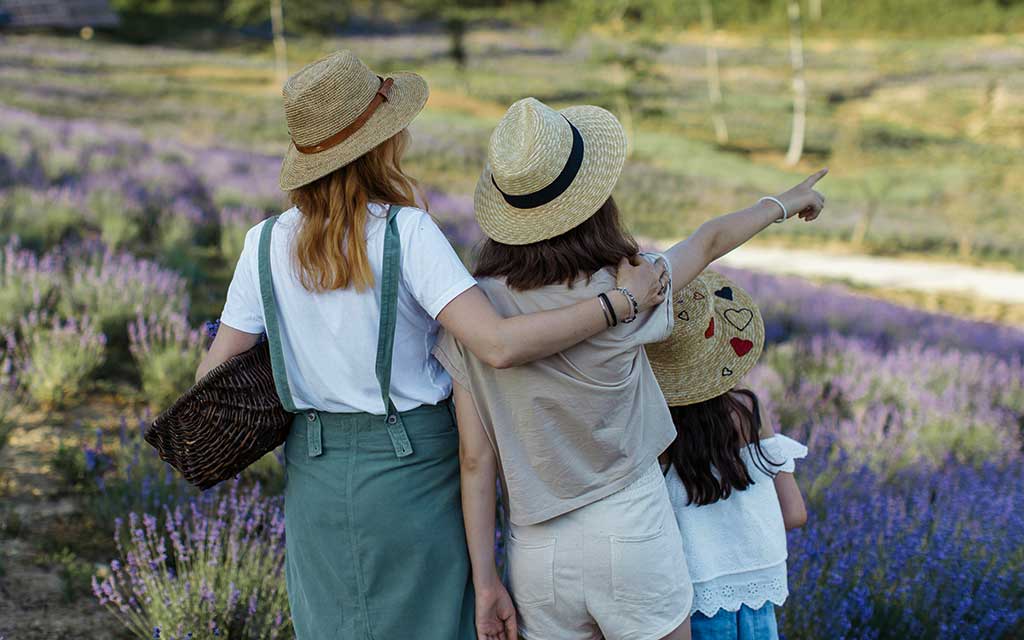
Feature image: Anastasia Shuraeva – Pexels

Other articles by Randi Hacker
Other recent articles
 Randi Hacker has been a writer and editor since the 20th century, and she’s been writing about the environment for more than thirty years, mostly to empower young people to take agency in their future. Satirical essays written with a partner appeared in the New York Times Book Review, Punch and Spy, among other publications. Her YA novel, Life As I Knew It, (Simon & Schuster) was named one of the Books for the Teen Age by the NY Public Library, and her TV show, Windy Acres, written with Jay Craven, was nominated for a New England Emmy for Writing. She just retired from her position as the resolutions copy editor for the State of Vermont, a job that has forever damaged her relationship with the comma. randihacker.com


 January 6, 2026" />
 through digital innovation" />
 looks back at 2025" />
 online betting rules?" />
 a film by Andrés Livov" />
 for its 16th edition" />
 Passion fruit meringue verrine" />
 playful clownish escapade" />
 World rhythms on stage" />
 management mistakes" />
 Kensington Avenue" />
 Vegan Chili Chocolate Cake" />
 Bethune tunnel" />
 Left out of breath" />
 of business strategy" />
 damage before it starts" />


 into a professional career" />
 plumbing issues at home" />
 embraces bold cinema" />
 Red snapper papillote" />
 the Legend of Pepita" />