
Extinction on My Mind:
My work here is done
There is simply too much evidence that we are entering the final lap
By Randi Hacker
March 5, 2026
This will be my last “Extinction on My Mind” essay.
It’s not that I’ve changed my mind about our inevitable self-extinction. It’s just that there is simply too much evidence that we are entering the final lap. You don’t need me to point it out; evidence abounds: My Extinction Evidentiary Support folder is overflowing. I mean, here in the U.S., where we are easily maintaining first place in the race to extinction, a recent week started with Republicans predicting a “total victory” over climate (“The conservative activists behind the scenes”, Lisa Freeman, The New York Times, February 10, 2026*), segued over to that absurd “coal’s BFF award” and to Trump’s order that the Department of Defense buy electricity generated by coal (“Trump orders Pentagon to buy electricity generated by coal”, John Power, Al Jazeera, February 12, 2026), and finished with the EPA repealing the science behind greenhouse gases and climate change (“Trump’s EPA revokes scientific finding that underpinned US fight against climate change”, Matthew Daly, AP, February 12, 2026).
But wait. Can you repeal or revoke science? Could you, for example, repeal or revoke the science behind, say, gravity, pregnancy or death?? Asking for a friend.
And then there’s the development that has put both nuclear energy (“Which EU countries could reverse their nuclear energy phaseouts?” Alession Dell’Anna and Naud Zaba, euronews, February 9, 2026) and nuclear war (“The end of arms control”, Sam Sifton, The New York Times, February 10, 2026) back on the table, and, in what amounts to a big”Fuck you” to Greta, Sweden is stepping back from its climate goals.
And have you seen this (“Canada has a secessionist movement on its hands. Its supporters thank Trump”, James T. Areddy, Wall Street Journal via msn, no date), from our performatively eco-friendly neighbour to the north? It’s disappointing, especially after reading The Grey Wolf, Louise Penny’s most recent and most prescient-and-self-righteous Inspector Gamache novel.
… could there be anything more paradoxical and less worthwhile to pour resources into than bitcoin mining… and AI data centers? Vast amounts of water… enormous amounts of energy… all to produce, in one case, nothing real, and, in the other case, something that relieves us of having to think…
Oh, and let’s not even get started on studies that ask how much nature is worth, that suddenly reveal that our love of money is detrimental to the earth (“More than 150 Countries Agree That Focus on GDP harms nature,” Eric Roston, Bloomberg, February 9, 2026). Surely I am not alone in saying, “Duh.”
And could there be anything more paradoxical and less worthwhile to pour resources into than bitcoin mining (“Evaluating the environmental effects of bitcoion mining on energy and water use in the context of energy transition”, Radulescu Magdalena, Kamel Si Mohammed, Abdelmohsen A. Nassani & Nicoleta Dascalu, scientific reports, March 10, 2025) and AI data centers (“Data centers for AI use huge amounts of electricity, water driving up costs and climate concerns”, Audrina Sinclair and Aida Mogos, CBS News, February 13, 2026)? Vast amounts of water, which I’m sure I don’t have to remind you is the basis of all life on earth, enormous amounts of energy, largely fossil fuel at the moment, all to produce, in one case, nothing real, and, in the other case, something that relieves us of having to think, the very quality, I might add, on which we have long hung our claim to superior species status. Of course, the time saved by not thinking does free us up to destroy our planet in funner ways: Royal Caribbean cruises, airborne hunting, monster truck rallies, to name just a few.
I’ve been thinking also about the difference between world and planet, two terms we have conflated, when, in fact, they are two different things altogether. World, I feel, refers to the human construct: our civilizations, our cultures, our beliefs, our conflicts; planet, on the other hand, I feel, refers to Earth as the third rock from the sun: the flora, the fauna, the oceans, the weather, the earthquakes. This planet gave rise to us, and, in turn, we gave rise to our world. The world that we are currently destroying.
Are we destroying the planet? Well, we are certainly doing our best.
Will we destroy the planet? I don’t know, but I have hope that we will not, that Earth will recover, and that millions of years hence, she will engender new lifeforms, and that these lifeforms will treat this life-giving, miraculous planet better than we did, by, at the very least, leaving our sorry fossil fuel asses in the ground.
‘Will we destroy the planet? … I have hope that we will not, that Earth will recover, and that millions of years hence, she will engender new lifeforms, and that these lifeforms will treat this life-giving, miraculous planet better than we did…’
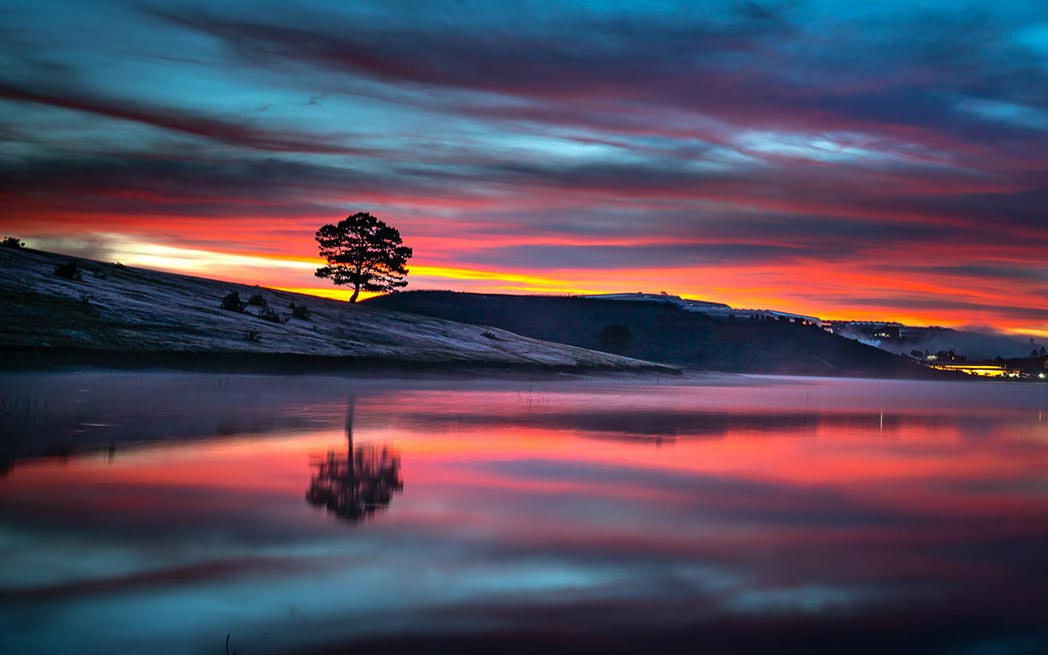
So the only thing left for me to say is this: Let’s not squander our pre-extinction days. Let’s cope with the day-to-day, relentless and heartbreaking selfishness and greed that is systematically bringing us to the end of our human world by taking in the striking beauty of a pink-striped sunset seen through the kitchen window before you close the blinds for the night; by feeling the buoyancy of that first crocus sighting of spring, even if it does happen in early February; and by the smell of petrichor in the air after a thunderstorm.
Every day that we’re still here is a beautiful day on earth.
*Articles in old school citation style with no links are those behind paywalls.
Disclaimer: The opinions expressed in this article are those of the author and do not necessarily reflect the opinions of WestmountMag.ca or its publishers.
Feature image: Quang Nguyen Vinh – Pexels

Other articles by Randi Hacker
Other recent articles
 Randi Hacker has been a writer and editor since the 20th century, and she’s been writing about the environment for more than thirty years, mostly to empower young people to take agency in their future. Satirical essays written with a partner appeared in the New York Times Book Review, Punch and Spy, among other publications. Her YA novel, Life As I Knew It, (Simon & Schuster) was named one of the Books for the Teen Age by the NY Public Library, and her TV show, Windy Acres, written with Jay Craven, was nominated for a New England Emmy for Writing. She just retired from her position as the resolutions copy editor for the State of Vermont, a job that has forever damaged her relationship with the comma. randihacker.com

 March 6, 2026" />
 My work here is done" />

 never seen before" />
 Purchase process in 2026" />
 as the climate transforms" />
 and business goals" />
 Winchester Avenue" />
 Scorched eggplant" />
 Michael Hawkes /99" />
 the world of a stray whale" />
 Selling process in 2026" />

 Emotional Intelligence" />
 Lemon blueberry sauce cake" />
 Kitchener Avenue" />
 where water meets fire" />
 Market process in 2026" />
 and resilient leadership" />
 to rules–based trade" />

 Crunchy Asian Slaw" />
 a new management role" />
 Un mar de músicas" />