Looksmaxxing, mirror
of an anxious society
Beyond the illusion of a flawless self, the quest for approval in the digital mirror age
By Andrew Burlone
April 4, 2026
There is, in the word looksmaxxing, a blend of humour and anxiety, a half‑serious meme born in some obscure corner of the internet. The neologism, born in the depths of English‑language forums before spreading to TikTok, YouTube and Reddit, refers to the art — or the compulsion — of optimizing one’s appearance. It is a world of sharper jawlines, facial ratios, targeted workouts, intensive skin‑care routines and, at times, even surgery. But behind the aesthetic façade, this seemingly trivial vocabulary points to something deeper: a collective fascination with self‑improvement, the normalization of extremes, and an obsession with controlling one’s image.
Looksmaxxing: a superficial fad or a question of identity, social comparison, and digital visibility?
At first glance, one might dismiss it as just another viral craze, one more hashtag in the endless flow of fleeting trends. Yet, as The Atlantic recently noted, looksmaxxing captures a broader drift: a compulsive need to maximize every dimension of life — from the body to productivity, from well‑being to social performance. Beauty, now turned into an algorithmic metric, has been folded into an attention economy where everything can be measured and compared.
A mirror amplified by algorithms
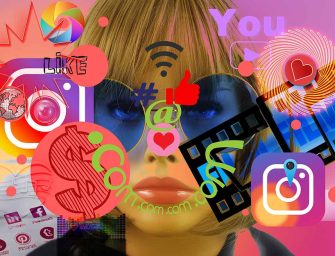
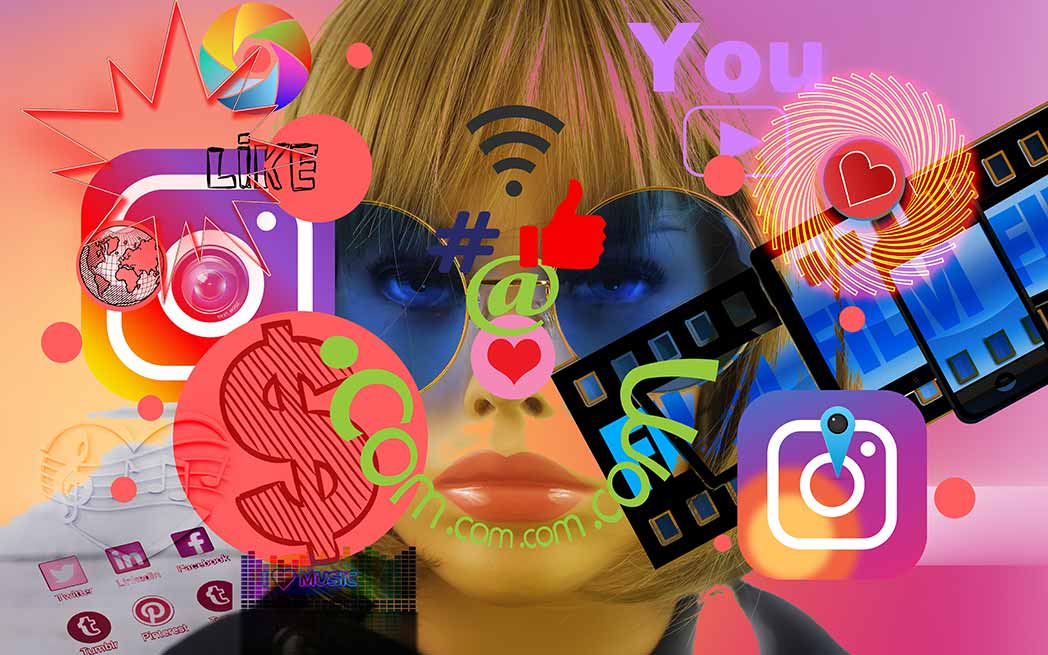
In a world saturated with images, the visual interface has become a competitive arena. Platforms calculate the “value of faces” through likes and reactions, filters rewrite features on the fly, and the blue light of screens sculpts our perception of reality. In Quebec, as elsewhere, these forces quietly shape our behaviours: from young adults’ selfie culture to the painstaking curation of professional profiles.
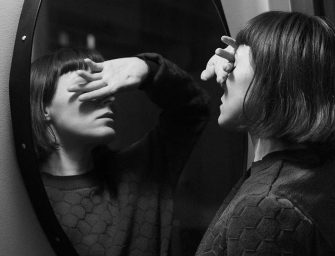
Algorithms reward whatever captures and holds the gaze. A pretty face, flawless skin, a flattering frame all become forms of social capital. Every post becomes an implicit test of one’s worth. And the more we put ourselves out there, the stronger the urge to optimize becomes. “Glow‑up” tutorials sit side by side with near‑medical skin‑care routines, photo shoots look increasingly professional, and the line between authenticity and performance grows thin. The digital mirror no longer simply reflects our image: it shapes it, reassesses it, and sometimes distorts it.
‘The digital mirror no longer just reflects our image; it shapes it, re-scores it, and sometimes distorts it.’
This spiral is all too familiar to Quebec content creators, often torn between a desire for authenticity and the pressure to perform. In Montreal, as in many other artistic and urban circles, individuality is celebrated even as it gets filtered through aesthetic codes aligned with global trends. Being “real” today often means passing through a “perfectly imperfect” filter.
Masculinity under pressure
Looksmaxxing finds its epicentre in male online communities. The term first circulated on forums where frustration, insecurity, and a cult of performance all blended together. These virtual spaces, often linked to incel culture, have turned the male body into a symbolic battleground. A man no longer just has to “be in shape” — he has to maximize his genetic potential, sculpt his appearance according to idealized ratios, and secure his place in the digital spotlight.
In Quebec, this tension shows up in a more diffuse, but no less real way. In a context where equality and openness are part of the dominant discourse, masculinity is still coded through social networks, urban gyms, and subtle rules of attraction. Looksmaxxing here speaks to a quiet unease: the fear of not being “enough” — not handsome enough, not confident enough, not visible enough. And while feminism is busy deconstructing the standards imposed on women, men often find themselves without clear reference points in the face of this new demand for permanent self‑construction.
‘While feminism is dismantling the standards imposed on women, men often find themselves without clear references in the face of this new demand for permanent self‑construction.’
This is the subtlety of the phenomenon: it does not enforce a single external norm; it pushes each person to become their own standard. The ideology of optimization shifts from the collective gaze to an internalized form of self‑control.
From self‑performance to the commodification of the body
Social platforms have turned the body into an editable product. Every angle is negotiated, every glance put on the market. The age of filters and instant retouching has normalized editing as a natural extension of the self. In Quebec’s major cities, we see a softer version of this logic at work in beauty treatments, wellness routines, and the broader “self‑care” culture. Yet beneath this gentle surface often lies a more demanding obsession: the need to look presentable in a world saturated with idealized images.
It is no coincidence that medical‑aesthetic clinics are multiplying or that local influencers constantly share their beauty routines. The underlying message remains the same: you can — and should — remake yourself. Even in a society that values modesty and human closeness, the idea that success depends on mastering one’s image has slipped into everyday life. Beauty becomes a moral duty, a proof of discipline and control.
An obsession with “maxxing”
The suffix “-maxxing” is telling in itself: it now gets attached to everything (gymmaxxing, lifemaxxing, wealthmaxxing), as if every part of life needed to be optimized. This logic mirrors the “gamification” of existence — those invisible scoreboards that rank our efforts and achievements. But behind the illusion of endless progress lies a cruel paradox: the more we chase improvement, the more inadequate we feel. The quest for a “better self” becomes a never‑ending competition, and in the attention economy, it takes more energy just to stay visible — or simply to feel like we exist.
‘But behind the illusion of endless progress lies a cruel paradox: the more we strive to improve ourselves, the more inadequate we feel.’
This digital fatigue sometimes takes the form of a partial retreat: deactivating accounts, posting less, or seeking refuge in nature, sports, and offline relationships. Far from being trivial, these gestures signal a quiet resistance to the cycle of constant performance.
Rethinking the value of the human face
Looksmaxxing forces us to ask a broader question: what is a face worth in the digital age? If every glance can be turned into data, how do we protect the uniqueness, vulnerability, and disarming humour that make human beauty what it is?
For Quebec society, shaped by a humanist tradition and a culture of moderation, these issues are anything but abstract. They touch on our models of youth, our relationship to diverse bodies, and even the language we use to talk about beauty. Aesthetic pressure has become fluid, de-gendered, multicultural — but rarely neutral.
Perhaps we need to return to spaces of disconnection — galleries, stages, studios — where the face becomes a living expression again, rather than an optimized icon. Art, in this sense, remains one of the few places where imperfection stands as a strength.
Toward an aesthetics of clear‑sightedness
Looksmaxxing is not just another internet fad. It is a symptom of the cultural moment we are living through — one in which technology promises control, but mostly generates new forms of anxiety.
It exposes our double desire: to be seen and to be loved, but in ways we fear are either too raw or too artificial. Perhaps the real challenge is no longer to “maximize” our appearance, but to learn how to inhabit our image with clarity and honesty.
This is not about going backwards or longing for a pre‑filter world. It is an invitation to let uncertainty, fatigue, and fluctuation back into what is visible — to accept that beauty is not a goal to reach, but a language we must learn again.
Disclaimer: The opinions expressed in this article are those of the author and do not necessarily reflect the opinion of WestmountMag.ca.
Feature iimage: Royalty‑free pixel

More articles by Andrew Burlone
Other recent articles

Andrew Burlone, co-founder of WestmountMag.ca, began his media journey at NOUS magazine. Subsequently, he launched Visionnaires, holding the position of creative director for over 30 years. Andrew is passionate about communication, culture and politics, with a keen interest in visual arts and architecture.