
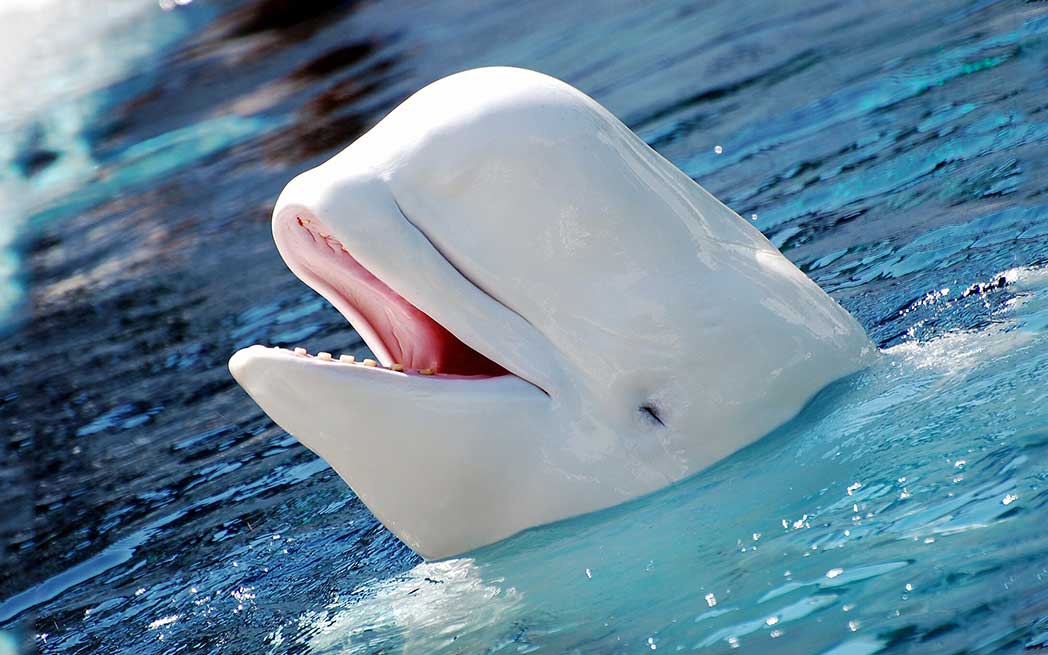
Marineland belugas:
authorities must act
Those who profited from the incarceration of these intelligent social beings should be held financially accountable
By Georges Dupras
January 8, 2026
For over 30 years, many of us have fought against keeping whales in aquariums. In Montreal, a group of dedicated activists managed to stop the Biodome from including whales in their inventory.
We opposed the capture of these social mammals for ethical reasons that have been argued, ad nauseam, both locally and internationally. Our concerns went beyond aquariums to zoos generally. There are no valid reasons to display animals. Educational arguments pale compared to the leaning alternatives that exist today and have existed for many years. The suggestion that aquariums are required to protect endangered, sick, or injured mammals is simplistic. In this case, we are addressing only the results of human interference in both marine and terrestrial habitats. This we do for economic gain and nothing more.
There are cases when we should make extraordinary attempts to help injured mammals and others. Our approach in cases such as these should be no different than our manner of helping injured humans. It has been proposed that suitable whale refuges be constructed in each of our coastal regions to deal with such events. These would be in saltwater bays, enclosed in such a manner as to prevent predators’ access while allowing the entry of live fish and the constant circulation of seawater. Employment would be restricted to those who feed patients and professionals who monitor patients’ well-being. These would be rescue and rehabilitation marine facilities only, not for tourism.
In Montreal, a group of dedicated activists managed to stop the Biodome from including whales in their inventory.
To be clear, these would be for mammals such as the endangered Right Whale, struck by ships with whom they share deep water channels or wild belugas in Hudson’s Bay or the Saint-Lawrence River. The latter, once described as living chemical entities, are still exposed to our waste.
Marineland
As for the belugas, at the now closed Marineland, I am asked what should be done. I have no satisfactory answer to that question, but had it been up to me, they never would have been brought there in the first place. This also applies to the Vancouver Aquarium and its marine mammals. I have no answers, only questions.
Among those questions, I wonder why a contingency plan for relocating animals was not required for aquariums or zoos in the event of closure. This plan would include insurance that would cover all costs. This should have been a part of a regulatory system overseen by dedicated authorities and ultimately the Justice Department. Animals are still considered property under that legal designation.
The now-closed Marineland covers some 800 acres in total, with about 100 acres as parkland. It is situated some 5 or 10 minutes from Niagara Falls. That real estate is in a prime commercial area. When considering the Family estate, the tax revenues that the city of Niagara Falls and the province of Ontario have accrued over the years, money should be made available to the trustees to cover whatever ethical decision is made.
Translocation
The option of transferring the remaining 28 or 30 belugas to a marine sanctuary is fraught with problems.
Firstly, the one proposed in Nova Scotia hasn’t even been constructed. Though a permit has been granted by the Nova Scotia Government, there is still the question of finance (no money).
Secondly, there is a very real concern about the stress these belugas would face during translocation. It is worth noting that three other belugas were transferred to the Mystic Aquarium in the US – all three have since died.
‘The option of transferring the remaining 28 or 30 belugas to a marine sanctuary is fraught with problems.’
Thirdly, captured belugas are accustomed to being fed dead fish regularly. This practice would have to continue until they learned to capture wild fish in the proposed ocean basin.
Fourthly, there is the question of echolocation. No one really knows how their echolocation abilities have been affected after years of confinement in shallow man-made basins.
Fifth, the water in the North Atlantic is much colder than the captive belugas are presently accustomed to. This compounds the stress of being loaded onto a vehicle by sling, taken to an airport, flown to Nova Scotia, and then transferred from Halifax International Airport by vehicle to the proposed basin.
The solution
As I stated at the very beginning, I have no viable solution, but I believe that the estate of the original owner, the City of Niagara Falls and the Province of Ontario should accept their financial responsibilities. They profited from the incarceration of these intelligent social beings and should now be held financially accountable.
Disclaimer: The opinions expressed in this article are those of the author and do not necessarily reflect the opinions of WestmountMag.ca or its publishers.
Feature image: Steve Snodgrass, CC BY 2.0, via Wikimedia Commons

Other articles by Georges R. Dupras
Other recent articles



 January 23, 2026" />
 Westmount—Saint-Louis" />
 Trump backs down" />
 celebrates its 34th season" />
 Commercial financing" />
 smart answer to tariffs" />
 Thai cauliflower florets" />
 legacy with purpose" />
 Lewis Avenue" />
 resistance and unity" />
 Sovereignty Project" />

 to be infallible that fail" />
 A look at self-confidence" />
 Abbott Avenue" />
 Flourless Almond Cake" />
 for real estate sales" />
 authorities must act" />
 Michael Hawkes /98" />
 looks back at 2025" />
 online betting rules?" />
 a film by Andrés Livov" />
 for its 16th edition" />
 Passion fruit meringue verrine" />

I think Mr. Dupras makes an important point about contingency plans and insurance coverage. It is unconscionable that these whales are left stuck in concrete tanks while those responsible for their imprisonment in the first place seem to be looking for others to solve this issue.
Time is of the essence if action is to be taken to save these whales, although when looking at the very serious problems associated with their transfer to a sanctuary, I suspect that it is already too late.
It seems that Marineland is now publicly threatening to kill the whales and dolphins if its demands to the Canadian Government are not met. They want to be able to send 30 beluga whales and four dolphins to SeaWorld and three other aquariums in the US.
It is illegal in Canada to breed whales and dolphins and our strong laws are designed to ensure Marineland animals are the last generation of whales and dolphins to suffer being trapped in tanks. If any export permits are granted, the animals’ well-being must come first and permits MUST include strong no-breeding conditions.
As Georges pointed out – the sanctuary in Nova Scotia has not even been built yet. I fear time has run out for these pore animals.