
Ensemble Montréal vs. Projet Montréal on November 2
The outcome of the City of Montreal’s municipal elections affects all residents living on the island
By Irwin Rapoport
September 3, 2025
Municipal elections in Quebec officially begin in mid-September, and the big event is the much-anticipated contest between Projet Montréal and Ensemble Montréal to lead the City of Montréal. The winner not only impacts the lives of Montreal residents, but those of the island’s independent municipalities that have been treated as cash cows by Montreal Mayor Valerie Plante and her Projet administration for the past eight years.
Residents in Westmount and other cities and towns not only pay municipal taxes to cover their costs, but a significant portion of their taxes is paid to Montreal via the agglomeration tax for shared services and projects. Projet has excessively increased this tax annually, devoting much of these funds to projects that solely benefit the City of Montreal.
Numerous attempts to persuade the CAQ government to intervene on their behalf to end this injustice have failed. And now the independent municipalities are in court to reclaim some of the money that fills Montreal’s coffers. Projet, which has increased municipal tax rates for its own citizens since it took power in 2017, shows no sign of ending its relentless assault on its own citizens and those of its neighbours.
Five municipal parties are contesting the election in Montreal: Ensemble Montréal, Projet Montréal, Futur Montréal, Transition Montréal, and Action Montréal. But everyone knows it is a choice of either Ferrada or Luc Raboin, Projet’s new leader.
The unknown factor is the position of Ensemble Montréal, led by former Montreal councillor and federal cabinet minister Soraya Martinez Ferrada, its mayoral candidate. Many Montrealers hope that her party will either minimize or freeze tax increases – the municipal tax and borough tax – and freeze the agglomeration tax to herald a new relationship between the two parties.
Five municipal parties are contesting the election in Montreal: Ensemble Montréal, Projet Montréal, Futur Montréal, Transition Montréal, and Action Montréal. But everyone knows it is a choice of either Ferrada or Luc Raboin, Projet’s new leader. Rabouin, also the mayor of the Plateau Montréal Borough, is striving to differentiate himself from Valerie Plante and her record, stressing that Projet should be viewed via his leadership and positions on access to Mont Royal and restoring weekly garbage collection in the summer for certain boroughs. This CBC News report (and links within) describes Rabouin’s charm offensive to portray the “new Projet Montreal” as citizen friendly.
Will it be enough to cast aside Plante’s obsession with imposing bike paths without public consultation, such as the one on Terrebonne Street in NDG, and eliminate access to Mount Royal Park via Camillien-Houde Way by car; a staunch refusal to consult residents in neighborhoods on major projects; tax and spend without attempting to streamline municipal services and seek ways to reduce costs to avoid tax increases; and overall, a blatant disrespect for citizens and their concerns and ignoring the consequences of her party’s actions and policies?
Ferrada, who took over the helm of Ensemble Montreal last February, is introducing herself to Montrealers. On Saturday, August 23, she met NDG residents while taking a stroll during the Monkland Stret Festival with her candidates running in the CDN-NDG Borough. She made a good impression, displaying her soft-spoken, empathetic, and sincere manner as she engaged with individuals. Here is a link to Ferrada and her policies.
This CBC article provides a preview of how the two party leaders are confronting each other during the pre-election period.
On Tuesday, August 26, Ferrada and Rabouin appeared on Radio–Canada, replying to questions asked by the moderator:
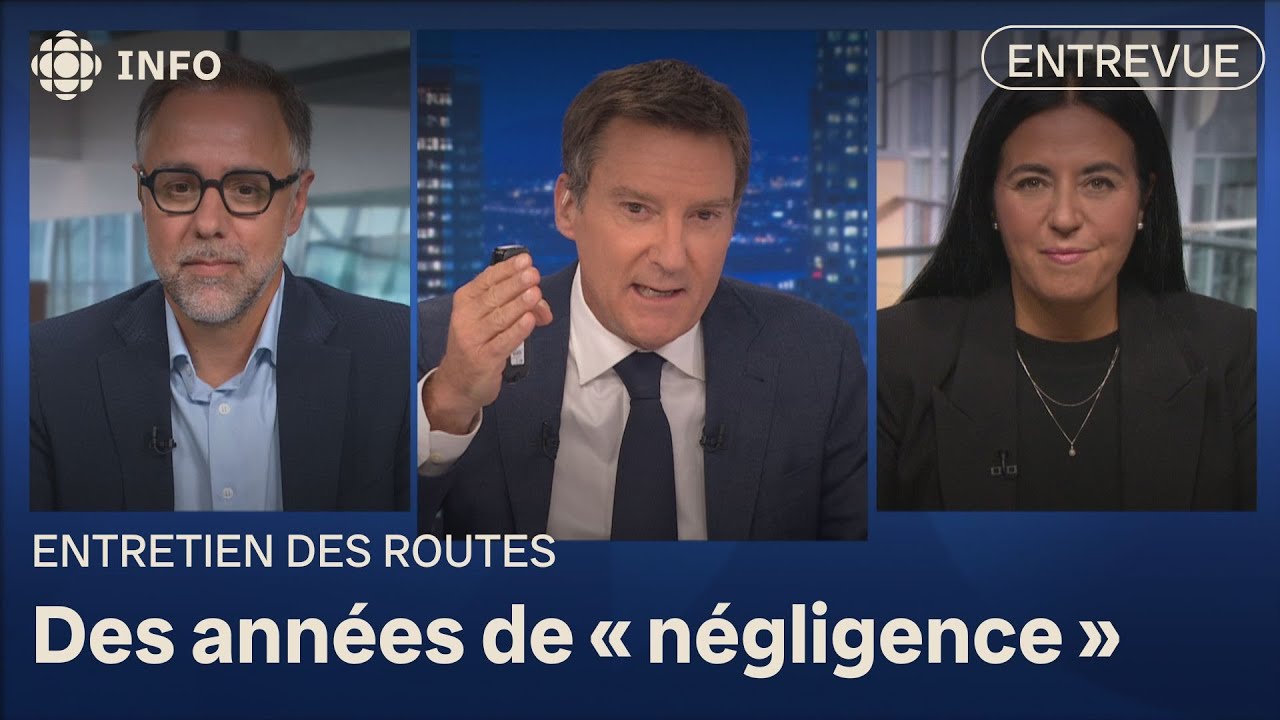
The discussion was civil and informative, not only in terms of their responses, but also in terms of their character and sincerity.
I have met Ferrada twice in CDN and NDG. I found her to be pleasant and attentive to the issues I raised. She was very aware of the concerns of CDN-NDG residents. I have encountered politicians from all three levels of government over the past three decades, and my assessment of their character, intentions, abilities, and sense of empathy has been mostly accurate. I am not fooled by pleasant words and smiles. In Ferrada, I perceived an individual who puts community first and is not in the race merely to attain power and fulfill an ideological agenda. Should she be elected mayor, I believe she will maximize her time to improve the lives of individuals and communities, attempt to resolve long-standing problems, and be a champion of the people.
I’m keen to meet Raboin and assess his qualities, intentions, and sympathy for residents whose ideologically driven Projet decisions and policies have negatively impacted.
It is tragic that far too many elected officials secure office and, in the end, do not leave a positive and enduring legacy of achievements.
Montreal has been poorly led by Mayors Jean Drapeau, Jean Doré, Pierre Bourque, Gérald Tremblay, Michael Applebaum, and Valerie Plante. We deserve better. Corruption and ineptness have been the hallmark of these administrations. Hundreds of billions of dollars have been wasted and have disappeared into thin air. There is no accountability, and the residents of the City of Montreal and the independent municipalities continue to foot the rising bill.
Case in point – the 2024 report of Montreal’s Auditor General. This CBC News report, More than a quarter of Montreal’s roads are in bad condition, auditor general’s report finds speaks volumes.
The report begins with:
“More than a quarter of Montreal’s roads are in ‘bad’ or ‘very bad’ condition, the city’s auditor general said in a report released Tuesday.
Andrée Cossette, the auditor general, said in her annual report that the latest evaluations show 25 per cent of Montreal’s arterial roads and 37 per cent of its local roads needed at least some maintenance work, or at most a full redo.
‘We conclude that the City of Montreal has not established sufficient mechanisms to ensure efficient management of maintenance and upkeep of arterial and local roads,’ Cossette wrote.
It is tragic that far too many elected officials secure office and, in the end, do not leave a positive and enduring legacy of achievements.
While Montreal mayors have been mediocre at best, some Canadian and American cities have been led by gems. These include Pete Buttigieg (South Bend), Cory Booker (Newark), Ed Koch (NYC), Michael Bloomberg (NYC), David Miller (Toronto), and many more. Why can’t Montreal have mayors who do their utmost for their citizens, treat taxpayers and their tax dollars with respect, cast aside ideology and present common-sense solutions, root out incompetence and wasteful spending, and make it a point to converse with their residents as equals?
The November 7, 2021, Montreal municipal election had 425,768 voters (38.42 percent) of 1,111,100 eligible voters cast their ballots for the mayor of the city, a drop of 4.15 percent compared to 2017. While Plante defeated Coderre by a landslide, there were some extremely tight borough mayoral and council races.
In the CDN-NDG Borough, Projet’s Gracia Kasoki Katahwa defeated Ensemble’s Lionel Perez by 161 votes, and in the Loyola district, Projet’s Despina Sourias defeated Ensemble’s Gabriel Retta by 101 votes. The consequences of the low voter turnout in that borough led to the installation of the imposed Terrebonne bike path and the replacement of a grass soccer field at Mackenzie King Park with an artificial turf field chock-full of hazardous “forever chemicals.” The two projects I mentioned were opposed by thousands of local residents, whose concerns were dismissed and ignored by the Projet majority borough council.
Not voting has a price. The voter turnout in November’s election for Montreal will result in a decrease in voter participation, a similar turnout, or a substantial increase as Projet and Ensemble duel it out to win the mayor’s office, control of city council, and the boroughs.
I hope we witness an explosion in overall voter participation in the City of Montreal and the island’s independent municipalities. There are plenty of crucial issues, and in Westmount, the development plan for the Southeast of the city should be front and center.
Municipal government has an enormous impact on our lives, and unfortunately, voter participation in municipal elections is low. Compared to the provincial and federal levels of government, the weight of public opinion is strongest at the municipal level, where everything is local. On November 2, wherever you live in Quebec, make it a point to be informed about the issues, ask questions of the candidates, and vote.
Disclaimer: The opinions expressed in this article are those of its author and do not reflect the opinions of WestmountMag.ca, its publishers or editors.
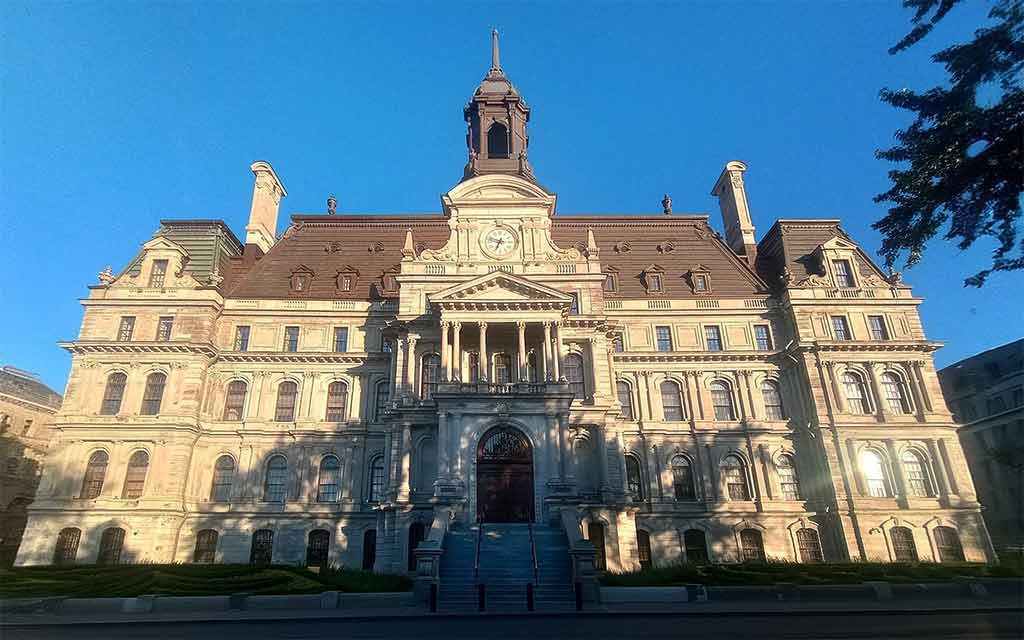
Feature image: Montreal City Hall, Daniel Di Palma, CC BY-SA 4.0, via Wikimedia Commons

Other articles by Irwin Rapoport
Other recent articles
 Irwin Rapoport is a freelance journalist with a bachelor’s degree in history and political science from Concordia University.

 January 6, 2026" />
 through digital innovation" />
 looks back at 2025" />
 online betting rules?" />
 a film by Andrés Livov" />
 for its 16th edition" />
 Passion fruit meringue verrine" />
 playful clownish escapade" />
 World rhythms on stage" />
 management mistakes" />
 Kensington Avenue" />
 Vegan Chili Chocolate Cake" />
 Bethune tunnel" />
 Left out of breath" />
 of business strategy" />
 damage before it starts" />


 into a professional career" />

 plumbing issues at home" />
 embraces bold cinema" />
 Red snapper papillote" />
 the Legend of Pepita" />
