

Espionage author discusses his fourth thriller in the Ridley Fox/Nita Parris series
By Irwin Rapoport
November 26, 2026
Montreal author Russell Brooks is launching The Cadmus Imperative on Sunday, November 29 at 12:30 p.m. at Union United Church. The event also marks Barbados’ 60th year of independence and fifth year as a republic, which the country celebrates on November 30.
The novel is Brooks’ sixth spy thriller and the fourth installment in his Ridley Fox/Nita Parris series. Set primarily in Barbados, it combines espionage, conspiracy, martial arts, betrayal, sex, and revenge in a fast-moving political thriller. Cynthia Waithe, president of Barbados House Montreal, will host the launch.
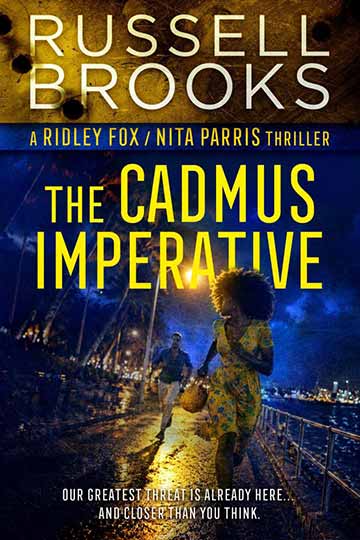 The Cadmus Imperative takes place eight months after the events of The Demeter Code, the previous book in the series. It brings back covert CIA officers Ridley Fox and Dr. Nita Parris, whose surveillance mission in Istanbul is sabotaged by a former CIA case officer and escaped convict.
The stakes rise when Parris is contacted by an investigative journalist with evidence connecting her to a Nazi-era project in Barbados — one allegedly sanctioned by the U.S. government. Fox travels with Parris to her home country to uncover the truth about her birth, but what they find is a conspiracy neither expected.
Brooks said he wanted to create a spy thriller rooted in Afro-Caribbean culture, while also examining the consequences of intelligence operations conducted abroad.
“Whenever we bring up spy thrillers, we often think about secret agents who must thwart the machinations of foreign powers from attacking the USA,” Brooks said. “We rarely think of the horrors these agencies inflicted on innocent foreigners in other countries under the pretext of national security.”
A personal and political story
The Cadmus Imperative is the first part of a two-book story arc. Its sequel, The Cadmus Cipher, is scheduled for release next year.
The novel is partly inspired by the biography of former CIA case officer Jeffrey Sterling, who was imprisoned for violating the Espionage Act after filing a discrimination complaint. Brooks uses that history as a starting point for a story about institutional power, racism, and accountability.
“Victims of racism can never expect to get justice in a systemically racist system,” Brooks said. “Especially when we have leaders who deny its existence to distract us from the fact they want to maintain it.”
Whenever we bring up spy thrillers, we often think about secret agents who must thwart the machinations of foreign powers from attacking the USA… We rarely think of the horrors these agencies inflicted on innocent foreigners in other countries under the pretext of national security.
– Russell Brooks, author, The Cadmus Imperative
Early praise for the novel
The book has already drawn praise from readers and media figures familiar with Brooks’ work.
“I’ve interviewed Russell Brooks about each of his five spine-tingling books, and now he’s back with The Cadmus Imperative,” said Peter Anthony Holder, host of The Stuph File Program. “His gripping stories capture the imagination, and I have no doubt this one will, too!”
Walter Innocent, Jr., of Selon Walter Magazine, called it “a captivating book that will leave a lasting mark on you,” praising its precise details and unforgettable characters.
An introduction to the series
For readers new to Brooks’ work, The Cadmus Imperative offers an accessible entry point into the Ridley Fox/Nita Parris series. The novel’s crisp dialogue, propulsive pacing, and interwoven plotlines make it an engaging choice for fans of political thrillers and espionage fiction.
Excerpts from the first two chapters are available through Brooks’ website, Books by Russell Brooks | Spy & Mystery Thriller Series.
* * * * *
Russell Brooks talks about his love of writing, his appreciation of the espionage genre, and the authors who have inspired him.
WM: How does The Cadmus Imperative fit in the Ridley Fox/Nita Parris series?
Brooks: The story picks up eight months after the catastrophic events in The Demeter Code. It delves deeper into the universe I’m building and lets readers learn more about Dr. Nita Parris’s origins and how her life is deeply affected by the events in this book.
WM: What do you enjoy about writing and how do your novels address serious issues?
Brooks: Writing gives me a way to express myself through my characters — giving them distinct voices. Cadmus and my previous novel, Jam Run, were more personal to me than my earlier books because they deal with controversial subject matter which is personal to me. While Jam Run was centred around homophobia in the Caribbean, The Cadmus Imperative and the next book, The Cadmus Cipher (coming in 2027), are centred around racism, systemic racism and the history of abuse of Black people and bodies. Considering how both American Federal and State governments are banning books and attacking institutions that dare to teach the truth about the horrors of slavery and Jim Crow, as an author and as a Black man who has not only witnessed racial discrimination but who has unfortunately been on the receiving end of it numerous times, I’m not going to be silent about this ongoing problem.
WM: What attracts you to the espionage genre and who do you look at for inspiration?
Brooks: Like many people, James Bond was the first fictional spy I was introduced to. The first Bond movie I saw as a child was Moonraker. Of course, at that age, I was fascinated by the gadgets, the international locations, and especially watching a woman (Lois Chiles) who could fight. Since then, I was exposed to other spy shows, such as Mission: Impossible and Scarecrow and Mrs. King. I was too young to know what espionage was, but I knew that the protagonists weren’t police officers or detectives. I saw them as good guys who fought the bad guys by pretending to be people they weren’t.
Eventually, I discovered Vince Flynn after graduating from university and read a few of his books before turning to Barry Eisler and Joseph Finder. I’ve also read Stephen King and John Grisham, and they write great books. However, my love for the espionage genre came from reading Flynn, Eisler, and Finder, and it revived my passion to continue the manuscript that I started when I was 12.
WM: Some spy stories are over the top, and others are realistic. Where do your books fit in?
Brooks: I consider my stories to be well grounded. Researching subject matter that I’m not too familiar with is one of the most important steps in writing. Even fiction needs to be realistic to a certain extent, in my opinion. The Cadmus Imperative technically qualifies as a work of science fiction. However, the science is factual and still believable. A few readers wrote me a while back, stating that Pandora’s Succession and The Demeter Code were scary because, in their opinion, the events in those novels could happen in real life or that similar events have already happened, but we were never aware of them. These are the kind of stories I wanted to write. I won’t describe my stories as being over the top; however, I will bring them as close as I can to the thin line that separates reality from fiction without crossing it.
WM: What inspired you to be an author? When did you know that you wanted to be one?
Brooks: When I was in elementary school, I wrote short stories as a hobby. During my Grade 6 French class, my teacher, Madame Marie Bedard, caught me with an amateur sleuth story that I wrote. She confiscated it, and when I expected to get in trouble, she called the class’s attention and read it to everyone. When she was done, she led everyone in applause, wrote a note in it and handed it back. Her note said: “I enjoyed this story. However, next time, I want to see your work published.” That’s all the encouragement that I needed to keep writing. A year later, I began what would later become a series of drafts that eventually became Pandora’s Succession.
It’s an irrefutable fact that most books available in the suspense thriller or mystery genres overwhelmingly have white protagonists and are heavily Eurocentric. I’m very proud of my Barbadian heritage, which is why I won’t waste my chance to create a series of books where the Afro-Caribbean diaspora is strongly represented.
The first adult book I read was The Tommyknockers by Stephen King, followed by Firestarter. They were enjoyable, but I didn’t see myself writing in this genre. I read two James Bond books by Ian Fleming and one by John Gardner. However, it was Term Limits by Vince Flynn that woke me up to spy literature because it went deep into the politics that surrounded the genre. Compared to the Bond novels, this story captured my attention even more because the political aspect made it more grounded.
It was after having read this novel and two others by Flynn that I understood what my characters were lacking. This helped me create and develop Ridley Fox and Dr. Nita Parris’s characters more fully. As strange as it may sound, I was still developing their characters and learning more about them — as with other characters who’ve appeared in the previous novels — in this fourth instalment.
My biology degree helped me with the scientific subject matter of my first two manuscripts in this series.
WM: How did it feel to bring in Caribbean heritage in your novel?
Brooks: It’s an irrefutable fact that most books available in the suspense thriller or mystery genres overwhelmingly have white protagonists and are heavily Eurocentric.
I’m very proud of my Barbadian heritage, which is why I won’t waste my chance to create a series of books where the Afro-Caribbean diaspora is strongly represented. The Caribbean isn’t just a group of islands that are populated by fishermen and farmers and people who work in the tourism sector. We’re also teachers, doctors, lawyers, administrators, and entrepreneurs. Readers shouldn’t have to wait for James Patterson or any other white author to create Black characters to validate us when I’m more qualified to do so.
WM: Your last books were more Afro-Caribbean focused than the others. What changed?
Brooks: Let me begin by mentioning that when I wrote Chill Run, which introduced Eddie Barrow and his best friend Corey Stephenson, it was originally supposed to be a standalone novel — a one-time deal. In other words, I only wrote it because I wasn’t ready to write the next Ridley Fox/Nita Parris novel.
However, while I was finishing the manuscript for The Demeter Code — which was my next project — I stumbled on a news article on CBC about a Jamaican teenager named Dwayne Jones who was savagely murdered near Montego Bay. He showed up at a street dance party dressed as a woman and was outed by a girl from his church he had confided in. And despite there being over three hundred potential witnesses, no one came forward to help the police catch the killer(s).
I read the story several times because I was furious at this injustice, and it inspired me to write a story about it. It was then that I came up with the idea of Eddie and Corey being in Jamaica and witnessing a similar murder. And since Eddie is of Barbadian descent and Corey is Trinidadian, this was the perfect opportunity to showcase Afro-Caribbean culture and the Caribbean, and to be innovative within the suspense thriller/murder mystery genre.
When I began writing, my writing coach, the late Victory Crayne, taught me about the importance of developing my own author’s voice. This isn’t something that happens immediately, but over a series of books. The fact that my books have become more Afro-Caribbean-centric reflects how my author’s voice has evolved over time.
The Cadmus Imperative allowed me to continue with the Afro-Caribbean trend. The plot was inspired by the questionable motives behind the arrest and imprisonment of Jeffrey Alexander Sterling, a former CIA case officer who was accused of violating the Espionage Act. According to Sterling’s biography, his patriotism was sparked after he saw a print advertisement for CIA recruitment. In other words, he had the opportunity to become part of something great. However, it was only after he had joined the CIA that he learned that this “greatness” did not include Black people unless they adapted to the white man’s worldview.
Even though the first three books in the Ridley Fox/Nita Parris series presented the CIA in a positive way, I knew that if I was going to write from the point of view of an author of Barbadian descent, then it would be important to address the CIA’s violent history of hostility towards the Caribbean and Central America — especially to those who were not threats to the United States. And since Nita Parris is Barbadian, this gave me the chance to further develop her origin story.
When I began writing, my writing coach, the late Victory Crayne, taught me about the importance of developing my own author’s voice. This isn’t something that happens immediately, but over a series of books. The fact that my books have become more Afro-Caribbean-centric reflects how my author’s voice has evolved over time.
WM: What is your writing process? Do you share drafts with friends?
Brooks: My writing process begins with a single idea that can come from anywhere: books, an event in the news, current affairs, overhearing a conversation, or even a billboard. Once I have my idea, I heavily research the subject matter linked to it until I develop a plot, the characters, and then a story outline. Usually at this point, I know how the story ends and have a concept of how it begins. The challenging part is trying to figure out what happens in between.
While writing the first two drafts, I’ll fact-check the content of the story with professionals to ensure accuracy. This is the only reason I’d allow friends to read parts of my manuscripts.
WM: Tell us about your audiobooks and the process of creating them?
Brooks: Last October, I produced the audiobook version of my second book, Unsavoury Delicacies. The most difficult task of being an independent author is getting adequate funding. And unfortunately, I’ve been unsuccessful several times — making it unfeasible to rent a studio and hire voice actors to record and produce an audiobook. Fortunately, I discovered an AI app that lets me clone my voice and use other voices, making it easier and more affordable to produce audiobooks. I could’ve simply uploaded each manuscript into the app, assigned voices to each character, and had audiobook versions of my six novels available within a week.
However, I don’t want to simply create an audiobook where the listener only hears different character voices; I want to create an experience where the listener feels as though they’re in the story itself. That’s why I’ll take time to create the perfect music score, along with sound effects, to fully immerse my readers in the action. This is a process that takes time.
… if ten agents and publishers reject your work, publish it independently. It’s more work, but at least it’s published. And it’s important to also know that even authors who are traditionally published need to do legwork to promote themselves…
WM: What writing advice would you give to first-time authors?
Brooks: I’ll give the same advice that NYT bestselling author Joseph Finder gave me: “Never stop writing.” My own additional advice is to work with professionals every step of the way. It’s important to remember that you don’t choose your readers; they choose you. This is why it’s important to do in-depth research and fact-check everything you write. Some of your most important readers could be doctors, lawyers, or government employees who specialize in your book’s subject matter. If the facts don’t line up, then they’ll be the first ones to call you out. It’s also important to understand that the publishing industry doesn’t care how good your book is; they only care about money. That’s why it’s important not to be discouraged if an agent or publisher rejects your manuscript.
They prefer to work with authors who already have large platforms, which allows them to invest as little as possible while maximizing profits. I’ve often told aspiring authors that if I were friends with Kim Kardashian and had ghostwritten all my books for her, literary agents would be breaking down her front door to represent her, simply because she has a platform that will buy anything she writes.
My advice is if ten agents and publishers reject your work, publish it independently. It’s more work, but at least it’s published. And it’s important to also know that even authors who are traditionally published need to do legwork to promote themselves — which is the same thing independent authors need to do.
Images: courtesy of Russell Brooks

More articles by Irwin Rapoport
RECENT ARTICLES

Irwin Rapoport is a freelance journalist and community advocate from Westmount with bachelor’s degrees in History and Political Science from Concordia University. He writes extensively on local politics, education, and environmental issues, and promotes informed public discourse and democracy through his writing and activism.