

The Middle East conflict
has de-escalated – so far
The atomic age and the threat of all-out nuclear war began in August 1945
By Irwin Rapoport
July 17, 2025
Tensions in the Middle East appeared to have eased since the end of the mini-war between Iran and Israel, which had American B-2 bombers target Iranian nuclear facilities with 30,000-pound “bunker buster” bombs, along with submarine-launched missiles. Israel and Iran exchanged missiles and drones for twelve days, causing extensive damage and killing and wounding thousands of people on both sides. With all the testosterone and bravado on display in Jerusalem, Tehran, and Washington, D.C., fears of serious regional conflict involving many nations were a reality.
For a while, neither side was backing down. Since then, the re-armed Houthis, aligned with Iran, have been attacking cargo ships in the Red Sea, sinking two ships. Fortunately, the Houthis have temporarily suspended their assaults on international shipping
The Middle East in recent history, especially since the establishment of Israel, has been a powder keg waiting to explode. We’ve experienced regional wars between Israel and coalitions of nations attempting to destroy it: the Iran-Iraq War; Iraq’s invasion of Kuwait in 1990 and the war that liberated the country with a multi-national coalition; the 2003 American invasion of Iraq; Hamas’s devastating and horrific attack on Israel on October 7, 2023; and the ongoing war in Gaza has been regionalized with Israeli planes and missiles striking Syria, Lebanon, and parts of Yemen.
With Russian forces experiencing battlefield reverses and Ukraine successfully hitting behind-the-lines Russian military targets, Russian President Vladimir Putin is threatening to employ battlefield nuclear weapons to stem the tide and relieve the pressure on his battered armed forces.
The seemingly never-ending Israeli-Palestinian conflict has remained local for the most part. As long as the oil flowed unfettered via tankers plying the Persian Gulf, the Middle East was considered to be in a peaceful phase. The Iran-Israeli War did raise the spectre of Iran closing the narrow Strait of Hormuz in the Persian Gulf, where tankers pass through daily.
With Russian forces experiencing battlefield reverses and Ukraine successfully hitting behind-the-lines Russian military targets, Russian President Vladimir Putin is threatening to employ battlefield nuclear weapons to stem the tide and relieve the pressure on his battered armed forces.
Let us take this moment to reflect on how we got to our current predicament. It was on August 6, 1945 the United States officially inaugurated the Atomic Age with the dropping of the atomic bomb on the Japanese city of Hiroshima, although some insist that the Trinity test in New Mexico on July 16, 1945, is the true date. While academics argue this point, it was the development of the atomic bomb via the Manhattan Project which gave us nuclear power and the nuclear arms race, and the possibility of an all-out global nuclear war via the Cuban Missile Crisis of 1962.
We have nuclear weapons courtesy of the First World War, which radically changed the world and whose legacy still haunts us today. Although serious attempts were made to avoid the global conflict, it was Germany’s Blank Cheque to back the Austro-Hungarian Empire that negated all attempts to negotiate a way out in July 1914.
Due to major alliances, such as the Central Powers and the Entente Powers, the war began. On July 28, Austria-Hungary declared war on Serbia, and then the train wreck began – Germany declared war on Russia on August 1 and France on August 3, Britain declared War on Germany on August 4, and over the next few weeks, all the major players in Europe were fighting.
The conflict, which ended with the November 11, 1918, Armistice, claimed the lives of 20 million combatants and many more wounded, some extremely ghastly due to the use of poison gas and devastating artillery, along with millions of civilian deaths – 600,000 alone in Germany due to gradual starvation. As the war was in its final phases, the global Spanish Flu epidemic began, claiming between 20 million to 100 million lives between 1918-1920. Death reigned supreme, and few families escaped its grip. Four empires collapsed – Germany, Austria-Hungary, Russia, and the Ottoman Empire – and Britain and France were seriously weakened. This is just the tip of the iceberg in terms of the long-term impacts of WWI.
‘… the U.S., Russia, France, and Britain still have nuclear missiles targeted at each other. India and Pakistan have joined the nuclear club, and it’s clear that Israel has missiles armed with nuclear weapons ready to be launched at various Arab countries should it be attacked by chemical, biological, or nuclear weapons.’
The events that followed the signing of the Treaty of Versailles, which officially ended WWI, one way or another, led to the start of World War II on September 1, 1939, when Nazi Germany invaded Poland, and a few days later, Britain and France declared war on Germany to fulfill their treaty obligations with Poland. WWII gave us yet another global conflict and the genocides associated with it – the Holocaust and the Japanese Empire killing over 20 million Chinese people between 1931 and 1945, and the beginning of the end of Western colonial empires.
Needless to say, the 20th century has been a bloody one, and while it gave us many wonderful legacies, such as the eradication of smallpox, it has given us numerous conflicts that killed millions, the Cold War, and, of course, the Atomic Age.
The introduction of atomic and nuclear weapons, which can wipe out all life on Earth numerous times, has been a game-changer, and for the moment, cooler heads have prevailed.
Films such as The Day After and Testament from the 1980s brought home the reality of what life could be like following a nuclear attack. On the Beach, released in 1959, dealt with the last days of life on Earth as radiation drifted south to Australia and other countries following a nuclear war in the northern hemisphere. All three films are worth watching.
Fortunately, atomic weapons have not been employed since 1945. Despite basic agreements among the nuclear powers not to use such weapons in a first strike, the U.S., Russia, France, and Britain still have nuclear missiles targeted at each other. India and Pakistan have joined the nuclear club, and it’s clear that Israel has missiles armed with nuclear weapons ready to be launched at various Arab countries should it be attacked by chemical, biological, or nuclear weapons.
In the 1998 film Armageddon, nuclear weapons saved us from a killer asteroid hurtling towards Earth. This was science fiction, but there is a school of thought that credits nuclear weapons for avoiding a Third World War via the concept of Mutual Assured Destruction (MAD). They may have a point, but it is not a reassuring one. One of the reasons why the United States, Britain, France, and other NATO nations have not intervened directly in the Russian invasion of Ukraine is that Putin may be insane enough to retaliate with nuclear weapons. Putin could also easily tell the Western powers that dozens of nuclear weapons have suddenly vanished from his arsenal, along with canisters of biological and chemical weapons. This is a real threat and would cause nightmares for decades.
‘The 1964 film Dr. Strangelove or How I Learned to Stop Worrying and Love the Bomb is a brilliant film, based on the premise of the insane U.S. Air Force General Jack. D. Ripper ordering his squadron of B-52 bombers to attack Russia and initiate a nuclear war.’
It would be very easy for a terrorist group to place a nuclear weapon in cities such as New York City, London, Paris, Tokyo, and threaten to activate it if a government did not agree to their terms. Such a group could also place a bomb in a city and simply explode it to make a point. Not every shipping container entering major ports can be searched, and nuclear weapons could be transported in small boats to avoid customs, with bombs shielded from detection in lead containers. The vast majority of people do not think about these threats, particularly as there is nothing we can do about them. The devil has been unleashed.
Nor is nuclear power, in the view of many, a safe alternative to fossil fuels. Nuclear power has never been green, be it from the mining of uranium to the storage of nuclear waste.
The past impacts the future, and we must draw the correct lessons and apply them for the benefit of humanity. We have much to worry about. The climate crisis and the ongoing destruction of the ecosystem and biodiversity should alarm everyone and spur us into action to avoid the looming catastrophe that is leading to the sixth mass extinction.
When the anniversaries of the destruction of Hiroshima and Nagasaki are commemorated, the usual call for the elimination of nuclear weapons is raised. Many believe that the possibility of a nuclear war is negligible. They are probably right, but it just takes one misstep for a disaster to occur.
The 1964 film Dr. Strangelove or How I Learned to Stop Worrying and Love the Bomb is a brilliant film, based on the premise of the insane U.S. Air Force General Jack. D. Ripper ordering his squadron of B-52 bombers to attack Russia and initiate a nuclear war. Here is a critical scene from the film:
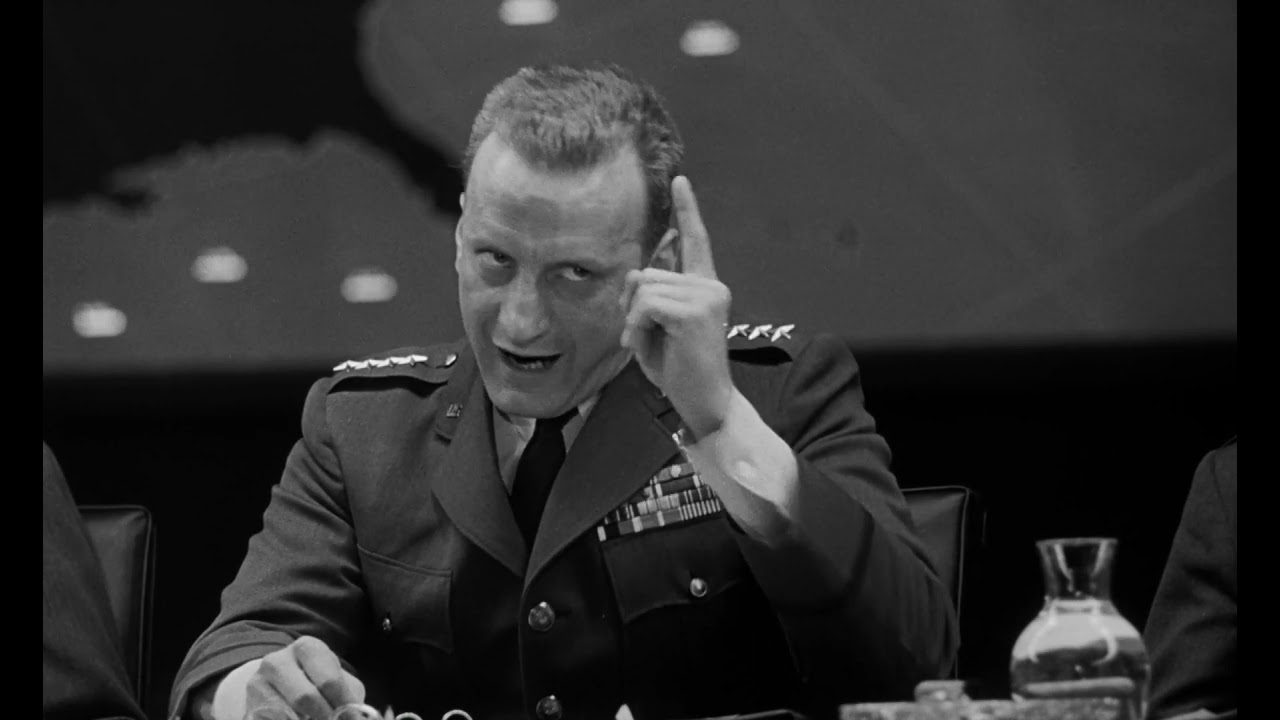
When we reflect on the use of the atomic bombs in 1945, there is much to consider. On the pro-use side, it ended the war rapidly. The Japanese should have surrendered in late fall 1944 after most of the Japanese Fleet (Combined Fleet) had been sunk and before the conventional bombing of Japanese cities began via the long-range B-29 bombers. The U.S. military believed that an invasion of the Japanese homeland would cause the death of at least one million Allied soldiers. The hawks who dominated the Japanese government opposed surrendering, and it was only after the atomic bombs were dropped that the country agreed to an unconditional surrender. This action saved the lives of millions of people – Allied military personnel, civilians in countries occupied by Japan, and Japanese civilians and soldiers.
On the other hand, Japan was losing the war, and it would have eventually surrendered; thus, it was unnecessary to use the atomic weapons.
‘The U.S. military believed that an invasion of the Japanese homeland would cause the death of at least one million Allied soldiers… On the other hand, Japan was losing the war, and it would have eventually surrendered; thus, it was unnecessary to use the atomic weapons.’
Serious discussions and arguments took place before the decision to drop the atomic bombs. This Wikipedia page provides excellent background information and sources to check out.
As the bombs were dropped, debate justifying their use is moot. We can examine what led to the decision to use them, but we cannot change the past. We have to live with the cards we were dealt, but that does not mean we have to stand by helplessly and let events unfold without opposition. Humanity is capable of great feats and the most inhumane and terrible actions. We are at a veritable crossroads of acting decisively to save life on Earth – humans, flora, and fauna – or sit idly by and watch as the disaster unfolds. The choice is ours, and it truly is a matter of life and death.
Disclaimer: The opinions expressed in this article are those of the author and do not necessarily reflect the opinions of WestmountMag.ca or its publishers.
Feature image: Bikini Atoll nuclear test – Public Domain

Other articles by Irwin Rapoport
Other recent articles
 Irwin Rapoport is a freelance journalist with a bachelor’s degree in history and political science from Concordia University.



 January 6, 2026" />
 through digital innovation" />
 looks back at 2025" />
 online betting rules?" />
 a film by Andrés Livov" />
 for its 16th edition" />
 Passion fruit meringue verrine" />
 playful clownish escapade" />
 World rhythms on stage" />
 management mistakes" />
 Kensington Avenue" />
 Vegan Chili Chocolate Cake" />
 Bethune tunnel" />
 Left out of breath" />
 of business strategy" />
 damage before it starts" />


 into a professional career" />

 plumbing issues at home" />
 embraces bold cinema" />
 Red snapper papillote" />
 the Legend of Pepita" />