
Westmount places
Melbourne Avenue
The history behind the familiar: Melbourne Avenue, a short street between Metcalfe and Melville
By Michael Walsh
Previously published in WestmountMag.ca
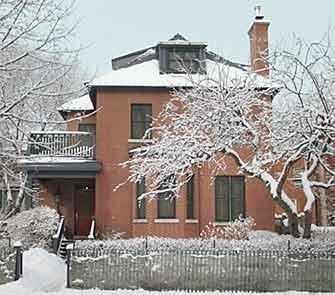
11 Melbourne
Have you ever wondered what constitutes an avenue? In Westmount, there is a historical rationale behind this nomenclature: all streets that run in a westerly direction.
“Moved by Councillor Murray, seconded by Councillor Warmington, that from the City limits, all roads running westward be called Avenues… – and that all roads running north and south be numbered from 1 to 17.”
Municipal Council Minutes, Municipality of Cote St Antoine, June 4th, 1877
Viscount Melbourne had two lives – the first as the cuckolded husband in one of the most scandalous affairs of the 19th century, and the second as senior statesman and mentor to Queen Victoria.
– Gov.UK, Past Prime Ministers
Today, there are many exceptions to these rules; however, many streets and avenues, due to historical reasons, retain their original names.
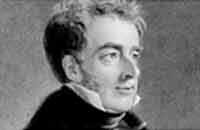
William Lamb, 2nd Viscount Melbourne – Image: © Crown copyright. Used under the Open Government License
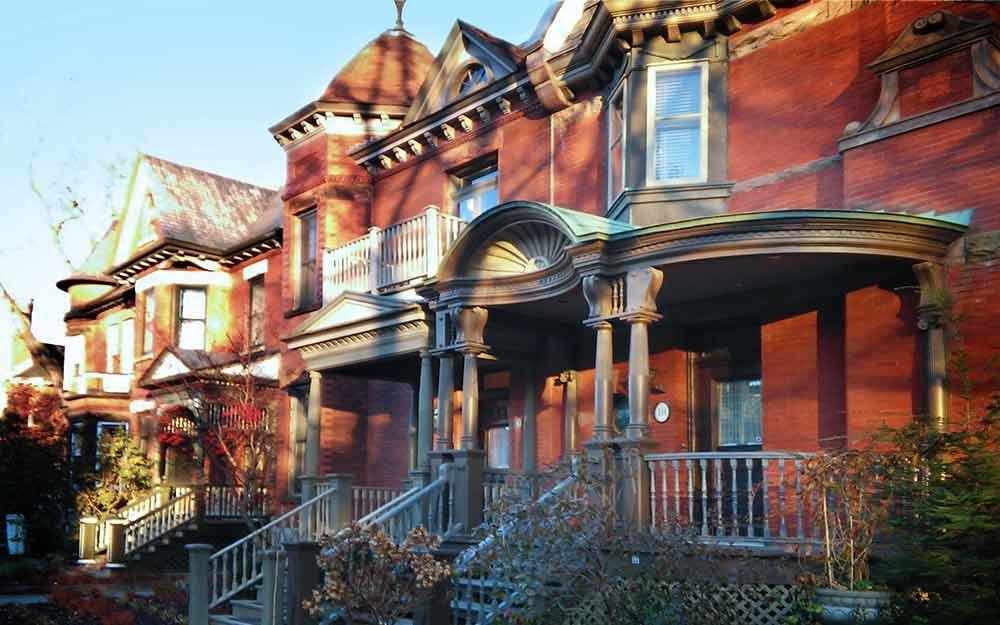
One example is Melbourne Avenue, a short street running west between Metcalfe and Melville Avenues. A quiet street lined with houses appearing today as they did over a century ago.
Interestingly, the street was originally owned by a private company that attempted, on two separate occasions, to cede its rights to the Town of Côte Saint-Antoine.
“Read letter from Mr. J Stevenson Brown dated 8th May stating that the company he represents are willing to hand over Melbourne and Springfield Avenues free. The Council, after consideration of the proposal, regrets that in the meantime they cannot take over the streets and instruct the Secretary to write to Mr. Brown accordingly.”
– Municipal Council Minutes, Town of Cote St Antoine, May 11th, 1891
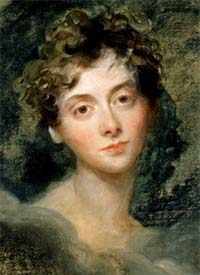
Lady Caroline Ponsonby-Lamb Image: Public Domain
Nevertheless, the town macadamized the road surface in 1894, with the costs levied (in 14 annual instalments) to the proprietors of the fronting properties. During that period, there were five houses bearing civic numbers 13, 15, 17, 21 and 26. Two years later, the Town incorporated the street into their municipality.
“That the Mayor and Secretary-Treasurer be and they are hereby authorized to sign a deed of unconditional cession of both Springfield and Melbourne Avenues.”
– Municipal Council Minutes, Town of Cote St Antoine, November 2nd, 1896
At this point, it is clear that the story lacks gripping qualities. However, as we shall see, the story of Melbourne Avenue takes an interesting turn as we become acquainted with William Lamb. As the name suggests, the street’s name honours William Lamb, 2nd Viscount Melbourne, whose political career was embroiled in one of Britain’s most notorious scandals when his wife, Lady Caroline Ponsonby-Lamb, had a pubic affair with the poet Lord Byron.
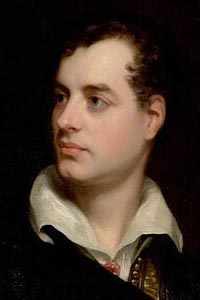
Lord Byron
Image: Public Domain
As the proverbial saying suggests, truth is stranger than fiction. Lady Caroline Ponsonby-Lamb was not a typical politician’s wife. The daughter of Frederick Ponsonby, 3rd Earl of Bessborough, and the granddaughter of the 1st Earl Spencer, she was born in 1785.
Lady Caroline married Lord Melbourne in 1805. After 2 miscarriages, she gave birth to their only child, George Augustus Frederick, in 1807, and was devoted to him. He was epileptic and mentally handicapped and had to be cared for almost constantly.
In 1812, Caroline read Lord Byron’s Childe Harold’s Pilgrimage and declared: “If he was as ugly as Aesop, I must know him.” On meeting Byron that summer, she famously noted in her diary that he was “mad, bad and dangerous to know”. They began an affair, which lasted until 1813, but even after it finished, Lady Caroline’s obsession with the poet continued. In 1816, she published a novel, Glenarvon, which contained obvious portraits of herself, her husband, Byron, and many others.
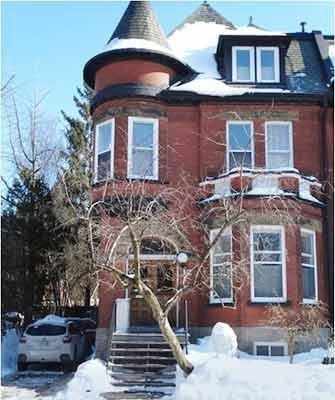
12 Melbourne
“Embarrassed and disgraced, Melbourne nevertheless decided not to part from his wife, and the formal separation did not occur until 1825. Lady Caroline died in 1828, aged 42, her death hastened by the consumption of alcohol and drugs. Lord Melbourne, not yet Prime Minister, was by her bedside when she died.”
– Gov.UK, Past Prime Ministers
Lord Melbourne was appointed Prime Minister by King William IV and served in that role from 1833-1870 – except for a five-month period in 1834 when Sir Peel was in office.
He was Queen Victoria’s first Prime Minister and became her mentor in political matters. Their close relationship ran quite deeply. In fact, Lord Melbourne was awarded a private apartment in Windsor Castle.
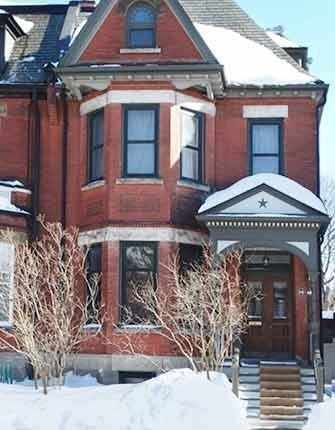
14 Melbourne
Following his retirement from politics, he resided at Brocket Hall in Hertfordshire until his death in 1848.
This brings us to the end of Lord Melbourne’s “imprint” within the City of Westmount. Clearly, a street whose name is worthy of a novel!
At this point, let’s stroll down Melbourne Avenue and become acquainted with some of the original residents and discover their stories.
11 Melbourne
Frank Cooper, Manager, A. J. White and Company (1900)
(Although it is not a purely Quebec (or even Canadian) company, I include it here because it had a large branch in Montreal.)
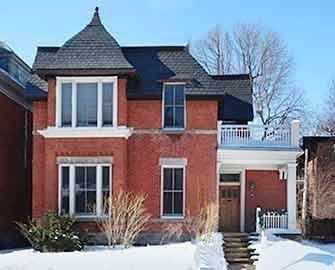
15 Melbourne
“This corporation was founded in New York, and the headquarters were relocated to London in 1884. Mr. A.J. White, a New Yorker, was the president of the company, and a certain H.K. Packard was in charge of the London facilities. Branches were established in New York, Montreal, Sidney, Bombay and Lille. The Montreal branch was opened in 1885 at 71A rue St-Jean and was under the direction of a Mr. F. Cooper from 1888.”
“All of the company’s products were manufactured in the London laboratories and then sent in bulk to the various branches where they were bottled and distributed.”
– Montreal illustrated, Consolidating Illustrating Co, Montréal, 1894, p. 237
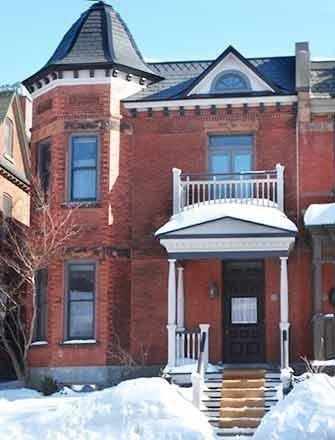
16 Melbourne
12 Melbourne
Horatio W. Nelson, H. A. Nelson & Sons Co. Ltd. (1900)
The company was a wholesale dealer of accessories and toys. They also manufactured wood cleaning items, such as brooms and brushes. A warehouse fire in 1901 forced the closure of the company.
H. W. Nelson was also the director of the Molson Bank (which merged with the Bank of Montreal in 1921) and President of the Loan and Investment Association.
14 Melbourne
W. B. Kingsley, superintendent, Canadian Rubber Company (1900)
“Canadian Rubber Company of Montreal was the first company in North America to manufacture rubber. The plant (located at 1840 Notre Dame East) was damaged by fire in 1916. Occupied by the Uniroyal Tire factory until 1982. The oldest section was demolished in 1995.”
– Industrial Architecture of Montreal
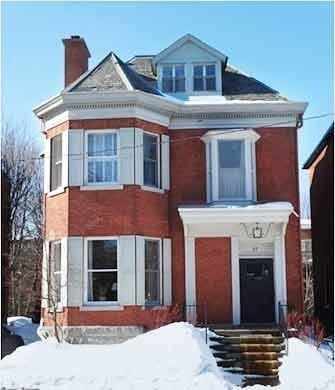
17 Melbourne
15 Melbourne
Honourable F. E. Gilman, Gilman & Boyd (1910)
16 Melbourne
J. H. Wallace, R. Moat & Company (1905)
17 Melbourne
R. N. King, Manager, Ontario Bank (1900)
“The bank and its 30 branches across the province were absorbed into the Bank of Montreal in the fall of 1906 after its general manager, Charles McGill, was found to have been speculating in the U.S. stock markets with bank funds and sustained an estimated $1.25 million in losses from ill-timed short sales. McGill was convicted of filing false tax returns and sentenced to a five-year prison term early in 1907.”
– Wikipedia
18 Melbourne Avenue
Ransom H. Howard, Merchant (1902)
21 Melbourne
Charles A. Senez, Percival & Senez (1901)
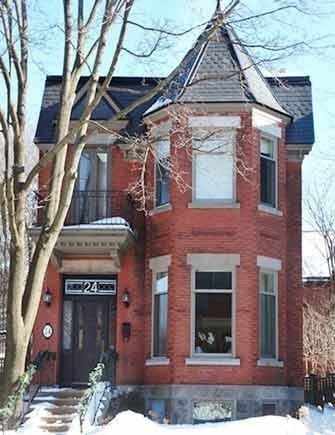
24 Melbourne
24 Melbourne
D. C. Dewar, Manager, Bell Telephone Company (1900)
Frank A. Ramsay, glass manufacturer (1905)
25 Melbourne (former civic number)
A. E. Gagnon, Manager, A. W. Ogilvie (1900)
“Due to their westerly expansion, the Ogilvie mills became involved in the developing grain trade of western Canada and they built many grain elevators along Canadian Pacific Railway lines in Manitoba. At the time, because the Canadian Pacific Railway wanted to generate traffic for itself, it offered incentives to build grain elevators along its railway lines that could not be passed upon by the Ogilvies. The result was a pseudo monopoly in grain purchasing because the CPR would not load grain directly from farmers or non-mechanical warehouses where there was a steam-powered elevator present, such as those of the Ogilvies.”
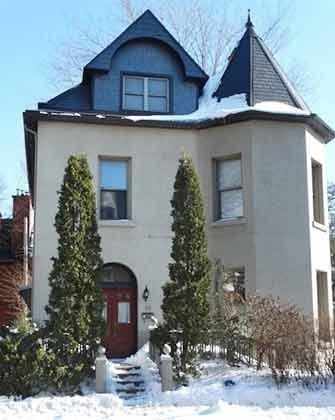
26 Melbourne
“By the end of the 1800s, A.W. Ogilvie and Company was the largest miller in the dominion and had garnered a worldly reputation for producing flour of the finest quality. After the death of William Watson in 1900, a Canadian syndicate bought A.W. Ogilvie and Company and renamed it Ogilvie Flour Mills Company. The aggrandizement continued through mill building and acquisitions then, in 1968, John Labbatt Ltd. purchased the outstanding shares of Ogilvie. Subsequently, Archer Daniels-Midland Co. bought Ogilvie from John Labatt Ltd. in 1993.”
Canadian Industrialists”
– Wilfrid Gagnon, Architect (1900)
26 Melbourne
E. H. Brown, Secretary, Montreal Amateur Athletic Association (1905)
Images: Michael Walsh – Feature image: Andrew Burlone
 Other articles by Michael Walsh
Other recent articles


 January 6, 2026" />
 through digital innovation" />
 looks back at 2025" />
 online betting rules?" />
 a film by Andrés Livov" />
 for its 16th edition" />
 Passion fruit meringue verrine" />
 playful clownish escapade" />
 World rhythms on stage" />
 management mistakes" />
 Kensington Avenue" />
 Vegan Chili Chocolate Cake" />
 Bethune tunnel" />
 Left out of breath" />
 of business strategy" />
 damage before it starts" />


 into a professional career" />

 plumbing issues at home" />
 embraces bold cinema" />
 Red snapper papillote" />
 the Legend of Pepita" />
Fascinating about the Lamb’s!!! Melbourne was mentioned in the series about the young Victoria. Carry on, Michael, I’m really enjoying reading about your neck of the Montreal woods! Daphne Bice, London, Ontario
Sunnyside School was started in the dining room of the house at 26 Melbourne by Miss Frances Brown. When there was a need for more space, it moved to Victoria Hall. You can read more about this in the Feb 2001 newsletter of the Westmount Historical Association. My grandmother taught there for awhile and my mother was a student.
http://westmounthistorical.org/whawp/wp-content/uploads/2015/06/Feb2001Text.pdf
Enjoy reading these articles regarding the history behind some of the Westmount streets. The more recent history regarding the last 50 years would be equally as fascinating and perhaps more relavant to your current readership. For example, Henry Morgentaler lived at the NE corner of Melville and Melbourne and I suspected ran a clinic out of his premises. The house at the other end of the street, the SE corner of Metcalfe and Melbourne which fronts on Metcalfe, also has the civic address of 10 Melbourne [a side entrance] and a Westmount mayor lived there at one point. The side yard on the east face of 12 Melbourne being used as a parking area alongside the house [visible in your photo of the house] is exceptionally narrow [less than 10 feet] and I understand that the mayor at the time agreed to purchase 10 feet of the property in support of a war widow living in the house at the time. Your article starts off with a current photo of 11 Melbourne. Perhaps you didn’t choose that photo but that house is recent construction and the house that was previously on that site was unique to the street and had a totally different appearance.
Good point, Morris, but 11 Melbourne is the same house. It had a major facelift, but the house itself, I believe is the same.
And thank you for this article.
always intriguing! the comments are also. will look at each house again when walking by.