
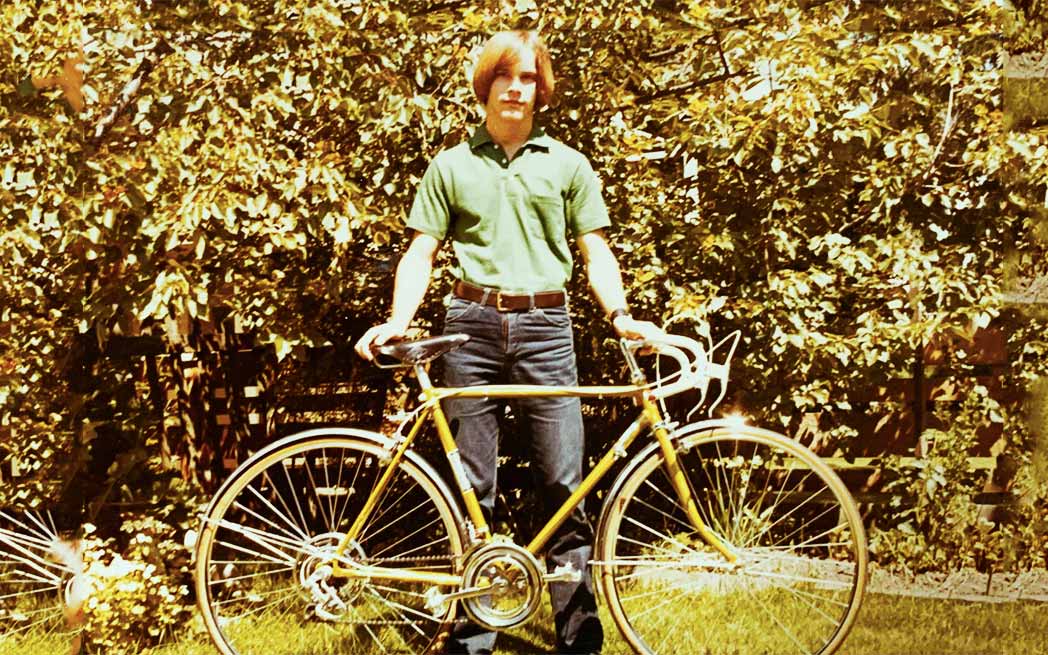
The East End Rules,
An East Van Memoir
Norman Nawrocki discusses his new book that will be launched on February 15 at a 60s/70s Dance Party
By Irwin Rapoport
February 12, 2026
Norman Nawrocki now calls Montreal home, but this notable and well-known author, poet, playwright, songwriter, academic, and anarchist was born and spent his formative years in Vancouver, East Vancouver specifically, which dramatically influenced his life and shaped his values and outlook on the world. And on Sunday, February 15, at the Casa del Popolo, he will launch The East End Rules, an East Van Memoir, a semi-autobiographical novel that chronicles an era whose existence lives only in memory.
“Nawrocki’s book is a remarkable coming of age and political awakening semi-fictionalized story set in the lively 1960s and 1970s of Vancouver’s gritty East End (a.k.a. East Van), his birthplace, long before it was gentrified,” states the press release. “Through the eyes of a young East Ender, Joey, we see the first twenty-two years of Nawrocki’s intense life as a rabble-rousing student activist, journalist and community organizer. The East End had always been tagged by better-off West Side residents as “the wrong side of the tracks.”
Nawrocki’s book is a remarkable coming of age and political awakening semi-fictionalized story set in the lively 1960s and 1970s of Vancouver’s gritty East End.
“Joey offers an engaging counter-narrative where the history and culture, dreams and challenges of this vibrant and beloved once predominantly poor working-class immigrant community are remembered and honoured,” it added. “And where the influences of the city’s flourishing radical counterculture and world events (anti-war, student free speech, Greenpeace, FLQ protests) helped transform one kid into a principled lifelong anarchist.”
Nawrocki is an internationally renowned violinist, actor and playwright, the author of eighteen books (poetry, novels, novellas, non-fiction), with over seventy albums and dozens of theatrical productions to his credit.
The Montreal Gazette calls him “a legend… one of the most fascinating folks on the cityscape.” The Globe & Mail says he’s “a born showman;” his shows are “subversively powerful.” The Vancouver Sun said his novella, Vancouvered Out (2024), was, “In the honoured tradition of George Orwell‘s Down and Out in Paris and London.”
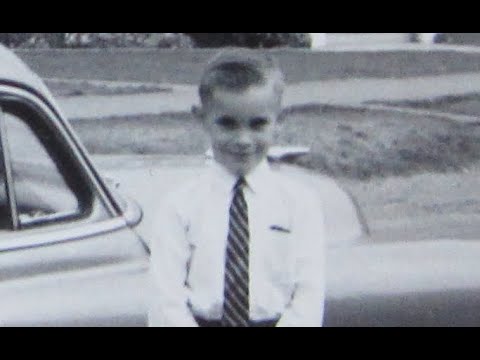
The East End Rules, an East Van Memoir is published by Black Rose Books, Montreal, and distributed by University of Toronto Press Distribution and Central Books. Here is the novel’s trailer:
In addition to Nawrocki reading passages from the novel and answering questions, the free book launch is highlighted by a 1960s/1970s-themed dance party where attendees are invited to “wear their best retro outfits.”
Nawrocki, who has been featured in several articles, discusses the book and how he brought it to life.
WM: How would you describe your book and its literary premise and stylings?
Nawrocki: It’s a semi-fictional collection of fifty-two short stories or episodes from my early life. The tales are organized chronologically and based on true events about growing up in Vancouver’s mostly poor, working-class but immigrant-rich East End (a.k.a. East Van). This was during the swinging 1960s and 1970s, long before the ‘hood became trendy and gentrified. Anyone from a similar community (e.g., Montreal’s Park Ex, LaSalle, Verdun) could identify with it, as will anyone curious about little-known Canadian history. My book blends fiction with memoir, so those who appreciate socially conscious political literature and the art of creatively documenting a life will also enjoy it.
‘A semi-fictional collection of fifty-two short stories or episodes from my early life, the tales are organized chronologically and based on true events about growing up in Vancouver’s mostly poor, working-class but immigrant-rich East End.’
The East End Rules, An East Van Memoir, presents the East End through the eyes of a fictitious “Joey” who portrays me during my childhood, teen years, and young adulthood. He raises hell in school, questions authority, and eventually battles for the rights of all. In high school, he publishes a radical newspaper and encounters the city’s counter-culture of hippies and politicized Yippies. He works odd jobs to save for college and helps to organize his community to save affordable housing. As a young intellectual and activist, he is marked by, and in turn marks, his beloved East End. He learns that those who have more on the other side of the city mean many on his side go without. But he also learns about global student revolt and anti-war protests.
Joey’s stories are of a lesser-known Vancouver. Of lives lived silently and mostly in the shadows. Of a history shared in alleyways, over picket fences or on the docks. The tales are based on my own memories, diaries, journals and extensive personal archives. They give a sense of the era that made and launched me into the world. And how a rock-fighting kid becomes a principled anarchist and community organizer.
WM: What is the attraction of Joey? How did your early childhood shape you?
Nawrocki: Because my childhood in the early 1960s was quite different from that of later generations. We were free to have adventures, to play in the streets or wherever we desired, without supervision or fear of being scolded. We were a community of children who hung outside together, not indoors. I was lucky to grow up loved. But we also learned early about class differences between those who lived in mansions on the west side of town, and us. It was an unspoken intangible that we were born with that made us different. But as mostly poor, immigrant working-class kids — like those in any similar neighbourhood elsewhere — we had our own enriched culture of family, friends and community. So my book is also about a specific community and building community. About housing rights organizers, trade unionists and general malcontents. People from similar backgrounds anywhere in Canada might recognize themselves and some of the circumstances I describe. Like how our family struggled, but pulled together to overcome social and economic challenges to survive. Our mom and dad were heroes for sacrificing so much for us.
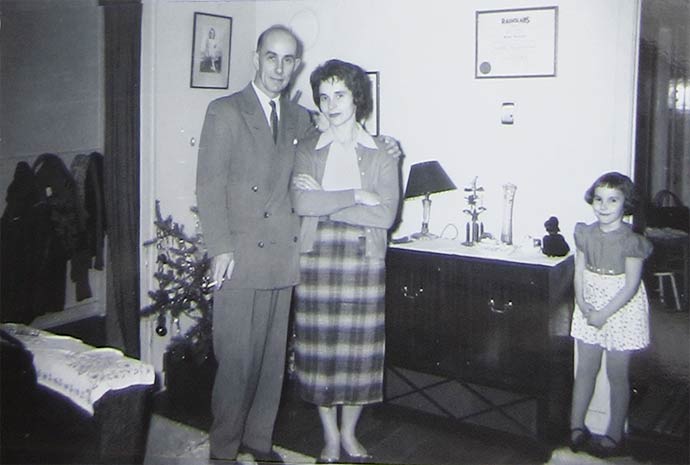
Like many “hybrid” Canadians — I’m of Polish and Ukrainian descent — I grew up sometimes confused about my cultural roots. We celebrated two Christmases. Mom said one thing in Ukrainian; Dad another in Polish. But they insisted that we kids learn English and forget about learning their native tongues. At school, teachers said something else. They promoted the dominant British Anglo-Saxon-centric culture. God and the Queen, noses in the air, with unquestioning obedience. We sensed that our place in the world was somewhere beneath them, subservient to them. But who to believe? At school, we were surrounded by kids just as hybrid and confused as we were, trying to fit in with the more culturally prevalent English. Our mother called Anglo-Saxons “white people” based on her experience growing up on the Prairies, where racism towards Ukrainians back then was widespread. We were forbidden to disclose our ethnic roots to others because she feared that we might suffer similar discrimination. Instead, she encouraged us to “assimilate” as much as possible to “be like them, speak like them, act like them,” even if it wasn’t us or in our blood.
WM: What were some of the influences that shaped your teenage years?
Nawrocki: We were often made painfully aware of our unequal social status. If we ventured to the west side of the city to socialize or work, we suffered slurs and insults from those who came from better-off families. “You are from where? Ewww!” End of conversations. We noticed that we East Enders grew up with a different culture. At parties, for example, we were the more generous, convivial, polite and open. We weren’t stingy, nor rude, snobbish, and patronising like privileged Anglo-Saxon others. Childhood friends and I marvelled in later years that this class discrimination from West Side residents towards East Enders still persisted, even into our later lives. We discuss this formative observation that never left us. It’s part of who we are, but in a positive way: we are kids from the East End. Like an invisible tattoo that we wear with pride.
WM: What do you think sets you apart from other teens of your age group in high school?
Nawrocki: I always had an abiding interest in both sports and intellectual pursuits, with a bit of music thrown in. Thanks to my Dad, I was a tennis nut from an early age and would spend hours practicing and playing. I loved running, yoga, marathon bike rides with friends, hiking and fishing in the mountains. I loved the outdoors as much as spending time in libraries, lost in stacks of books. I stayed up late at night reading and writing in my journals and diaries. I read the morning and evening newspapers. And loved going to school and sharing my observations and thoughts about current events, history and literature based on my own personal reading.
‘Because my childhood in the early 1960s was quite different from that of later generations. We were free to have adventures, to play in the streets or wherever we desired, without supervision or fear of being scolded.’
I also loved debating and public speaking. Our house was always full of live music. Even if I didn’t play the violin after the age of 14 because of peer pressure — “that’s a sissy instrument” — I still loved listening to and absorbing music, whether my father or sister was playing piano or my Dad’s LP collection.
Later, I started my own record collection: The Doors, Hendrix, Deep Purple, Cream, etc., and built my own library of books. But like all teens, I also loved to party, even if I didn’t toke up, drop acid or get hammered on cheap Baby Duck wine. Maybe I mention something like that in the book.
WM: When you were coming of age, what were some of the key political and social issues that concerned you and others of your generation?
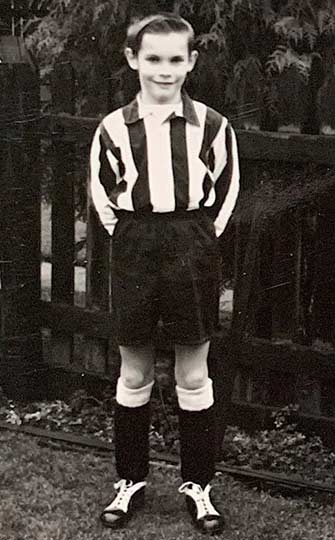 Nawrocki: The anti-war movement made daily headlines. How could we not be opposed to the American invasion of Vietnam? The murder of student protesters at Kent State? The rise of the Black Panthers in Oakland, then across the US? The student free speech movement that originated in Berkeley and drifted north to Vancouver was part of the whole global student rights uprising, including the May/June 1968 revolt in France. My friends and I were inspired by all of this and moved to act.
The controversy around recreational drugs, criminalizing potheads who just wanted to “toke up, get high and even drop out,” was a big concern for local youth counterculture. Vancouver’s mayor at the time campaigned on a program of ridding the city of undesirable “hippies and long-haired layabouts.” The police targeted and harassed “longhairs” and kids from the East End, including me! The FLQ crisis was on our radar. I was lucky to grow up during this period of intense political and cultural ferment that marked my generation. It inspired me to educate myself about the world. We had multiple news sources: corporate to community, alternative and political, from underground newspapers to neighbourhood weeklies.
WM: What are some of the connections readers might discover between the young elementary school Norman and the now “you”?
Nawrocki: My insatiable curiosity as a child about the world beyond our house and our city grew into a hunger for knowledge about international affairs and political movements. Today, I teach grade schoolers to grad students in Canada and beyond, speak out and write books about critical issues. Growing up in a house full of music eventually led to my career as a professional musician touring the world. Blending creativity with my passion for social justice meant I could share this knowledge with others through teaching about how to use the arts to address social issues.
WM: You mentioned some bands and musicians that influenced you. I am a big fan of The Doors and Cream. What were your impressions of hearing Break on Through, The End, LA Woman, N.S.U., Tales of Brave Ulysses, and Strange Brew, and other songs by iconic artists when they were first released?
Nawrocki: Whenever a friend would buy a new album and bring it over to share on my basement room turntable, it was an exquisite and almost religious “wow” moment. A wonderous reverent experience. We’d slip the album out of the sleeve, admire the cover artwork and maybe the enclosed poster also, then close our eyes and just listen, grooving to every song on each side. It gave me shivers hearing them for the first time, listening carefully to every word, every guitar or organ riff, then wanting to play it again and again. We weren’t teens high on booze or drugs, but just the music.
Experiencing every new LP felt like a rite of passage. Awe-inspiring. Unforgettable. And I still have and love playing all my Doors, Cream, Hendrix, Pink Floyd and King Crimson albums!
Launch of The East End Rules, An East Van Memoir
Sunday, February 15
Casa de Popolo,
4873 St. Laurent, south of St. Joseph Blvd
from 5 pm to 8 pm
Images: Courtesy of Norman Nawrocki

Other articles by Irwin Rapoport
Other recent articles

Irwin Rapoport is a freelance journalist and community advocate from Westmount with bachelor’s degrees in History and Political Science from Concordia University. He writes extensively on local politics, education, and environmental issues, and promotes informed public discourse and democracy through his writing and activism.
 February 17, 2026" />
 to rules‑based power" />

 Crunchy Asian Slaw" />
 a new management role" />
 Un mar de músicas" />
 Retail fixturing" />
 and stilts, oh my!" />
 An East Van Memoir" />
 the passion of Argentina" />
 of speaking kindly" />
 Tupper Street" />
 Preserved Lemons" />
 becomes Reality TV" />
 La Jeune Fille et l’Amour" />
 Commercial lease" />
 Seed-crusted roasted fries" />
 Forden Avenue and Crescent" />
 a preventable trap" />
 to the Centaur Theatre" />
 Letter of intent" />
 recycling breakthrough" />
 Arvo Pärt’s 90th birthday" />