
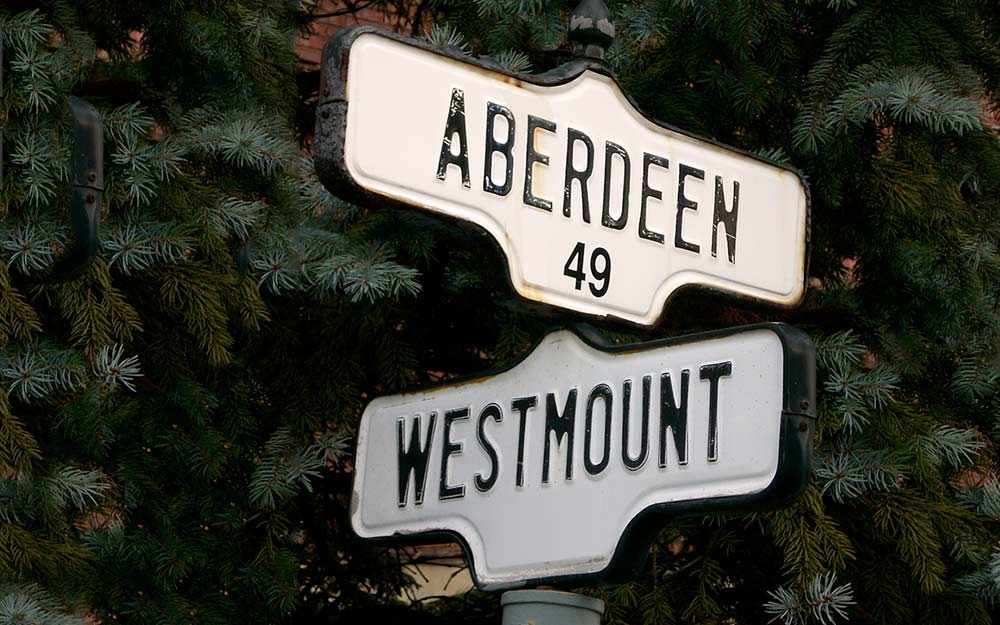
Some Westmount streets named after dignitaries in Canadian history
By Michael Walsh
Previously published in WestmountMag.ca
To find extraordinary things,
go to the ordinary streets.
– Mehmet Murat Ildan
What’s in a name? — Quite a lot, actually, if one is referring to the street names in Westmount. In fact, each one offers a history lesson that can date to when they were opened. Street names in Canada (as well as other geographical names) are stored in the Canadian Geographical Names Database at Natural Resources Canada. Interestingly, Prince Edward Island has the fewest names (fewer than 2,000), and Quebec has the most (over 100,000). In Quebec, the provincial government’s Commission de toponymie regulates names.
A leisurely walk through Westmount on a sunny weekend revealed the following streets and the historical background behind their names.
Aberdeen
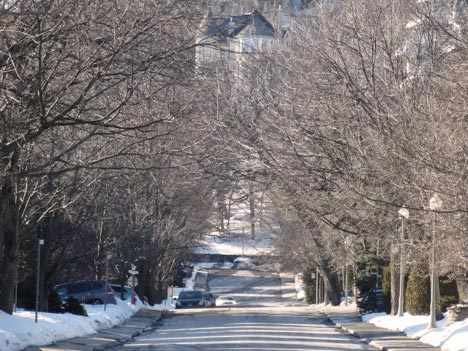
This street’s name pays tribute to John Campbell Gordon (1847-1934), 7th Earl and 1st Marquess of Aberdeen, and Ishbel Maria Hamilton-Gordon, Marchioness of Aberdeen and Temair (1857-1939).
Lord Aberdeen was Governor General of Canada (1893-1898). Lady Aberdeen also founded the Victorian Order of Nurses for Canada (1897) and the Canadian branch of the National Council of Women.
Abbott
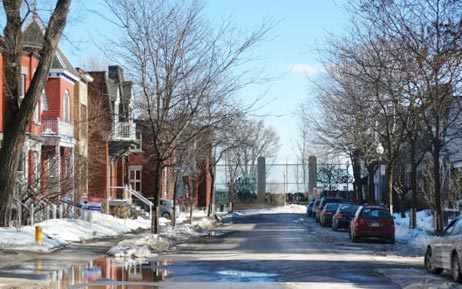
Sir John Joseph Caldwell Abbott — Canada’s third prime minister (1891-1892).
His professional career included: Dean of Law at McGill (1855-1880), President of the Canada Central Railway (1862) and Mayor of Montreal (1887-1888). His career was not without controversy. He was implicated in the Canadian Pacific Scandal, along with C.P.R.’s president Sir Hugh Allan, involving corruption charges in the awarding of contracts for the construction of Canada’s transcontinental railway. (British Columbia demanded the construction of this railway as a condition of joining the Dominion of Canada). In the end, this scandal brought down Sir John A. Macdonald’s government.
He was also one of hundreds of Montreal businessmen (including Peter Redpath and John Molson) who signed the Annexation Manifesto (1849) that advocated “render(ing) our incorporation with the United States a desirable consummation”. An avid gardener, his hobbies included raising orchids and had the finest Canadian collection of this species. He married Mary Bethune in 1849, and they had eight children. The actor Christopher Plummer is one of their descendants.
Argyle
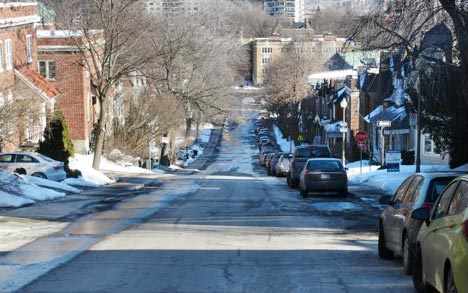
This street is named after John Campbell, Marquess of Lorne and 9th Duke of Argyll (1845-1914).
Former Governor General of Canada (1878-1883), he was married in 1871 to Queen Victoria’s daughter, Princess Louise. The family home is Inveraray Castle, located on the shores of Scotland’s Loch Fyne. The castle is presently occupied by Torquhil Campbell, 13th Duke of Argyll — and is also a shooting location for Downton Abbey.
Amongst his accomplishments that stand to this very day was the formation of the Royal Canadian Academy of Arts (1880) — the inception of today’s National Gallery of Canada and the Royal Society of Canada (1882) “to promote learning and research in the arts, the humanities and the natural and social sciences”.
Metcalfe
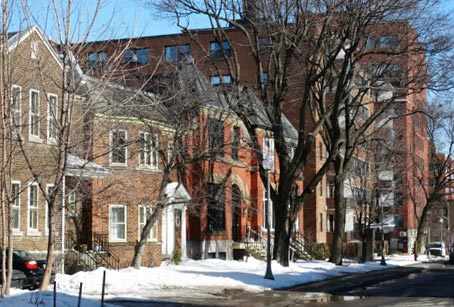
This street’s name honours Charles Theophilus Metcalfe, 1st Baron Metcalfe (1785-1846).
His career included: Lieutenant Governor of Administrative Regions of India (1836-1838), Governor of Jamaica (1839-1842) and Governor-in-Chief of Canada (1843-1845). Importantly, as Governor-in-Chief of Canada, he was responsible for preserving French as an official language within the Province of Canada, ending the British policy of forced Anglicization.
Metcalfe stated that “if the French Canadians are to be ruled to their satisfaction, and who could desire to rule them otherwise? Every attempt to metamorphose them systematically into English must be abandoned.” Thus, Kingston was precluded from being the provincial capital because it was “a foreign land” to the Canadians. He also urged amending the Act of Union to give French and English equal status in the legislature. (Dictionary of Canadian Biography)
Prince Albert
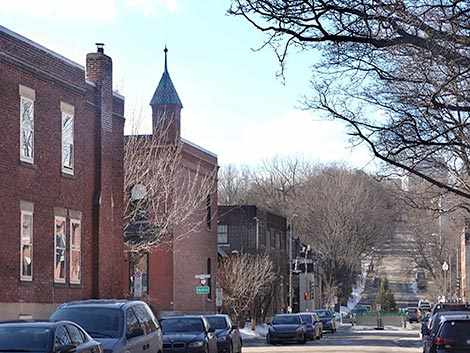
Prince Albert of Saxe-Coburg and Gotha (Francis Albert Augustus Charles Emmanuel, 1819-1861) was the Prince Consort and husband to Queen Victoria.
His legacy included changing how the royal family was depicted and, as a male consort, confronting gender roles before the emergence of feminist theory. In fact, the fashion in which Prince Albert depicted the royal family still exists in the Royal Family to this day. He recognized and admired the new middle class created by the shift from an agricultural society to one that produces goods and services. The Royals’ rituals shifted from aristocratic snobbery to include musicals and children’s theatre, transforming court life forever.
As a male consort, he ran the family’s daily routine, including taking an interest in the children. This was in an age when men were always in charge. His role has been described as his sheer existence threatening comfortable gender roles. He died of typhoid fever in 1861 — Queen Victoria kept the illusion of Albert alive by having his clothes and shaving cream put out every morning.
Strathcona
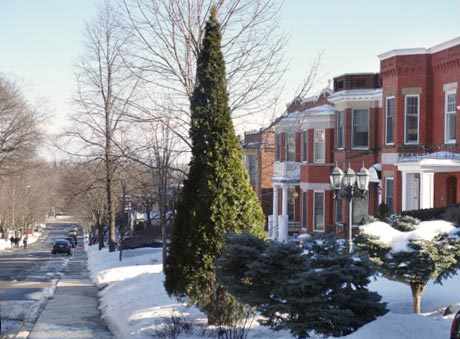
The Right Honourable Donald Alexander Smith, Baron Strathcona and Mount Royal (1820-1914).
His career started with the Hudson’s Bay Company outpost in the Ungava Peninsula of Nunavik, Quebec and rose to the position of the company’s Governor in 1869 — the same year that the company’s rights were transferred to the Canadian Government. He was responsible for the inception of the Canadian Pacific Railway and for securing government contracts to build a transcontinental railway. He completed the line in 1885 and drove the last spike that connected the Pacific and eastern sections. In recognition of this achievement, he was awarded the Most Distinguished Order of Saint Michael and Saint George in 1886.
As Chancellor of McGill University, he founded: The Donalda College for Women (“on condition that the standard of education for women should be the same as that for men for the ordinary degrees in Arts, that the degrees to be granted to women should be those of B.A., M.A., LL.D., which should be so granted to them by McGill University on the same conditions as to men.”), the Royal Victoria Hospital (with Lord Mount Stephen) and the Royal Victoria College. During the South African (Boer) War, he raised and equipped Strathcona’s Horse. Lord Strathcona’s Horse (Royal Canadians) is a regular armoured regiment of the Canadian Army, currently based in Edmonton, Alberta.
Mount Stephen
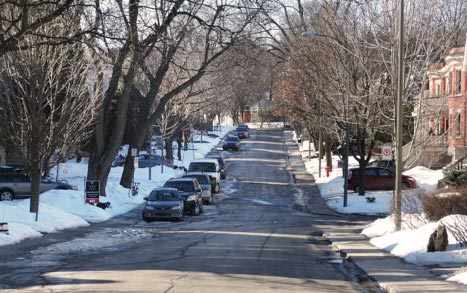
George Stephen (1829-1921), Baron Mount Stephen, started life as a ‘herd laddie” in Morlach, Scotland, before coming to Montreal in 1850.
By 1876 he rose to the position of President of the Bank of Montreal. His prominence in the railways began in 1878, as part of a consortium with Donald A. Smith and R. B. Angus formed to acquire the St. Paul and Pacific Railroad, which ran from St. Paul, Minnesota, to the Canadian border. During that same period, the Canadian government, under pressure from Manitoba, was completing the northerly rail portion that would ultimately connect Winnipeg and St. Paul. On the American side, however, with only sixty miles of track left to complete, the Dutch company stopped financing the venture, bringing work to a standstill.
Seeing an opportunity, George Stephen and his associates bought out the American company’s stock (at a record-low price) and completed the essential link. This allowed the Canadian government to complete the Manitoba section in 1878. George Stephen’s syndicate then formed the Great Northern Railway, which has been described as one of the greatest railroads on the American continent.
Feature image: © Andrew Burlone
Other images: Michael Walsh

More articles by Michael Walsh
RECENT ARTICLES

Michael Walsh is a long-time resident of Westmount. Now happily retired after nearly forty years in higher-education technology, he enjoys exploring the city on foot, uncovering its past and bringing to light the history behind its familiar places. michaelld2003@ hotmail.com • Westmount Overlooked blog

The names show the historical background beautifully–the illustrious people and their contribution to Westmount and to Canada.
Your article provides readers with a fascinating and factual look at the men and the history behind the street names we take so for granted.