
How to assess your relationship with risk and make better decisions
By Angela Civitella
Previously published in WestmountMag.ca
Being aware of your own propensity to take risks is of great benefit when making decisions. Risk-taking people preferring high-risk options should consider reviewing their choices carefully. On the other hand, risk-averse people wanting to take the safe option may need to push themselves if they’re to achieve the best outcomes. Being aware of your risk patterns helps you determine if you are truly choosing the best option, or if you’re letting your risk profile influence the decision more than it should.
Which one is your style?
The process you use to make decisions affects everything you do.
From the moment you wake up, you’re in this process. Everything about your day, whether small or big, requires study and reflection. This is your brain evaluating and understanding a projected outcome to any decision you make.
To excel in your decision-making process, it is essential to understand how you approach it. Remember, in each decision taken, there are always elements that you can’t control. Consciously or subconsciously, you evaluate these unknowns that are ever-present when faced with a potential outcome.
It makes sense to try to find the middle path between suffocating prudence and reckless confidence.
However, the payoff and the risks involved are estimates, not absolutes, and are therefore coloured by your perception. This, in turn, is strongly influenced by your propensity to take risks.
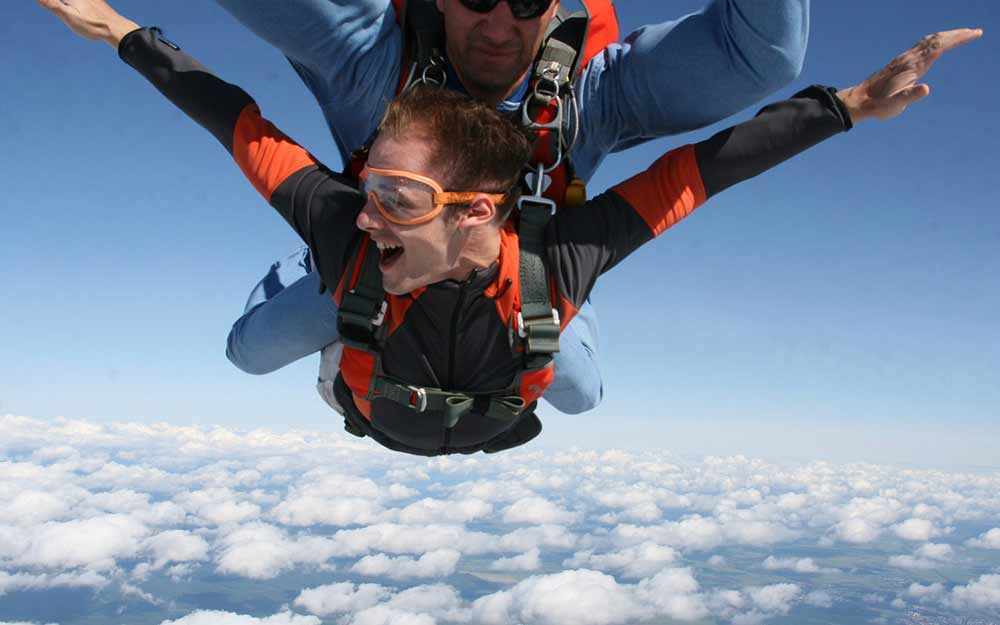
By nature, some people are more tolerant of risk than others. We all know people who thrive on big risks. People who gamble or take part in off-piste skiing are typically pretty risk-tolerant, as are those who invest in new markets and emerging technologies. To them, the excitement and potential rewards make the risk worthwhile.
Understanding your capacity for risk
Therefore, you need first to understand your attitude towards risk. Are you risk-averse, a risk lover, or does it depend on the situation? The amount of risk you accept in your decisions is related to your overall risk profile. Some people are simply more cautious by nature. So what the cautious decision maker deems high-risk may have a lower risk assessment when analyzed by the ‘courageous’ decision maker.
‘The payoff and the risks involved are estimates, not absolutes, and are therefore coloured by your perception… strongly influenced by your propensity to take risks.’
This is important because we all have to take risks in our lives if we’re to achieve our full potential, and it makes sense to try to find the middle path between suffocating prudence and reckless confidence. The ability to find this middle path, to take risks intelligently, is a significant advantage in many business situations.
Research has shown that your personality type is a good way of predicting your capacity for risk.
People fall into three groups when it comes to calculating risk. Some people are through-and-through risk takers. Not only do they thrive on the sensation of danger, but they also actively seek out this thrill. In terms of personality type, they will tend to have highly extroverted and open personalities, and not be that agreeable, and perhaps not be that conscientious when undertaking risk. These people like to have fun, enjoy the ‘buzz’ of novelty and danger, and aren’t too worried about what others think of them.
‘Research has shown that your personality type is a good way of predicting your capacity for risk.’
By contrast, people with the opposite personality traits, such as having tendencies of being introverted but are highly agreeable and very conscientious, will typically be risk-averse.
The third group comprises individuals whose willingness to take risks varies depending on the situation. Their approach to risk tends to differ across the following six main areas:
• Health
• Personal safety
• Social
• Recreational
• Career
• Personal finance
Examples of people whose relationship with risk is different in each of these areas include a fast-driving smoker who stays within one company for his whole professional life (taking risks with personal safety and health but not with his career), or someone who gives up a well-paid job to start a new business yet always wears a cycle helmet (taking risks with her personal finance but not her personal safety).
Capacity for risk and decision-making
Once you are fully aware of your approach to risk in decision-making, you can start to think about how your natural risk appetite is influencing your decisions. If you are naturally a ‘courageous’ decision maker, then you may want to increase the amount of analysis you conduct, so that you avoid taking unwarranted risks. On the other hand, if you are a ‘cautious’ decision maker, then knowing that may help you to break free of constraints that may be holding you back.
‘Once you are fully aware of your approach to risk in decision-making, you can start to think about how your natural risk appetite is influencing your decisions.’
Here’s how to use your understanding of your capacity for risk when you have to decide between two or more options:
Step one: Analyze the level of risk with each option
First, you need to identify the dangers inherent in each option, assess their likelihood of occurrence, and determine the potential impact they’d have if they materialize.
Once you’ve calculated the risks for each option and considered how you could manage these, rank your options according to the riskiness of each one and decide which one is your preferred option.
Step two: Compare your capacity for risk to the level of risk of your preferred alternative
If you’re naturally a ‘courageous’ decision maker who enjoys taking risks, and you’ve chosen a high-risk option, step back. Consider whether your choice is influenced by the excitement that this risk would bring. Although a high-risk option seems the most attractive to you, is it really the best choice, or are you just seeking an “adrenaline buzz”?
Equally, if your tendency is towards risk-averse, ‘cautious’ decision making and you’ve chosen the least risky option, check that your natural prudence isn’t getting in the way of a truly objective assessment of the choices available.
Key points
Embracing your relationship with risk empowers you to transform hesitation into confidence and impulsive urges into measured choices. By methodically examining risks and weighing them against your unique tolerance, you position yourself to overcome self‑doubt or rein in excess, forging a path toward decisions that truly embody your ambitions. Striking a healthy balance between courage and caution is not just strategic—it is vital for sustaining long‑term growth and achieving your goals. Recognizing that every decision is an opportunity for progress, tap into this awareness as a catalyst for lucid, bold, and purposeful action, in harmony with your highest aspirations.
Image: Anton Kudris via StockPholio.net
Other articles by Angela Civitella
Other recent articles
[row cols_nr=”2″ class=”narrow”][col size=”2″]

[/col][col size=”10″]Angela Civitella, a certified management business coach with more than 20 years of proven ability as a negotiator, strategist, and problem-solver, creates sound and solid synergies with those in quest of improving their leadership and team-building skills. linkedin.com/in/angelacivitella/ • intinde.com • @intinde[/col][/row]