The importance of bridging age diversity in today’s workplace
By Angela Civitella
Revised, August 29, 2026
Imagine this scenario: a respected long-time manager retires, and the organization appoints a younger colleague—or an external hire—to lead the team. The new manager brings energy, current technical knowledge and ideas for improving how work gets done. Long-serving employees bring institutional memory, professional judgment, relationships and a deep understanding of what has worked, what has failed and why. Within weeks, however, tensions begin to surface.
The problem is not an inevitable “generation gap.” It is a failure to create shared expectations, mutual respect and practical ways to exchange knowledge.
Some employees may feel the new manager is moving too quickly, relying too heavily on digital tools, changing processes without enough consultation, or equating visibility on Slack, Teams or another platform with real collaboration. The new manager may feel that experienced colleagues are resisting change, withholding context, dismissing newer approaches, or expecting decisions to be made according to “the way we have always done it.” The problem is not an inevitable “generation gap.” It is a failure to create shared expectations, mutual respect and practical ways to exchange knowledge.
Age diversity matters because today’s workplaces often include employees at very different career stages: people entering their first full-time roles, mid-career professionals balancing advancement and caregiving, established leaders, and experienced workers who may be delaying retirement, changing roles or returning on a flexible basis. Canada’s workforce is aging: the share of the population aged 55 and over rose from 22.0% in 2001 to 32.3% in 2022, while Millennials now outnumber Baby Boomers in Canada. That makes retaining experience and transferring knowledge a strategic issue—not simply an HR concern.
Move beyond generational stereotypes
The older version of this discussion divided workers into rigid categories—Baby Boomers, Gen X, Millennials and Gen Z—and treated each group as if it had one predictable personality, set of values or leadership style. That framing is now too simplistic. A person’s approach to work is shaped by much more than birth year: their job, industry, income, caregiving responsibilities, career stage, disability, culture, personality, digital access and past experience with employers all matter.
Research reviews have found that differences within age groups are often much greater than differences between them; broad “generational” effects explain relatively little variation in workplace outcomes. The popular assumption that younger employees are automatically better with technology is especially unhelpful. Digital confidence depends on exposure, training, role requirements and opportunity—not age alone.
A more useful question is: What does each person need to do excellent work, contribute their expertise and see a future here?
These assumptions can become self-fulfilling. They encourage managers to overlook individual strengths and needs, and they can make employees feel patronized, underestimated or excluded. A more useful question is: What does each person need to do excellent work, contribute their expertise and see a future here?
What employees tend to need
Although employees’ needs vary by individual, life stage, and role, several priorities tend to recur across age groups and career stages. People generally want to feel that their workplace is fair, trustworthy, and transparent. In practice, this means clear pay practices, consistently applied policies, psychologically safe conversations, and leaders who communicate the reasons behind important decisions.
Employees also tend to value meaningful work. They are more engaged when they can see a clear connection between their day-to-day responsibilities and the organization’s larger mission, whether that mission serves an audience, clients, a community, or a broader social purpose. Even routine work can feel more worthwhile when employees understand how it contributes to shared goals.
Flexibility has become an important expectation rather than a niche benefit associated with one particular generation. Depending on the nature of the work, flexibility may include predictable schedules, hybrid or remote-work options, reasonable accommodations, and respect for caregiving, health, and personal responsibilities.
People generally want to feel that their workplace is fair, trustworthy, and transparent.
In Canada, employees in federally regulated workplaces may request flexible work arrangements under the Canada Labour Code, including changes to their hours, schedules, or work location. The federal government notes that these arrangements can support employee health and satisfaction while also helping employers recruit and retain staff, including workers with family responsibilities and more experienced employees.
Opportunities for growth matter as well. Employees often look for training, mentoring, stretch assignments, lateral moves, and visible career pathways—not simply promotions. A workplace that supports development signals that it sees employees as capable of evolving and contributing in new ways over time.
A sense of belonging is another consistent need. Respectful collaboration, inclusive meetings, meaningful recognition, and opportunities to form professional relationships can help people feel valued and connected. This is particularly important in hybrid or dispersed workplaces, where informal contact and relationship-building may not happen as naturally.
Finally, employees need the practical conditions to do their work well and sustainably. That includes accessible technology, adequate training time, clear documentation, and reliable help when tools, systems, or processes change. It also means realistic deadlines, manageable staffing levels, protected time off, and a culture that does not treat overwork or burnout as evidence of commitment.
Why age diversity is valuable
Age diversity can strengthen a team because employees at different career stages bring complementary knowledge and experience. This value does not arise automatically from simply employing people of different ages; it depends on creating a workplace where colleagues are encouraged to listen to, learn from, and collaborate with one another.
Employees with extensive experience often bring institutional knowledge: an understanding of why particular processes exist, what earlier initiatives taught the organization and which relationships require particular care. Their professional judgment may have been developed through repetition, setbacks, crisis management and long-term responsibility. They can offer mentoring, sector knowledge and continuity during organizational change, as well as a realistic understanding of risk, timing and the practical constraints that affect implementation.
Performance should be assessed primarily through results, quality, collaboration and reliability—not simply through online presence or time spent at a desk.
Newer or younger employees can contribute equally important strengths. They may bring fresh perspectives to established processes, challenge assumptions about audiences and identify routines that have become outdated or unclear. They are often familiar with current technologies, emerging tools and evolving work practices, and may bring energy for experimentation, improvement and change.
However, age diversity should not be reduced to the simplistic idea that one group supplies “wisdom” while another provides “technology.” Every employee can teach and learn. A long-serving editor, for example, may have a deep understanding of an audience’s history while also being highly capable with analytics, AI-assisted editorial workflows or content-management systems. Similarly, a recent graduate may be technically fluent but still benefit from guidance in interpreting organizational politics, stakeholder relationships, editorial standards and institutional context.
How to bridge the gap
Build teams around skills, interests and project needs rather than assumptions about age or career stage. When assigning work, consider each person’s expertise, workload, development goals and willingness to contribute—not stereotypes such as assuming that younger employees should manage every emerging platform or that longer-serving staff should automatically handle people management, policy or institutional history.
Stronger teams deliberately combine different levels of tenure, disciplines and perspectives. For example, a website redesign could bring together a long-serving employee who understands the organization’s audiences, editorial history and internal workflows; a newer colleague with up-to-date knowledge of UX, SEO, analytics or accessibility; and a manager who can remove obstacles and make decisions promptly. This structure recognizes both employees as capable contributors, rather than positioning one as the permanent expert and the other as the learner.
Knowledge transfer should be an ongoing organizational practice, not something that begins only when an employee announces a retirement, resignation or extended leave. By that point, vital context—such as why a decision was made, who holds a key relationship, or how an unusual process works—may already be difficult to retrieve.
Stronger teams deliberately combine different levels of tenure, disciplines and perspectives.
Organizations should document recurring procedures, essential contacts, decision histories, editorial standards, technical instructions and lessons from past projects. Organizations can share this knowledge through playbooks, process maps, recorded demonstrations, short how-to videos, common templates, checklists, cross-training days, job shadowing, and project retrospectives that record both successes and improvements for next time.
Succession planning is particularly important for positions that depend on specialized operational knowledge, institutional memory, or long-standing relationships. To prepare others to assume these roles, organizations must encourage employees to share knowledge, mentor colleagues, and document essential processes. This expectation should be reflected in performance discussions and evaluations. If an organization claims that knowledge sharing matters but rewards only individual output and speed, employees will understandably prioritize urgent deliverables over preparing others to take over their responsibilities.
Two-way mentoring can also help bridge differences in experience, perspective and working style. Traditional mentoring remains valuable: a more experienced employee can help a newer colleague build professional judgment, confidence, networks and an understanding of the organization’s culture and history. At the same time, mentoring can flow in the other direction. Reciprocal, sometimes called reverse, mentoring can help senior employees and leaders better understand new digital tools, changing audience behaviours, accessibility expectations, AI-supported workflows, social platforms or evolving career priorities.
The goal should not be framed as asking a younger person to “teach the older person technology.” Instead, it should be a genuine exchange in which each participant contributes meaningful knowledge. One person might share experience in stakeholder management, negotiation or organizational history, while the other offers current digital practices, research methods or new approaches to communication and collaboration. Both colleagues should agree on goals, meet regularly and participate as equals.
Two-way mentoring can also help bridge differences in experience, perspective and working style.
Clear hybrid-work norms are equally important. Hybrid and remote arrangements can broaden access to talent and give people more autonomy, but uncertainty about expectations can easily create tension. Employees may have very different views of what responsiveness, visibility, office attendance and meeting participation should look like. Rather than leaving these issues to assumption or informal office culture, organizations should establish shared norms.
Teams need clarity about which work genuinely benefits from in-person collaboration and why, which hours require availability, how quickly people should respond to email or messaging platforms, and when a chat conversation should become a call or meeting. They should also decide how remote employees will be included in decisions, informal information-sharing and opportunities that might otherwise happen in the office. Assess performance primarily through results, quality, collaboration, and reliability—not simply through online presence or time spent at a desk.
Finally, treat flexibility as a practical question of work design rather than a generational perk. Employees may value flexible arrangements for many reasons, including childcare, eldercare, health needs, long commutes, focused work, study, community commitments or a desire for a more sustainable routine. Recognizing those varied needs helps organizations move away from simplistic assumptions about what different age groups want. The most effective workplace practices create clear expectations while allowing people to contribute in ways that reflect both their professional strengths and the realities of their lives.
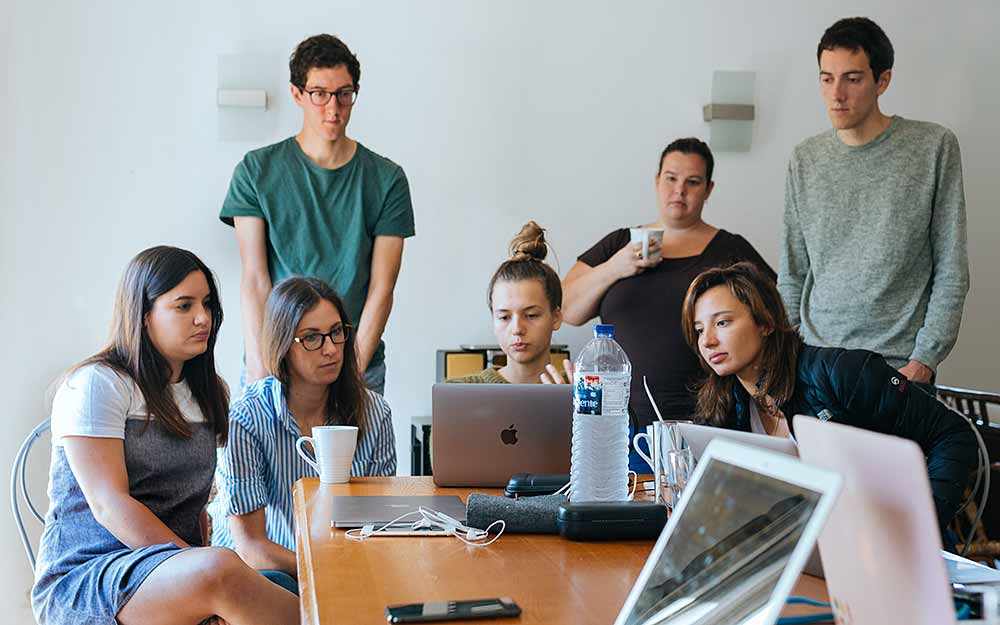
Image: Fox – Pixabay

More articles by Angela Civitella
RECENT ARTICLES
 Angela Civitella, a certified management business coach with many years of proven ability as a negotiator, strategist, and problem-solver, creates sound and solid synergies with those in quest of improving their leadership and team-building skills. linkedin.com/in/angelacivitella/ • intinde.com • @intinde