
Preventative measures are sadly lacking in intensive farming facilities
By Georges Dupras
July 30, 2026
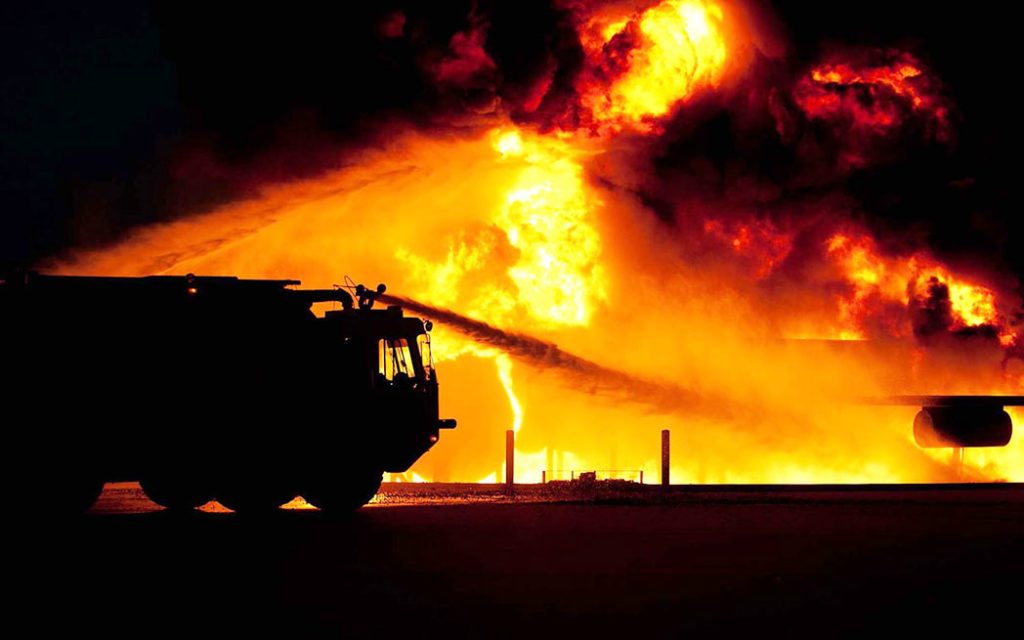
On July 14, Michelle Both of CBC News reported that another commercial barn fire was in progress, this time in Simcoe, Ontario. This fire caused the death of some 20,000 hogs – they burned alive.
At the time of this report, it was still unclear as to the cause of the fire. Regardless, it is obvious that preventative measures were sadly lacking. Intensive farming facilities are increasing at the expense of family-owned operations where there is at least the impression of greater human care and responsibility. Independent pig farmers complain that these mega producers rarely benefit the communities where they are located.
Today, corporate enterprises operate facilities that can house up to 90,000 pigs, far from the oversight of board members, or the prying eyes of animal advocates.
Today, corporate enterprises operate facilities that can house up to 90,000 pigs, far from the oversight of board members who live miles away, or the prying eyes of animal advocates.
Care for hogs
Care is taken – not in the interest of hogs, but primarily that of investors. This is done through the use of large quantities of penicillin, tetracyclines, and macrolides to prevent bacterial infection, pneumonia, and enteric diseases. Despite similar fires in intensive breeding and laying facilities, there appears to be no insistence by Agriculture Canada, the Canadian Food Inspection Agency (CFIA), or insurance companies for the mandatory installation of state-of-the-art fire prevention systems.
Operators of such facilities disregard insignificant losses in the interest of the collective and of corporate profit and loss ledgers. They seem more focused on attempting to criminalize those who photograph conditions that are hidden from public view.
Industry standards
The government seems content to simply relegate the responsibility of animal care to “Industry Standards”. In years past, this was done for political reasons to secure the support of rural interests. Today, the onus has shifted somewhat, where our elected representatives cater to corporate shareholders. These benefactors live in urban sprawls and are more concerned about their investment than about animal care.
To quell growing concern over animal treatment, some Provincial authorities have designated specific breeds as sentient, but it’s still business as usual.
Call to action!
Since 2017, when Donald Trump was inaugurated as President in the United States, most long-fought gains on environment and animal protection issues have been sacrificed to benefit users. This total contempt, on President Trump’s part, has had a trans-border impact. It is easy to become discouraged and simply throw in the towel – but that benefits no one.
‘Operators of such facilities seem more focused on attempting to criminalize those who photograph conditions that are hidden from public view.’
Each challenge begins with the first step, so I’ve listed a few Federal contacts you might want to follow up with below. I will leave it to you to follow up with your Provincial Ministers. Always remember that the squeaky wheel gets grease.
FEDERAL MINISTER OF AGRICULTURE & AGRI-FOOD
The Hon. Heath MacDonald
Minister of Agriculture and Agri-Food
aafc.minister-ministre.aac@agr.gc.ca
Telephone: (613) 773-1059
FEDERAL MINISTER OF JUSTICE
The Hon. Sean Fraser
Minister of Justice and Attorney General of Canada
Sean.fraser@par.gc.ca
Telephone: (613) 957-3559
Disclaimer: The opinions expressed in this article are those of the author and do not necessarily reflect the opinions of WestmountMag.ca or its publishers.
Feature image: Pexels – Pixabay
More articles by Georges R. Dupras
Other recent articles
 Georges R. Dupras has advocated for animals for over fifty years. A member of the International Association for Bear Research and Management (IBA), a Director of the Animal Alliance of Canada (AAC), Quebec Representative of Zoocheck Canada and past Board member of the Canadian SPCA, he worked on the original Save the Seal campaign in 1966 that culminated in the founding of the International Fund for Animal Welfare (IFAW) in 1969. Georges Dupras has published two books, Values in Conflict and the eBook Ethics: A Human Condition, and currently lives in Montreal, Canada.