
Successfully working
from a home office /1
Respect, discipline and commitment are key to a fully performing home-based office or business
By Lori Karpman
Updated July 13, 2026
If you think it is easier to work from a home office than from an office away from home, please read on. You may find that this assumption is much farther from the truth than it appears at first glance.
A home office can be a wonderful place to work and even extremely lucrative, as long as you have the discipline to manage your time well. The flexibility it offers is real, but it must be framed by clear routines and a strong sense of personal responsibility for your schedule and results.
To be successful, a home-based business requires at least as much commitment as a conventional work environment, and often more. Teleworking offers significant benefits – reduced operating costs, greater profit potential and time savings with less commuting – but these advantages only materialize when you structure your days intentionally and honour your professional commitments.
A home office can be a wonderful place to work and even extremely lucrative, as long as you have the discipline to manage your time well.
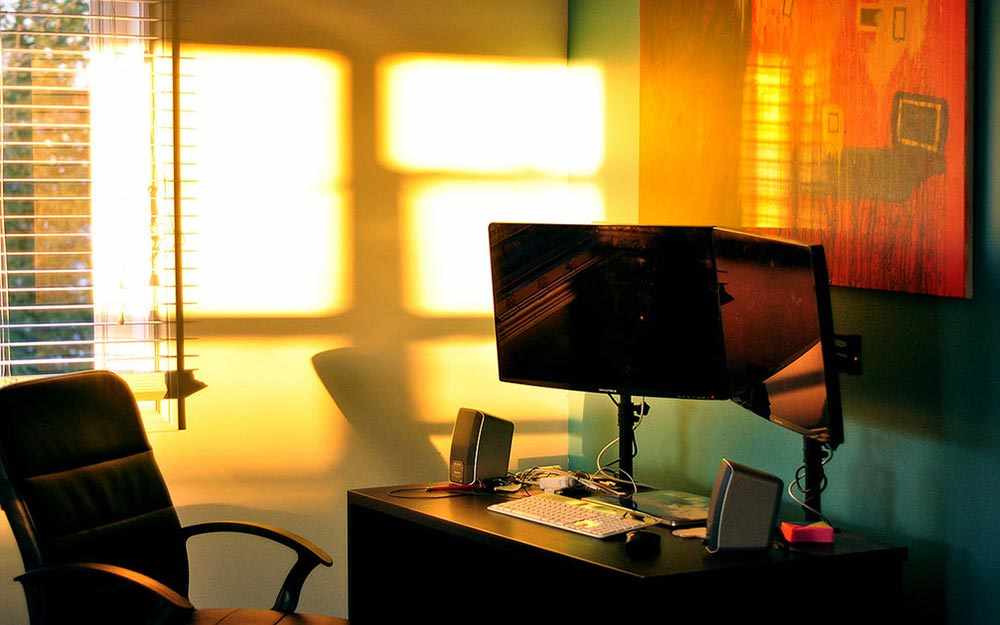
A home office is a professional space dedicated solely to work. It is not a corner of your dining room table but a space equipped, supplied and organized like a “real” office, with everything you need to perform at your best. Ideally, it is a separate room or a secluded area; if that is not possible, screens or partitions can be used to clearly delineate your workspace from the rest of your home.
This physical separation is not just practical; it also has a powerful psychological effect. When you cross the threshold into that space, you are signalling to yourself that you are “at work,” with all the focus and presence that implies.
The first challenge entrepreneurs and professionals face when moving from an external office to a home office is psychological. Many people struggle to recognize that, aside from not having to leave their homes, very little has changed in terms of expectations: deadlines, quality standards and collaboration requirements are still there.
The reason people often fail at teleworking is not the home office itself, but the way they approach it: they may not treat their telework hours with the same respect as when they are physically in the office, and/or they lack the self-discipline to create and maintain routines and structure. At the same time, success also depends on the framework provided by clients or employers: clear goals, appropriate tools, regular communication and a culture of trust all play a crucial role in making remote work sustainable.
‘Once you enter your office, you are at work, and those hours should be treated as dedicated to professional activity.’
The second major challenge is the ritualization and protection of your working hours. It is very easy for work to become entangled with household chores, family responsibilities or personal errands, and people then wonder why they are not productive enough or do not generate the income they expect. Flexibility in your schedule is a tremendous advantage, but it should not come at the expense of your effectiveness. Plan your work blocks as non-negotiable appointments with yourself: during these periods, focus on high-value, income-generating activities. If you absolutely must perform certain non-work-related but essential tasks during the day, consciously integrate them into your schedule and adjust your working hours accordingly, rather than letting interruptions dictate your rhythm.
Once you enter your office, you are at work, and those hours should be treated as dedicated to professional activity. The more consistently you respect that boundary, the easier it becomes to maintain both your performance and your peace of mind.
When work and leisure are constantly blended, true quality of life becomes elusive: there is no clear distinction between work and home, and even the days of the week can start to blur into one another. To maintain the balanced quality of life you deserve, it is crucial to end your workday with a deliberate, concrete gesture.
This may be as simple as turning off your computer, closing the office door or clearing your desk at the end of the day. These small rituals send a powerful signal to your brain that work is over and that you are now free to step into your personal life without guilt. Once you leave the office—physically or symbolically—your time is yours, and you can enjoy it fully. You will feel the difference almost instantly, and the rhythm of your weeks will regain its meaning.
Remote work not only presents organizational challenges; it can also affect your psychological well-being. Spending most of your time alone in a home office can lead to isolation if you are not careful. To counter this, build regular contact into your routine: virtual meetings, phone calls, in-person meetings when possible, or participation in professional and community networks. Maintaining human connection with colleagues, partners, clients and your local community helps sustain motivation, creativity and a sense of belonging—three elements that are essential for long-term success in telework.
In recent years, many organizations have adopted hybrid models that combine remote work and in-office presence. This evolution gives you more latitude to organize your time and travel, but it also increases the need for clarity about priorities and expectations. As a home-based worker or entrepreneur, you benefit from defining, with your clients or employer, your availability windows, preferred communication channels and explicit expectations regarding response times and deliverables. Discipline, in this context, is no longer just about being present at fixed hours; it is about consistently meeting your commitments in a reliable and predictable way.
Respect and discipline remain the keys to success in operating a home office. Respect for your time, for your commitments, for your clients or employer—and for your own need for rest and boundaries. As with any business, success ultimately depends on the owner’s or professional’s sustained efforts and willingness to adapt. Working from home certainly introduces additional challenges, but for those who develop the necessary skills, structure and mindset, there may be no better place in the world to work.
In the second part, we will look at the content and equipment a home office should have and offer practical advice on choosing furniture and decor that support both your productivity and well-being.
Image: Laura D’Alessandro – StockPholio.net

More articles about Business
Other recent articles

 July 21, 2026" />
 lakeshore and horizon" />
 and green apple salad" />
 voice communication" />
 A living natural heritage /7" />
 from a home office /2" />
 Buying a country home" />
 Treat your vehicle to a beauty makeover" />
 in the Laurentians" />
 from a home office /1" />
 Lima Bean Hummus" />
 mistakes to avoid" />
 A living natural heritage /6" />
 The buyer’s visit" />
 environmentalism?" />
 the classical mandolin" />
 between matter and light" />
 goes bonkers circus" />
 Caramelized Beet Carpaccio" />
 of emotional labour" />
 A living natural heritage /5" />
 what takes Trump down?" />
 Summer doldrums" />
 30th edition unveilled" />