
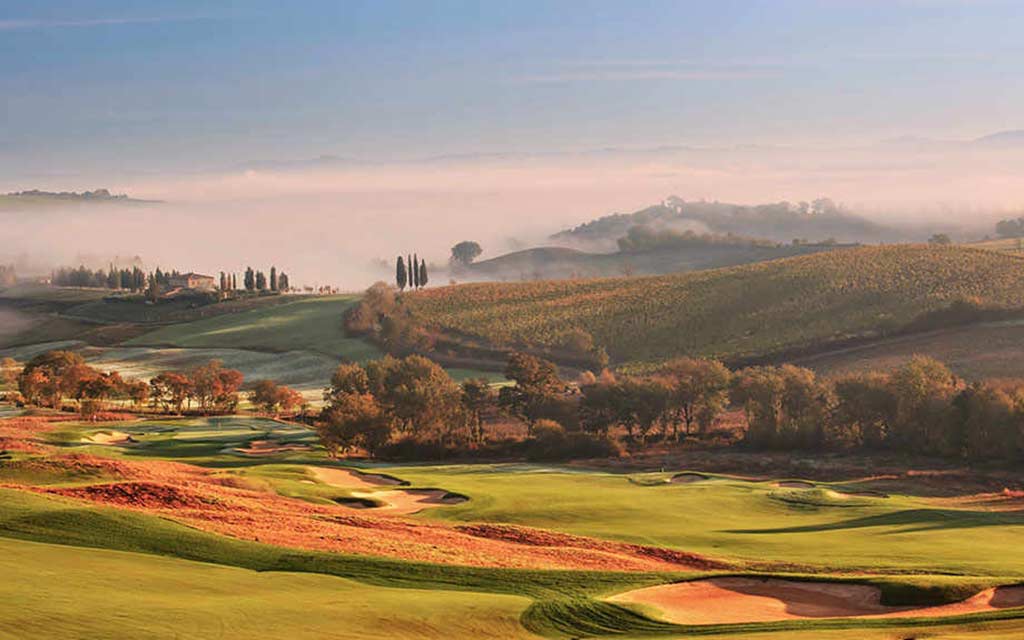
An Italian cooking class
in the hills of Tuscany
Awaken your senses to the very essence of Tuscan cuisine: Antipasti and Wine
By Eva Stelzer
Edited December 6, 2025
Awaken all your senses while experiencing the very essence of Italian cuisine in an atmosphere where time seems to slow, and every detail is designed for pleasure. From the first breath of herb-scented air in the gardens to the final sip of prosecco in the glow of a centuries-old villa, this is not simply a meal but a lingering celebration of flavour, memory, and place.
The colours of Tuscany—sage greens, sun-warmed ochres, the deep ruby of ripening grapes—inspire a cuisine that is as elegant as it is rooted in place.
High above Florence, where the city’s terracotta rooftops slope toward the Arno, Renaissance Villa opens onto a world where food, landscape, and history feel inseparable. Within its heritage-protected gardens, the colours of Tuscany—sage greens, sun-warmed ochres, the deep ruby of ripening grapes—inspire a cuisine that is as elegant as it is rooted in place.
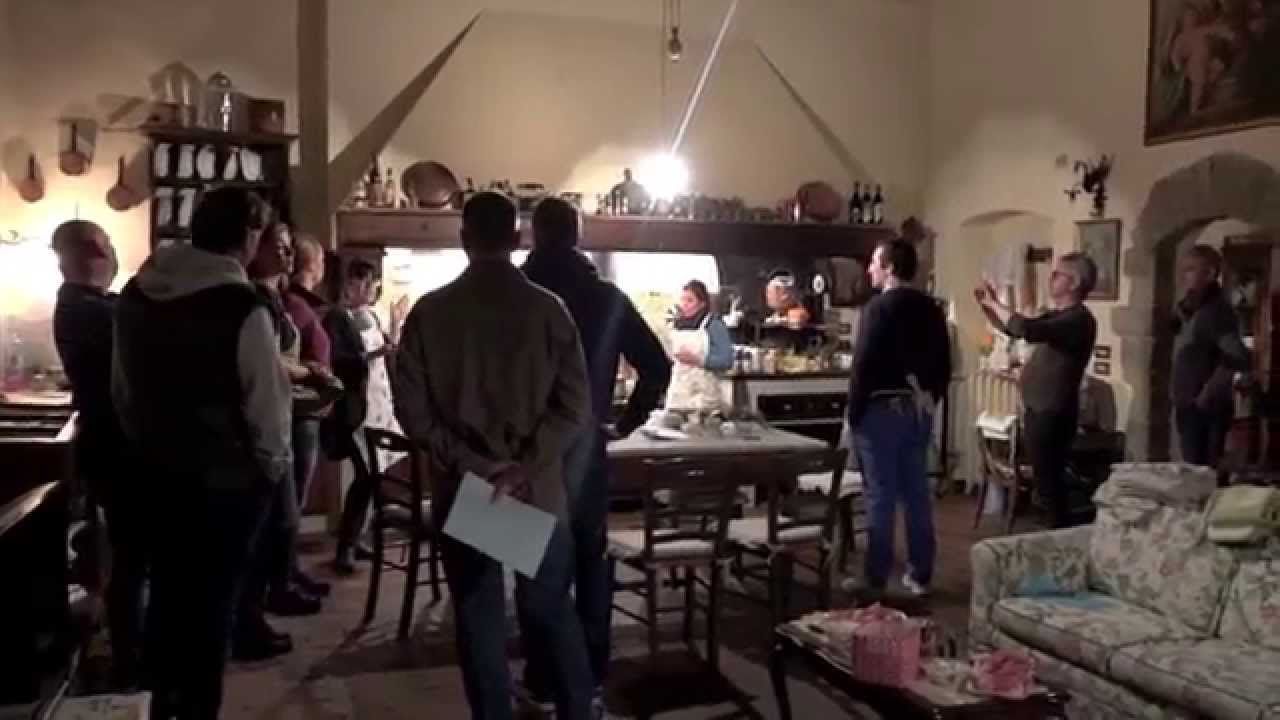
Guided by Chef Costanza, you wander through organic herb beds, fingertips grazing fragrant leaves before carrying their essence into the kitchen, where every dish becomes a quiet homage to the Tuscan table. An evening of antipasti and wine unfolds slowly, like a conversation at dusk, each course revealing another shade of Italy as lived in real time.
You are encouraged to smell, feel and taste the various greens, learning how to choose the most perfect natural flavour enhancers of Tuscan cuisine. While selecting the freshest herbs for your cooking lesson, discussions among guests and the host cover food traditions, history, and what makes food such an integral part of everyday life in Italy.
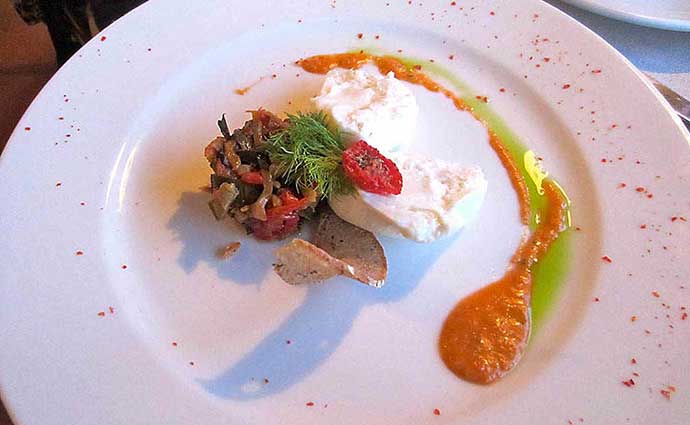
The first dish guests are invited to prepare is an authentic antipasto. Too many restaurants ignore antipasti and focus on pasta, but this is a traditional meal to be enjoyed year-round, with an antipasti selection based on seasonal and local produce. Each course is paired with an Italian wine. Appetizers are based on both wild and cultivated foods, and in Tuscany, food choices are seasonal, taking advantage of the freshest produce.
In spring, you might make frittata di carciofi – fried artichoke. Chef Costanza shows how to thinly slice an artichoke and treat it like a carpaccio – usually thinly sliced raw beef or fish – and serves it with a deep, grassy-flavoured olive oil. A memorable springtime feast might include spinach crepes, artichoke pie, and faraona arrosto – roasted guinea fowl.
In summer, tomatoes ripening on the vine make delicious bruschetta al pomodoro (tomato bruschetta) and insalata caprese (tomato salad with garden-fresh basil, oregano, and local buffalo mozzarella). Autumn is the season for melt-in-the-mouth crostini con i funghi porcini (porcini mushrooms in a flaky crust).
‘It might sound like too much food, but with enough wine, it all works out. This is cottura lenta at its finest – slow cooking, enjoying the food all evening.’
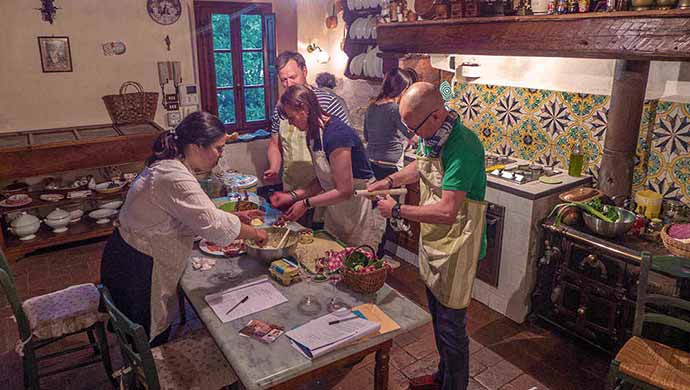
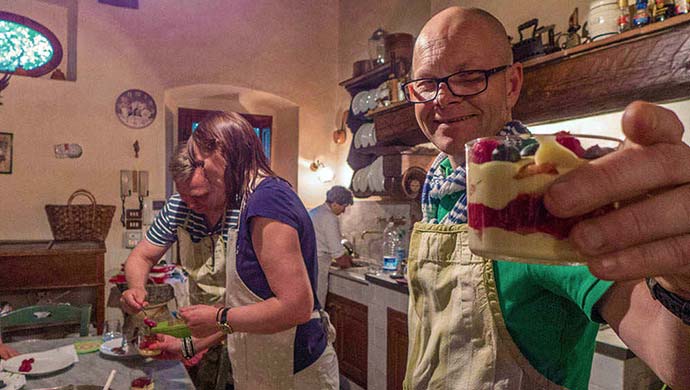
After a few hours of cooking and learning, Chef Costanza invites her guests out into the garden for a glass of sparkling prosecco. She says you must clear the nose of kitchen smells to better appreciate the food. While we got intoxicated from the scent of fresh flowers – and perhaps more than one or two glasses of prosecco – Costanza’s crew set a lavish table in the 15th-century villa before inviting guests back inside to feast on their creations.
Faraona del Paradisino
(Roasted Guinea Fowl)
Preparation and cooking time: 1.5 hours
Serves six
Ingredients
• 1 large Guinea Fowl, about 1.5kg (can substitute a whole chicken)
• sage, rosemary, mirto
• 4 cloves of garlic, chopped
• 6 strips of lemon rind, about 3”-long strips
• 2 tablespoons extra-virgin olive oil
• 2 garlic gloves smashed with the peel + 2 garlic cloves finely chopped
• 30 grams of butter at room temperature
• Salt, pepper
• Juniper berries, a handful (optional) or a teaspoon of gin for every two berries required
• 1/2 glass of red wine and 1/3 glass of Marsala
• An extra glass of good Chianti red wine to drink while cooking!
Preparation
- Chop the sage and rosemary finely. Mix with the garlic and butter to make a paste to spread inside the bird’s cavity, adding 1 piece of lemon rind. Pour the olive oil into a large pan and place the bird breast-side up. Put the pan on medium heat and brown the bird on all sides. Add the smashed garlic cloves, herbs and remaining pieces of lemon rind. Cook for one minute.
• - Add the salt, pepper (and juniper or gin, if desired). Cook for two more minutes. Add Marsala and, after 5 minutes, the red wine. Cover the pot with a lid (do not cover tightly), and reduce the heat to a simmer.
• - Cook until the meat is very tender, about 45 minutes, checking every 10 minutes and adding a little water if the bird seems dry. Take the bird out of the pot, place it on a carving board to rest for ten minutes, covering with a tent of foil.
• - For the sauce, add enough Marsala to the pan to create a thin sauce, scraping the bottom to release the fond. Carve the bird or cut it into 8 pieces and serve with the pan sauce.
Note: If you buy a bird already cut into pieces, rub the pieces of meat with the butter/herb mixture before browning.
Buon appetito!
Images courtesy of Rosewood Castiglion del Bosco and Eva Stelzer





 January 6, 2026" />
 through digital innovation" />
 looks back at 2025" />
 online betting rules?" />
 a film by Andrés Livov" />
 for its 16th edition" />
 Passion fruit meringue verrine" />
 playful clownish escapade" />
 World rhythms on stage" />
 management mistakes" />
 Kensington Avenue" />
 Vegan Chili Chocolate Cake" />
 Bethune tunnel" />
 Left out of breath" />
 of business strategy" />
 damage before it starts" />


 into a professional career" />

 plumbing issues at home" />
 embraces bold cinema" />
 Red snapper papillote" />
 the Legend of Pepita" />