
From tariff tantrums
to rules–based trade
Canada’s unique trade position bridges Europe, the Pacific and North America’s manufacturing heartland
Edited, March 2, 2026
Amid Donald Trump’s latest tariff theatrics, it is easy for Canadians to stare south and miss the bigger story taking shape over the horizon. While Washington wages its trade battles in bursts of digital bravado, a quieter yet pivotal project is moving forward under Canada’s leadership — one aimed at rebuilding partnerships and steadying a fractured global economy. Between Brussels, Tokyo, Ottawa and a dozen other capitals: an emerging economic space linking the European Union and the Trans‑Pacific bloc known as the CPTPP, with Canada playing a pivotal role.
While Washington turns trade into televised grievance, a quieter project is taking form between Brussels, Tokyo, Ottawa and a dozen other capitals
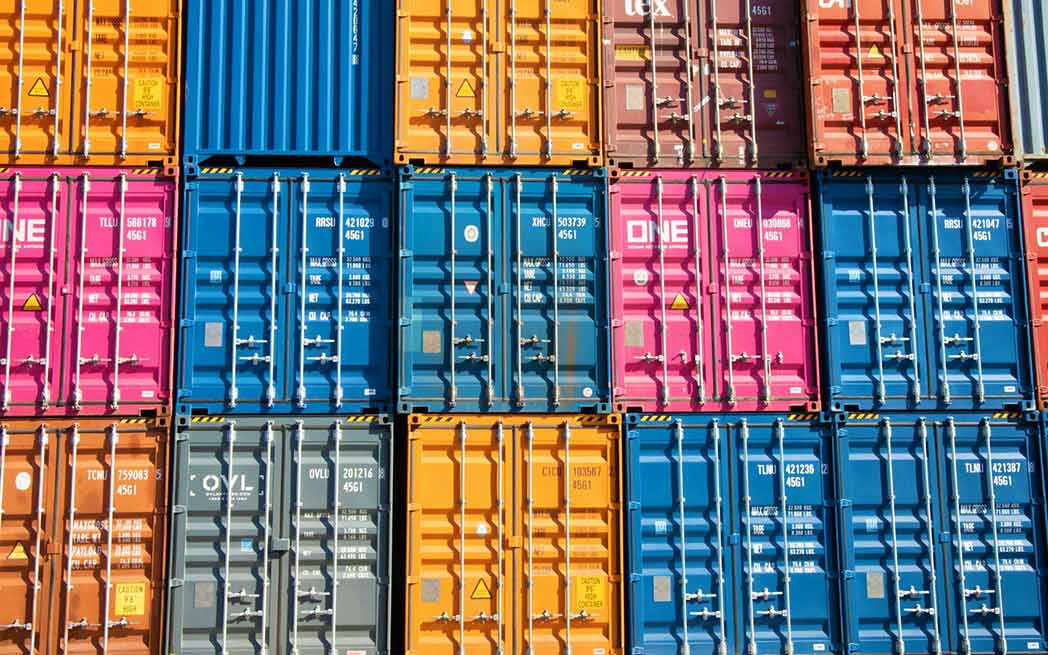
On one side, tariffs have become instruments of political theatre. On the other, trade and foreign ministers are quietly shaping what could become a mega‑market linking roughly 40 per cent of global GDP and binding supply chains from Quebec through Osaka to Frankfurt. The wager is clear: if the United States continues to weaponize access to its market, middle powers will weave an alternative network of rules and routes — one designed to limit their exposure to the mood swings of the Oval Office.
The shift is already underway. The European Union and the members of the Comprehensive and Progressive Agreement for Trans‑Pacific Partnership have established a formal Trade and Investment Dialogue. The label may be technocratic, but the ambition is not. Rather than a single grand treaty, it’s a gradual effort to align standards, ease investment flows, and strengthen supply chains between two blocs already deeply connected. Most CPTPP economies have free trade agreements with the EU, and Canada alone is embedded in CETA with Europe, CPTPP across the Pacific, and CUSMA in North America. Taken together, these links explain why this emerging architecture matters far more than the latest social‑media tariff outburst.
Integrated supply chains may sound like specialist jargon, but the reality is tangible. It’s about where car parts are stamped, phone chips designed, and the minerals for EV batteries mined and processed. Picture Quebec graphite or lithium sent to Japan for refining, turned into batteries in Poland, built into vehicles sold across Europe, and — under favourable rules of origin — shipped back into North America. The more the EU and CPTPP align their rules and recognize one another’s standards, the easier it becomes for companies to move value along that chain without tariffs or red tape getting in the way.
In such a system, tariffs lose much of their force as blunt instruments and become obstacles to work around. If Washington slaps a new duty on a category of imports, producers embedded in an EU–CPTPP network can re‑route production, re‑label origin, and re‑deploy investment. None of this makes the United States irrelevant — its market remains too large and too central for that — but it does weaken its ability to coerce partners through trade as they develop credible alternatives. For countries like Canada, long used to managing the sensitivities of an unpredictable neighbour, that is a very tangible advantage.
‘Most CPTPP economies have free trade agreements with the EU, and Canada alone is embedded simultaneously in CETA with Europe, CPTPP across the Pacific and CUSMA in North America.’
Mark Carney fits naturally into this picture. For years, he advised others on how to manage their economies, from the Bank of Canada and the Bank of England to the World Economic Forum in Davos. His message was consistent: global finance is fragile, and economies built on stranded assets and brittle supply chains are exposed. As prime minister, he hasn’t abandoned that analysis; he’s turned it into a governing agenda. A Carney‑led Canada sees itself as an autonomous hub in a wider system, not a subordinate appendage to a dominant power.
Structurally, Canada is well-positioned to play that role. It is one of the few economies with deep, modern trade agreements across Europe, the Pacific, and North America. It has the critical minerals and energy allies need, the financial and legal systems investors trust, and the political stability that has become increasingly rare. The Carney government frames this strategy of global integration not as a reaction to U.S. unpredictability, but as a national project: dismantle internal barriers, accelerate infrastructure and permitting, and embed Canada in a tighter network of like‑minded economies so that turbulence in any one capital does less harm.
To be clear, there is a fair amount of projection in the idea that Carney is leading this emerging mega‑bloc. The EU–CPTPP process is driven by many hands, most of them unelected technocrats who spend their lives in windowless meeting rooms. Resistance to deeper liberalization runs through Europe and Asia, just as it does here. No one has signed up for a shiny new super‑bloc with a flag and an anthem. What actually exists is an intent: to lock in supply‑chain resilience, common digital rules and mutual investment protections among economies that still, on balance, prefer a rules‑based order to a world of naked power.
And then comes the Canadian reality check. For all the talk of hubs and junctions, this is still a country where securing permits for a mine, pipeline, or even major housing project can take a decade. Interprovincial barriers blunt the very efficiencies our trade agreements are meant to amplify. Voters are understandably wary when elites promise that the next wave of globalization will finally deliver, after years of stagnant wages, soaring housing costs, and fraying public services. A Carney doctrine that sounds compelling in Geneva will quickly falter if it fails to deliver tangible results in Granby or Saskatoon.
For years, Mark Carney was the Canadian export advising others on how to manage their economies, from the Bank of Canada and the Bank of England to the stages of Davos.’
That is the core risk in this project. We talk as if Canada were pivotal but often act as if it were peripheral. We issue communiqués on critical minerals and defence‑industrial corridors while our infrastructure strains under outdated capacity. We promote Canada as a trusted node in global supply chains while investors still face dense, unpredictable regulation. If we hope to benefit from an EU–CPTPP‑style economic space, we’ll have to do something Canadians haven’t done in a long time: move with urgency at home.
Which brings us back to Trump’s tariffs. They perform well online, where outrage spreads instantly. The work of building alternative rules and alliances is tedious by comparison. There are no hashtags for mutual recognition of standards, no viral posts about investment protection clauses. Yet over the next decade, that’s where our prosperity will be determined. Either we help design a trading system that makes tantrums matter less — or we spend another generation reacting to the next flare‑up from Washington.
Canadians are not destined to watch from the sidelines. By history and design, we are embedded in nearly every part of the emerging order: Europe’s single market, the Pacific’s high‑standard partnership, and North America’s integrated manufacturing base. Few countries straddle so many systems at once. That position is our advantage, if we choose to use it.
We can use this position to help shape a more resilient world, or we can squander it by clinging to old habits and old fears. The next chapter of globalization won’t be launched with fanfare; it will take shape quietly, through the deals and standards that knit economies together. When it does, Canada will either be ready — or left wondering how the junction it once controlled became just another stop along the line.
Feature image: Michael Petersen – Pexels


Andrew Burlone, co-founder of WestmountMag.ca, began his media journey at NOUS magazine. Subsequently, he launched Visionnaires, where he served as creative director for many years. Andrew is passionate about culture and politics, with a keen interest in visual arts and architecture.


 March 3, 2026" />
 as the climate transforms" />
 Scorched eggplant" />
 Michael Hawkes /99" />
 the world of a stray whale" />
 Selling process in 2026" />

 Emotional Intelligence" />
 Lemon blueberry sauce cake" />
 Kitchener Avenue" />
 where water meets fire" />
 Market process in 2026" />
 and resilient leadership" />
 to rules–based trade" />

 Crunchy Asian Slaw" />
 a new management role" />
 Un mar de músicas" />
 Retail fixturing" />
 and stilts, oh my!" />
 An East Van Memoir" />
 the passion of Argentina" />
 of speaking kindly" />
 Tupper Street" />