
Do you manage your stress
or let it run your life?
Simple tools you can use to handle deadlines, pressure, and change
By Angela Civitella
Previously published in WestmountMag.ca
These days, it feels like stress is almost everywhere. Between heavy workloads, job insecurity, and the constant pace of change, it’s no surprise that so many of us feel stretched thin. Sometimes it’s the pressure of looming deadlines, other times it’s the long-term demands of a challenging career. Either way, stress doesn’t just weigh us down—it can also hurt our health, drain our energy, and make it harder to focus at work.
The good news? Stress doesn’t have to run the show. With the right tools and a few tried-and-true techniques, it’s possible to take back control and protect both your well-being and your productivity.
Stress can cause severe health problems and, in extreme cases, death.
In this article, we’ll break down what stress really is, why some situations make you more vulnerable to it, and—most importantly—simple, practical ways you can keep it from getting in the way of your daily life.
Warning
Stress can cause severe health problems and, in extreme cases, death. While these stress management techniques have been shown to have a positive effect on reducing stress, they are provided for guidance only. Readers should consult suitably qualified health professionals if they have any concerns about stress-related illnesses or if stress is causing significant or persistent unhappiness. Health professionals should also be consulted before any substantial change in diet or levels of exercise.
What is stress?
A widely accepted definition of stress, attributed to psychologist and Professor Richard Lazarus, is, “a condition or feeling experienced when a person perceives that demands exceed the personal and social resources the individual can mobilize”.
This means that we experience stress if we believe that we don’t have the time, resources, or knowledge to handle a situation. In short, we experience stress when we feel “out of control”.
This also means that different people handle stress differently, in various situations: you’ll handle stress better if you’re confident in your abilities, if you can change the situation to take control, and if you feel that you have the help and support needed to do a good job.
… we experience stress if we believe that we don’t have the time, resources, or knowledge to handle a situation.
Reactions to stress
We have two instinctive reactions that make up our stress response. These are the “fight or flight” response and the General Adaptation Syndrome (GAS). Both of these reactions can happen at the same time.
Fight or flight
Walter Cannon identified the “fight or flight” response as early as 1932. It’s a basic, short-term survival response, which is triggered when we experience a shock or when we see something that we perceive as a threat. Our brains then release stress hormones that prepare the body to either ‘fly’ from the danger, or ‘fight’ it. This energizes us, but it also makes us excitable, anxious, and irritable.
The problem with the fight or flight response is that, although it helps us deal with life-threatening events, we can also experience it in everyday situations – for example, when we have to work to short deadlines, when we speak in public, or when we experience conflict with others. In these types of situations, a calm, rational, controlled, and socially sensitive approach is often more appropriate.
‘… the “fight or flight” response… a basic, short-term survival response… triggered when we experience a shock, or when we see something that we perceive as a threat.’
General Adaptation Syndrome (GAS)
GAS, which Hans Selye identified in 1950, is a response to long-term exposure to stress. Selye found that we cope with stress in three distinct phases:
The alarm phase, where we react to the stressor.
The resistance phase, where we adapt to and cope with the stressor. The body can’t keep up resistance indefinitely, so our physical and emotional resources are gradually depleted.
The exhaustion phase, where, eventually, we’re “worn down” and we cannot function normally.
Tip
Fight or flight and GAS are actually linked – the exhaustion phase of GAS comes from an accumulation of very many fight or flight responses, over a long period of time.
Stress and the way we think
When we encounter a situation, we make two (often unconscious) judgments. First, we determine whether the problem poses a threat – this could be a threat to our social standing, values, time, reputation, or even our survival. This can then trigger the fight or flight response and the alarm phase of GAS.
Next, we assess whether we have the necessary resources to address the perceived threat. These resources can include time, knowledge, emotional capabilities, energy, strength, and much more. How stressed we feel then depends on how far out of control we feel, and how well we can meet the threat with the resources we have available.
‘How stressed we feel… depends on how far out of control we feel… how well we can meet the threat with the resources we have available.’
Signs of stress
Everyone reacts to stress differently. However, some common signs and symptoms of the fight or flight response include:
• Frequent headaches.
• Cold or sweaty hands and feet
• Frequent heartburn, stomach pain, or nausea
• Panic attacks
• Excessive sleeping, or insomnia
• Persistent difficulty concentrating
• Obsessive or compulsive behaviours
• Social withdrawal or isolation
• Constant fatigue
• Irritability and anger episodes
• Significant weight gain or loss
• Consistent feelings of being overwhelmed or overloaded
Consequences of stress
Stress impacts our ability to do our jobs effectively, and it affects how we work with other people. This can have a profound impact on our careers, our general well-being, and our relationships. Long-term stress can also cause conditions such as burnout, cardiovascular disease, stroke, depression, high blood pressure, and a weakened immune system. (Sure, if you’re stressed, the last thing you want to think about is how damaging it can be. However, you do need to know how important it is to take stress seriously.)
‘Long-term stress can also cause conditions such as burnout, cardiovascular disease, stroke, depression, high blood pressure, and a weakened immune system.’
How to manage stress
The first step in managing stress is to understand where these feelings are coming from. Keep a stress diary to identify the causes of short-term or frequent stress in your life. As you write down events, think about why this situation stresses you out. Next, list these stressors in order of their impact. Which affect your health and wellbeing the most? And which affect your work and productivity?
Then, consider using some of the approaches below to manage your stress. You’ll likely be able to use a mix of strategies from each area.
1. Action-oriented approaches
With action-oriented approaches, you take action to change the stressful situations.
Managing your time
Your workload can cause stress if you don’t manage your time well. This can be a key source of stress for many people.
Other people
People can be a significant source of stress. Remember to learn how to manage boundaries, deal with unreasonable requests, and most importantly, understand and know how and when to say ‘no’.
Working environment
Workspace stress can come from irritating, frustrating, uncomfortable, or unpleasant conditions in the workplace.
2. Emotion-oriented approaches
Emotion-oriented approaches are helpful when the stress you’re experiencing comes from the way that you perceive a situation. (It can be annoying for people to say this, but a lot of stress comes from overly negative thinking.)
Tip
Some people experience stress because they’re maladaptive perfectionists, who struggle to let go of tasks unless they complete them perfectly. Others experience stress because they have a fear of failure or a fear of success.
3. Acceptance-oriented approaches
Acceptance-oriented approaches apply to situations where you have no power to change what happens and where conditions are genuinely bad.
To build your defences against stress:
• Use techniques like meditation and physical relaxation to calm yourself when you feel stressed.
• Take advantage of your support network – this could include your friends and family, as well as people at work and professional providers, such as counsellors or family doctors.
• Get enough exercise and sleep, and learn how to make the most of your downtime, so that you can recover from stressful events.
• Learn how to cope with change and build resilience, so that you can overcome setbacks.
‘… create defences against stressful situations that you cannot control – use your network, be sure to get enough exercise and sleep, and learn how to relax.’
Key points
We experience stress when we feel threatened, and when we believe that we don’t have the resources to deal with a challenging situation. Over time, this can cause long-term health problems, and it can also affect the quality of our work and our productivity.
To control your stress, conduct a job analysis so that you know your most important priorities at work. Learn good time management strategies so that you can handle your priorities effectively. Try to let go of negative thinking habits and cultivate a positive mindset by using affirmations and visualization techniques.
Also, create defences against stressful situations that you cannot control – use your network, be sure to get enough exercise and sleep, and learn how to relax.
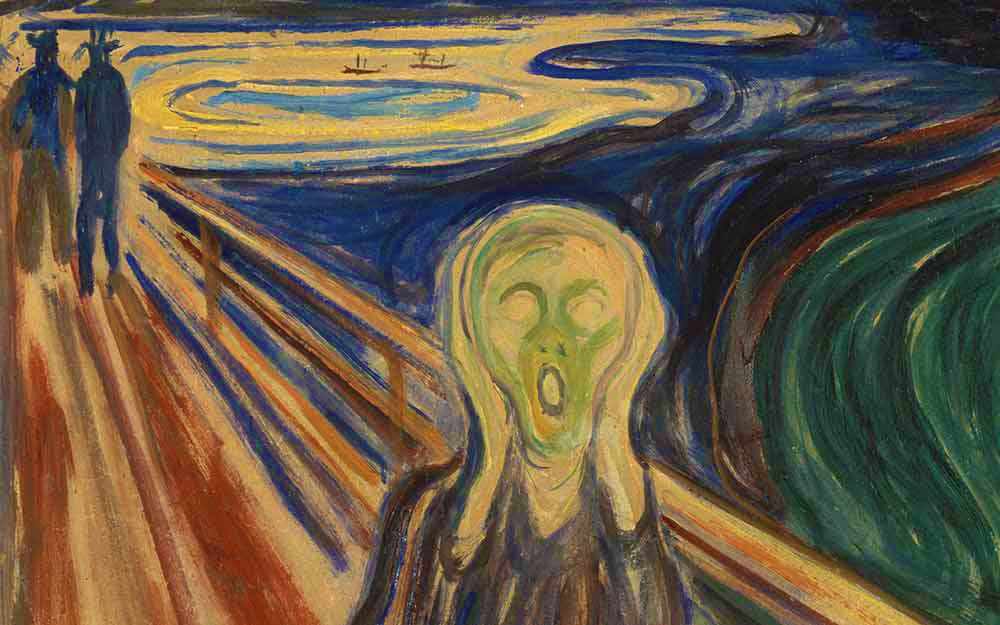
Image: Edvard Munch (Public domain), via Wikimedia Commons

Other articles by Angela Civitella
Other recent articles



 January 6, 2026" />
 through digital innovation" />
 looks back at 2025" />
 online betting rules?" />
 a film by Andrés Livov" />
 for its 16th edition" />
 Passion fruit meringue verrine" />
 playful clownish escapade" />
 World rhythms on stage" />
 management mistakes" />
 Kensington Avenue" />
 Vegan Chili Chocolate Cake" />
 Bethune tunnel" />
 Left out of breath" />
 of business strategy" />
 damage before it starts" />


 into a professional career" />

 plumbing issues at home" />
 embraces bold cinema" />
 Red snapper papillote" />
 the Legend of Pepita" />
