
Montreal municipal election
campaign begins in earnest
Attention centers on the two leading parties’ policies and the leaders’ character
By Irwin Rapoport
Updated September 18, 2025
Montreal’s two main municipal parties, Ensemble Montréal and Projet Montréal, have 46 days to persuade voters ahead of the November 2 election for mayor and city council.
A Léger poll released on September 8, commissioned by the Montreal Police Brotherhood, suggests both parties still need to pick up momentum. Ensemble Montréal launched its campaign last Sunday, as reported by CityNews, and on Tuesday announced journalist Leslie Roberts as its candidate in the downtown Peter McGill district.
The poll results placed Ensemble Montréal’s Soraya Martinez Ferrada in the lead with 18 percent of voter support. Projet Montréal’s Luc Rabouin followed with 15 percent, Transition Montréal’s Craig Sauvé registered 7 percent, and 10 percent was divided between Jean-François Kacou of Futur Montréal and Gilbert Thibodeau of Action Montréal.
While 41 percent of respondents said they were undecided or preferred not to answer, the survey also found that 61 percent of voters would like to see a change in the city’s administration. This could pose challenges for Projet Montréal as it seeks a third consecutive term. Rabouin, who has been trying to distinguish himself from outgoing Mayor Valérie Plante, faced further scrutiny during a September 11 interview with CJAD‘s Aaron Rand.
While 41 percent of respondents said they were undecided or preferred not to answer, the [Leger] survey also found that 61 percent of voters would like to see a change in the city’s administration.
During the interview, Rabouin stated that if elected mayor, Camillien Houde Way – the eastern access to Mount Royal Park – would be permanently closed to cars, including the Route 11 bus. Instead, he proposed introducing small electric shuttles to transport visitors from Parc Avenue to Beaver Lake.
Rabouin also committed to keeping in place all bike paths installed since 2017 without public consultation in neighbourhoods such as Notre-Dame-de-Grâce (Terrebonne Avenue), Park Extension (Querbes Street and others), Ahuntsic, and Little Italy. He criticized his opponent, Soraya Martinez Ferrada’s proposal to audit these bike paths and argued that such reviews are not needed at this time.
He further confirmed that, under his administration, Cavendish Boulevard would not be extended to connect to Saint-Laurent and the vacant Hippodrome site. The property was transferred from the provincial government to the City of Montreal in 2015 for $1 with plans to develop housing, but no units have been built to date. Rabouin said he expects the first 10,000 off-market housing units to begin construction in the coming years.
In recent weeks, Projet Montréal has also outlined other commitments, including installing cameras outside every school to ticket drivers exceeding speed limits, creating a new municipal body to address traffic congestion caused by construction sites, and expanding bus service to improve public transit.
In a September 5 interview with CJAD’s Elias Makos, Luc Rabouin outlined his proposal to make monthly public transit passes more affordable for low-income Montrealers, specifically those earning $30,000 or less, by lowering the price to match the rate paid by students. When asked whether this change would affect the STM’s budget, Rabouin clarified that the city, not the transit authority, would cover the additional cost – a move that would require new tax increases for Montreal and neighbouring municipalities through the Agglomeration tax. “It doesn’t affect the budget of the STM because it is the City of Montreal that is paying for that,” he said.
Rabouin also referenced last year’s municipal budget, acknowledging the significant tax increases while emphasizing that the administration had made every effort to cut costs and use taxpayer funds efficiently. He pointed to allocations of $33 million for the housing crisis and $5 million for community organizations supporting people experiencing homelessness. Rabouin emphasized ongoing efforts to review and streamline city services, stating, “We worked very hard to save money, and we started a large process of revising all the services – we are doing the good things, how can we do it better at a lower cost. This is work that already started two years ago, and we will continue that…”
‘Rabouin acknowledged the significant tax increases while emphasizing that the administration had made every effort to cut costs and use taxpayer funds efficiently.’
Recent reports from Montreal’s auditor general highlight significant shortcomings in the city’s road maintenance and financial management, citing inefficiencies, inadequate planning, and equipment failures that have led to worsening road conditions, particularly on key arterial routes. City officials recognize some of these challenges and have pledged improvements. At the same time, opposition parties have criticized the current administration for what they describe as financial mismanagement and insufficient action on infrastructure.
Soraya Martinez Ferrada has also been actively presenting her policy proposals to both the media and Montrealers. On September 9, she was interviewed by Rand and the day before by Elias Makos.
Clear contrasts have emerged between Ferrada and Rabouin. Ferrada’s public approach is collaborative, and she emphasizes seeking a broad public consensus for new legislation and policy. Should Ferrada lead the next city administration in this manner – engaging with residents on policy decisions – it could set a new tone for municipal governance in Montreal.
If Léger is correct regarding Montrealers’ desire for change, Ensemble Montréal could secure the mayor’s office and the city council. However, high voter turnout would be crucial to ensure the party receives a strong mandate. Soraya Martinez Ferrada has been presenting measured goals, and she has committed to reducing the size of the city’s civil service by at least 1,000 positions, primarily through attrition and administrative restructuring, an initiative Ensemble Montréal says would not affect frontline services. This is a good start. It should be bolstered by a thorough forensic audit of every city and borough department to control spending, root out waste, shut down inefficient programs, and streamline services and spending.
Ensemble Montréal has pledged to cap tax increases at the rate of inflation in its first budget. Some observers, however, note that such a commitment may not go far enough to address concerns about Montreal’s rising tax burden. They point to cost-cutting directives seen at other levels of government, such as Prime Minister Mark Carney’s recent order for cabinet ministers to reduce department spending by 15 percent, as a possible model for more aggressive fiscal restraint. Proponents argue that if similar measures were implemented at city hall, Montrealers might see tax freezes in the coming years.
Since Projet Montréal took office in 2017, the city’s operating budget has grown from about $5.2 billion to $6.9 billion for 2024, with much of the increase devoted to infrastructure, public services, and debt servicing. Previous mayors also oversaw significant spending, with Denis Coderre’s term marked by costly projects, such as the city’s 375th anniversary and the Formula E race, as well as high-profile infrastructure expenses, including the controversial granite blocks on Mount Royal, each costing around $250,000.
‘Soraya Martinez Ferrada… has committed to reducing the size of the city’s civil service by at least 1,000 positions… ‘
A key element of Plante’s 2017 election victory was voter dissatisfaction with Denis Coderre’s administration, which led many Montrealers to back Projet Montréal despite uncertainties about its platform. Plante interpreted this support as an endorsement of her party’s overall vision and priorities.
In 2021, Coderre again led Ensemble Montréal after the party was unable to find another candidate, but his campaign was marked by the same traits that had previously alienated voters. Plante won decisively with 52.14 percent of the vote, compared to Coderre’s 37.97 percent, a larger margin than in 2017, when she received 51.42 percent, compared to Coderre’s 45.66 percent. This second victory further strengthened Plante’s mandate to advance Projet Montréal’s policies.
If Projet Montréal were to win a third term, it would mark a historic milestone as no party has managed three consecutive administrations in recent memory. Conversely, if Ensemble Montréal wins and performs well in office, it could position itself for multiple mandates.
Higher voter participation will be a key factor in determining the direction of City Hall and the 19 boroughs. Turnout in 2021 was 38.32 percent, down from 42.47 percent in 2017 – a drop that underscores the importance of civic engagement for those seeking change.
The future is in our collective hands. I am pleased Montreal’s media outlets are taking the election seriously and informing Montrealers of their choices.
Disclaimer: The opinions expressed in this article are those of its author and do not reflect the opinions of WestmountMag.ca, its publishers or editors.
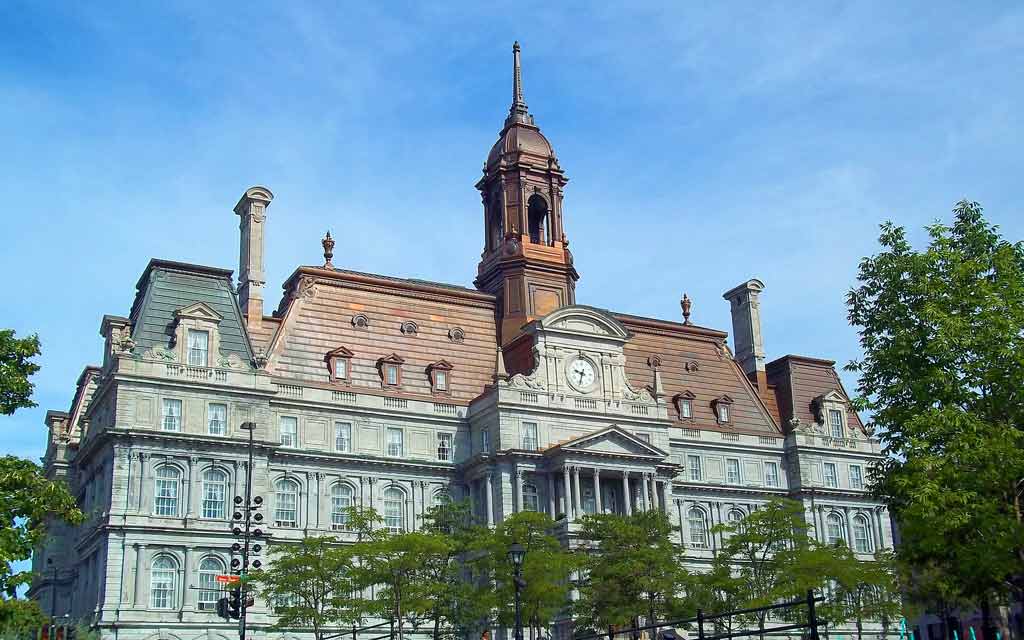
Feature image: Jean Gagnon, via Wikimedia Commons

More articles by Irwin Rapoport
Other recent articles

Irwin Rapoport is a freelance journalist and community advocate from Westmount with bachelor’s degrees in History and Political Science from Concordia University. He writes extensively on local politics, education, and environmental issues, and promotes informed public discourse and democracy through his writing and activism.


 February 6, 2026" />
 Arvo Pärt’s 90th birthday" />

 becomes Reality TV" />
 Westmount—Saint-Louis" />
 La Jeune Fille et l’Amour" />
 Commercial lease" />
 Seed-crusted roasted fries" />
 Forden Avenue and Crescent" />
 a preventable trap" />
 to the Centaur Theatre" />
 Letter of intent" />
 recycling breakthrough" />
 To go or not to go" />
 Tropical Grilled Peppers" />
 and their stories" />
 Trump backs down" />
 celebrates its 34th season" />
 Commercial financing" />
 smart answer to tariffs" />
 Thai cauliflower florets" />
 legacy with purpose" />
 Lewis Avenue" />
 resistance and unity" />