
Susan Grundy launches
latest novel Black Creek
Westmount author delves into the novel and her literary style in Q&A
By Irwin Rapoport
November 3, 2025
Westmount novelist Susan Grundy is launching her new novel, Black Creek, on Thursday, November 6, at Le Petit Dep, 290 de la Montagne in Griffintown, an area featured in her latest and second novel. The launch, which starts at 7 pm, will feature Grundy in conversation with musician and producer Carrie Haber. Black Creek, published by Inanna Publications, explores themes of inheritance, mental health, and ancestral reckoning.
“As a child, Kate Stong Smythe drew castles,” states the press release for the book launch. “At thirty-five, she designs condominium towers for a Griffintown developer. Black Creek flips back and forth between Montreal and Toronto, present and past, as Kate explores her ties to the past, the ancestral hardness that holds her hostage, and the compromise she’s made by pursuing an unfulfilling career that has veered far from her dreams. After the death of her prickly mother, Kate begins to experience strange flashbacks – visions of women from the 19th-century pioneer village of Black Creek who seem uncannily familiar. When her mother’s dying words name five mysterious women, Kate is forced to confront a legacy of intergenerational trauma – and the possibility of breaking free from it.”
Grundy’s debut novel, Mad Sisters, published in 2024, chronicled her experience as a caregiver to a sibling diagnosed with schizophrenia.
Black Creek is a haunting, familial history… personalized by grief. Both warning and celebration, it explores how the ghosts of the women who came before us shape our lives, either trapping us in old patterns or giving us the love to live freely in the present.
– Paola Ferrante, Governor General’s Award finalist for Her Body Among Animals
The roots of Black Creek are based on her mother’s memories and anguish. “As a young child, I was aware of the unspoken pain my mother carried,” said Grundy. “The pain turned up on her face, in her voice, through her moods, in the old photographs of her female ancestors. I wondered if their suffering had something to do with the mental illness that struck my sister so young. After my mother passed away, I felt the weight of her pain, now mine, heavy enough to push me to investigate further, not only for myself but for my daughter. Fortunately, six generations (I’m seventh) of family history were readily accessible, given the historical significance of Elisabeth and Daniel Stong’s log cabin, barn and farmhouse still standing in Toronto’s Village of Black Creek. I was able to dig deep to untangle our family roots. The results surprised me.”
Susan Grundy spent thirty years in marketing before shifting her focus to fiction, inspired by her time living in Costa Rica and a desire to explore emotional healing through story. Her short fiction has appeared in The Danforth Review and Montréal Writes. Grundy divides her time between Montreal and London, and is often found walking toward the nearest café.
Grundy discusses Black Creek, her writing style, and what drives her as a novelist in the Q&A below.
WM: What was the inspiration for Black Creek? How is this novel different from your previous work?
Grundy: As a child, I was aware of an invisible pain my mother carried. I never raised the subject, fairly certain that she would find my inquiry annoying. After she passed away, shadows visited me from time to time, not depression, more like I was carrying the burden of someone else, my mother perhaps. Curious, I explored her family history, readily accessible given that my maternal great-great-great Stong grandparents are known figures in Toronto history; the open-air heritage museum Village at Black Creek and York University stand on their former farm. The pained expressions of my female ancestors captured in old photographs shocked me. I read about the hardships they’d endured as new arrivals to Canada and, further back, to the religious persecution their Huguenot ancestors suffered in France. Their unhappiness fuelled me with urgency to break the cycle of misery, not only for myself, but for my children (likely too late for my sister, who has struggled with a serious mental illness since adolescence).
Armed with my files of historical research and the family genealogy, I dove into Black Creek, sharing my story through fictional Kate Stong Smythe, a hard-edged Griffintown architect who struggles with a legacy of intergenerational trauma passed on by her female lineage. Black Creek follows the same path as my short stories and memoir, Mad Sisters. My writing explores the weight of emotional distress and the possibility of stepping into an easier way of being. Black Creek, however, represents a first step into long fictional narrative. I intend to pursue this direction.
‘Black Creek follows the same path as my short stories and memoir, Mad Sisters. My writing explores the weight of emotional distress and the possibility of stepping into an easier way of being. Black Creek, however, represents a first step into long fictional narrative. I intend to pursue this direction.’
– Susan Grundy
WM: Did you study literature in school? Tell us about some of your favourite novelists and books.
Grundy: Family pressure to pursue a practical career discouraged me from studying literature at university. I opted for a business degree instead, choosing marketing as a major, which was the closest subject to the creative arts I could find. I crammed my electives with classes offered by McGill’s English Department based on the false assumption that I would boost my grade point average with cushy literature courses. Not so! After graduation, I honed my writing skills through business reports and strategic plans, transforming potentially heavy and dull subjects into marketing narratives.
So many brilliant authors out there, I don’t have favourites. I rarely read works by the same author back-to-back, no matter how much I love their writing. Admittedly, I have a bias for Canadian writers. Miriam Toews’ portrayal of a tragic sister relationship in All My Puny Sorrows particularly touched me, prompting me to complete my own sister book. Further afield from home, I was fortunate to hear the brilliant storyteller Elif Shafak speak at the 2025 Chelsea Arts Festival. She blew me away with her multi-timeline novel about the preciousness and politics of water. There are Rivers in the Sky was inspired, she said, by a single rain drop. Her words still resonate – “Write what you don’t know.” I’m following her advice.
WM: What was the writing process like for Black Creek? What is the role of setting in the narrative?
Grundy: Following a year of intense historical research, I jumped into Black Creek with great enthusiasm. The opening scene in the first draft followed Kate into her great-great-grandparents’ abandoned farmhouse, standing without purpose on the grounds of York University in Toronto. Thanks to the brilliant editorial support from author and Westmount neighbour Claire Holden Rothman, this scene was pushed further into the story and replaced by a Montreal hospital room setting where Kate’s mother whispers the names of five mysterious women on her deathbed – a powerful beginning.
Black Creek jumps back and forth between cities as Kate is continually pulled from Montreal to Toronto in search of answers about her female lineage. The story also flips back and forth in time, weaving Kate’s present-day journey with historical vignettes that reveal the struggles faced by six generations of Stong women, Kate being the seventh.
WM: Do you write in other genres? What appeals to you about fiction?
Grundy: My fictional writing began with short stories, and I hope to return to this form, perhaps after my next novel. Mad Sisters is creative non-fiction, a gripping memoir about caregiving, mental illness and our broken healthcare system. I am touched by the heartfelt response to Mad Sisters from caregivers, mental health groups and readers at large – well worth the challenge of revisiting dark memories of my sister’s illness and the devastating impact on our family. Fiction, however, remains my preferred genre; nothing compares to the thrill of watching the characters I create spring to life. About halfway through writing Black Creek, Kate jumped off the page and reprimanded me for dialogue that didn’t fit with her temperament. She kept me company through the rest of the manuscript, as did Joram (her love interest) and his lovely grandmother, Hanan. Who said that writing is an isolated experience?
‘I’m working on a story about the gift of hearing voices, inspired by the amazing people I’ve met through Mad Sisters who have lived experience with psychosis. This project is pure fiction…’
– Susan Grundy
WM: What are you working on right now?
Grundy: Following the same thread of mental health and healing, I’m working on a story about the gift of hearing voices, inspired by the amazing people I’ve met through Mad Sisters who have lived experience with psychosis. This project is pure fiction; I’m writing what I don’t know, which means lots of research ahead. Virginia Woolf will make a guest appearance as she often does in literature. Another character very close to Virginia will play a key role, a figure who often stood in the shadows of her well-deserved fame. Shadows seem to follow me – or perhaps I follow them.
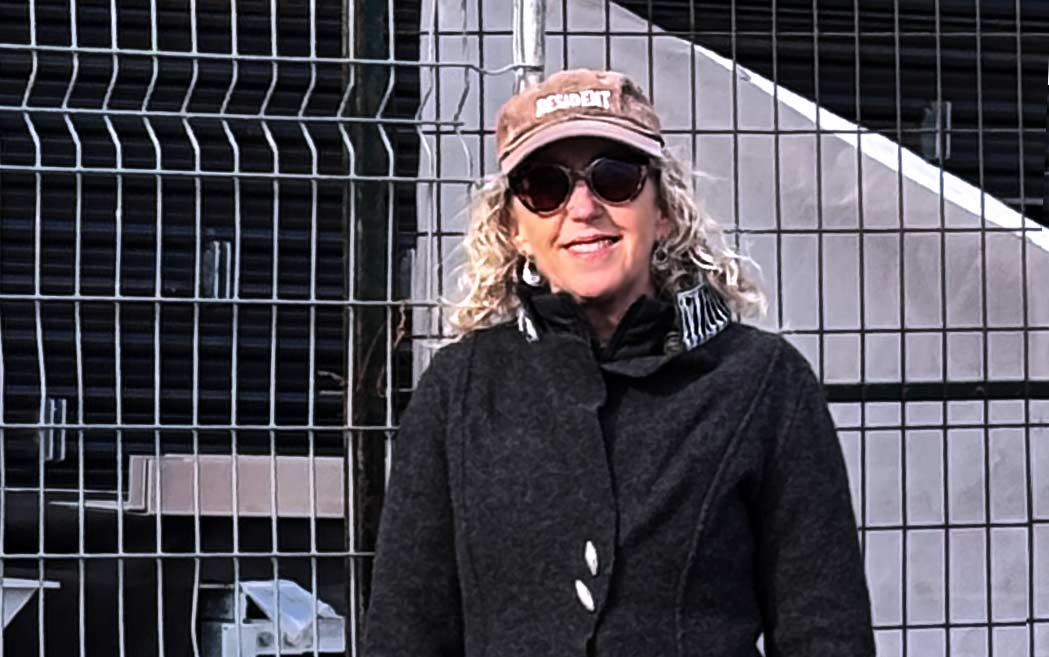
Feature image: Susan Grundy – courtesy of Susan Grundy

Other articles by Irwin Rapoport
Other recent articles
 Irwin Rapoport is a freelance journalist and community advocate from Westmount with bachelor’s degrees in History and Political Science from Concordia University. He writes extensively on local politics, education, and environmental issues, and promotes informed public discourse and local democracy through his writing and activism.



 January 6, 2026" />
 through digital innovation" />
 looks back at 2025" />
 online betting rules?" />
 a film by Andrés Livov" />
 for its 16th edition" />
 Passion fruit meringue verrine" />
 playful clownish escapade" />
 World rhythms on stage" />
 management mistakes" />
 Kensington Avenue" />
 Vegan Chili Chocolate Cake" />
 Bethune tunnel" />
 Left out of breath" />
 of business strategy" />
 damage before it starts" />


 into a professional career" />

 plumbing issues at home" />
 embraces bold cinema" />
 Red snapper papillote" />
 the Legend of Pepita" />