The campaign has not officially started, but the political machinery is clearly in motion
By Irwin Rapoport
August 16, 2026 • Opinion
Like it or not, the October 5 provincial election has intruded upon the remaining weeks of summer. The campaign is expected to launch near the end of August, but the pre-campaign has already begun: polls are being released, party leaders are testing messages, prospective candidates are being announced, and commentators are parsing every maneuver.
The election has not officially started, but the political machinery is clearly in motion, and Quebecers face an unsatisfying range of choices among the parties represented in the National Assembly. That does not mean every candidate is unqualified or that every party lacks useful ideas. It does mean that, so far, none has made a sufficiently convincing case that it is ready to govern Quebec effectively through the economic, social, environmental and institutional challenges ahead.
The election debate is already overly focused on sovereignty, federalism, language and identity at the expense of health care, education, public finances, housing, economic development and climate policy
An early-August Pallas Data/Qc125/L’actualité poll placed Paul St-Pierre Plamondon’s Parti Québécois at 31%, Charles Milliard’s Quebec Liberal Party at 27%, Christine Fréchette’s Coalition Avenir Québec at 19%, Éric Duhaime’s Quebec Conservative Party at 14%, and Québec solidaire at 9%, led by spokespeople Sol Zanetti and Riba Ghazal.The PQ is the current front-runner, but the four-point gap between the PQ and Liberals should not be treated as a settled result. Polls are always snapshots, and regional support, turnout and candidate quality will matter enormously once the official campaign begins. The larger question is not simply who may win. It is whether Quebecers will be offered a serious debate about how the province should be governed.
The danger of a narrow campaign
The election debate is already overly focused on sovereignty, federalism, language and identity at the expense of health care, education, public finances, housing, economic development and climate policy. The central political frame is already emerging: Will voters give the PQ a mandate despite its commitment to holding a referendum on Quebec’s sovereignty during its first term, or will they rally behind the Liberals as the principal federalist alternative? That question is legitimate. Quebec’s constitutional future, its relationship with Canada, the French language, provincial autonomy and identity are all important matters. They cannot be ignored, but they should not crowd out the issues that affect Quebecers every day.
The province needs credible plans to improve access to health care, address the pressures facing hospitals and family medicine, support schools and post-secondary institutions, expand housing supply, strengthen economic competitiveness, improve public-sector management, and respond seriously to climate change. Quebec also needs a more disciplined conversation about public finances. Its debt, deficits, long-term infrastructure needs and cost pressures in health and education require more than broad promises.
Voters should demand that parties identify their priorities, explain the costs, provide timelines and say how success will be measured. A party that promises to improve health care should explain how it will recruit and retain staff, reduce wait times and finance the changes. A party that promises economic development should identify the sectors it will support, the public investments required and the expected results. A party that promises better government should explain how it will prevent costly failures before they occur rather than merely investigate them afterward.
The parties’ governing test
Can each party govern competently, responsibly and practically? That is the test Quebec voters should apply to every party seeking office—not simply whether it can win an election, advance a constitutional position or deliver an effective campaign message. Governing requires more than promises: it means developing coherent, affordable policies; explaining how commitments will be financed; managing health care, education, housing, infrastructure and other public services; appointing capable ministers and recruiting credible candidates; overseeing the civil service; preventing costly administrative failures; responding effectively to economic pressures and emergencies; and reporting results while accepting public accountability.
The larger question is not simply who may win, but whether Quebecers will be offered a serious debate about how the province should be governed.
The PQ enters the campaign with the strongest polling position. Its support reflects frustration with the CAQ and many voters’ desire for change. Yet it must show it is prepared to govern across the full range of provincial responsibilities—not only constitutional and identity questions. A PQ government would be judged on its management of health care, education, public finances, housing, infrastructure, economic development and environmental policy. Its referendum commitment will remain central to public debate, but its credibility will also depend on whether it can offer detailed, costed and practical solutions to daily problems.
The Liberals are attempting to position themselves as the principal federalist alternative, particularly in Greater Montreal and among anglophone and cultural communities. They are also seeking to rebuild their organization and recruit candidates with experience in business, community organizations and public life. Milliard has been active in recent weeks. He announced that James Hughes, president and CEO of the Old Brewery Mission, will run in Vaudreuil, while Michel Leblanc, former president of the Chamber of Commerce of Metropolitan Montreal, will run in Marguerite-Bourgeoys. He has also set out economic-development proposals and spoken about protecting and promoting French. The Liberals must nevertheless do more than oppose a referendum. They need to persuade voters that they can govern competently, maintain strong public services, manage the province’s finances responsibly and offer a constructive vision of Quebec’s place within Canada.
The CAQ remains weighed down by its record over eight years in office. The party was founded by François Legault and Charles Sirois and won two majority governments, but it has lost public confidence after a succession of difficulties, including the Northvolt battery project, the SAAQclic rollout and other high-profile management controversies. Christine Fréchette is attempting to present a more forward-looking style of leadership and to distinguish her approach from the later years of the Legault government. She has emphasized Quebec’s interests in economic and trade matters and worked to rally the CAQ base. Still, the CAQ cannot escape its record. It will need to explain what it learned from costly policy and administrative failures, what it would do differently, and how it would restore public confidence in its ability to manage Quebec’s institutions. A party seeking re-election must be held to a higher standard of accountability than its opponents.
The Quebec Conservative Party enters the election with greater support than it received in seats in 2022, when it won 12.91% of the vote but elected no MNAs. Its support now spreads evenly across the province, translating into representation under Quebec’s electoral system. Duhaime has increasingly emphasized autonomy and nationalist themes while retaining his libertarian identity. Critics question whether Conservative proposals could expand private health-care delivery. The party should explain what would remain publicly funded and how its plans would protect universal access to care.
Capable and community-minded MNAs have earned local respect and made constructive contributions to public life, but a stronger National Assembly requires more than a few effective representatives.
The question is not whether a party can make broad promises. Every party can. The question is whether its policies are workable, affordable and consistent with Quebecers’ expectations of accessible public services and accountable government. Québec solidaire continues to advocate progressive social, environmental and economic policies, while also supporting Quebec independence. Its polling support is lower than its party would like and remains concentrated in particular areas. The party must show that it can broaden its appeal while retaining its commitment to climate action, affordability, social services and democratic reform.
A campaign worthy of Quebecers
Capable and community-minded MNAs have earned local respect and made constructive contributions to public life, but a stronger National Assembly requires more than a few effective representatives. Quebec needs candidates with experience in health, education, environmental protection, municipal affairs, finance, business, labour, social services, Indigenous relations and public administration. It needs political parties that welcome people with different professional backgrounds and views, rather than rewarding only those who are best at repeating party messages.
Voters, journalists, community organizations and civil-society groups need to insist on higher standards.
The campaign should not be reduced to who can most effectively invoke nationalism, federalism, language or identity. Those issues matter, but they are not substitutes for competent administration. A worthwhile election debate would ask each party:
- How will you improve access to primary care and reduce surgical and diagnostic wait times?
- How will you improve school conditions, support teachers and ensure students receive the services they need?
- How will you address Quebec’s debt and deficits while protecting essential public services?
- What is your plan for housing affordability, particularly in Montreal and other high-pressure regions?
- How will you prevent future administrative failures and improve transparency in public spending?
- What concrete actions will you take to reduce emissions, protect natural environments and prepare communities for climate-related risks?
- How will you improve Quebec’s economic resilience in a changing North American economy?
•
These are not secondary questions. They are the essential tests of whether a party is prepared to govern.
The campaign has begun
An August 10 CBC report on pre-campaign advertising offered an early indication of the messaging to come. In the weeks ahead, Quebecers can expect more radio and television appearances, candidate announcements, policy launches, fundraising appeals and increasingly visible local campaigns. Once the writ is issued, signs will appear quickly on street corners, candidates will knock on doors, and leaders will attempt to define both themselves and their opponents.
Voters should welcome the attention, but they should also be demanding. No party should be allowed to rely on slogans, symbolic gestures or vague aspirations. Quebecers deserve policies that are specific, costed, measurable and capable of surviving beyond election night. The October 5 vote will determine who governs Quebec. The campaign should also determine whether its political leaders are prepared to confront the province’s real problems with the seriousness they require.
Disclaimer: The opinions expressed in this article are those of the author and do not necessarily reflect the opinions of WestmountMag.ca or its publishers.
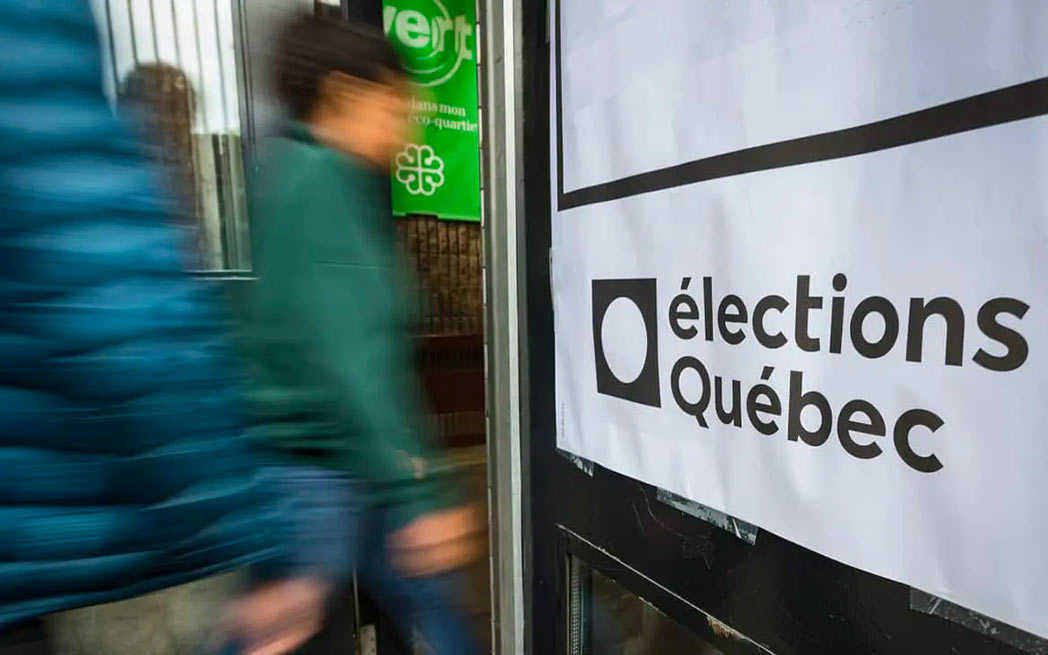
Feature image: Elections Québec

Other articles by Irwin Rapoport
RECENT ARTICLES
 Irwin Rapoport is a freelance journalist and community advocate from Westmount with bachelor’s degrees in History and Political Science from Concordia University. He writes extensively on local politics, education, and environmental issues, and promotes informed public discourse and democracy.