
Real Estate Talk:
Latent defects
What is unseen during inspection can become a costly issue
By Joseph Marovitch
Updated July 23, 2025
Clients often tell me that they are not worried about latent defects because they had an inspection by a certified inspector. They are confused. A latent defect is a hidden defect in the home that a certified inspector did not see or search for. General home inspectors are mandated to inspect a property and report only what they see.
Home inspectors are not responsible for what they cannot see. The inspector will search for cracks around and in the house. They will search for stains that indicate water infiltration and markings for possible mould. The inspector will turn on the faucets to examine the water pressure. They will look for loose railings, rotted mouldings and roofs. They will examine plugs to ensure they are grounded and do not cause harmful shocks. If the inspector has a thermal imaging device, they will check the walls for heat loss, condensation, live wires and lack of insulation.
General home inspectors are mandated to inspect a property and report only what they see.
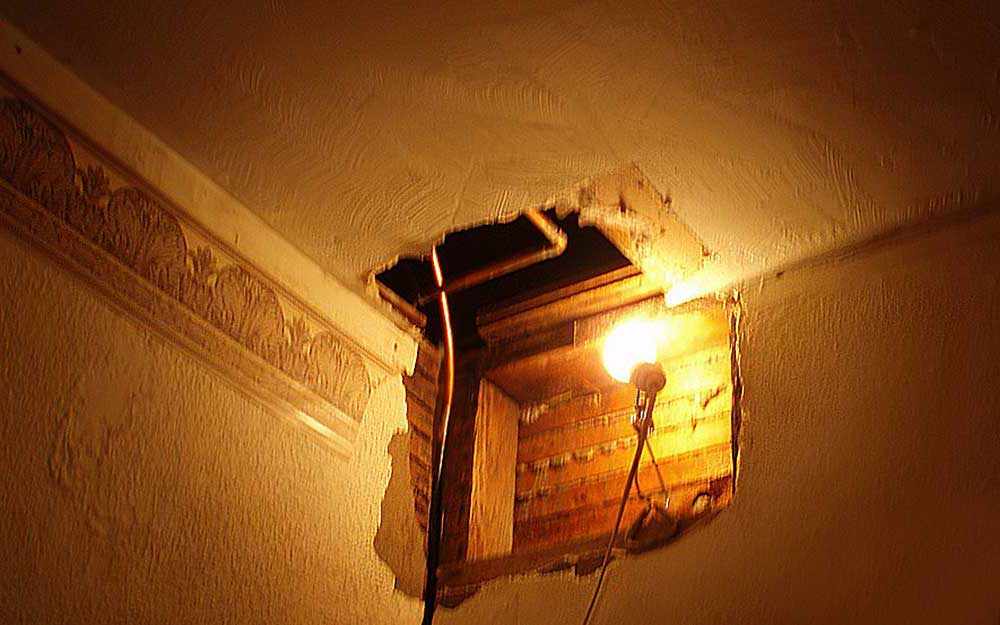
Inspectors will not look for cracks in the lining of the fireplace or the foundation. They will not check the wiring in the walls or the plumbing under the floor. They will not open the walls to see if there is vermiculite or asbestos waiting.
The inspector is only responsible for what they can see. The inspector may find clues to hidden defects and then indicate to the buyer to get a foundation, roof, pool or mould specialist to examine the issue further. Hidden defects are issues that would not normally be visible, reduce the value of the home, and are not known by the seller.
The issue is that a home that is sold with a warranty means the seller is responsible for that hidden defect even after the property has been sold. Not only is the seller responsible, even if they do not live in that house, but the owner before them is responsible as well, and so are all the owners before that who are living. If there was an owner who sold the property without warranty, they are not responsible.
So, if you purchase a home with a fireplace and move in, then one day make a fire in the fireplace only to discover that your house is filling with smoke on the second floor due to a tear in the lining of the fireplace, you can hold the previous owner responsible.
‘The issue is that a home that is sold with warranty means that the seller is responsible for that hidden defect even after the home has been sold.’
In terms of remedy, the buyer can have the seller refund part of the sale price, pay for reparation or, in some cases, the buyer can cancel the purchase and ask for their money back. In theory, these remedies are all possible. In practice, it is never that easy. If the buyer contacts the seller years after the purchase, the seller may refuse the buyer’s demands. In this situation, the buyer would have to sue the seller and wait for the judge to decide. This process takes time, energy and money. However, if the issue is serious, expensive to repair and not the fault of the buyer, then we do what must be done. When you sell a house, it must be usable.
Sellers can choose to sell without warranty, but this causes the property to be sold at a discount, for the buyer to take the risk that the house is in good working order. These sellers are prepared to sell without warranty for a lower price for the peace of mind that the buyer will never come back at them. Selling without warranty can also take longer to sell.
‘Sellers can choose to sell without warranty, but this causes property to be sold at a discount for the buyer to take the risk that the house is in good working order.’
Reasons for a home to be sold without warranty include:
- The property was inherited, and the seller does not know the condition.
- The buyer is a real estate developer, and the warranty is not required since the property will be gutted anyway.
- The seller is moving to a retirement home and does not want to be bothered.
- The seller is moving out of the country and does not want to be bothered.
Two other issues should be noted:
- If the current seller is selling without warranty but the previous owner sold with warranty, it can be stated in the new deed of sale that the prior owner guarantees the warranty.
- If the seller sells without warranty, a hidden defect is found, and it can be proven that the previous owner was aware of the defect, the previous owner committed fraud. Therefore, the without warranty clause is invalid, and the previous owner is liable.
The information in these articles is a summary. Should you have questions, comments or wish to discuss further, please refer to the comments section at the bottom of the page or contact me directly. As well, to view past articles, click here.
Next article: Buyer’s options if the inspection indicates major issues
State of The Market
Unlike the rest of the Canadian provinces, according to the Canadian Mortgage and Housing Corporation (CMHC), Montreal has had significant growth in sales and pricing, favouring sellers. Some economists are forecasting a slowdown in the market, but Montreal shows no signs of slowing down. Montreal’s growth can be attributed to Quebec being historically one of the more affordable markets in Canada.
What is not accounted for in this report is current geopolitical conditions around the world, such as politics, wars, terrorist attacks and health issues, that affect our supply chain and, in turn, our inflation and interest rates. Despite the factors in front of us, buyers and sellers must consider future carrying costs and plan for all possible eventualities.
‘Some economists are forecasting a slowdown in the market, but Montreal shows no signs of slowing down.’
BROKER’S TIP OF THE WEEK
Here are three rules to consider when purchasing
- Pay what the property is worth based on market comparable property and forensic due diligence.
- Whatever is purchased must be easy to sell when the time comes.
- Purchase what fits your budget. No one should be stressed when paying the mortgage and carrying costs.
For further discussion, leave a comment or call me directly.
Have a great week!
Let’s not forget that people with cancer are vulnerable too!
You are invited to keep giving to the following organizations since it’s now more important than ever to support cancer research! Click on the logos below to find out how:


Image: StockPholio.net

Other articles by Joseph Marovitch
Other recent articles




 January 6, 2026" />
 through digital innovation" />
 looks back at 2025" />
 online betting rules?" />
 a film by Andrés Livov" />
 for its 16th edition" />
 Passion fruit meringue verrine" />
 playful clownish escapade" />
 World rhythms on stage" />
 management mistakes" />
 Kensington Avenue" />
 Vegan Chili Chocolate Cake" />
 Bethune tunnel" />
 Left out of breath" />
 of business strategy" />
 damage before it starts" />


 into a professional career" />

 plumbing issues at home" />
 embraces bold cinema" />
 Red snapper papillote" />
 the Legend of Pepita" />
In today’s reality, my suggestion (as a retired property inspector & expert) to any senior or retiree selling a property is twofold: a) get a pre-selling inspection, which gives you a very good diagnostic of the condition of your property and gives you time to chose the right contractor at the right price (as opposed to when you’re in a prepurchase situation, where you have no time..). This report and whatever repairs/improvements made (invoices, etc.) make a great selling tool btw! b) sell without the legal warranty! You may get less for the property but the peace of mind if well worth the price difference!