
Les larmes de Marie at Bourgie Hall
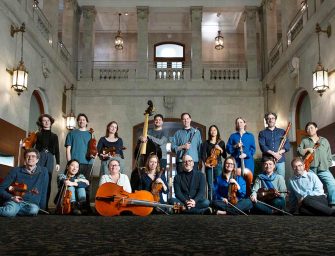
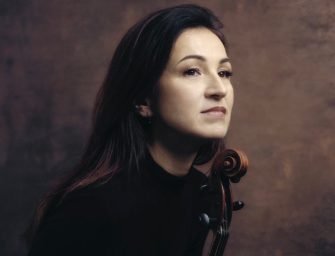
Arion Orchestre Baroque welcomes contralto Anthea Pichanick and conductor-harpsichordist Marie van Rhijn
February 23, 2026
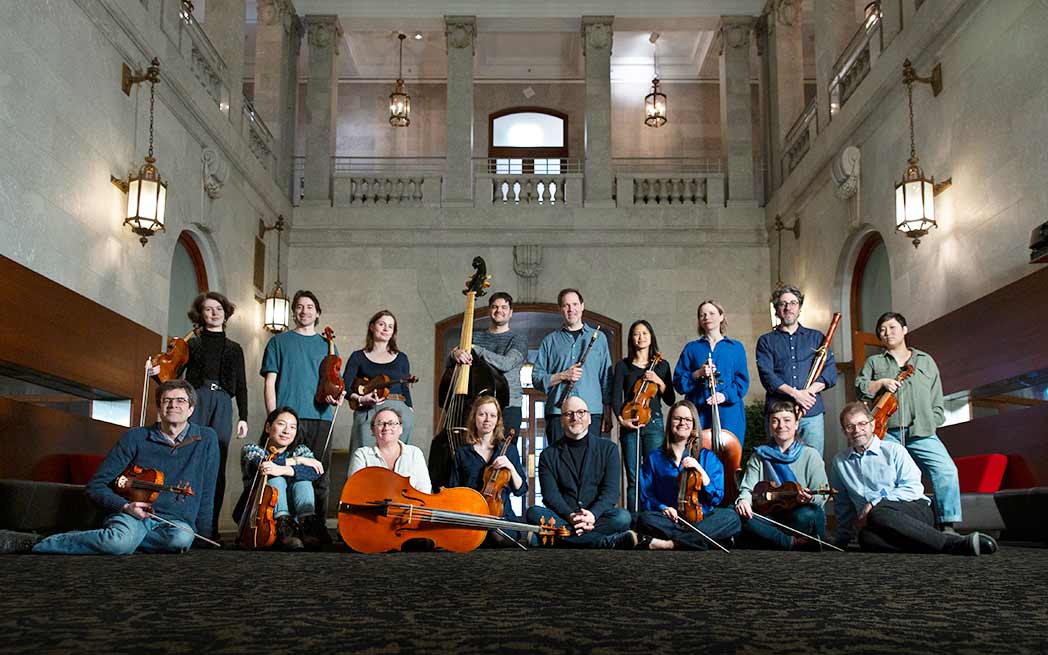
In early March, the story of Mary’s sorrow will unfold in sound at Bourgie Hall, one of Montreal’s most beloved venues for classical music. Over two evenings, 7 and 8 March 2026, Arion Orchestre Baroque, under the artistic direction of Mathieu Lussier, brings the evocative program Les Larmes de Marie (“The Tears of Mary”) to Montreal’s celebrated concert hall. The concert promises a deeply emotional journey, one that draws on centuries of sacred music devoted to the figure of the Virgin Mary at her most human: grieving, questioning, and quietly resilient.
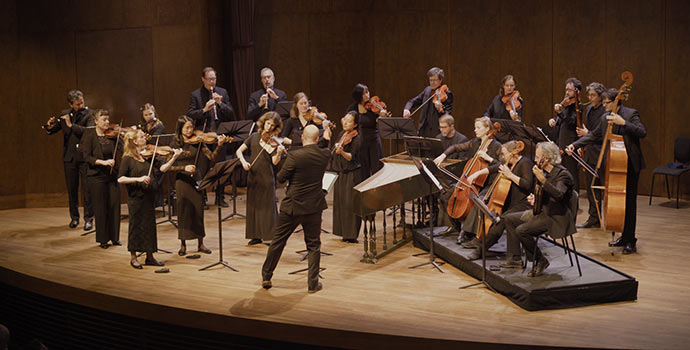
Arion Orchestre Baroque has long been a pillar of Montreal’s early music scene, specializing in historically informed performances on period instruments. For more than four decades, the ensemble has explored the rich sound world of the 17th and 18th centuries, pairing scholarly rigour with a sense of theatrical immediacy. Under the guidance of artistic director and bassoonist Mathieu Lussier, Arion continues to curate programs that invite listeners to hear familiar stories in new ways. Les Larmes de Marie fits squarely within that mission: it is both a tribute to a longstanding devotional tradition and a fresh, living encounter with the expressive possibilities of Baroque music.
The theme of Mary’s tears, often associated with the image of the Stabat Mater, has inspired many significant pages in the sacred repertoire.
The theme of Mary’s tears, often linked with the image of the Stabat Mater—Mary standing at the foot of the Cross—has inspired some of the most luminous pages in the sacred repertoire. Composers from the Italian and German Baroque, as well as their French contemporaries, turned repeatedly to this subject, attracted by its mix of intimacy and grandeur. A mother’s grief is universal, yet the liturgical texts that describe it are steeped in theology and poetry. Baroque musicians approached this paradox with music that alternates between hushed contemplation and urgent drama, between simple, chant-like phrases and richly ornamented arias. Listeners can expect a program that moves through these emotional registers with elegance and intensity.
For audiences in a secular, modern city, the power of this music does not depend on religious belief. The lamenting lines of a soprano, the dark colouring of a viola da gamba, the sobbing figures in the violins—these speak directly to shared human experiences of loss, compassion, and hope. The Baroque language of dissonance and resolution, of tension and release, is ideally suited to express such themes. A single suspended note yearning to resolve can sound like a held breath or a stifled cry; a sudden shift from minor to major can feel like the first glimmer of consolation after despair. Throughout “Les Larmes de Marie,” the musicians of Arion will use these expressive tools to trace Mary’s journey from anguish to a kind of acceptance.
Bourgie Hall
Bourgie Hall offers an especially fitting setting for this program. Intimate yet resonant, the hall has become a home for chamber and early music in Montreal, combining architectural warmth with excellent acoustics. Its proximity to the visual art collections of the museum adds another layer of meaning to the evening. Visitors who have just passed by Renaissance and Baroque depictions of the Virgin and Child, or scenes from the Passion, will find themselves immersed in the musical counterpart to those images. Where the paintings capture a single, frozen moment—Mary’s downcast eyes, a tear on her cheek—the music allows us to inhabit the unfolding of emotion over time.
At the heart of this concert is the relationship between text and music. Baroque composers were masters at “word painting”: shaping melodic lines and harmonies to highlight particular words or images. When the text speaks of weeping, the melody may descend in small, sighing intervals; when it mentions the Cross, the music might suddenly rise, as if looking up. Listeners, even without understanding every Latin or other liturgical phrase, can sense these gestures and follow the emotional narrative. “Les Larmes de Marie” thus becomes not just a sequence of beautiful pieces, but a coherent spiritual and dramatic arc.
Mathieu Lussier’s presence as artistic director ensures that this arc is carefully considered. Known for his dynamic work as both performer and conductor, Lussier has a talent for drawing out character from the score—whether playful, solemn, or fiery—while maintaining stylistic clarity. His approach often highlights the rhetorical nature of Baroque music: the idea that each movement is like a speech, designed to persuade and move the listener. In a program centred on Mary’s tears, this rhetorical dimension is particularly important. The music does not simply describe sorrow; it invites us to feel it, to reflect on it, and ultimately to be transformed by it.
‘Les larmes de Marie is not simply a series of beautiful pieces, but a coherent spiritual and dramatic arc.’
For Montreal audiences, “Les Larmes de Marie” also offers a chance to experience the richness of the early music world that thrives in this city. Arion’s musicians bring specialized expertise in period instruments—gut‑strung strings, Baroque bows, historical winds and continuo instruments—that subtly changes how this repertoire sounds. The colours are more earthy and transparent, the articulations more speech-like, and the balance between voices and instruments more intimate. In the quiet of Salle Bourgie, these nuances can be appreciated fully: the rasp of a bowed string at the start of a note, the gentle decay of a plucked chord, the way the hall itself seems to breathe with the ensemble.
Ultimately, a concert like “Les Larmes de Marie” invites us to slow down and listen closely, both to the music and to ourselves. In a world where grief is often rushed past or kept out of sight, spending an evening in the company of Mary’s tears can feel unexpectedly contemporary. The Baroque composers who wrote this music understood that sorrow and beauty are not opposites, but companions. Arion Orchestre Baroque, in partnership with Salle Bourgie, offers Montrealers the opportunity to step into that understanding—to sit, for a time, with the weight of loss and the possibility of consolation, carried on the fragile, luminous thread of sound.
Program
Antonio Vivaldi (1678–1741)
Cantate Cessate, omai cessate, RV 684
Concerto in D minor for strings and basso continuo, RV 129, “Madrigalesco”
Maria Margherita Grimani (fl. 1713–1715)
Cantate Pallade e Marte (excerpts)
Maria Teresa Agnesi (1720–1795)
Serenata Ulisse in Campania (excerpts)
Giovanni Battista Ferrandini (1709–1791)
Cantate Il pianto di Maria
Les larmes de Marie
Saturday, March 7, 2026: 7:30 pm.
Sunday, March 8, 2026: 2:30 pm.
Bourgie Hall, Montreal Museum of Fine Arts
1339 Sherbrooke Street West
Metro Peel or Guy-Concordia, Bus 24, 66, 165 or 166
Tickets
514 355-1825
Images: Courtesy of Arion Orchestre Baroque





 February 24, 2026" />
 Emotional Intelligence" />
 Lemon blueberry sauce cake" />
 Kitchener Avenue" />
 where water meets fire" />
 Market process in 2026" />
 and resilient leadership" />
 to rules–based trade" />

 Crunchy Asian Slaw" />
 a new management role" />
 Un mar de músicas" />
 Retail fixturing" />
 and stilts, oh my!" />
 An East Van Memoir" />
 the passion of Argentina" />
 of speaking kindly" />
 Tupper Street" />
 Preserved Lemons" />
 becomes Reality TV" />
 La Jeune Fille et l’Amour" />
 Commercial lease" />