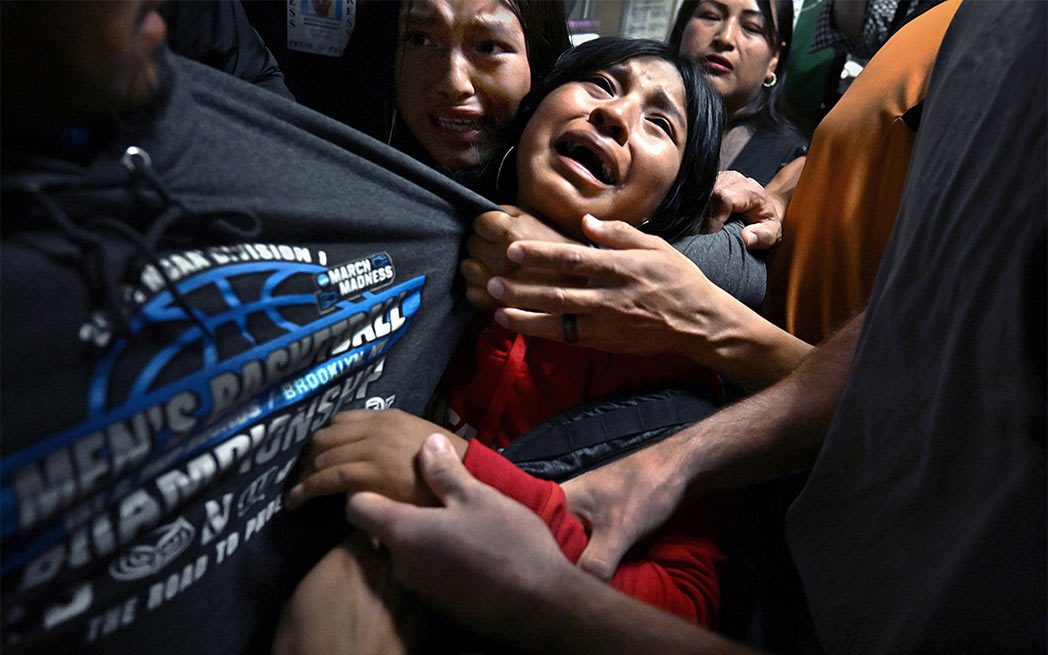
The 19th edition of the exhibition will be held at Marché Bonsecours from August 26 to October 12
By Andrew Burlone
August 19, 2026
The 19th edition of the World Press Photo Montreal Exhibition arrives at Bonsecours Market from August 26 to October 12, bringing the year’s leading photojournalism to Old Montreal alongside seven complementary exhibitions rooted in Quebec’s visual culture and public life. Its featured guest, award-winning Franco-Syrian photojournalist Abdulmonam Eassa, gives the event a particularly immediate connection to the human cost of conflict and the responsibilities of witnessing.
An independent international jury of 31 professionals selected the winners from 57,376 photographs submitted by 3,747 photographers representing 141 countries.
The annual exhibition presents work by 42 award-winning photographers from the 69th World Press Photo Contest. An independent international jury of 31 professionals selected the winners from 57,376 photographs submitted by 3,747 photographers representing 141 countries. The scale is formidable, but the exhibition’s strength lies less in statistics than in its ability to slow visitors down: placing them in front of images that make distant events personal, complex, and difficult to dismiss.

The broader context is staggering. World Press Photo reports that more than 13 million people have been displaced and at least 150,000 killed since the war began; millions of children are out of school, while access to water, electricity and health care has been severely disrupted. The organization also emphasizes the danger facing journalists: more than 400 have fled Sudan since April 2023, while those remaining contend with arrest, intimidation, violence and coordinated misinformation campaigns.
Abdulmonam Eassa’s Sudan
Eassa, a Syrian-French photojournalist now based in Damascus, will visit Montreal in connection with his World Press Photo-recognized series, Sudan’s War: A Nation Trapped, published in Le Monde. The series confronts the conflict that began in April 2023 between the Sudanese Armed Forces and the Rapid Support Forces (RSF), a paramilitary group. It documents a country in which civilians have endured displacement, collapsing essential services, hunger and restricted humanitarian access.
Eassa began photographing during the five-year siege of his neighbourhood on the outskirts of Damascus, documenting both civilian suffering and resilience. After reaching France in 2018, he covered the Yellow Vest movement and later reported from Sudan, Ukraine, Turkey, Syria and Chad. His work has appeared in Le Monde, The New York Times, The Guardian and The Washington Post.
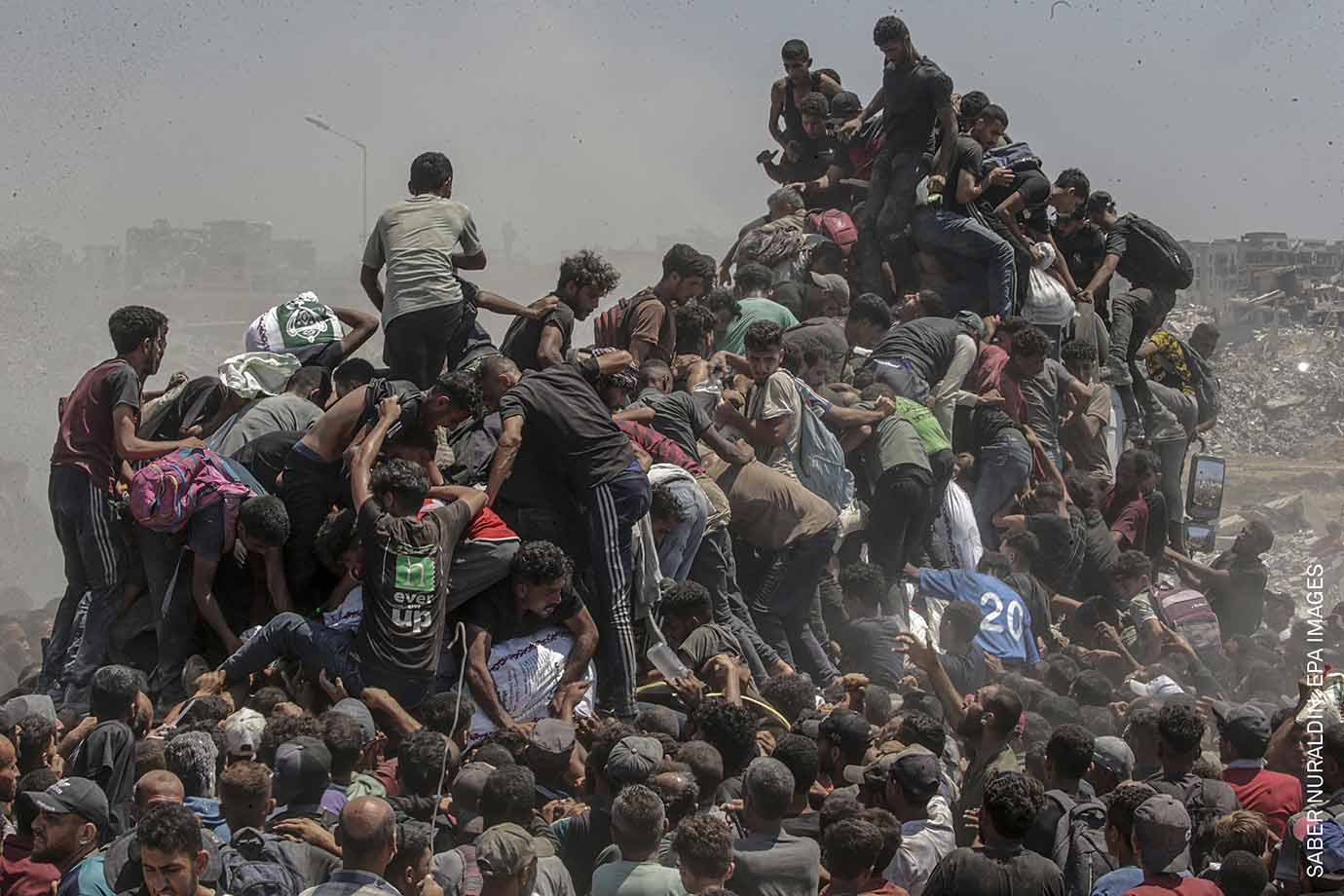
Among the photographs is an image of Alhaja Abdallah, displaced from Bara, showing scars she sustained in a fire at the Al-Mohad camp in El-Obeid. World Press Photo notes that RSF forces have set multiple displacement camps ablaze. The image is not simply evidence of violence; it asks viewers to recognize the individual body and life behind the language of crisis.
Eassa began photographing during the five-year siege of his neighbourhood on the outskirts of Damascus, documenting both civilian suffering and resilience.
That makes Eassa’s own stated concern especially resonant. In the release announcing his Montreal visit, he describes the continual surveillance and identification checks involved in reporting from Sudan, but says the central challenge is ensuring that nobody faces danger because of his photographs after he has left. This ethical position goes to the heart of documentary practice: reporting is not only about gaining access to a story, but also about considering what publication may mean for the people pictured.
A Quebec-centred programme
Montreal’s presentation extends well beyond the international prize-winning images. Seven additional exhibitions will connect global issues to Quebec journalism, memory, education and media literacy.
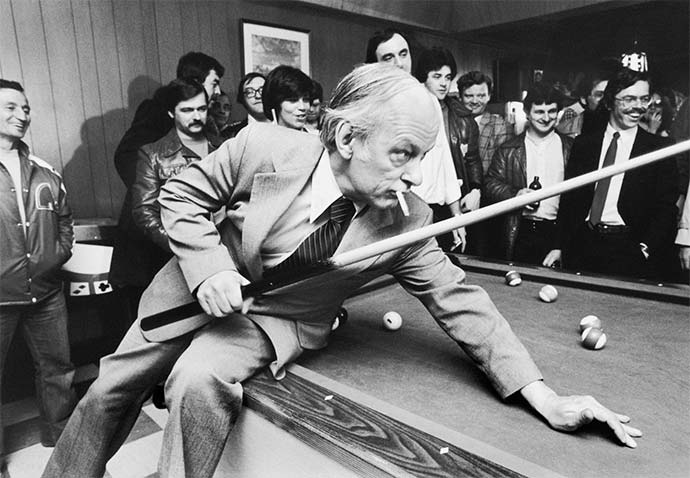
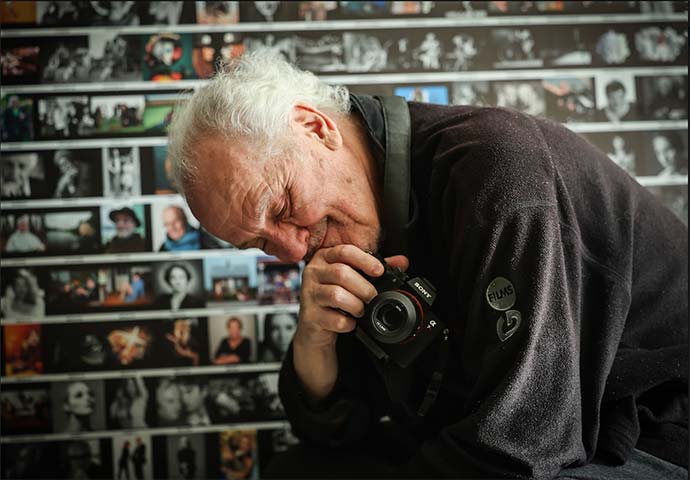
Jacques Nadeau: Page-One Material! offers a retrospective of a photographer whose work chronicled Quebec’s political and social transformation over four decades. Curated by his daughter, Virginie Nadeau, with photographers Martin Tremblay and Frédéric Séguin, the exhibition revisits images associated with figures and moments including René Lévesque, Pierre Elliott Trudeau, Justin Trudeau and Jack Layton. Nadeau, who died in December 2025, worked for The Canadian Press before joining Le Devoir in 1990 and taught photojournalism at the Université de Montréal for nearly 20 years.
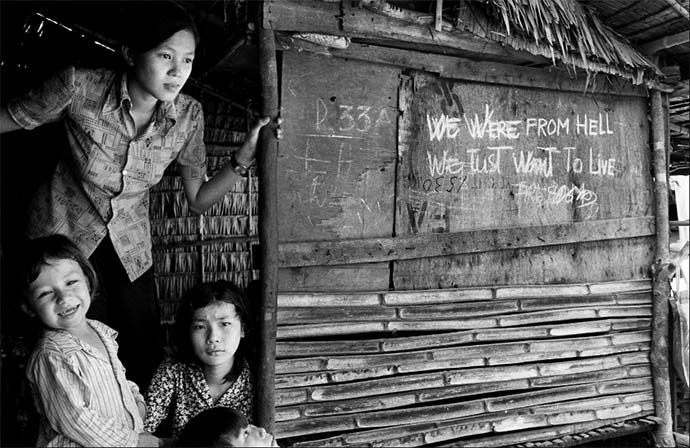
Another major presentation, To Live, returns to a 1980 reporting trip through Thailand and Malaysia. During two months in the region, photographer Claire Beaugrand-Champagne and journalist Paule Beaugrand-Champagne documented people who had fled Vietnam, Laos and Cambodia amid political upheaval, violence and displacement. The photographs and reports, originally published in La Presse, preserve a record of families waiting in refugee camps for the possibility of a new beginning.
The historical exhibition has a contemporary counterpart in Martin Chamberland’s photo essay, And Life Goes On. Created this summer, it follows four Montreal families who emigrated from Southeast Asia, focusing on four women and how family memory, migration, and inherited experience continue across generations more than 45 years after exile.
Photography, emerging voices and trust
The exhibition also makes room for emerging photographers. Dot Dot Dot, Tracing Human Ground presents 28 student projects from the Photography program at Cégep du Vieux Montréal. Actor, director and screenwriter Lou-Pascal Tremblay, the 19th edition’s spokesperson, selected four projects for larger-format presentation, highlighting work that explores identity, belonging and memory.
Photojournalism remains valuable because responsible journalism brings verification, context and accountability to what audiences see.
The finalist photographs from the 21st edition of the FPJQ’s Antoine-Desilets Award will also be displayed. The award recognizes excellence in Quebec press photography across categories including Arts and Culture, Social Issues, International, Photo Essay, Portrait, Sports and Daily Life.
Two further exhibitions reinforce the exhibition’s public-service dimension: Au coeur de l’actualité, featuring work by La Presse photojournalists, and Radio-Canada’s Destination: Distinguer le vrai du faux, which offers practical tools for recognizing misleading content and assessing information in a crowded media environment. That final focus is timely. In an era of manipulated imagery and relentless information flows, photojournalism remains valuable not because photographs are automatically neutral, but because responsible journalism brings verification, context and accountability to what audiences see.
Plan your visit
World Press Photo Montreal takes place at Bonsecours Market, 325 De la Commune Street East, in Old Montreal, roughly 300 metres from Champ-de-Mars métro station. The visit lasts approximately 90 minutes.
Admission is $16 plus taxes for general entry and $13 plus taxes for students and seniors; children aged 10 and under enter free. Tickets are available at the door, except for group reservations, and the venue does not accept cash.
The exhibition is open Sunday through Wednesday from 10 a.m. to 10 p.m., and Thursday through Saturday from 10 a.m. to midnight. Accessibility provisions include a ramp to the main hall and elevator access to mezzanine exhibits.
World Press Photo Montreal Expo
Feature image: Photo of the Year, by Carol Guzy – ZUMA-Press – iWitness-for-Miami-Herald

 World Press Photo is an independent, non-profit organization founded in the Netherlands in 1955 that champions photojournalism and documentary photography as tools for understanding the world’s most urgent stories. Its exhibitions and educational initiatives reach millions of people in more than 80 locations worldwide each year.