A lifetime of advocacy, guided by compassion and grounded in experience
November 12, 2026 • WestmountMag.ca
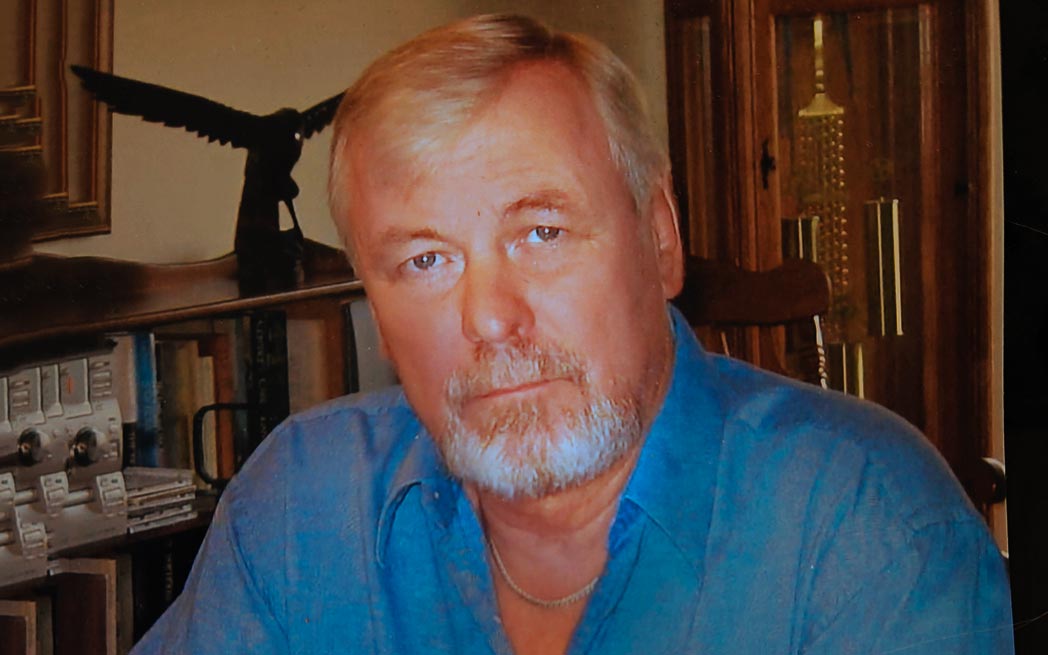
Georges R. Dupras, who passed away on August 6, 2026, was one of Westmount Magazine’s most distinctive contributors – a writer whose byline became synonymous with animal welfare and environmental accountability. For a Montreal-area publication serving a primarily local readership, Dupras brought a global range of concerns: the commercial seal hunt, endangered species, captive wildlife, factory farming, climate policy, and the ethical foundations of human decision-making.
Dupras had contributed to the magazine since 2017, and over the years, he built a substantial archive of essays in both English and French, making him a recurring presence in the magazine’s opinion and animal-welfare coverage. His authority rested not simply on closely held convictions, but on over 60 years of campaigning, organizational service, and engagement with public institutions.
Dupras was a longtime director of Animal Alliance of Canada, Quebec representative of Zoocheck Canada, a member of the International Association for Bear Research and Management, and a former board member of the Canadian SPCA. His advocacy began in 1966, when, at seventeen, he volunteered for Brian Davies’s Save the Seal campaign, which preceded the founding of the International Fund for Animal Welfare in 1969.
For those of us who worked with him, that seriousness of purpose came with a pleasant demeanour and a self-deprecating sense of humour.
When he wrote about the seal hunt, bears, captive whales, or wildlife management, he was not merely offering commentary from a distance. He had spent a lifetime working to protect them.
A lifetime of advocacy
Dupras’s writing carried authority because it was grounded in decades of activism. He began working on the original Save the Seal campaign in 1966, when he was only 17, and that early involvement culminated in IFAW’s founding in 1969. That history mattered to readers: when he wrote about the seal hunt, bears, captive whales, or wildlife management, he was not merely offering commentary from a distance. He had spent much of his life inside the campaigns, organizations, and political debates that shaped Canada’s animal-protection movement.
Dupras’s Westmount Magazine output was unusually broad. He was best known for animal-welfare commentary, but his interests extended well beyond a single cause. His articles examined the ethics of de-extinction, the costs of gold mining, endangered-species protection, breed-specific legislation, veterinary costs, intensive farming, government accountability, and the relationship between economic systems and environmental destruction.
That breadth reflected a consistent worldview. Dupras tended to treat animal welfare, environmental protection, and public ethics as connected rather than separate issues. In a 2024 article on endangered species, he argued that “if we are not part of the solution, then we are the problem,” framing protection of other species as a matter of human responsibility rather than sentimentality. In another piece, he questioned whether resurrecting extinct species made ethical sense if the conditions that caused their extinction remained unchanged.
His writing often challenged the idea that technological innovation or political promises could substitute for moral restraint. That was especially evident in his coverage of wildlife captivity. In Do Montrealers really want another aquarium?, published in 2022, Dupras argued against including an aquarium in the Royalmount Mega-Mall, contending that the public had become more sensitive to the needs of animals held in artificial facilities. He returned to the subject in 2023, describing the proposed Royalmount Aquarium as “an already dated facility” and arguing that people worldwide were moving away from aquariums and zoological gardens.
Animal welfare as local journalism
Although Dupras wrote about national and international issues, his work had a strong Montreal dimension. One of his most notable Westmount Magazine pieces was The plight of Montreal’s calèche horses, published in 2018. Its subtitle, Born free spirits, they died due to our indifference, captured his argument that a familiar tourist attraction carried an unacceptable cost to the animals.
Readers commenting on the article thanked him for drawing attention to the horses’ suffering and to alternatives to animal-based attractions. The article also showed one of his strengths as a columnist: he could take a visible local issue and place it in a larger ethical framework without losing sight of the animals themselves. His local advocacy included efforts to end Montreal’s contract with the Berger Blanc pound.
Dupras could take a visible local issue and place it in a larger ethical framework without losing sight of the animals themselves.
He also wrote about breed-specific legislation in 2018, arguing that such laws would not solve the problem of aggressive dogs and placing responsibility on owners and handlers rather than on particular breeds. The piece reflected his habit of resisting simple, punitive answers. Whether the subject was dogs, bears, seals, or farm animals, Dupras generally looked for the human decisions and institutional incentives behind a problem.
The seal hunt and political accountability
Dupras returned repeatedly to the commercial seal hunt, the issue that had first drawn him into activism. In April 2026, Westmount Magazine published his article Politics over science: The slaughter goes on, whose subtitle declared that “the ice still runs red with the blood from the commercial seal hunt.” For him, the seal hunt was not only an animal-welfare issue but also a test of whether governments would follow evidence or political pressure.
That theme appeared throughout his later writing. In July 2026, he published True or political environmentalism?, arguing that federal and provincial leaders had an ethical obligation to submit the West Coast Pipeline environmental impact study. The article connected energy policy to agriculture and animal industries, illustrating how he saw environmental ethics as a system-wide problem rather than a single-issue campaign.
His final months of published work continued in that vein. In January 2026, he wrote about “failsafe systems said to be infallible that fail,” reflecting on the vulnerability of banking, justice, medicine, military systems, computers, politics, and democracy itself. In May 2026, he criticized climate-policy retreat in Climate backsliding, but at what cost, calling the undoing of decades of ecological progress “sheer folly.” In July 2026, he wrote about a barn fire that killed thousands of animals, arguing that preventative measures in intensive farming facilities were still inadequate.
A distinctive voice
Westmount Magazine gave Dupras a platform that suited his style. He was an advocate, and his articles were designed to persuade. Yet his writing avoided the tone of simple outrage. He often began with a concrete incident, policy failure, or scientific development, then moved toward a broader ethical argument. His essays asked readers to consider what their choices cost – financially, ecologically, and morally.
In The Shadow of Gold, for example, he examined the hidden human and environmental costs of pursuing mineral wealth. In The exclusive Club we are not part of, he asked whether people were prepared to trade personal freedom and privacy for survival. This made him a valuable contributor to our community magazine, which, through Dupras, brought serious ethical debate to a local readership.
Dupras translated his lifetime of advocacy into accessible arguments for readers who might never attend a parliamentary hearing or join an animal-rights organization.
Dupras’s contribution to Westmount Magazine translated his experience into accessible arguments for readers who might never attend a parliamentary hearing or join an animal-rights organization. His writing also preserved a particular moral vocabulary. He wrote about indifference, responsibility, accountability, suffering, and the danger of allowing economic or political interests to define what counts as acceptable treatment of animals and nature.
A lasting archive
Georges Dupras’s death ended a remarkable run of public advocacy, but his Westmount Magazine archive and decades of published essays show a writer who insisted that animals, ecosystems, and future generations deserve a place in public conversation.
Feature image: Georges R. Dupras, courtesy of Thea and Joanna Dupras