
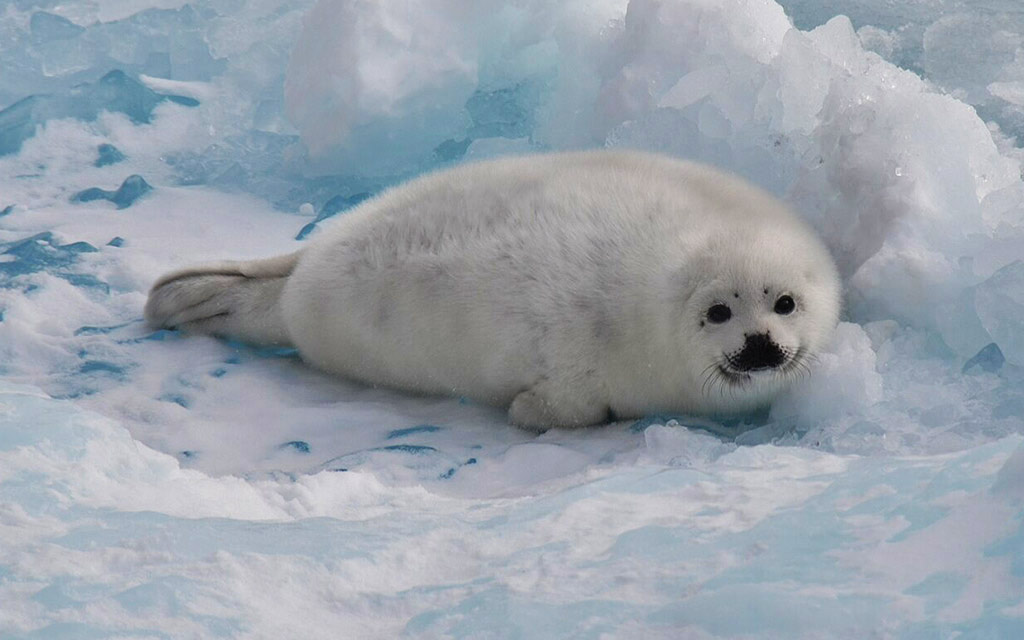
The ice still runs red with the blood from the commercial seal hunt
By Georges Dupras
Updated April 20, 2026
Hidden by the horrors of the illegal Iran war, the indiscriminate killings and land grabs in the Gaza, the ongoing conflicts in the Ukraine, not to forget the disregard for civil liberties in the United States, the ice on Canada’s East Coast still runs red with the blood of the much fought, and now mostly forgotten, commercial seal slaughter.
Millions of people around the world have voiced their indignation about this practice, but our government not only turns a blind eye to their voices but actively subsidizes the slaughter. This support is “political” in nature and has nothing to do with conservation.
Why government support?
No markets exist for this heavily subsidized slaughter of juvenile seals, many only a few months old. The arguments claiming that seals are eating all the fish have been refuted at all levels. Seals do eat fish, but they are opportunistic feeders, and commercial fisheries worldwide are in a state of collapse, not due to marine mammals. The current overview suggests that the principal causes are:
- Overfishing (commercial)
- Illegal fishing
- Fishing nets left adrift, having been cut by illegal fishers
- Impact of microplastics throughout marine environments
- Change in ocean temperature, which impacts egg survival (under study)
- Naturally occurring environmental cycles
Climate fluctuation
Due to climate change, the ice off the Grand Banks and in the Gulf is much thinner, necessitating a different approach for so-called hunters. Rather than walking on the ice and killing young seals¹ by means of hakapiks, they are now shooting at the seals from a distance or from their boats. Shooting a small whitish-grey target on a background of white ice from a boat, susceptible to pitch and yaw, cannot possibly be humane. This annual tradition, hidden from public scrutiny, has nothing to do with conservation – it is “entrenchment”.
Over the years, the Federal Government has tried unsuccessfully to develop markets for seal products, including fur, oil… and meat… I suspect that, as in years past, most seal carcasses are either burned or dumped at sea.
Regulations
The regulations, as I remember them, stipulate that the “hunter” must strike the animal three times on the skull, turn the seal over, check for eye reflex, then exsanguinate. At this point, skinning can begin. Eyewitnesses’ statements and postmortem reports show that this was not always done.
Markets
Over the years, the Federal Government has unsuccessfully tried to develop markets for seal products, including fur, oil (now labelled marine oil), and meat. The meat has been shunned by high-end, exclusive restaurants catering to those with discriminating taste. Mink farmers have no interest in seal meat, as even the mink won’t touch it. Attempts to use it as fertilizer have failed. I suspect that, as in years past, most seal carcasses are either burned or dumped at sea.
Moving forward
Despite setbacks, progress has been made. At times, this might not seem the case, given the current political mindsets in the United States, which have a global impact.
We are responsible for our own actions and accountable, if only to ourselves. If we fail to follow up on what we believe is right, while pointing to all the other wrongs in this world, then we have failed ourselves and future generations.
That said, I urge you to write to your Member of Parliament, or the Minister of Fisheries² in Ottawa, to voice your objection to this ongoing slaughter.
1. The three stages of development for harp seals include: White coats (babies), Ragged Jackets (juveniles), Beaters, and Bedlamers (adults)
2. The Honourable Joanne Thompson at joanne.thompson@parl.gc.ca
Disclaimer: The opinions expressed in this article are those of the author and do not necessarily reflect the opinions of WestmountMag.ca or its publishers.
Feature image: Harp seal by Lysogeny, CC BY-SA 4.0, via Wikimedia Commons

More articles by Georges R. Dupras
Other recent articles
[row cols_nr=”2″ class=”narrow”][col size=”2″]
 [/col][col size=”10″]Georges R. Dupras has advocated for animals for over fifty years. A member of the International Association for Bear Research and Management (IBA), a Director of the Animal Alliance of Canada (AAC), Quebec Representative of Zoocheck Canada and past Board member of the Canadian SPCA, he worked on the original Save the Seal campaign in 1966 that culminated in the founding of the International Fund for Animal Welfare (IFAW) in 1969. Georges Dupras has published two books, Values in Conflict and the eBook Ethics, a Human Condition, and currently lives in Montreal, Canada.[/col][/row]
It is hard to believe that this barbaric activity is still going on! The east coast seal hunt has become an international embarrassment for Canada – a serious black eye! The “hunt” has proven to be a manufactured problem. What is behind it? There is no market for seal products, pelts are being warehoused, the hunt is heavily subsidized by the federal government and it is beyond cruel! Could it be that the seal hunt is such an important part of Newfoundland history? Could it be that this is a strong local issue? Could it be that there are seven important federal swing votes to be gained in Newfoundland? One wonders!
There is one word in Mr. Dupras’ article that particularly jumped out at me and that word is “entrenchment”. Along with “tradition”, these two words convey the true motive behind all cruel, out-dated activities such as Canada’s annual seal hunt.
When humans abdicate responsibility for their actions by basically saying, we do it because our ancestors did it, then tradition is nothing but glorified stagnation.
That the Canadian government has perpetuated this animal cruelty over decades and decades with false justifications is appalling and should be condemned.
Please note that the email address provided to write the minister of fisheries does not work. Here is a valid one: joanne.thompson@parl.gc.ca
Noted – the change has been made.