
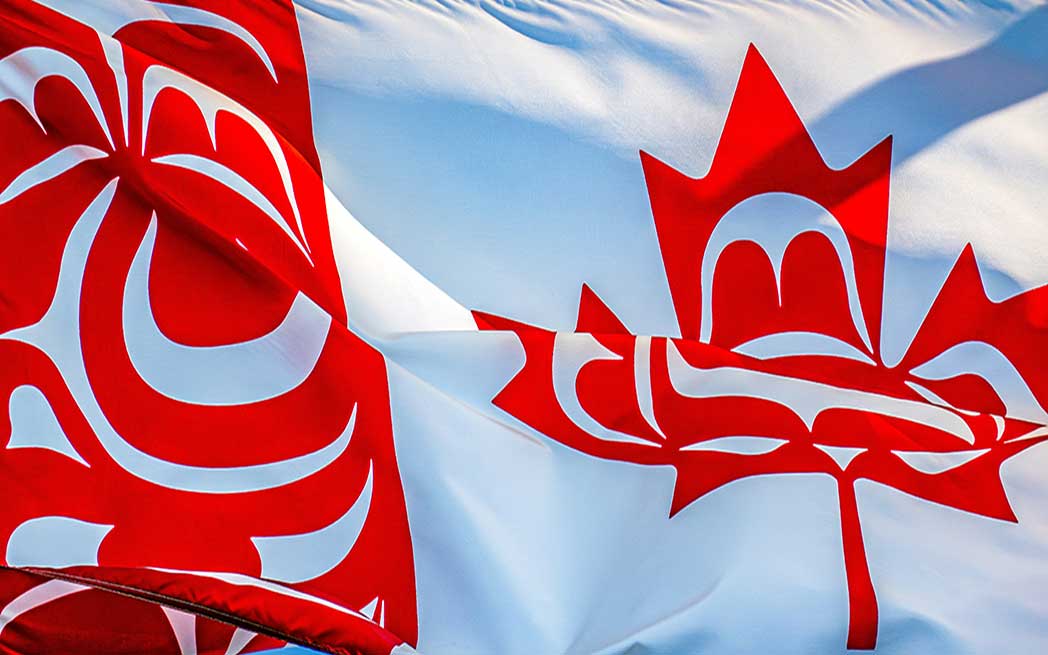
First Nations draw line
around Alberta separation
Referendum drama exposes Canada’s fragile foundations on Indigenous land
By Irwin Rapoport
May 27, 2026
Alberta’s latest push for a separation referendum has just collided with a hard legal and moral boundary: First Nations treaty rights. On May 12, Justice Shaina Leonard of the Alberta Court of King’s Bench quashed approval of a key independence petition, finding that Elections Alberta’s chief electoral officer made an error in law by ignoring an earlier ruling that separation would violate Indigenous treaty rights and by failing to respect the duty to consult First Nations. For now, the courts have done what the political class would not—draw a line around treaty land and say it cannot be wished away by a provincial plebiscite.
Elections Alberta’s chief electoral officer made an error in law by ignoring an earlier ruling that separation would violate Indigenous treaty rights and by failing to respect the duty to consult First Nations.
This is not just an Alberta story. In 1995, as Quebec nationalists prepared to ask voters whether the province should become sovereign, the Cree Nation and the Inuit of northern Quebec held their own referendums and delivered crushing majorities in favour of remaining in Canada. Their message was simple and explosive: if Canada is divisible, so is Quebec; provincial borders cannot be redrawn over Indigenous nations that never consented to leave. Every Canadian discussion of “independence” or “separation,” whether in Alberta or Quebec, takes place on land that was first taken—through conquest, disease, coerced treaties and legal fictions—from First Nations and Inuit.
Against that backdrop, the seemingly technical fight over the wording of an Alberta referendum question looks very different. Supporters of Forever Canadian and of outright independence are not just battling over semantics; they are trying to frame a vote on territory whose legal status is already constrained by treaties and Indigenous rights. Danielle Smith’s United Conservative government has now committed to putting a separation question on the October 19 ballot, but court rulings, First Nations challenges and months of messy maneuvering have revealed just how legally and politically fragile this project remains
That fragility surfaced at a May 20 committee meeting to consider the Forever Canadian initiative launched by former Alberta MLA and deputy premier Thomas Lukaszuk. The session imploded when the United Conservative chair mishandled the proceedings and allowed a premature statement about the outcome to be released, undermining the committee’s credibility. What should have been a routine review turned into a minor parliamentary fiasco—an early sign that the mechanics of putting a referendum on the ballot are anything but straightforward.
The question of who writes the question
Beneath the procedural chaos lies a sharp battle over the question itself. Lukaszuk’s petition backs a deceptively simple formulation: “Do you agree that Alberta should remain within Canada?” That wording, favoured by federalist forces, frames the vote as a choice for continuity rather than rupture, forcing separatists to actively defend leaving. On the other side, the Alberta Prosperity Project has promoted a more direct and provocative question: “Do you agree that the province of Alberta should cease to be a part of Canada to become an independent state?” Here, independence is the affirmative act; remaining in Canada is recast as the status quo that must be rejected.
‘Supporters of Forever Canadian and of outright independence are not just battling over semantics; they are trying to frame a vote on territory whose legal status is already constrained by treaties and Indigenous rights.’
These rival questions and the political havoc surrounding them have been widely reported, including threats by separatist activists to oust Premier Smith if the government fails to deliver a “clean” independence question. The hardcore of Alberta separatists—perhaps 400,000 people out of a voting population of about 3 million—are clearly determined, but they remain a vocal minority in a province where polling still shows most residents favour continued membership in Canada. Even if the legislative and procedural hurdles were cleared, a referendum would likely confirm that Alberta is far from consensus on breaking away.
To see where Indigenous nations fit in, it is useful to recall some lesser-known aspects of the 1995 Quebec referendum. In the days before the October 30 vote, the Cree Nation held its own plebiscite on October 24, asking whether its people consented to being taken out of Canada if Quebec voted “Yes.” The answer was emphatic: more than three-quarters of eligible Crees voted, and 96.3 percent chose to remain in Canada. Grand Chief Matthew Coon Come told reporters in Montreal, “We will not be separated from Canada. We have withheld our consent. The message is clear: We won’t go.”
Geography made that stance impossible to ignore. The traditional territories of the Cree, Inuit and Innu cover more than two-thirds of Quebec’s landmass, including the vast Ungava region and areas bordering Labrador. In a separate referendum, the Inuit also rejected Quebec sovereignty by an overwhelming margin, echoing a similar result in 1980. These votes did not stop the Quebec referendum from going ahead, but they added moral and political weight to the argument that Quebec could not simply walk away with its existing boundaries intact.
Grand Chief Coon Come’s language was unflinching. Any attempt by a sovereign Quebec to remove Eeyou Istchee from Canada, he warned, would amount to hijacking “a whole people and their lands.” He raised the prospect of challenging Hydro-Québec’s ownership of its dams through the courts, and insisted that Ottawa would be obliged under the Constitution to protect First Nations’ rights if Quebec tried to secede on its own terms. The partition debate, already present in works such as William Shaw and Lionel Albert’s Partition: The Price of Quebec’s Independence, took on new urgency once Indigenous nations asserted their own right to stay.
‘The partition debate, already present in works such as William Shaw and Lionel Albert’s Partition: The Price of Quebec’s Independence, took on new urgency once Indigenous nations asserted their own right to stay.’
Those Quebec precedents now echo in Alberta. Inspired in part by the Cree and Inuit referendums, several First Nations there have mounted legal challenges to both the content of an independence question and the process by which a referendum would be called. Chiefs and Indigenous leaders stress that all of Alberta sits on treaty land, and that any attempt to change the province’s constitutional status without their consent would violate solemn agreements between First Nations and the Crown. In other words, the fate of “Alberta” as a political unit cannot be decided solely by the non-Indigenous electorate.
The May 12 rulings by Justice Leonard gave those arguments teeth. In quashing Elections Alberta’s approval of the second citizen-initiated petition, she held that the chief electoral officer had failed to consider an earlier decision that found separation would infringe treaty rights, rendering his approval unreasonable. She also accepted First Nations’ arguments that major changes to the province’s constitutional status trigger a duty to consult, which had not been met. The court signalled that Alberta cannot use a simple petition mechanism to sidestep its constitutional obligations to Indigenous nations.
Premier Smith has denounced the decision as anti-democratic and promised to appeal, arguing that the courts are denying hundreds of thousands of Albertans the chance to have their signatures verified. Her government insists that citizens should be able to force a referendum on independence and that elected politicians, not judges, should decide whether the vote proceeds. Yet even if an appeal succeeds on procedural grounds, the underlying message from the courts and First Nations remains: treaty rights are not a historical footnote but a living constraint on what any province can do.
All of this points back to a deeper, uncomfortable fact: Canada, like every country in the Americas, rests on land seized from Indigenous peoples. From the 1494 Treaty of Tordesillas, in which Spain and Portugal casually divided the “New World” between them, to the charters that created entities like the Hudson’s Bay Company with sweeping control over Rupert’s Land, European powers treated entire continents as empty space to be claimed, traded and sold. The Indigenous nations already living there—labelled “savages,” decimated by disease and pushed off their territories by force and fraudulent treaties—were not consulted.
‘Chiefs and Indigenous leaders stress that all of Alberta sits on treaty land, and that any attempt to change the province’s constitutional status without their consent would violate solemn agreements between First Nations and the Crown.’
This matters because a large percentage of Canada’s so-called Crown land is, in fact, contested territory, subject to ongoing claims and negotiations with First Nations and Inuit. Non-Indigenous Canadians like to speak of “our” Crown land and “our” Indigenous people, but in truth, we are settlers and colonizers living on other people’s territories, often without their free, prior and informed consent. We benefit every day from the resource wealth and strategic depth that stolen land provides, while Indigenous communities continue to grapple with poverty, displacement and systemic discrimination.
Recognizing this should change how we think about independence referendums. Instead of seeing them solely as contests between Ottawa and a provincial capital, we need to acknowledge that multiple overlapping sovereignties are at stake. Indigenous nations are not just interest groups to be consulted at the margins; they are rights-bearing peoples whose treaties, constitutional protections and inherent rights to self-determination limit what provinces and the federal government can legitimately decide. That is why Cree and Inuit referendums in Quebec, and court challenges in Alberta, are not side-shows but central to the story.
It also means that meaningful justice cannot stop at symbolic recognition or modest revenue-sharing. Large tracts of sparsely populated Crown land could, in principle, be returned to Indigenous ownership or placed under Indigenous-led stewardship without displacing existing communities. A smaller Canada, sharing the continent with several self-governing First Nations and Inuit polities that are aligned with the federation in various ways, is not unthinkable. Modern treaties, land-claims agreements and self-government accords already point in that direction.
This article can only scratch the surface of the many outstanding issues arising from centuries of dispossession. But as Alberta wrestles with the fallout of its thwarted independence petition, and as Quebec nationalism once again flirts with a new referendum, one fact should remain front of mind: we live, work and vote on stolen land. Any serious conversation about separation, whether in the Prairies or along the St. Lawrence, must begin by listening to the Indigenous nations whose territories we occupy—and by accepting that they, not just provinces and Ottawa, have the right to decide their own future.
Disclaimer: The opinions expressed in this article are those of the author and do not necessarily reflect the opinions of WestmountMag.ca or its publishers.
Feature image: Chris Robert – Unsplash

More articles by Irwin Rapoport
Other recent articles

Irwin Rapoport is a freelance journalist and community advocate from Westmount with bachelor’s degrees in History and Political Science from Concordia University. He writes extensively on local politics, education, and environmental issues, and promotes informed public discourse and democracy through his writing and activism.

 May 29, 2026" />
 but at what cost" />
 around Alberta separation" />
 The power of clarity" />
 Memory in Motion" />
 returns to Montreal" />
 Olivier Avenue" />
 in uncertain times" />
 Asparagus and green beans" />
 things got weird" />
 book on China" />
 Mr. Davies was right" />
 of Mount Royal Park" />
 Negotiating better offers" />
 Sherbrooke Street /2" />
 and manage anxiety" />
 Vegan Shepherd’s Pie" />
 through gesture and gaze" />
 spring and summer" />
 is back for a new run!" />
 Sherbrooke Street /1" />
 the Colorado Rockies" />
 of decision-making" />
 Thai Lemongrass Soup" />
Well written Irwin. You have stated what many know to be true, whether in Quebce or Alberta. This vote will be costly for Alberta, as were the refrendums in Quebec.
Great article! I always felt Quebec could not leave Canada and maintain its provincial borders. I recently found snippets suggesting that to be true. Your article hits the nail on the head and makes it profoundly clear. Thank you!!