
Belgo changes hand
but its spirit remains
A flagship Montréal building begins a new chapter while remaining faithful to its artistic calling
June 18, 2026
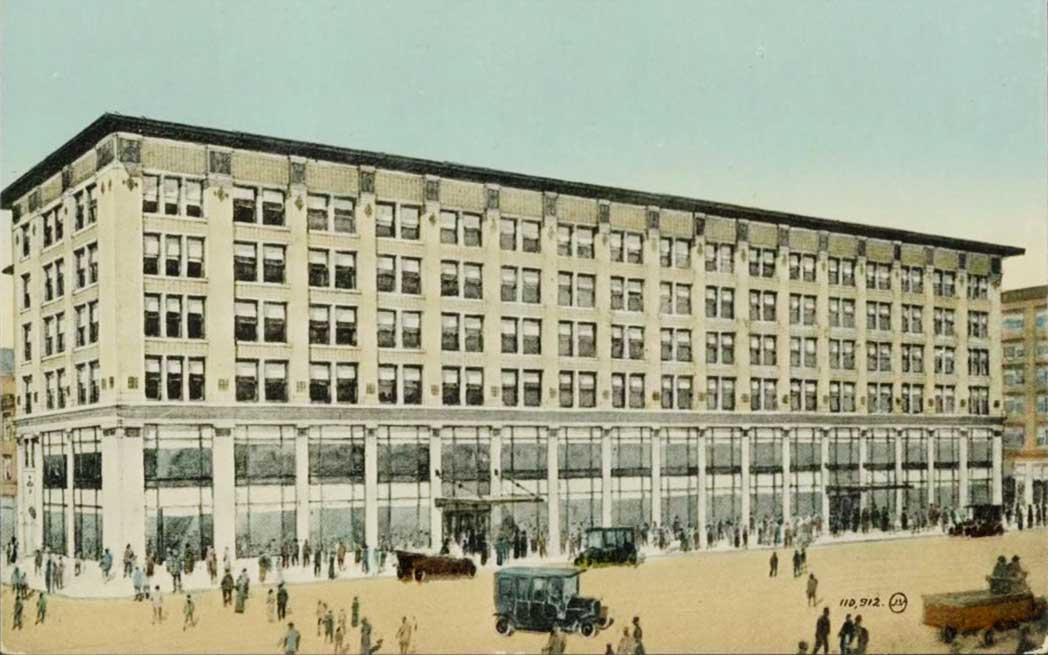
At 372 Sainte‑Catherine Street West, behind a discreet façade, the Belgo houses the highest concentration of contemporary art galleries in Canada. Designed in 1912–1913 by architects Finley & Spence for Belgo‑Canadian Realty, the building was originally a department store inspired by the Chicago School and was one of Montréal’s first reinforced‑concrete structures. Over the course of the 20th century, it mainly hosted textile and garment workshops before gradually transforming, from the 1980s onward, into a true centre for artists, curators, and collectors.
Today, the Belgo is home to the largest cluster of contemporary art galleries in Canada.
Little by little, the upper floors filled with galleries, artist‑run centres, studios, and creative spaces. Today, the Belgo brings together nearly two dozen galleries and a vibrant community that make the building a kind of horizontal museum of contemporary art: free admission, exhibition openings, Nuit blanche, and cultural “rentrées” when the entire building comes to life, drawing thousands of visitors every year.
A real‑estate transaction, but also a cultural one
After decades in the same hands, the Belgo has just been acquired by the Avenir Immobilier group. For the new owner, this is more than a simple financial operation; it is an assumption of responsibility for a place with a strong identity. The group, which already integrates artworks, murals, and curated artistic interventions into several of its properties, says it intends to act in a spirit of continuity and respect.
“The Belgo is far more than a building; it is deeply embedded in Montréal’s cultural history. We were immediately drawn to its unique identity, the artistic energy it fosters, and the essential role it has played for years within the city’s gallery ecosystem,” notes Frédérick Lizotte, Vice‑President, Leasing, at Avenir Immobilier. The stated intention is clear: to preserve the building’s vocation, respect its spirit, and support its long‑term vitality.
To guide this transition, Avenir Immobilier has retained heritage and planning consultant Geneviève Richard, Ph.D., co‑founder of Gris Orange. An in‑depth historical study is underway to better understand the building’s evolution and inform future interventions.
‘An in‑depth historical study is underway to better understand the building’s evolution and inform future interventions.‘
“The task we’ve been given raises a fundamental question: how can we intervene while enhancing what already exists? The challenge is not to freeze the Belgo in time or turn it into a museum, but to preserve its memory and the character that has made it so compelling for decades,” she explains. The aim is to show that it is possible to combine vision with sensitivity to heritage, seeing culture not just as another program among many, but as a defining component of the site and the city.
A vital crossroads for galleries, artists, and curators
The Belgo is a central link in Montréal’s visual arts ecosystem. The Association des galeries d’art contemporain (AGAC) is therefore pleased with the new owner’s commitment. “The Belgo is a key hub for the accessibility and recognition of contemporary art in Canada. That is why AGAC is delighted to learn that the new owner is committed to maintaining its cultural mission and supporting the long‑term viability of the galleries, artist‑run centres, and studios,” notes its Executive Director, Anie Deslauriers.
For gallerist Hugues Charbonneau, whose space is located on the top floor, the building is closely tied to his own trajectory. From his first visits as a CEGEP student—when he knew he would become a gallery owner—to today, as his team prepares, among other projects, the participation of artists in the Venice Biennale, the Belgo has remained an essential stop. He describes a generous and supportive community, an unmissable destination for international artists and curators scouting talent, ideally located within a triangle formed by three universities, three museums, and numerous corporate headquarters, while remaining an accessible space to experiment, take risks, and put Montréal on the map.
‘The aim is to show that it is possible to combine vision with sensitivity to heritage, seeing culture not as just another program among many, but as a defining component of the site and of the city.’
In a changing downtown, where rents are rising and independent spaces are becoming scarce, the fate of the Belgo is anything but trivial. The building remains one of the few places where a single visit lets you wander through several floors of galleries, discover emerging artists, run into visiting curators, and take the pulse of the local scene.
By choosing to reaffirm the Belgo’s artistic vocation rather than convert it to more lucrative short‑term uses, Avenir Immobilier is sending a strong signal: here, art and culture are not just a marketing bonus, but a central part of the site’s identity. It remains to be seen how this promise will translate in concrete terms—in lease management, access to spaces, and support for the communities that keep the building alive day after day.
Feature image: The Montreal; Valentine & Sons’ Publishing Co., Ltd. – Pierre Monette Collection

 June 19, 2026" />
 but its spirit remains" />
 A window of opportunity" />

 marriage prevents disputes" />
 2026 summer season" />
 downtime strategically?" />
 A living natural heritage /2" />

 at the Fringe Festival" />
 Opportunities to sell" />
 from a credit union" />
 at the Fringe Festival" />
 helps you feel more" />
 A living natural heritage /1" />
 Suzy’s vegan cookies" />
 to save Tamaracouta" />
 Rewards of investing" />
 playing in Pointe-Claire" />
 A jewel worth preserving" />
 Chocolate Raspberry Tart" />
 without burning out" />
 Lansdowne Avenue" />
 but at what cost" />