
Blue Metropolis brings together authors and cultural mediators from across the globe
By Irwin Rapoport
April 23, 2026
The 28th edition of the Blue Metropolis International Literary Festival started today, and over the next four days, HOTEL10, at 10 Sherbrooke W, and other venues will host discussions with local and international authors on a variety of subjects and themes.
“In such a noisy world – a world marked by wars, conflicts and divisions; dominated by speed; dizzied by overconsumption; assaulted by petty rumours circulating on social media; submerged in the constant flow of fact and falsehood – how can we come to understand each other?” states the press release for this very welcome festival. “Over 150 authors, writers, thinkers, philosophers, translators, and journalists from different countries, cultures, backgrounds and imaginaries converge on Montreal to respond to this question at the Blue Metropolis International Literary Festival.”
These four author meetings jumped out to me:
Memories, Generations and Legacy
Friday, April 24 at 1 pm
HOTEL10, Salle Saint-Laurent
WM: The persistence of memory and understanding our place in the world are powerful motivations that help guide us in our daily lives. What impact do you believe Songs for the Brokenhearted and Almost English have had in helping readers explore these themes?
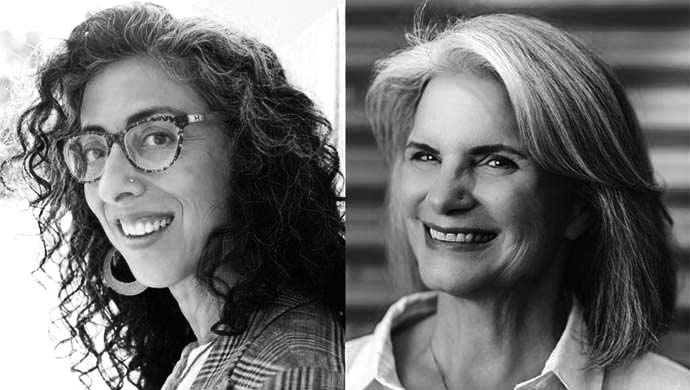
Barbara Sibbald: Many readers of Almost English have told me they have been motivated to unearth their own family history. Family stories are our foundational memories. They provide us with a unique mythology and place in the world. Brave, Great-grandfather Stephen, who speared a wild pig at close range. My intrepid Great Grannie, part Indian, who was born in a tent in India. These stories root me and obviously prompted others to find their stories, their memories and place.
Ayelet Tsabari: I wrote Songs for the Brokenhearted to celebrate my community and give them a place in literature because I grew up not seeing my experience reflected in literature. So I’m hoping that readers may find resonance in the novel and maybe even inspiration to tell their own stories in whatever way they can.
I wrote Songs for the Brokenhearted to celebrate my community and give them a place in literature because I grew up not seeing my experience reflected in literature.
– Ayelet Tsabari, author of Songs for the Brokenhearted
WM: Can you provide some insight regarding your family and cultural backgrounds and how they have influenced your writing?
Barbara Sibbald: From a very early age, I knew my maternal grandmother was born in India and was partially Indian. She coiled her long black hair into a bun and had gold bangles hanging from her wrist. Her cramped house contained statuettes of Buddha and elephants: exotic in the 60s. All this provoked my curiosity about my family and about life in general. I became a journalist and loved being able to ask any question I wanted to satisfy my curiosity. In my late 50s, my mother completed a genealogy that drew me back to the original source of my curiosity: my family. I began to research and write an imagined story about my maternal ancestors, sticking as close as possible to the facts. I couldn’t have written Almost English without the influence of my grandmother and her culture.
Ayelet Tsaabari: I dedicated the book to the women in my family because they were and still are a huge inspiration to my writing. I grew up with a grandmother, aunts and older female cousins I deeply admired, and I wanted to tell our stories. I started my research with them, and then moved on to interviewing other elderly Yemeni women in Yemeni communities in Israel. The stories I heard during my research were often heartbreaking; many of the women were married off as girls, were second or third wives, and suffered abuse and oppression, but there was also such joy in their songs. The songs, composed and sung in Arabic, memorized and passed on from mother to daughter, became a major thread in the novel. I feel like I owe so much to my family and my community, and in a sense, my writing is a way for me to pay this debt.
metropolisbleu.org/event/memories-generations-and-legacy
Ayelet Tsabari’s Songs for the Broken-Hearted
Friday, April 24 at 7:30 pm
HOTEL10 – Salle Saint-Laurent
WM: How long was the desire to write Songs for the Broken-Hearted yearning within you? How would you describe the writing process? To what extent is the novel autobiographical?
Tsabari: I’ve dreamt of writing a multi-generational novel about my Yemeni community from the moment I started writing in English, but it took me a while to actually get there. I guess I needed to write my first two books – a collection of stories and a memoir, first. I usually walk around with characters and scenes percolating in my head for a while before they become words on the page, so Zohara and Saida have been with me for years.
The novel isn’t autobiographical on the level of narrative and story. The storyline isn’t inspired by my family history or by real events. And Zohara, my protagonist, is very much her own person in my own mind, but we do have things in common (as I do with other characters as well!). She shares some biographical details with me and some traits, but perhaps the most biographical element in both our lives is the leaving and returning. Our home, our community, our families; that movement of rejecting and then reclaiming my heritage. There are other stories and moments I may have borrowed from my life and my family in the story, but I think most authors do that.
WM: What are the themes of your upcoming novels? How do you choose your subjects and characters?
Tsabari: I do not know that I choose subjects or characters. I am compelled to write what haunts me and preoccupies me. And I find myself endlessly interested in writing about Yemeni Jewish women and about Jewish Yemeni history, culture and traditions, so my next works will continue to explore themes and stories relating to that.
metropolisbleu.org/event/ayelet-tsabaris-love-song-for-the-broken-hearted
From Kyiv, the Ukrainian Poet Lyuba Yakimchuk and the Apricots of Donbas
Saturday, April 25 at 11:30 am
HOTEL10, Espace Godin
WM: The people of Ukraine continue to suffer from the prolonged impact of Russia’s invasion and the burdens of defending the nation. Poets, playwrights, and authors have long chronicled the experiences of soldiers and civilians in wartime situations. How does Apricots of Donbas fit into the traditions of wartime literature?
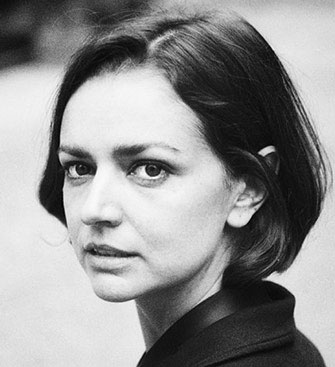
Yakimchuk: I see Apricots of Donbas as part of a long tradition where literature does not just describe war, but resists it.
War is not only fought with weapons. It is also fought through language, memory, and imagination. This is what we call soft power. And like any form of power, it can be used both to destroy and to protect. Russian culture often follows Russian tanks – it continues their work in another form, especially in occupied territories. It reshapes language, replaces memory, and slowly erases identity.
My book works in the opposite direction. It tries to preserve what is fragile: voices, landscapes, the texture of everyday life before and during war. It breaks language the way war breaks reality – through fragmentation, silence, and displacement. For me, poetry is one of the fastest ways to respond to violence. It does not need time to build an argument; it reacts almost immediately, like a reflex.
So I would say the book is not only about war. It is also an act of cultural resistance – a way to hold on to identity when everything around is being dismantled.
WM: How has the war personally impacted you and your close ones? What about morale and the future of Ukraine?
Yakimchuk: For me, the war is not an abstract topic. It is very close.
Since 2014, part of my family – my parents, my sister, and my grandmother – lived under occupation. This changes your sense of reality. You live with a constant split: physically you may be in one place, but mentally you are always somewhere else – where your loved ones are, where you cannot go, where you cannot protect them. I visited them back then, when the occupation was only just beginning, almost at the doorstep. In 2015, they managed to leave.
‘This is where literature – and everyday human practices – become important again. Not as decoration, but as a way to document, to process, and to preserve a human dimension inside something that constantly tries to dehumanize us.’
– Lyuba Yakimchuk, author Apricots of Donbas
I was lucky that in 2022, Russian troops did not occupy Kyiv, where I live, although they came very close to the outskirts of the city. But throughout these years, we have all been living under regular attacks, cruise missiles and lethal drones. Recently, a building just 200 meters from my home was hit and burned down. Death moves too close.
At the same time, I see a strong inner concentration in Ukrainian society. People are tired, of course. But there is also clarity. The war has forced many to redefine who they are, what language they speak, what they stand for. Identity is no longer something abstract – it becomes a daily decision.
This is where literature – and everyday human practices – become important again. Not as decoration, but as a way to document, to process, and to preserve a human dimension inside something that constantly tries to dehumanize us. We were supposed to become less human, but in many ways, we have become more humane. Ukrainians donate not only to save people, but also animals – rescuing them from burning buildings and rubble. They even raise money to protect exotic plants in the Kyiv Botanical Garden, which were freezing this winter without electricity. Our humanity extends to all living things, even as Russia continues to destroy them.
metropolisbleu.org/event/from-kyiv-the-ukrainian-poet-lyuba-yakimchuk-and-the-apricots-of-donbas
Violence, Political Power, Murder: Did Shakespeare Foresee Our World?
Saturday, April 25 at 4 pm
HOTEL10, Salle Jardin
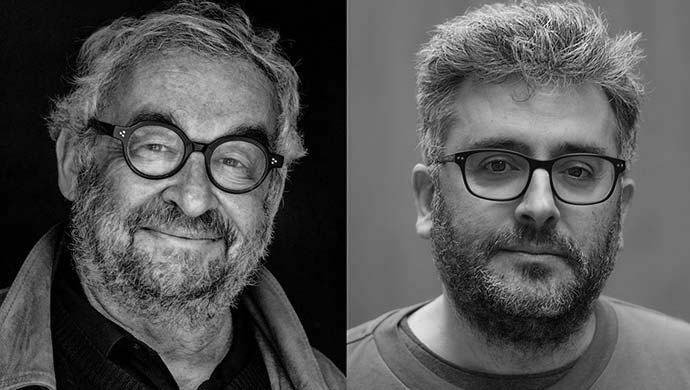
Power, betrayal, revenge, crime, war: in his time, Shakespeare showed us everything about human nature. Did he also foresee the world as it is today? A discussion between the Canadian American writer, born in the Soviet Union, Mikhail Iossel (Sentence) and British writer and translator Daniel Hahn (If This Be Magic. The Unlikely Art of Shakespeare in Translation).
metropolisbleu.org/event/violence-political-power-murder-did-shakeaspeare-foresee-our-world
For more information about the Festival: westmountmag.ca/blue-metropolis-literary-festival-2026
Images: courtesy of Blue Metropolis

More articles by Irwin Rapoport
Other recent articles

Irwin Rapoport is a freelance journalist and community advocate from Westmount with bachelor’s degrees in History and Political Science from Concordia University. He writes extensively on local politics, education, and environmental issues, and promotes informed public discourse and democracy through his writing and activism.