
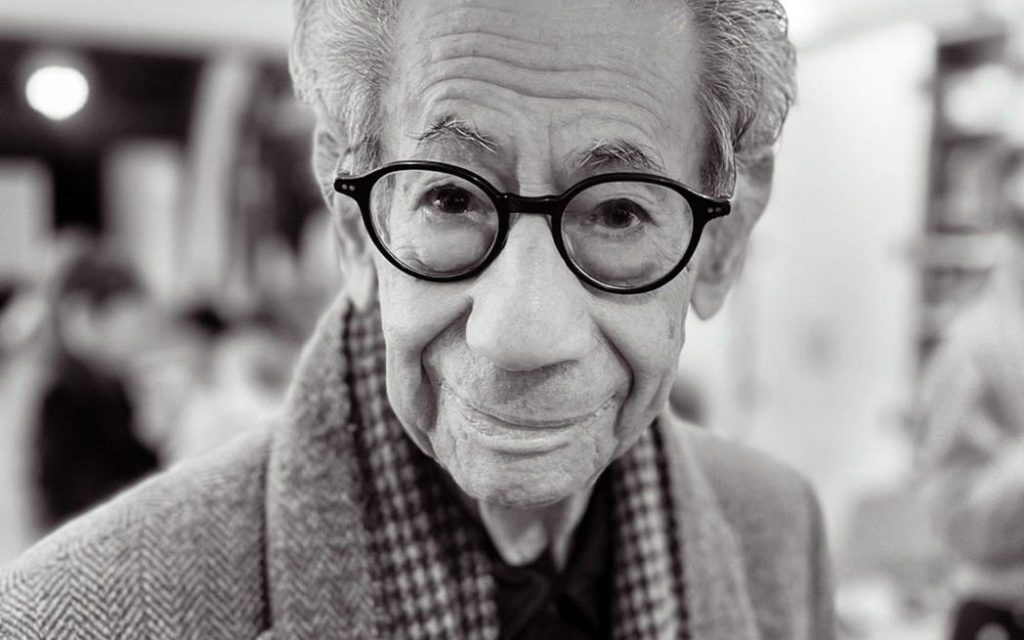
A silent witness has left us, yet his images sustain our collective memory
By Andrew Burlone
April 22, 2026
Gabor Szilasi died on April 10, 2026, at the age of 98, and with him we lose not only a man but an entire way of seeing Quebec. A discreet yet determined photographer, he spent more than half a century walking our villages, our streets and our galleries, attentive to the eloquence of everyday life.
In an era when images race past us on our screens, his photographs invite us to slow down and truly see the people and places that have shaped this province.
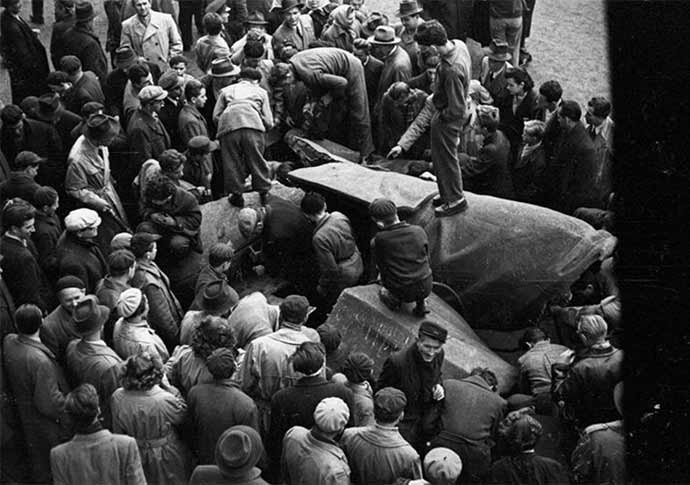
Born in Budapest in 1928, Szilasi grew up in a Europe marked by war, authoritarian regimes and constant uncertainty about the future. He began photographing in the streets of his hometown, observing daily life while sensing the mounting tensions that would lead to the 1956 Hungarian Uprising. When Soviet tanks crushed the revolt, he joined the wave of refugees who left their country behind to start over elsewhere.
Canada became his new home and, in the late 1950s, he settled in Montreal. He arrived as a newcomer, a stranger to the language and the codes, but already an attentive observer. One senses that exile had sharpened his eye: having lost his first city, he clung all the more to the streets and faces of the second. Very early on, he understood that this new territory deserved to be documented patiently, in all its complexity.
Rural Quebec: a society in transition
In Quebec, Szilasi quickly found work that took him out of the metropolis and into the countryside. Employed by provincial agencies, he travelled the back roads of rural Quebec throughout the 1960s and 1970s, photographing village main streets, parish churches, modest interiors and the countless commercial signs that structured life in these communities.
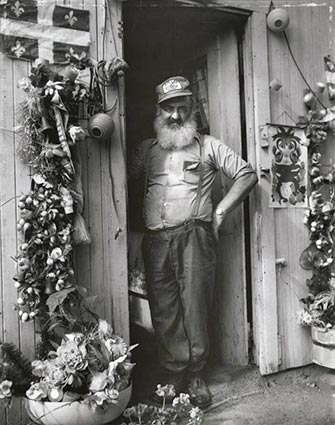
His images are not sentimental postcards of a nostalgically imagined past. They are calm, clear-eyed studies of a society in transition: farmers and shopkeepers, nuns and children, all captured on the threshold between an older, clerical world and the modernity ushered in by television, highways and the exodus to the cities. What strikes us today is the dignity with which he records these lives, without condescension and without nostalgia, simply with attention.
Looking at his photographs of villages, we realize just how much these seemingly modest scenes are in fact irreplaceable documents. They bear witness to a Quebec that no longer quite exists, yet whose spirit persists in our collective memory.
If his rural work captures the quieter rhythms of Quebec, his camera also turns toward the urban heart of the province: Montreal. For years, Szilasi walked along Sainte-Catherine Street and neighbouring arteries, photographing shop windows, neon signs, small businesses and bars.
Montreal: façades, signage and urban ways of life
He understood that these commercial façades were more than surfaces; they were, in their own way, portraits. A cobbler’s shop window, a hand-painted sign, the entrance to a café – all of these tell us something about the people who work there, the people who pass by, and the changing character of the city. Many of the places he photographed have since disappeared. Yet as we look at these images, we recognize the shadow of our own memories: the feel of downtown on a winter evening, the glow of a sign glimpsed from a streetcar or a bus, a typeface, a reflection in a window.
These photographs resonate like a walk through a recent past: we rediscover a city in the midst of transformation, caught between the postwar years, the Quiet Revolution and the cultural metropolis Montreal would become.’
A chronicler of Montreal’s art world
Alongside his explorations of rural parishes and city streets, Szilasi built another body of work that is just as important: a visual chronicle of Montreal’s art scene. Beginning in the 1960s, he became a familiar, almost omnipresent figure at exhibition openings, studio visits and cultural events.
He photographed painters, sculptors, curators, gallerists and critics, and he documented artist-run centres, private galleries and major museum institutions. His images of openings – whether in cramped rooms or more prestigious spaces – show artists leaning over their work, groups deep in conversation, and expressions ranging from intensely focused to quietly amused. To leaf through these photographs is to move through a living map of Montreal’s cultural ecosystem over several decades.
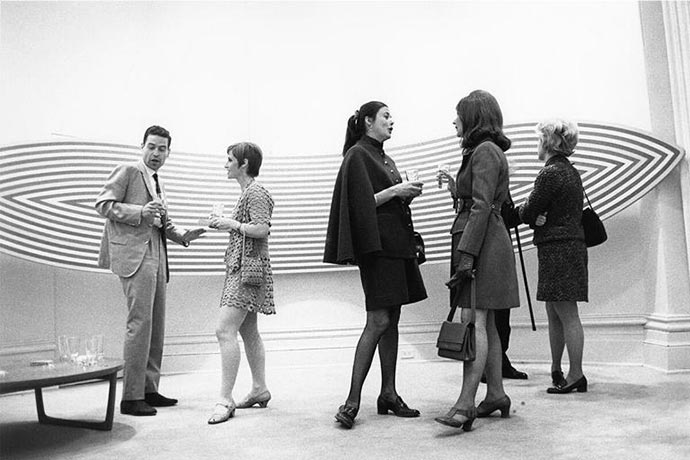
This dimension of his work is of particular interest to art historians: beyond the individual image, it reveals an entire network of relationships, affinities and aesthetic debates. In this sphere, Szilasi acts as a discreet yet essential witness.
A demanding humanism: style and ethics
What binds all these bodies of work together – villages, streets, galleries – is Szilasi’s deeply humanist approach. Rooted in the great modern documentary tradition, he favours clarity over spectacle. His compositions are precise without being mannered; his prints are luminous yet restrained. Above all, he is interested in the relationship between people and their surroundings. A portrait is often also a study of an interior, with its furniture, wallpaper, religious icons or family photographs. A street scene is anchored by one or two anonymous figures moving through the frame. In every case, the subject is not just a person or a place, but the dialogue between the two.
‘From the 1960s onward, he became a familiar, almost omnipresent figure at exhibition openings, studio visits and cultural events.’
Those who knew him speak of a man who worked without noise or theatrics. His presence at an event or in a village was discreet; he did not impose himself, he waited. That patience is visible in the work. There is no voyeurism, no desire to catch people off guard in order to shock the viewer. Instead, we sense a quiet pact between photographer and subject: I will look at you attentively, and in return, you agree to be seen. At a time when images are so often instrumentalized, this ethic of recognition carries particular weight.
The teacher and the living legacy
Szilasi’s influence was also felt in the classroom. From 1979 to the mid-1990s, he taught photography at Concordia University as well as at other Montreal institutions. Generations of young photographers discovered not only his images, but also his way of working: the importance of returning to the same streets, understanding the social and architectural context, and building a body of work patiently rather than chasing the picture of the day.
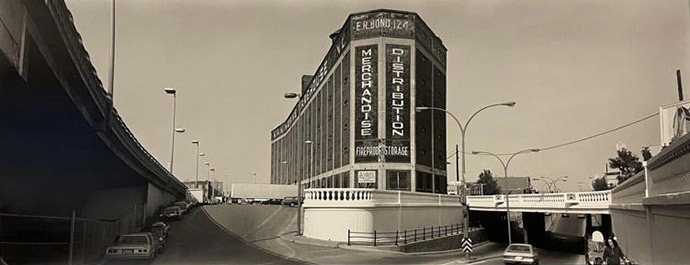
Many of those students went on to become important voices in photography and visual culture in Quebec and across Canada. Each of them carries, in their own way, something of his patient way of seeing, so that through them Szilasi’s legacy remains alive, constantly reinterpreted in light of new urban and social realities.
Archives, memory and an invitation to look
Over the years, institutional honours have underscored his place in the history of photography. Retrospective exhibitions have been devoted to his work, his photographs have entered national and provincial collections, and his vast archive – tens of thousands of images – has been acquired and preserved by public institutions.
For the public as much as for researchers, these archives now represent a precious resource. They make it possible to understand how downtown Montreal has evolved, how the art world has taken shape, and what rural parishes looked like before their schools closed and their presbyteries were transformed.
‘Szilasi’s work reminds us that an ordinary moment, treated with care, is never simply ordinary.’
The passing of Gabor Szilasi invites a double reflection. On the one hand, we lose a living connection to a period when the city and the province were reinventing themselves, from the Quiet Revolution to the recent wave of globalization. On the other, he leaves us the traces of that reinvention, fixed on film.
A village street under a cloudy sky, a group of artists gathered around a table, a shop window half in shadow – each of these fragments becomes, in his hands, a piece of our collective memory. The streets and interiors have changed; many of the people he photographed are gone. The images remain, modest and precise, asking only that we look. In that invitation, his legacy endures.
Featured image: Lëa-Kim Châteauneuf – Wikipedia

Other articles by Andrew Burlone
Other recent articles
[row cols_nr=”2″][col size=”2″] [/col][col size=”10″]
Andrew Burlone, co-founder of WestmountMag.ca, began his media journey at NOUS magazine. Subsequently, he launched Visionnaires, serving as creative director for over 30 years. Andrew is passionate about culture and politics, with a keen interest in visual arts and architecture. [/col][/row]