
A summer of great works
at Festival de Lanaudière
An outdoor amphitheatre and venues offering a new encounter with symphonic masterpieces
June 18, 2026 • Sponsored article
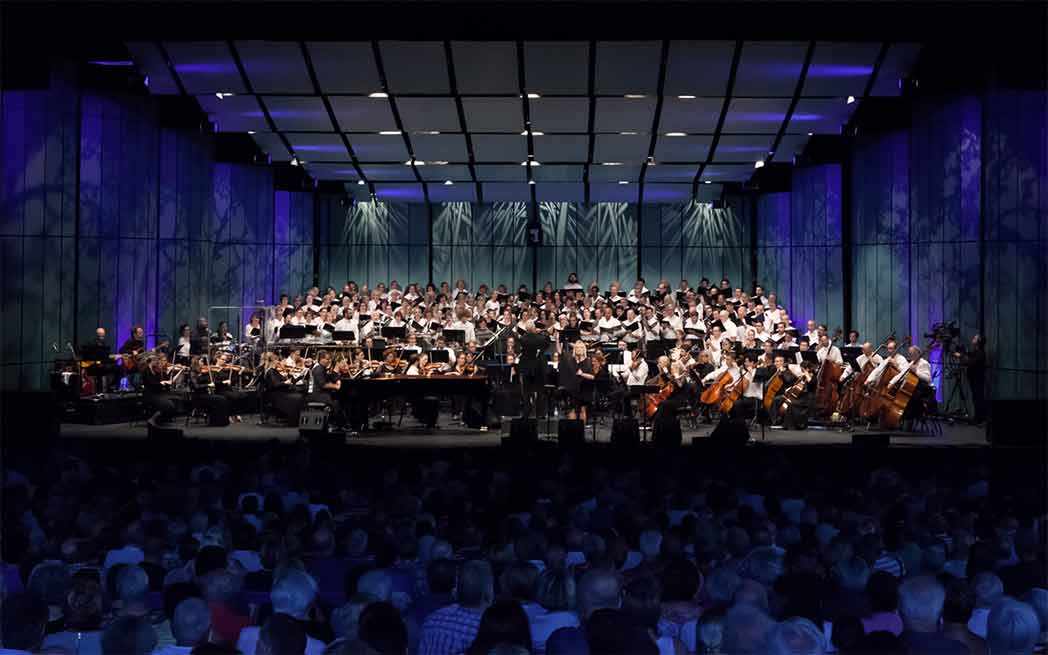
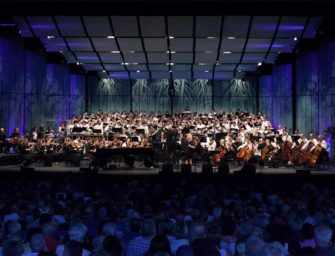
From 3 July to 2 August 2026, the Festival de Lanaudière offers a summer season in which great works of the repertoire enter into dialogue with nature, today’s voices, and Québec’s major orchestras. At the Fernand‑Lindsay Amphitheatre, as in the churches and off‑site venues throughout the region, this 49th edition focuses on a handful of emblematic scores – from Stravinsky to Verdi – to offer a new way of reflecting on our relationship to the world.
Nestled among trees and fields, this music festival offers the rare blend of open air and artistic rigour that has become its hallmark.
Founded in 1978, the Festival de Lanaudière has become one of North America’s leading classical‑music gatherings. Nestled among trees and fields, the festival offers that rare combination of outdoor setting and artistic exactingness that defines it: audiences on the grass or under cover, refined acoustics, and the changing glow of summer nights.
In 2026, the season runs from 3 July to 2 August and brings together around twenty concerts, ranging from large‑scale symphonic programs and chamber music to baroque evenings and performances in the region’s churches and agrotourism venues. The guiding thread is clear: works that have travelled through time and still fire the imagination, interpreted by artists who offer fresh perspectives.
The Rite of Spring: earth, rhythm, and memory
Saturday, 4 July 2026 – 7:30 pm
Fernand‑Lindsay Amphitheatre
Premiered in Paris in 1913, Stravinsky’s The Rite of Spring forever changed the way composers write for orchestra. Rhythm becomes the driving force: shifting accents, colliding sound blocks, orchestral colours answering one another. Heard in the middle of an open‑air amphitheatre, the sheer mass and pulsation are all the more striking.
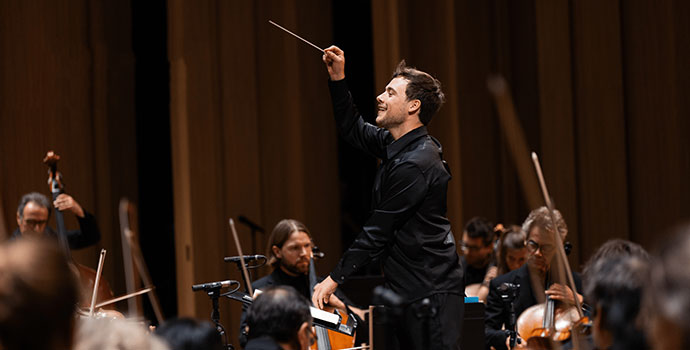
Nicolas Ellis
Under the direction of Nicolas Ellis, the Orchestre de l’Agora presents this landmark work as part of a program devoted to earth, territories, and cultural memory. Claude Champagne’s Symphonie gaspésienne, Ravel’s Shéhérazade, and Katia Makdissi‑Warren’s Chorus Nunavik each explore different ways of evoking a landscape, a voice, or a shared imagination. It is an evening that brings modernity, Québec repertoire, and contemporary creation into dialogue, opening the symphonic season.
Grieg, Hétu, Zemlinsky: Stories and landscapes
Friday, 17 July 2026 – 8 pm
Fernand‑Lindsay Amphitheatre
Grieg’s Piano Concerto in A minor is one of those works we think we know, yet rediscover with every new performance. From the very first chord, the piano asserts its character before blending into a close‑knit dialogue with the orchestra, where virtuosity and lyricism remain inseparable.
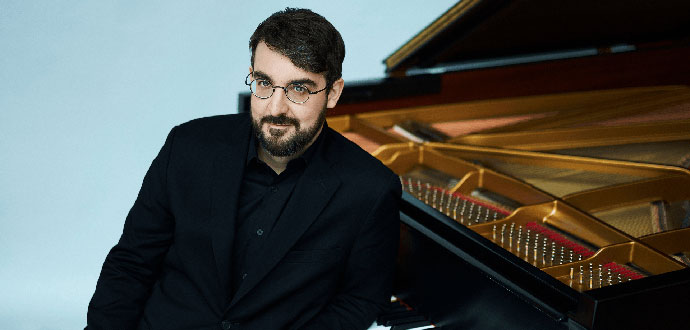
Charles Richard‑Hamelin
At Lanaudière, the solo part will be taken by Charles Richard‑Hamelin, performing with the Orchestre symphonique de Québec under the direction of Clemens Schuldt. Around Grieg, the program tells other kinds of stories: Jacques Hétu’s Le Tombeau de Nelligan brings Québec’s poetic memory into orchestral writing, while Zemlinsky’s The Little Mermaid turns Andersen’s fairy tale into a vast symphonic fresco. Three works that each, in their own way, explore the relationship between music, text, and imagination.
The Tenth Symphony by Shostakovich: history, tension, and memory
Saturday, 18 July 2026 – 7 pm
Fernand‑Lindsay Amphitheatre
Composed in the aftermath of Stalin’s death, Shostakovich’s Symphony No. 10 is one of the great orchestral works of the 20th century. It moves between tension, irony, violence, and inward moments, with writing that demands from the musicians as much precision as it does breadth.
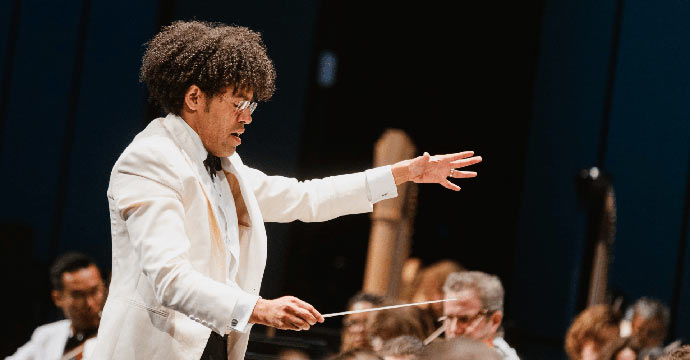
Rafael Payare
Rafael Payare and the Orchestre symphonique de Montréal approach this symphony at the heart of a program that questions the orchestra’s relationship to history and place. Beethoven’s Egmont Overture first establishes a dramatic tradition tied to the theatre and the idea of freedom. With Dzonot by Gabriela Ortiz, cellist Alisa Weilerstein performs a contemporary work inspired by the cenotes of Yucatán, where the very substance of sound seems carved out of stone and water. The Tenth then unfolds the full power of the symphonic form, poised between memory and revolt.
Saint‑Saëns, Ibert, Poulenc, Gershwin: journeys in orchestral colour
Saturday, 25 July 2026 – 7 pm
Fernand‑Lindsay Amphitheatre
Saint‑Saëns’s Piano Concerto No. 5, nicknamed The Egyptian, is emblematic of those works in which travel becomes musical material. Written after a stay in Luxor, it preserves the concerto’s formal clarity while weaving in melodic turns, rhythms, and orchestral colours associated with distant places.
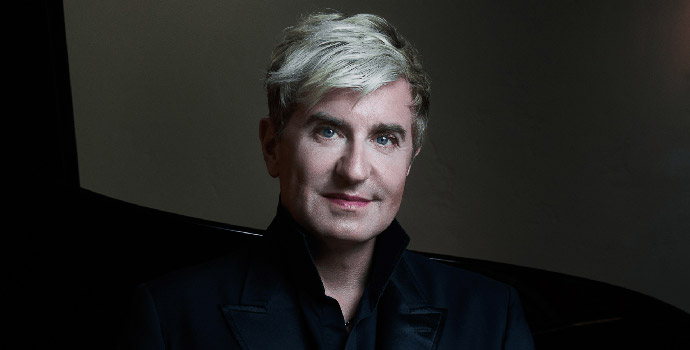
Jean‑Yves Thibaudet
Jean‑Yves Thibaudet will be at the piano, joined by the Orchestre symphonique de Montréal under the direction of Stéphane Denève. Ibert’s Escales extends the idea of travel by evoking a series of Mediterranean ports, Poulenc’s Les Biches conjures the world of ballet and dance, while Gershwin’s An American in Paris brings together symphonic writing, jazz, and the sounds of the city. It is an evening in which the orchestra tells the story not only of places, but also of the circulation and crossing of musical styles.
Macbeth by Verdi: a finale under the sign of theatre
Sunday, 2 August 2026 – 7 pm
Fernand‑Lindsay Amphitheatre
Premiered in 1847, Macbeth marks an important stage in Verdi’s relationship with theatre. In adapting Shakespeare, the composer gives the orchestra, the voices, and the chorus a central role in shaping the drama: prophecy, ambition, fear, and downfall all become driving musical forces.
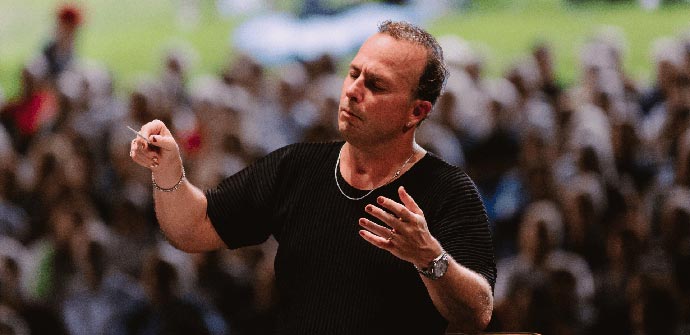
Yannick-Nézet-Séguin
Presented in concert form, this closing evening will highlight the score’s architecture, contrasts, and great ensemble scenes. Yannick Nézet‑Séguin will lead the Orchestre Métropolitain and the Chœur Métropolitain, with Étienne Dupuis, Saioa Hernández, Alexandros Stavrakakis and Matthew Cairns in the principal roles. It is a way of bringing the festival to a close with one of the great encounters between Verdi and Shakespeare, at the crossroads of opera and tragedy.
Continuing the discovery
These major evenings are far more than a string of repertoire favourites. Each one offers a carefully considered reading of the works, their context, and the artists who bring them to life. That attention to the meaning of each program runs throughout the 2026 season, in which every concert has been conceived as a complete musical journey rather than a simple collection of pieces.
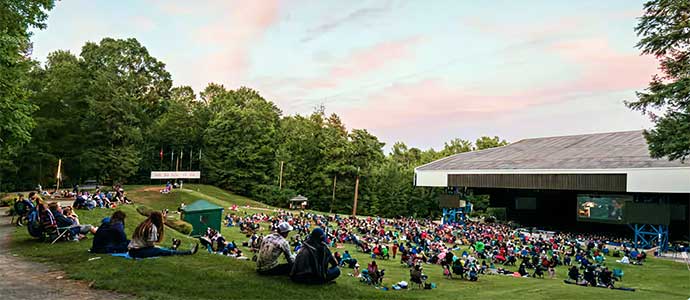
Between the Fernand‑Lindsay Amphitheatre, historic churches, and agrotourism venues, the Festival de Lanaudière thus offers a full month of musical explorations, from the great 20th‑century scores to the baroque, via romanticism and contemporary creation.
Images courtesy of Festival de Lanaudière
 More articles on music and concerts

 June 19, 2026" />
 at Festival de Lanaudière" />
 but its spirit remains" />
 A window of opportunity" />

 marriage prevents disputes" />
 2026 summer season" />
 downtime strategically?" />
 A living natural heritage /2" />

 at the Fringe Festival" />
 Opportunities to sell" />
 from a credit union" />
 at the Fringe Festival" />
 helps you feel more" />
 A living natural heritage /1" />
 Suzy’s vegan cookies" />
 to save Tamaracouta" />
 Rewards of investing" />
 playing in Pointe-Claire" />
 A jewel worth preserving" />
 Chocolate Raspberry Tart" />
 without burning out" />
 Lansdowne Avenue" />