
Jojo O’Neil’s No Jumping,
a play set in Westmount
Tense days leading up to the 1995 Quebec referendum as backdrop for the dark comedy
By Irwin Rapoport
April 27, 2026
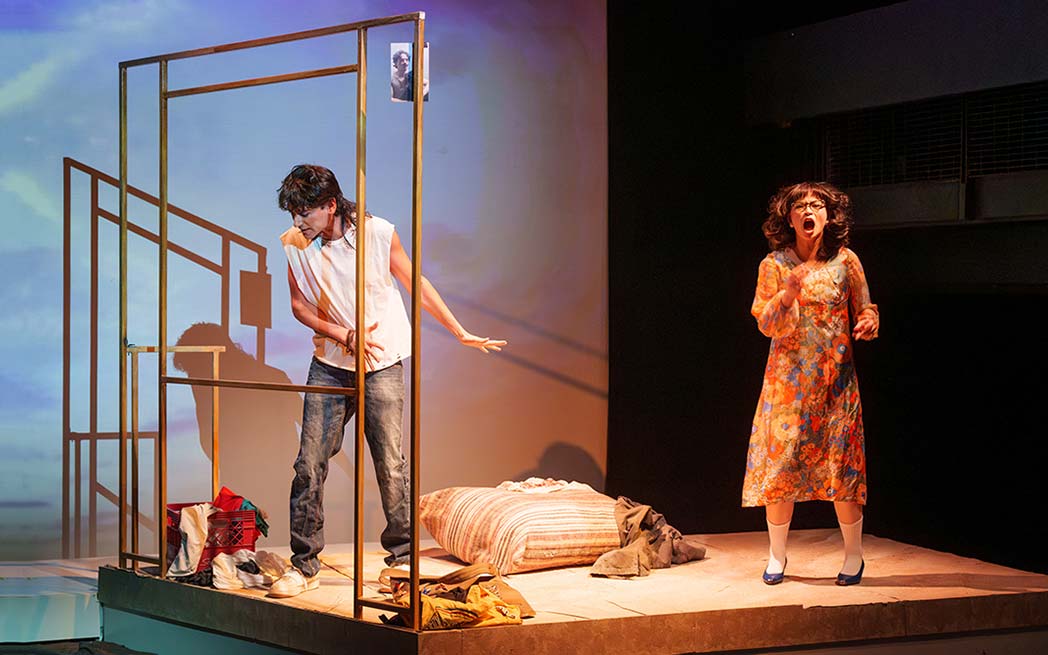
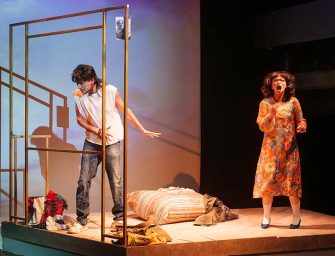
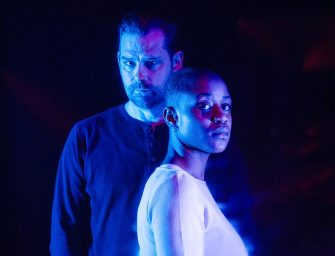
Westmount serves as the setting for No Jumping, Jojo O’Neil’s play in the National Theatre School of Canada’s New Words Festival. The production runs at the NTS Monument-National Campus, 1182 Saint Laurent, until May 2.
The tense days leading up to the 1995 Quebec referendum provide a backdrop to the dark comedy directed by Azal Dosanjh. It follows fifteen-year-old Felix as he navigates a fractured family life, personal confusion, and the sudden disappearance of a neighbour.
The NTS describes the play as more than a period piece, calling it a love letter to Montreal and a meditation on identity, grief, and transformation. The cast includes Scotia Browner, Owen Carter, Rainbow Kester, and Nikola Masri.
The NTS describes the play as more than a period piece, calling it a love letter to Montreal and a meditation on identity, grief, and transformation.
O’Neil said the play grew out of their own experience transitioning and the questions that came with moving between identities and social worlds. Dosanjh said the script stayed with him because of its emotional depth and its reflections on love, beauty, and the divisions in human life.
All elements of the production are created by NTS students in playwriting, production design, technical arts, set and costume design, directing, and acting, with guidance from guest artists. Founded in 1960, the National Theatre School is marking its 65th anniversary this year and remains Canada’s leading bilingual theatre training institution.
* * * * *
Playwright Jojo O’Neil, director Azal Dosanjh, and actors Scotia Browner and Nikola Masrihold forth on the play and their craft in the following Q&A:
WM: When did the basic premises of No Jumping coalesce in your mind? When did you start the writing process? And what are the keys to writing about sexuality and sex?
O’Neil: For me, the story of No Jumping started to emerge when I moved to Westmount. Although I grew up in Ontario, both of my parents are Montrealers: my father grew up in Pointe-Claire and is a proud West Islander, and my mother is French-Canadian from the Town of Mount Royal. I grew up visiting both sides of my family in Montreal, and now, I’ve been living in Montreal since I was 18, since 2017, and have been living in Westmount for three years. When I first moved, I became neighbours with two of my closest friends – two gay men in their thirties who lived in a beautiful loft apartment, with gorgeous art and furniture, vintage runway garments draped around the space, and a rottweiler.
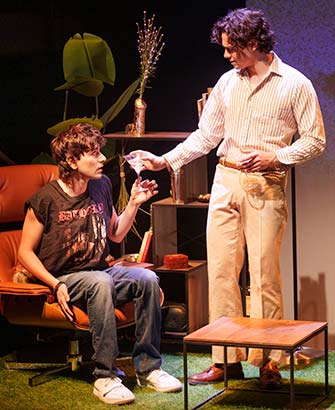 These two men remain very important to me, and they provided the first image of some of the characters in No Jumping. I became obsessed with how different they felt from me, and the envy that I felt that I couldn’t ever be like them. Slowly, as the story began unfolding, more characters came to my mind – sort of reflections of myself who all feel broken off from something, whether it’s their families, bodies, community, or language.
The backdrop of the 1995 referendum, a time of huge potential cultural split and the dawn of a new age of Quebec, felt right for a story about the beauty and possibilities that come with transformation, and the fear, danger, and uncertainty that come with splitting off into something new. From there, I had the opportunity to write this play alongside my dramaturg, Sky Gilbert, as a part of my final project at the National Theatre School of Canada’s New Words festival.
I think writing about sex and sexuality requires as much honesty as possible. Not that it should be gratuitous (sometimes it can be), but it has to be as true as it is beautiful and ugly and awkward and sometimes awful, and from there, the honesty will support the tone of the scene. I’m very fortunate to be working with an incredible team, including intimacy coordinator Jen Viens, director Azal Dosanjh, and my lovely cast, for being able to provide a space for us to explore and choreograph all of these intricate, beautiful, and sometimes tricky moments.
WM: How do you think audiences will react to the play? What messages and questions do you hope they will take away from it?
O’Neil: Honestly, I’m not too sure what to expect from the audience. It’s always so difficult to say what the audience will take away from a live performance. I think they may be shocked, they may laugh, but what I hope for is that the audience can all sit in something together that makes them feel part of a whole, while simultaneously allowing them to feel the cracks between them, letting them choose what to do with them. I think what the play is confronting is whether or not we exist in a broken world, or if it’s us who are truly broken.
‘The backdrop of the 1995 referendum, a time of huge potential cultural split and the dawn of a new age of Quebec, felt right for a story about the beauty and possibilities that come with transformation, and the fear, danger, and uncertainty that come with splitting off into something new.’
– Jojo O’Neil, playwright, No Jumping
No Jumping isn’t a play that seeks to answer how we can fix these fractures that haunt many of us; instead, I hope this play can be a place where the audience can sit with one another and not be alone or in a broken spirit. I’m curious about the question of whether or not it’s better if some things stay broken. Where is there beauty in division? When is “community” dangerous? How do we navigate a fractured world when we are fractured? How can we still be together in brokenness? What happens if we jump into the cracks?
WM: What are some of the themes that attract you as a playwright? What steps do you take to bring the characters and ideas to life? What are you currently working on?
O’Neil: Before becoming a playwright, I trained as an actor at Concordia University. Solo performance became the style and form I loved most. Because of that, my process is very forensic and on my feet, placing myself in the centre of the world, and seeing how everything takes shape from the inside. Especially later in the process, when I’m a few drafts in, I’ll work in studios, acting with a script in hand as each individual character, tracking their arcs, transformations, the dramatic actions they perform, and how they inform the overall structure, marking my script and making edits as I go. My process looks different every time – each play requires something different, and often each play will tell you how it wants to be written, but typically I always start with an image, and once I start writing about it, I can start finding where it exists within a larger story, and what questions the story is asking.
After my graduation from NTS’s playwriting program, I will fly to Greece to be a visiting artist in residence at Mudhouse Residency in Agios Ioannis, Crete, where I’ll be continuing work on my play Holes, which received a reading at Centaur Theatre’s WinterWorks Festival this past February.
My style has been described as expressionistic, and where “visceral meets cerebral” – where the two are in conversation with one another, often exploring themes such as madness, intergenerationality, desire, home, and love. I love staging the impossible and offering large-scale transformations to my cast, production, and design team. I love figuring out how to create images that burn into the audience’s minds, and I love a theatre that makes me feel not so alone.
WM: No Jumping takes on multiple themes and a full range of emotions. What were the keys to understanding the play and creating your vision for the stage?
Dosanjh: At its core, No Jumping inquires into the human condition as it moves through a time of personal, social, and universal split. It is funny, sad, poignant, and entertaining.
For me, the first song I hear when I read a script is crucial. When I first read No Jumping, that first song was the eight-year-old me, standing at the edge of the terrace of our apartment building, looking down at the ground and feeling the urge to jump. If I jump, I am either jumping toward everything, and I leave nothing behind – or I am jumping toward nothing, and I leave everything behind. That song helped me hold the myriad of emotions and themes this play explores.
Other questions that anchored me: Who is a weed in a garden? Who has access to beauty? How do we fix the split? When I’m in the thick of the forest, these first songs help me find the center.
As for vision, my process relies on empowering my team to do their best work. They are the show.
WM: How did you assemble the cast? How would you describe that process, as well as the rehearsal time to get it right?
Dosanjh: For this production, our circumstances were given, including the cast and rehearsal period. So my work became about how to best use the time and resources available to us.
No Jumping entered the rehearsal room with a very solid structure, which allowed me to build a complete blueprint of our staging in the first two days. From there, most of our rehearsal time became about polishing rhythm and tempo while sharpening clarity of thought. I believe we get it right when the joy and freedom, personal and collective, are palpable both in a rehearsal room and on stage.
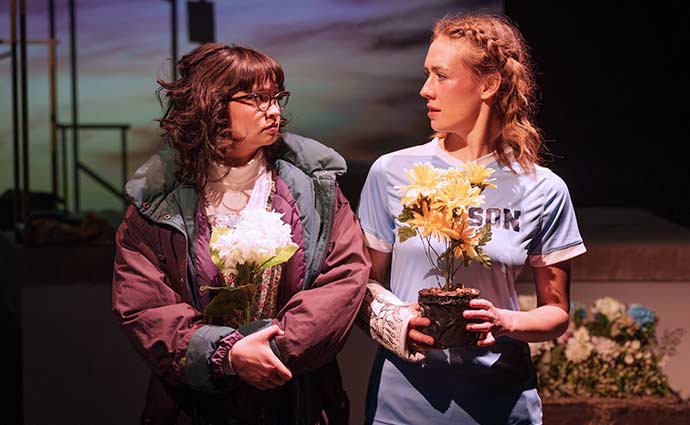
‘It’s really special to have No Jumping set in Westmount and other areas of Quebec because it allowed me to visit all the spots mentioned in the play… I visited the Westmount Greenhouse, The Village, and the Atwater Market. Doing this helped me create a clearer picture of Dianne’s journey and see what she sees.’
– Scotia Browner, actor, No Jumping
WM: Who are the directors that you look to for inspiration? Are there any productions that stand out to you?
Dosanjh: One of my biggest mentors has been Jillian Keiley. I was her assistant director for a couple of years and got to shadow some of her major productions. I’ve always admired Jill’s ability to run the room with effortless smoothness – I learned from her how to begin a rehearsal day (always with a little fun and a game – joy and freedom!) and how to squeeze every last bit of creativity out of every available resource to achieve a unified vision. Her mentorship leaves me with a lot. One constant question I have inherited from her: “How can I, as a director, cultivate conditions for rich collaboration and audience transcendence?”
Her production of Richard II at the Stratford Festival 2023 stands out to me. Adapted by Brad Fraser and set in the late 1970s and early 1980s, the production brought a disco-era aesthetic, punk-inspired intensity, and a chorus of angels. The production was a bold reminder of what becomes possible when we let the rulebook go.
WM: How did you prepare to portray your character? How would you describe your acting style?
Browner: It’s really special to have No Jumping set in Westmount and other areas of Quebec because it allowed me to visit all the spots mentioned in the play. To prepare to portray Dianne, I visited the Westmount Greenhouse, The Village, and the Atwater Market. Doing this helped me create a clearer picture of Dianne’s journey and see what she sees. Additionally, since I’m playing a character older than myself, I did a lot of work on how I hold my body and face as a 40-year-old mother. Her breath and body should move very specifically through all the obstacles she’s facing.
It’s hard to pinpoint a specific acting style I have because all the characters I’ve played are so uniquely different. Usually, I’ll start by identifying what makes me and the character similar and go from there!
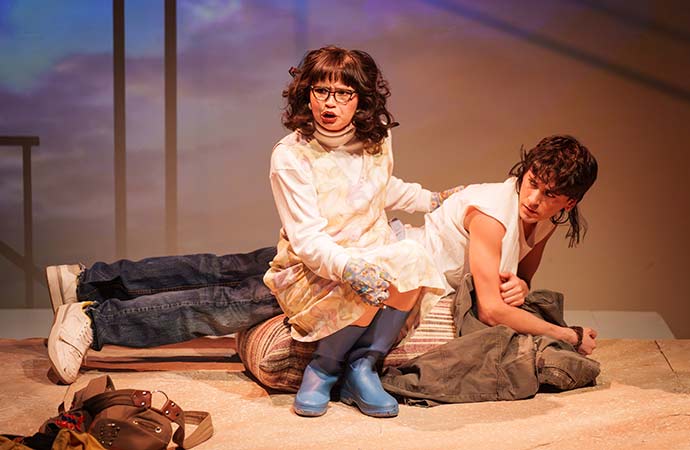
Masri: I would describe my acting style as instinctive, playful, and a little mischievous. I’m drawn to risk, to following impulses, to embracing unpredictability, and to allowing something alive to happen in the moment rather than trying to control it. I get bored by safe choices; I’m much more interested in what happens when you follow something unexpected. At its core, my work leans toward naturalism, but I like to arrive there through exploration, improvisation, and sometimes unconventional methods.
Drama school gave me a real sense of rigour, which I value, but I’ve also had to learn how to protect my freedom inside that structure. I don’t always approach the work in a traditionally “academic” way. I resist anything that feels too controlled or overly intellectualized. For me, acting needs to feel like a game; that’s when I’m at my best. It brings me back to a childlike state where imagination is effortless, and nothing feels off-limits. As adults, we tend to edit ourselves constantly, but acting is the one place where I feel completely unrestrained, where anything is possible.
In terms of preparation, my process always starts in a more abstract place. I don’t intellectualize right away; I dream first. I let the character live in my mind and my body while I’m doing everyday things, showering, cooking, lying in bed… and I pay attention to the images, emotions, and sensations that come up. From there, I ask: “How are we similar, and how are we different?” More often than not, I find that the character and I share more than I expected, and I use that overlap to ground them in something truthful and human.
For the differences, that’s where the craft comes in. I follow their logic, study their psychology, look for clues in the text or invent them if I have to. It’s a process of trying, failing, adjusting, and staying curious. I’m less interested in “getting it right” than I am in discovering something real, which will allow me to transform easily.
WM: What attracted you to acting? Are there any actors and performances that inspire you?
Browner: When I was little, my mom put me in a musical theatre class at my dance school, and ever since then, I knew that theatre was what I was born to do. It felt so natural to be onstage telling a story. The profession of acting is so special because you get to experience so many lives and perspectives through the work.
Growing up mixed-race, I found it rare to see actors who represented my culture and family, so I’m really inspired by icons such as Lea Salonga and Phillipa Soo, who have reshaped what Asian art can be on Broadway. Representation matters and will always matter.
‘I would describe my acting style as instinctive, playful, and a little mischievous. I’m drawn to risk, to following impulses, to embracing unpredictability, and to allowing something alive to happen in the moment rather than trying to control it. I get bored by safe choices; I’m much more interested in what happens when you follow something unexpected.’
– Nikola Masri, actor, No Jumping
Masri: What first drew me to acting was the danger of it. There’s something slightly unhinged about choosing to reveal yourself in front of strangers, and I love that! I don’t know what that says about me as a person, but there’s a kind of thrill in not knowing exactly what will happen, and I’m always chasing that feeling. As a viewer, I’m most engaged when a performance feels genuinely unpredictable, like it’s unfolding for the first time.
I’m most inspired by performances where the actor is walking a line between control and chaos. Robert Pattinson does that in a way I find exciting. His choices are bold, almost dangerous, and it makes you lean in.
I’m also obsessed with the precision and intensity of Nicole Kidman and Isabelle Huppert; they’re completely controlled, but there’s always something simmering underneath. And then you have someone like Willem Dafoe, who just transforms in a way that feels almost supernatural.
One of my earliest memories in a cinema was watching The Chronicles of Narnia: The Lion, the Witch and the Wardrobe and being completely hypnotized by Tilda Swinton. She terrified me, but I couldn’t look away. That kind of magnetic, almost otherworldly presence has stayed with me.
I’ve always been drawn to darker material, especially horror, because it exposes something raw about human nature. Fear strips everything down; there’s no pretending. Cinema has that transformative power; it can disturb you, move you, and change you.
The film that really changed everything for me was Mommy by Xavier Dolan. I remember watching it and feeling completely wrecked. It made me realize that acting isn’t just about performance, it’s about impact. It’s about leaving a mark on someone, and that’s the kind of work I want to do, something that doesn’t just entertain, but lingers. Something people don’t fully shake off.
Images: Maxime Côté

More articles by Irwin Rapoport
Other recent articles

Irwin Rapoport is a freelance journalist and community advocate from Westmount with bachelor’s degrees in History and Political Science from Concordia University. He writes extensively on local politics, education, and environmental issues, and promotes informed public discourse and democracy through his writing and activism.


 April 28, 2026" />
 to master an art" />
 a play set in Westmount" />
 hen with preserved lemons" />
 facing new managers" />
 Elm Avenue" />
 understand each other" />
 tips for every season" />
 of everyday life in Quebec" />
 Promise to purchase first!" />
 and how to outsmart it" />
 Fish soup with rouille" />
 Burton Avenue" />
 Michael Hawkes /100" />
 in the heart of nature" />
 thriller Seeker at Centaur" />
 Southern Italian Retreat" />
 The slaughter goes on" />
 Renting a second residence" />
 builds real credibility" />
 Cocktail Meatballs" />
 Stayner Street" />
 smooth move in later life" />