
Bourgie Hall unveils
its 2026-2027 season
Interview with Olivier Godin on a program featuring major names and new discoveries
By Andrew Burlone
May 5, 2026
Bourgie Hall begins its 16th season with a 2026–2027 program that fully embraces its role as an intimate venue with a now well-established reach at the local, national and international levels.
At the heart of the new season are three major festivals devoted to Beethoven, Philip Glass and Pierre Mercure, the continuation of the complete Schubert Lieder cycle, and a series of cross-disciplinary arts where music is in dialogue with dance, poetry, theatre and film. Far from limiting itself to the classical repertoire alone, Bourgie Hall also continues to open its doors to music from here and elsewhere, jazz and more adventurous projects, while maintaining its artistic rigour.
This year’s program features three major festivals, the ongoing Schubert Lieder cycle, and a series blending music with dance, poetry, theatre, and film.
In this context, WestmountMag.ca spoke with Olivier Godin, artistic director of Bourgie Hall, to discuss the main themes of the 2026–2027 season, how it builds on recent years, and the challenges of renewing audiences. From the space given to local artists to the welcoming of major international names in the hall’s intimate setting, to questions of format, scheduling, and interdisciplinary collaborations, he reflects on the directions shaping the program and on the experience he hopes to offer audiences.
WestmountMag: The 2026–2027 season marks Bourgie Hall’s 16th season. What are its main artistic directions, and how does it build on previous seasons?
Olivier Godin: This season is very much in continuity with what Caroline Louis and I set out to do when we arrived: to make Bourgie Hall better known beyond its loyal core, in Montreal, across Canada and internationally. One of our goals is truly to give the hall the widest possible reach. I’ve just come back from a congress in Estonia, and I can see that more and more European musicians and presenters know about Bourgie Hall. It’s a sign that the work done over the past few years is paying off.
Artistically, the 2026–2027 season extends several major projects, especially the complete Schubert Lieder cycle, which is now entering its third year. This project follows in the footsteps of major undertakings that have marked the hall’s history, such as the complete Bach cantatas, and helps establish Bourgie Hall as a benchmark venue for recitals and chamber music.
WM: What are the main pillars structuring this season in concrete terms?
Olivier Godin: Three major festivals play a central role this year. The first is a festival devoted to Ludwig van Beethoven, presented in March 2027 on the occasion of the 200th anniversary of his death. It was a project we had originally imagined for 2020, but the pandemic pushed it back. It will be both a tribute to his memory and a celebration of his life, through a broad overview of his music: works for piano, chamber music, Lieder, trios, quartets, and even the Ninth Symphony in a version for two pianos, based on Liszt’s transcription. We can’t present the original orchestral version on this stage, but we wanted to give it that nod.
The second is devoted to Philip Glass. At 90, Glass remains a major figure in contemporary music, and it seems important to us to honour a great creator while he is still living. The festival will explore his output and the work of artists who have collaborated with him, such as the Kronos Quartet and countertenor Anthony Roth Costanzo, as well as Quebec performers. Five pianists will share the Twenty Etudes for Piano, and Les Violons du Roy will also take part.
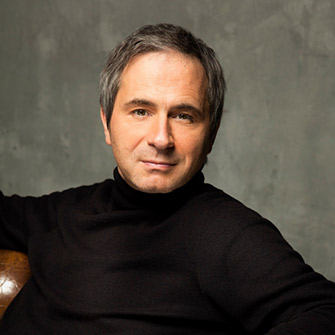
Piotr Anderszewski • photo: © Simon Fowler
The third is the Pierre Mercure festival, dedicated to a pioneer of electroacoustic music who would have turned 100 in 2027. He died tragically young, at 38, and we want to remind audiences of the strength of his work. This festival is being developed in collaboration with the Société de musique contemporaine du Québec, the Nouvel Ensemble Moderne and the Centre de musique canadienne, with access to archives created with Radio-Canada and the National Film Board.
Alongside these three focal points, our core series — piano, chamber music, early and Baroque music, Lieder, jazz, and music from here and elsewhere — remain very much present. We have increased the Baroque component, and jazz still holds an important place, especially through the much-loved 5 à 7 jazz concerts.
Serving the audience
WM: Looking back, what guiding thread do you see in your artistic direction work, and what major changes have you observed?
Olivier Godin: For me, the guiding thread is serving a community. Being an artistic director means serving the audience: listening to what people love, what they want to discover, but also offering them projects they might never have imagined.
We’ve just experienced the best season in the hall’s history, reflecting the quality of our programming, communication work, and attentiveness. We’re often in the hall, talking with audience members, reading comments after concerts. That informs our choices without trapping us in a pure “permanent polling” logic.
‘Artistically, the 2026–2027 season extends several major projects, especially the complete Schubert Lieder cycle, which is now entering its third year.’
I also want Bourgie Hall to play a strong role for local artists, and about half of the programming is devoted to Quebec and Canadian artists. We’re fortunate to have an incredible pool of talent, and it’s essential to give them a platform worthy of their abilities.
Intimacy and acoustics
WM: Bourgie Hall is known for its acoustics and intimacy, and as a sought-after stop for touring artists. How does that influence your choices?
Olivier Godin: It’s decisive. The combination of that acoustics and that sense of proximity changes the experience for both artists and audience. Performers used to playing in large halls discover here an almost chamber-like relationship with the audience, and often they want to return.
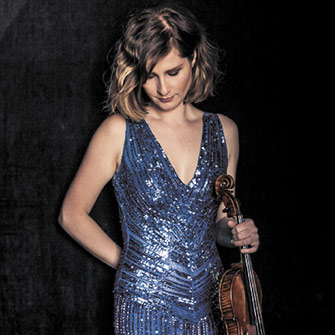
Lisa Batiashvil • photo: Sammy Hart
That creates a virtuous circle: artists talk about us, agents reach out, and we receive many proposals. We can then build seasons where major names — the kind you usually hear in larger venues — coexist with discoveries, all within an intimate setting.
For the voice in particular, Bourgie Hall’s acoustics are especially appreciated. In the context of the Schubert cycle, several singers have spoken of a real “acoustic revelation.” That’s a privilege for a hall of this size, and a strong reason to invite major artists to sing here.
Balancing the season
WM: The different series — piano, lied, chamber music, Baroque, jazz — strongly shape the season. How do you strike a coherent balance?
Olivier Godin: The key is not to overpack the season. We’ve found that between 80 and 95 concerts per season keeps us in a balanced range. This year we’re at 94, which feels ideal: rich enough to be substantial, but not so dense that it overwhelms the audience.
‘The three festivals we discussed help weave connections between the series: they make different periods and styles speak to one another while still providing the public with clear points of reference.’
Some series are growing, like jazz, but we’re advancing gradually. Growth is not just about quantity; it’s also about visibility: bringing in more international artists in certain series, strengthening the presence of local artists, and deepening themes.
The three festivals we discussed help weave connections between the series: they make different periods and styles speak to one another while still providing the public with clear points of reference.
Repertoire and risk
WM: How do you balance the repertoire with more daring or experimental proposals?
Olivier Godin: In recent years, Bourgie Hall has opened itself to projects that move somewhat beyond its original core mission, and I’m very happy about that. I believe today’s audience wants both repertoire they know and new experiences.
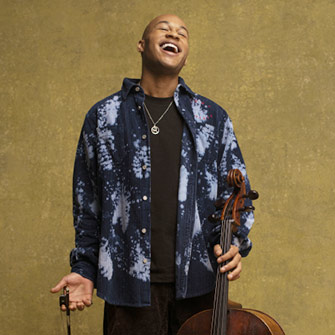
Sheku Kanneh Mason • photo: Mahaneela
When we program more adventurous projects, the challenge is to present them well. It’s not about saying, “this is for insiders” and “this is for everyone else,” but about clearly showing what we’re offering, who it’s for, and why it matters. Some concerts won’t necessarily sell out, but they are important to the hall’s artistic identity. We embrace them and balance them with evenings we know will draw strong audiences.
Partnerships help us a great deal: for example, the dance project built around the Schubert Lieder cycle, created with the National Arts Centre, Danse Danse and Domaine Forget, allows us to bring together audiences from music and dance. That’s a textbook way of combining rigour and accessibility.
It is in that spirit that we developed the “Cross-Disciplinary Arts” series, in which music enters into dialogue with theatre, poetry, dance, and film. It’s a major strand of the hall’s identity, and it fits perfectly with its place inside the Montreal Museum of Fine Arts.
Renewing audiences
WM: You’ve expressed a clear desire to make the audience younger. What results are you seeing, and how are you continuing that effort?
Olivier Godin: We do want to rejuvenate the audience, but without forgetting the “grey heads,” who remain at the heart of the hall’s life. Many people discover classical music later in life, in retirement, and become deeply involved. We want to take good care of them.
For young adults, several measures have paid off: 50% off tickets for under-35s when bought in advance, $10 tickets at the door 1 hour before the concert, and our proximity to McGill and Concordia. All of that has helped significantly increase the share of young people in the hall.
Collaborations with other art forms — dance, literature, cinema — also bring in audiences who don’t normally come to classical music. The challenge now is to reach younger people from other communities and backgrounds, for whom Bourgie Hall is not yet a natural reflex. That’s a project we’re continuing to work on.
Formats and atmosphere
WM: Beyond ticket prices, which formats or atmospheres seem most effective for less experienced audiences?
Olivier Godin: Sunday afternoon concerts, 5 à 7 jazz events, and matinées are formats that work particularly well. They fit more easily into daily life, don’t end too late, and offer a broader experience: a musical moment, but also a way of experiencing the hall and the museum differently.
More broadly, I think people are no longer looking only for a “program,” but for an experience. At Bourgie Hall, we try to offer that: a suspended moment in an intimate place, where people listen and also share something together.
WM: What would you most like audiences to take away from this new season?
Olivier Godin: I’d like people to feel that this season is truly for everyone: for the dedicated music lovers who come often, as well as for those walking through the door for the first time.
That there is always, in this programming, something for each person, and that everyone feels welcome. Bourgie Hall is not an elitist place: it’s a place where people share musical moments in a spirit of openness and calm.
To view the full 2026–2027 season program, consult the brochure.
Images: courtesy of Bourgie Hall



 May 8, 2026" />
 its 2026-2027 season" />
 Investing with life insurance" />
 Stories and emotions" />
 Gentle speech as resistance" />
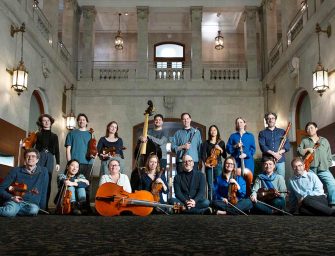
 strengthen their partnership" />
 Peanut Butter Dog Treats" />
 the ideal job candidate" />
 Costa Rica’s simpler living" />
 sings Orlando di Lasso" />
 for all seasons" />
 to master an art" />
 a play set in Westmount" />
 hen with preserved lemons" />
 facing new managers" />
 Elm Avenue" />
 understand each other" />
 tips for every season" />
 the Quartier des spectacles" />
 of everyday life in Quebec" />
 Promise to purchase first!" />
 and how to outsmart it" />